Your new post is loading...

|
Scooped by
jean lievens
March 8, 2015 5:33 PM
|
Could new, distributed, free systems create a different logic and dynamic from these born on centralized services?
|
|
Scooped by
jean lievens
March 1, 2015 4:25 PM
|
Since the 1970s, the number of rice varieties in India has plummeted from roughly 100,000 to 7,000. The massive drop is largely due to the rise of high-yield crops born from the Green Revolution, which helped relieve a strained food supply. However, the extinct rice varieties don’t just signify a loss of heritage and cultural identity in Indian villages – each lost variety is a small defeat in the battle to preserve biodiversity and genetic variation.
|
|
Scooped by
jean lievens
February 20, 2015 2:24 AM
|
“People centered” means that control of infrastructure, access, distribution, resources, and co-governance are now on the scale of the individual person. When an individual person with this empowerment reaches their individual carrying capacity to operate, they will tend to reach out to others who are operating like them, and a connection-based network will emerge. Economic development here targets individuals operating as self-employed independents who network together. Independents, small businesses, community groups, working together, with government, higher education, and larger business are the new economic driver. The more control people have an on individual scale of infrastructure, access, distribution, resources, and governance, *and* the more connectivity there is between those people, the that more growth happens in “people centered economic development”. When control of infrastructure, access, distribution, resources, and co-governance are now on the scale of the individual person, a new way of coopertive co-managing of existing resources, and surpluses of production tends to emerge. That new way of co-managing is known as “Resource Sharing”."
|
|
Scooped by
jean lievens
January 15, 2015 4:43 PM
|
The biggest problems of the twenty-first century are and will be technological problems. Consider the problems we have already faced in the past decade: anti-biotic resistance, quickly spreading diseases due to transportation systems, mass surveillance, climate change, mass extinctions, invasive species, and so on. It is clear that the problems will continue as scientists, governments, and corporations push for even more invasive and destabilizing technologies like nanotechnology, genetic engineering, and advanced artificial intelligence. Some scientists are even considering utterly insane ideas like geo-engineering.
|
|
Scooped by
jean lievens
December 10, 2014 1:21 PM
|
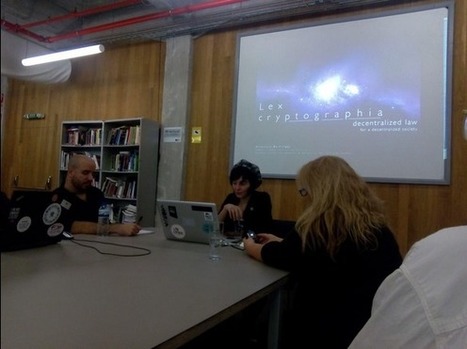
In this audio presentation Primavera de Filippi explores the possibilities and pitfalls of blockchain-derived platforms developed through Ethereum.
|
|
Scooped by
jean lievens
November 13, 2014 2:25 PM
|
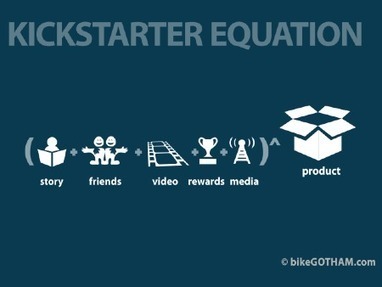
What crowdfunding businesses like Kickstarter have accomplished is to allow hundreds, thousands, of small businesses to be born, obtaining financing with nothing more to offer than an idea and without having to cede portions of property in exchange.
|
|
Scooped by
jean lievens
October 31, 2014 7:37 PM
|
I’ve a long time felt that I’m different, actually from I was a child. I remember how I reacted with anger when the road outside our house was paved, I think I was about 7 years at that time. Today I hate the view of cars, power lines, the sound of fans and so on. My cell phone has buttons, probably they still make a few just for old people, but touch screens are against my nature. I use the old laptops after my brother. Just to mention some.
|
|
Scooped by
jean lievens
October 1, 2014 6:30 PM
|
“Technology is an alienating force, removing us from contact with community, with Nature, and our Mother Earth; and yet, at the same time, we heard of communications technology as something that was preserving native languages, allowing native communities to reach out to each other and to supporters around the world, empowering youth and providing new ways for Elders to tell their stories.
|
|
Scooped by
jean lievens
September 7, 2014 1:28 PM
|
In shifting the focus of regulation from reining in institutional and corporate malfeasance to perpetual electronic guidance of individuals, algorithmic regulation offers us a good-old technocratic utopia of politics without politics. Disagreement and conflict, under this model, are seen as unfortunate byproducts of the analog era – to be solved through data collection – and not as inevitable results of economic or ideological conflicts.
|
|
Scooped by
jean lievens
August 13, 2014 1:18 PM
|
Data leaned from people's behaviour online is an important tool in everything from marketing to social planning, but consumers lose control over their privacy the more data is collected about them.
|
|
Scooped by
jean lievens
July 7, 2014 4:11 PM
|
we don’t need to wait until a hypercapitalist techno-utopia emerges to do right by our struggling neighbors. We could pay for universal health care, higher education, and a basic income tomorrow. Instead, you’re kicking the can down the road and hoping the can will turn into a robot with a market solution
|
|
Scooped by
jean lievens
June 21, 2014 1:42 AM
|
“This book gives an in-depth insight into the philosophical, political and technological aspects of decision making using the internet and the “secrets” of LiquidFeedback, a computer software designed to empower organizations to make democratic decisions independent of physical assemblies, giving every member of the organization an equal opportunity to participate in the democratic process.
|
|
Scooped by
jean lievens
May 16, 2014 5:38 PM
|
This remark by a librarian of Lyon, attributing the birth of socialism to the mechanics of the Jacquard loom, was made with the deepest disapproval. In his history of Lyon, it was his explanation for the violent uprisings by artisan weavers that had shaken the town thirty years earlier. As he saw it, in raising the living standards of workers, the Jacquard loom encouraged higher pay demands and worker recalcitrance. What interests me in the quote above is not the claim that the Jacquard loom improved the living standards of weavers, nor whether their radicalism was driven by growing affluence or deepening deprivation. Both of those claims are questionable, to say the least (cf. Strumingher & Bolo, 1978). Of greater relevance to my argument in this paper is that the quote links the introduction of a new technology with the birth of a political – even a revolutionary – idea, the idea of socialism. Still more intriguingly, the technology in question is the famous Jacquard loom. A series of technical advances over the previous fifty years in the Lyon weaving district had culminated in this machine, nowadays hailed as the world’s first computer. The loom mechanism was guided by punched cards, a machine tool control system still employed in heavy industry a century and a half later (Noble, 1986). It is the same principle of using pre-written instructions – i.e. software code – to control the movements of a tool head, that lies at the heart of 3D printing. As for socialism, Adrian Bowyer launched the open source 3D printer project Rep-rap with a manifesto article, where he stated the following:
|
|
|
Scooped by
jean lievens
March 8, 2015 5:22 PM
|
Could new free systems, thought of as alternatives to Facebook and Twitter, and with a distributed structure, create a different logic and dynamic from these born on centralized services?
|
|
Scooped by
jean lievens
March 1, 2015 4:12 PM
|
What makes a lot of people uncomfortable about a phenomenon like Uber, when you get right down to it, is how it is owned.
|
|
Scooped by
jean lievens
January 24, 2015 2:50 PM
|
This brilliant infographic is from March 2014 but still worth sharing. It was originally published at Cryptocoins News
Everyone knows that global wealth is unevenly distributed. The top 1% has control over almost 50% of the global economy.
|
|
Scooped by
jean lievens
January 1, 2015 3:38 PM
|
|
|
Scooped by
jean lievens
December 8, 2014 5:46 AM
|
In this powerful and indignant article, Aral Balkan – verging on ‘mad as hell and I’m not going to take this any more‘ mode, exposes the nascent total surveillance state, what he calls ‘Spyware 2.0′ and their fraudulent ‘free’ services. He likens the exchange of convenient technology for personal data as tantamount to a theft of one’s soul, and the centralisation of all personal information into private hands as a classic enclosure of the Commons.
|
|
Scooped by
jean lievens
November 13, 2014 6:05 AM
|
The Internet Of Things is coming. Rejoice! …Mostly. It will open our collective eyes to petabytes of real-time data, which we will turn into new insights and efficiencies. It will doubtless save lives. Oh, yes: and it will subtly redefine ownership as we know it. You will no longer own many of the most expensive and sophisticated items you possess. You may think you own them. But you’ll be wrong.
|
|
Scooped by
jean lievens
October 28, 2014 4:16 PM
|
The disparity between the rich and everyone else is larger than ever in the United States and increasing in much of Europe. Why?
|
|
Scooped by
jean lievens
September 23, 2014 5:36 PM
|
Can technology also help degrowth objectives, giving humankind a lighter touch on the planet ? A debate with two colleauges at Degrowth 2014.
|
|
Scooped by
jean lievens
September 2, 2014 12:59 AM
|
Some technology critics, with their laments of cultural decline enabled by Twitter and e-books, are partly to blame. Instead of engaging with attention and distraction socio-economically — as was done with earlier media by Walter Benjamin and Sigfried Kracauer — we get Nicholas Carr, with his embrace of neuroscience, or Douglas Rushkoff, with his biophysiological critique of acceleration (8). Whatever the salience of such interventions, they end up decoupling the technological from the economic, so that we end up debating how the screens of our iPads condition the cognition of our brains — instead of debating how the information gathered by our iPhones conditions the austerity measures of our governments. To be critical of technology today should mean questioning how it and its boosters let the current system buy more time, and stave off an even more existential crisis.
|
|
Scooped by
jean lievens
July 25, 2014 10:07 AM
|
Algorithmic regulation, whatever its immediate benefits, will give us a political regime where technology corporations and government bureaucrats call all the shots. The Polish science fiction writer Stanislaw Lem, in a pointed critique of cybernetics published, as it happens, roughly at the same time as The Automated State, put it best: “Society cannot give up the burden of having to decide about its own fate by sacrificing this freedom for the sake of the cybernetic regulator.”
|
|
Scooped by
jean lievens
July 5, 2014 10:02 AM
|
The still raging financial crisis of 2007–2008 has enabled the emergence of several alternative practices concerning the production, circulation and use of money. This essay explores the political economy of the Bitcoin ecosystem. Specifically, we examine the context in which this digital currency is emerging as well as its nature, dynamics, advantages, and disadvantages. We conclude that Bitcoin, a truly interesting experiment, exemplifies “distributed capitalism” and should be mostly seen as a technological innovation. Rather than providing pragmatic answers and solutions to the current views on the financial crisis, Bitcoin provides some useful and timely questions about the principles and bases of the dominant political economy.
|
|
Scooped by
jean lievens
June 8, 2014 1:57 AM
|
Making a giant octopus is way more enlightening than taking the SAT or Sociology 101.
|




 Scoop.it!