“BitShares does for businesses what Bitcoin is doing for money,” goes the Bitshares motto, even though BitShares’ cryptocurrency asset has increased five times in value in only 13 days. Brian Page, BitShares Director of Marketing, tells us how Bitshares has gained such rapid growth in such a short period and what this means for the cryptocurrency landscape.
The still raging financial crisis of 2007–2008 has enabled the emergence of several alternative practices concerning the production, circulation and use of money. This essay explores the political economy of the Bitcoin ecosystem. Specifically, we examine the context in which this digital currency is emerging as well as its nature, dynamics, advantages, and disadvantages. We conclude that Bitcoin, a truly interesting experiment, exemplifies "distributed capitalism" and should be mostly seen as a technological innovation. Rather than providing pragmatic answers and solutions to the current views on the financial crisis, Bitcoin provides some useful and timely questions about the principles and bases of the dominant political economy.
Without government run central banks and inflationary currencies, engaging in war is much more difficult. Stefan Molyneux speaks about the potential of bitcoin and cryptocurrencies to end war and brainstorms on how it would be possible start a war in a bitcoin economy. Speech recorded on April 12th at the Toronto Bitcoin Expo 2014.
Since we’ve created money, we also have invented ways of replacing it with other forms of currency, whether it’s because we don’t fully trust fiat currency or because we love the idea of having choices. Bitcoin is the perfect mix of these two valid explanations and, like our favourite virtual coin, a lot of alternative currencies have lives, prospered and (sometimes) ended after providing a lifetime of joy to their users. Let’s take a look at some of these “different” currencies.
Crowdfunding, for its practicality and usefulness, has expanded without any ideological limitation and while it served to finance many social projects it has also supported more conventional initiatives based on consumerism and business as meant in the capitalist system.
Digital crypto-currencies such as Bitcoin are the singularity of money and, after spending some time educating myself, I have turned from a skeptic into a fan. If you are not familiar with the topic then I suggest that you start with my interview with Andreas Antonopoulos. In that conversation we lay down the basics and discuss why "Bitcoin is not currency; it's the internet of money!"
Bitcoin may disintermediate banks, but that will not change the economy, save the environment or make society fairer. One peaceful way to prevent our governments driving us to collective suicide is to get behind a new generation of P2P credit projects.
Accelerationism came to prominence in 2013 with Nick Srnicek and Alex Williams's hashtag-titled manifesto. A cloud computing-era spin on the old Marxist argument that we first need to perfect capitalism in order to transcend it, its lineage is fleshed out in a new book fromUrbanomic. Urbanomic claim (among others) Nick Land's skynet midwifery, J.G. Ballard's science fictionalization of culture, and Marx himself as precursors to Accelerationism, establishing it as a serious anti-humanistic response to the challenges that humanity faces if it is to avoid extinction. Similar to Christine Harold's strategy of "intensification", Accelerationism calls for us to appropriate the value of capital's developments and transform them materially into something else rather than attempt to resist them head-on or refuse them in our hearts.
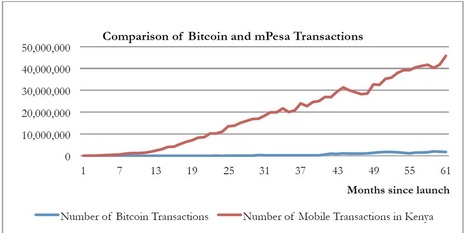
Despite its global reach, Bitcoin flows now pale in comparison to those among Kenya's 45 million people over the course of their six-odd years in existence.
SWARM entitles all coin owners to a part of 1% of all future coins launched on the platform and allows coin holders to vote on a community representative.
Bitcoin-like startup Ethereum is on track to have concluded one of the most successful crowdfunding exercises in history, with the first two week so a "pre-sale" of its currency-like internal token, ether, concluding Tuesday.
Over the weekend, CCN reported on the government of Ecuador’s decision to ban Bitcoin, along with all other cryptocurrencies, via a National Assembly majority vote on July 23rd. An outright ban placed on Bitcoin by one nation, or another, has always been inevitable.
Developers at the CureCoin Forum said “It is not just Bitcoin that has gained traction amongst the online community, many other alternative currencies exist.
While most adults may still be baffled by bitcoin and bemused by blockchains, a new generation is being introduced to this alternative form of finance by advocates aiming to bring about a “digital currency revolution”. Their belief is that our current financial system can be overthrown by those who don’t even yet have bank accounts.
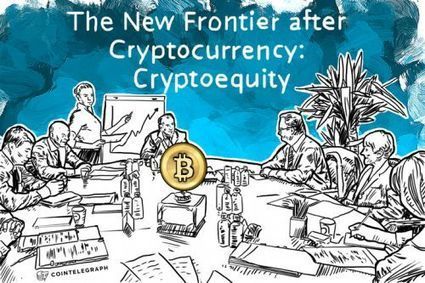
You may have come across the word Cryptoequity before - it has been written about in mainstream media, from the Wall Street Journal, to The Economist. However, few understand what cryptoequity really mean, the different forms and purposes of it, and how it’s likely to evolve in the financial and legal landscape around the world. Hence, here’s a brief introduction to the concept - some food for thought for people curious about this embryonic and exciting industry.
The average lifespan of mainland-based virtual currency businesses is just nine months, indicating Beijing's success in limiting financial activity outside the official banking system.
Bitcoin is incredibly risky because it’s not endorsed by any government, commodity market or recognised as an asset. It has no genuine value in and of itself. Though Bitcoin has revolutionary potential, but will always be risky because it is an off- base technology whose creators are largely unknown. No matter how much acceptance it gets amongst businesses, it will operate under unknown regulatory environment until a global authority takes control of it. If IMF or the World Bank forms a body to secure this currency against some tangible and exchangeable asset then I might think about it.
To get content containing either thought or leadership enter:
To get content containing both thought and leadership enter:
To get content containing the expression thought leadership enter:
You can enter several keywords and you can refine them whenever you want. Our suggestion engine uses more signals but entering a few keywords here will rapidly give you great content to curate.


 Your new post is loading...