Bacteria have traditionally been viewed as solitary organisms that 'hang out on their own,' says a molecular biologist. However, scientists now realize that in fact, bacteria exhibit social behavior within groups.
By Kaine Korzekwa By asking members of the public to capture and send beetles in for research, scientists at the University of Florida are using “citizen science” to get a better idea of the distri...
A century ago this year, a young Swiss physicist, who had already revolutionized physics with discoveries about the relationship between space and time, developed a radical new understanding of gravity.
Nobel Prize winning physicists have proven beyond doubt that the physical world is one large sea of energy that flashes into and out of being in milliseconds, over and over again.
Nothing is solid.
This is the world of Quantum Physics.
They have proven that thoughts are what put together an
via EarthSky.org: Reports of the death of the Big Bang have been greatly exaggerated. Big Bang theory is alive and well. At the same time, our universe may not have a beginning or end.
Interview at the Research Days 2009 with Prof. Dr. Francis Heylighen from the Evolution, Complexity and Cognition group of the Free University of Brussels.
Technology has come a long way in the millennia that mankind has thrived. Today we see a collective dependent relationship formed with our most common electronic devices.
Back in 2010, we shared with you 100 awesome search engines and research resources in our post: 100 Time-Saving Search Engines for Serious Scholars. It’s been an incredible resource, but now, it’s time for an update. Some services have moved on, others have been created, and we’ve found some new discoveries, too. Many of our original 100 are still going strong, but we’ve updated where necessary and added some of our new favorites, too. Check out our new, up-to-date collection to discover the very best search engine for finding the academic results you’re looking for.
The scientific world seems to be swamped by a true tsunami of papers of all kinds, full of sound and fury and signifying nothing. A situation which looks more and more similar to that of the general cacophony of the World Wide Web, swamped by poor quality information drowning the good information (if any). This starts to be a serious problem and some have explicitly asked that scientists should publish a smaller number of papers, but of higher quality (as argued, for instance, by Timo Hannay).
In October 2013, Greg Gage and Tim Marzullo unveiled a cyborg cockroach that could be controlled from a smartphone through electrodes attached to its antennae and a wireless unit on its back. Imagine in the coming years what would happen if we are able to go much smaller and nanoscale computing devices could be integrated with individual bacteria. And what if these hybrid devices could be designed to control colonies of bacteria? Of course a big problem could be powering such devices, but bacteria based batteries are already a reality.
Studying 40 years' worth of data on rat brains, scientists found that the rat cerebral cortex has hubs and 'local area networks,' much like the Internet.
Some of us have had the experience ourselves, regretfully, of enduring a trauma resulting in a broken limb which never completely healed. More often, we know others who have been through falls, motorcycle accidents, car wrecks, etc., and...
Researchers have successfully mapped rats’ memories, could humans be next? Scientists may have cracked the code of memories by successfully tracing how they are imprinted on the brain.
Some serious groundwork has been laid. Some amazing instruments are turning on. Some incredible destinations are in sight. If you ask us, 2015 is going to be an awesome year in science.
The phenomena of religion, spirituality, and mystical or transcendental experience have long been shrouded in mystery. From a scientific point of view, little is known about the biological or evolutionary implications of the religious instinct which has dominated the landscape of human life for at least the past 5,000 years.
Re-uploaded (again, just in case), since TED's Chris Anderson censored Rupert Sheldrake, along with Graham Hancock, and removed this video and Hancock's from the TEDx YouTube channel. They dared question the Scientistic Orthodoxy, and for that they have been publicly castigated and defamed. Follow this link for TED's dubious statement on the matter (and the many comments appropriately critical of TED's rationale):
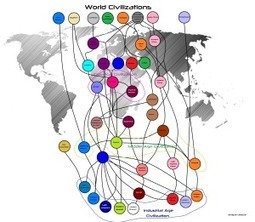
In part I of this series of articles, I briefly mentioned Consumeristic Individualism, as I defined the dominant ethos of our era. To be able to define it, we must start to talk about a part of our collective identities that we all know about, yet few of us recognise – namely civilization. So, the issue at hand is: What is a civilization, and what is a civilizationary ethos? And how can these forms of definitions aid our undertaking?
What drives our desire to behave morally? Neuroeconomist Paul Zak shows why he believes oxytocin (he calls it "the moral molecule") is responsible for trust, empathy and other feelings that help build a stable society.
Scientists turned the data gathered from the Large Hadron Collider into a symphony—call it the real music of the spheres. And this music gives us a look at the radical future of data visualization.
To get content containing either thought or leadership enter:
To get content containing both thought and leadership enter:
To get content containing the expression thought leadership enter:
You can enter several keywords and you can refine them whenever you want. Our suggestion engine uses more signals but entering a few keywords here will rapidly give you great content to curate.


 Your new post is loading...
 Scoop.it!