Your new post is loading...

|
Scooped by
jean lievens
April 13, 2014 2:40 AM
|
In March, exactly twenty-five years after he first outlined his proposal for a "world-wide web", Tim Berners-Lee called for "a global constitution - a bill of rights" to protect the "neutral, open internet". This appeal for a "Magna Carta", a single document that enshrines certain fundamental rights and protections for citizens in the digital age, comes after a series of revelations about the extent of state surveillance online.
|
|
Scooped by
jean lievens
March 28, 2014 2:05 AM
|
Last night, Brazil´s Congress approved the "Marco Civil," a landmark piece of legislation comprehensively protecting human rights online. The vote follows closely on the heels of the Web´s 25th anniversary and Sir Tim Berners-Lee call for a "Magna Carta" of the internet. Brazil is the first country in the world to hear that call. Effectively, the Marco Civil creates a bill of rights for the Brazilian internet, a first for the world.
|
|
Scooped by
jean lievens
March 21, 2014 1:14 PM
|
Last Friday, the US National Telecommunications and Information Administration (NTIA)announced plans to transition its oversight of key technical coordination functions of the Internet to “the global multistakeholder community.” Currently, the Internet Corporation for Assigned Names and Numbers (ICANN) is under contract with NTIA to perform certain limited but essential functions associated with the global domain name system. Together, these are referred to as the IANA (Internet Assigned Numbers Authority) functions. Among them is the maintenance of the root zone that sits at the top of the domain name system’s hierarchy of Internet addresses. Under the current system, NTIA approves all changes to the root zone file.
|
|
Scooped by
jean lievens
March 13, 2014 4:33 PM
|
OVER the next decade, approximately five billion people will become connected to the Internet. The biggest increases will be in societies that, according to the human rights group Freedom House, are severely censored: places where clicking on an objectionable article can get your entire extended family thrown in prison, or worse.
|
|
Scooped by
jean lievens
March 7, 2014 11:06 AM
|
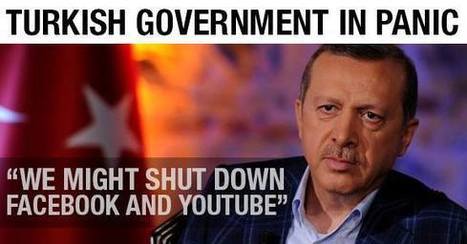
Turkey’s Prime Minister Recep Tayyip Erdogan hinted that his government may shut down Facebook and YouTube after March 30 local elections to what he says avert negative effects of internet on society, a move would likely spark public backlash given the mounting social unrest and uneasiness over government’s growing encroachment on people’s lives and media.
|
|
Scooped by
jean lievens
February 13, 2014 5:41 PM
|
On Jan. 11, 2014, the internet observed the one year anniversary of the suicide of Internet Freedom activist, coding genius, and all-around beautiful human being Aaron Swartz. Swartz “became an Internet folk hero, pushing to make many Web files free and open to the public.” Swartz was facing up to 35 years in prison and $1 million in fines for legally accessing the MIT JSTOR archives and downloading 4.8 million academic documents. It’s not clear whether he broke the law, and he never shared the documents, but it’s clear from the ideals he espoused that he believed the accumulated knowledge of humanity should be accessible to all people, not just the Ivy League; that was enough for him to be made an example of. Schwartz hung himself in Jan. 2012.
|
|
Scooped by
jean lievens
February 3, 2014 3:35 AM
|
president (Rebooting trust is way harder in society then for any algorithmic machine. Challenges of networked world well noted.
|
|
Scooped by
jean lievens
January 26, 2014 4:25 PM
|
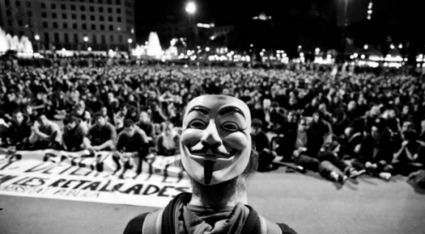
As the struggle intensifies between those who would limit access to information and those who believe the internet should remain entirely unregulated, the cyber war has gone offline: in bedrooms and boardrooms, in the streets, in court, even in prison, hackers, trolls and associated free speech activists are fighting against governments and corporations over the digital world’s greatest resource: data. Esquire went inside the Internet Underground – Anonymous, LulzSec and other groups of pranksters and protesters – to find that as the authorities harden their stance, the hackers are regrouping, wounded but defiant. And the battle has only just started.
|
|
Scooped by
jean lievens
January 22, 2014 1:47 PM
|
Increasingly, it appears that Americans are taking the Internet for granted, and that’s a problem. It’s only January, and we’ve already had a federal appeals court strike down the FCC’s net neutrality rules and President Obama placed into the awkward position of having to explain the nation’s rampant NSA spying on both American citizens and overseas allies. Both of these are significant events that could impact the future of the Internet, but what has been the outcome so far?
|
|
Scooped by
jean lievens
December 16, 2013 2:26 PM
|
In response to fears about diminished privacy, some programmers want to make the Internet more like it used to be.
|
|
Scooped by
jean lievens
November 23, 2013 1:28 AM
|
Despite the air of pessimism surrounding the Web Index 2013 launch in light of the state spying controversies, Berners-Lee remained positive about the many good things that are happening around the globe. According to the report the internet remains vital in catalysing citizen action and real world change. Despite the fact 30 percent of nations engage in targeted web censorship and "moderate to extensive blocking or filtering of politically sensitive content", the web and social media played a big role in "public mobilisation" in 80 percent of nations
|
|
Scooped by
jean lievens
November 14, 2013 1:03 AM
|
WASHINGTON -- WikiLeaks on Wednesday published a critical chapter of an international trade deal the United States is currently negotiating with 11 Pacific nations.
|
|
|
Scooped by
jean lievens
April 10, 2014 5:16 PM
|
This seems to be the week for Internet-related existential anguish. First there was a New York Times op-ed wherein an NYU student by the name of Zachary Fine bemoaned the way pluralism has apparently left the millennial generation in a puddle of indecision and angst, and thenJon Lovett’s piece for The Atlantic about how everyone being nasty to one another on the Internet is undermining free speech. To some extent, these arguments seem to contradict one another, but when you look more closely, they’re both manifestations of the same basic premise: that the diversity of voices and opinions and views on the Internet are undermining our ability to get things done — and, if this is correct, then the question is whether the benefits of this diversity outweigh the detriments. I submit that they do. But let’s look at both arguments.
|
|
Scooped by
jean lievens
March 27, 2014 5:03 PM
|
|
|
Scooped by
jean lievens
March 15, 2014 2:51 PM
|
Reporters Without Borders (RSF) released its annual “Enemies of the Internet” index this week — a ranking first launched in 2006 intended to track countries that repress online speech, intimidate and arrest bloggers, and conduct surveillance of their citizens. Some countries have been mainstays on the annual index, while others have been able to work their way off the list. Two countries particularly deserving of praise in this area are Tunisia and Myanmar (Burma), both of which have stopped censoring the internet in recent years and are headed in the right direction toward internet freedom.
|
|
Scooped by
jean lievens
March 13, 2014 3:49 PM
|
March 12 was not the day most people would have designated as the 25th anniversary of the World Wide Web because 25 years ago they hadn't heard of it. In fact, it didn't actually exist. In 1989, it was simply the day when a CERN software engineer, Tim Berners-Lee (now Sir Tim), "filed the proposal for what was to become the World Wide Web". As he notes on the official webat25.org birthday website, "My boss dubbed it ‘vague but exciting’."
|
|
Scooped by
jean lievens
February 18, 2014 3:46 PM
|
A global debate has been raging on the issue of the mechanisms and principles of Internet Governance (IG) ever since the exposé that the United States and the National Security Agency (NSA) were engaged in wide-ranging mass surveillance of international traffic. Brazil is holding a global multistakeholder meeting in April on this issue, while the European Union (EU) has released a communiqué on “Europe’s Role in Shaping the Future of Internet Governance.” The issue boils down to the mechanisms and the role of various stakeholders in this space.
|
|
Scooped by
jean lievens
February 12, 2014 2:51 PM
|
A little over a year ago, open Internet activist Aaron Swartz was found dead in his Brooklyn apartment. Swartz had been facing 35 years in prison and fines of up to $1 million for downloading academic journals from an MIT computer, and he took his life two days after a prosecutor turned down a proposed plea deal that would have kept him out of prison.
|
|
Scooped by
jean lievens
February 2, 2014 6:05 PM
|
This is something every Internet user should be aware of.
|
|
Scooped by
jean lievens
January 23, 2014 10:23 PM
|
An ambitious project has been launched that the developers hope could one day replace the current internet. Bitcloud aims to harness the same methods used to mine Bitcoins, to provide services currently controlled by internet service providers (ISPs) and corporations.
|
|
Scooped by
jean lievens
January 17, 2014 6:17 PM
|
Earlier this year, Martha Lane-Fox, Baroness of Soho, stepped down from her role as Digital Champion for the UK government, but pledged she’d still be playing a part in the debate around the ongoing societal transformation that digital technologies can enable.
|
|
Scooped by
jean lievens
December 5, 2013 6:00 PM
|
Paris, 3 December 2013 — Yesterday the 2014-2019 defense bill passed first reading in the French National Assembly. It marks a strong shift towards total online surveillance. If passed, the bill will not only allow live monitoring of everyone's personal and private data but also do so without judicial oversight, as the surveillance will be enabled through administrative request. The bill also turns permanent measures that were only temporary.
|
|
Scooped by
jean lievens
November 14, 2013 2:09 AM
|
Decade's worth of records is erased, including PM's speech praising internet for making more information available
|
|
Scooped by
jean lievens
September 28, 2013 3:41 AM
|
The existing literature on the recent global wave of social protest ranges from theories that regard new media as ‘game-changers’, to those that stress the centrality of global communication networks or of online/offline articulations in the occupied squares, to those that seek explanations not in new media but in the protracted crisis of financial capitalism. This article proposes an alternative theory of the new protest movements centred on the growing convergence of the global movement for digital freedom with local forms of social unrest.
|