The open-source world has learned to deal with a flood of new, oftentimes divergent, ideas using hosting services like GitHub -- so why can't governments? In this rousing talk Clay Shirky shows how...
Whether you like it or not, virtually all cryptocurrencies launched to date do it on a model closer to the classic "startup" model where founders and early adopters have the potential to become super-rich.
The UK economy has been in difficulty since the 2008 financial crisis. Tough spending decisions have been needed to put it on the path to recovery because of the huge budget deficit left behind by the last irresponsible Labour government, showering its supporters with social benefit spending. Thanks to the coalition holding its nerve amid the clamour against cuts, the economy has finally recovered. True, wages have yet to make up the lost ground, but it is at least a “job-rich” recovery, allowing people to stand on their own feet rather than relying on state handouts.
Article - U.S. Government Slides Toward Sharing Economy and Changing Zeitgeist - By John Hendrie - Boy, that is a title mouthful and very curious. But, the move is right on the horizon, when you start to follow the money, actually the costs.
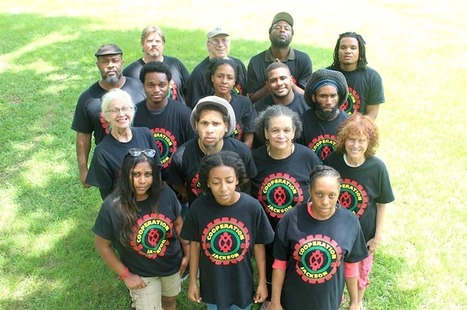
With a median household income of just over $37,000, Mississippi is the poorest state in the United States. A powerhouse organization promoting economic justice, Cooperation Jackson was born of a need to transform the state, in particular its capital and largest city, Jackson.
Stacco Troncoso and his colleagues at Guerrilla Translation in Madrid have completed an English translation of an important statement from Spain, “The Charter for Democracy,” which should be of great interest to small-d democrats throughout the world. He explains that “the group behind the piece, “Movimiento por la Democracia” (Movement for Democracy), is undoubtedly one of the most important evolutions of Spain’s 15-M movement. It clearly targets the political arena without desiring to become a political party itself. Their ‘Charter for Democracy’ is an inspiring, thorough text on what politics should be. It proposes a politics for the people: squarely grounded in environmental realities and social justice, based on the Commons, defended from corporate interests and neoliberal dictates.”
Tech pioneers in the US are advocating a new data-based approach to governance – 'algorithmic regulation'. But where does this leave governments, asks Evgeny Morozov
Our shared belief in equality should ineludibly lead us to a politics of individual, not collective, rights, since as individuals we do not accept on faith the superior wisdom of others.
The words “hacker” and activity of “hacking” have been receiving a great deal of attention over the past few years, in the wake of data breaches, Wikileaks, the Anonymous and LulzSec groups, and now the “Shady Rat” cyberespionage revelations. Given that it’s being reported as the biggest hacking attack ever, the attention is merited.
Whether the home rental website Airbnb is helping or hurting the American economy has come under increasing scrutiny of late, online magazine Slate reported on Friday.
There are many valuable lessons to glean from Code Red_, Steven Brill’s Time Magazine cover story on the rescue of healthcare.gov. For those calling out Silicon Valley for its apparent narcissism,
A small team of 10 people called Etalab recently released a brand new version of Data.gouv.fr, France’s open data platform. Etalab essentially acted like a startup within the French government, utilizing its open data initiative to surreptitiously modernize the state itself.
Creating a fair and environmentally sustainable economy is no easy task, nor does it have a certain outcome. It takes vision, commitment, an understanding of how we got into our current state as well as insight into how to get out of it.
"Cooperative businesses have lower failure rates than traditional corporations and small businesses, after the first year of startup, and after 5 years in business. About 10% of cooperatives fail after the first year while 60-80% of traditional businesses fail after the first year. After 5 years, 90% of cooperatives are still in business, while only 3 - 5% of traditional businesses are still operating after 5 years."
Governments all over the planet are scared shirtless of Bitcoin because it interferes with their ability to watch us from the cradle to the grave. But who said that they have the right to watch us in the first place?
Inequality and poverty are suddenly hot topics, not only in the United States but also across the globe. Since the early 1980s, there has been a growing underclass in America. At the same time a much smaller class, now called the superrich, built its wealth to levels of opulence not seen since France’s Louis XVI. Despite this, the resulting inequality went mostly unnoticed. When the Great Recession of 2008 hit, and the division between the very wealthy and the rest of us came starkly into focus, various people and groups, including the Occupy movement, began insisting more publicly that we tax wealth. But still, helping the poor has been mostly a discussion on the fringes. At last, the terms of public debate have changed, because inequality and poverty now are debated regularly in the mainstream media and across the political spectrum, not solely by labor, by the left, and by others imagining a new economy.
Citizen science is an increasingly popular way for ordinary citizens to engage with science across a variety of subject areas and mediums. A combined, cross-sector approach is necessary and the results can be more citizens engaged in the critical science policies that impact our society.
FLOK stands for “Free, Libre, Open Knowledge,” and the FLOK Society is a government-sponsored project to imagine how Ecuador might make a strategic transition to a workable post-capitalist knowledge economy.
For a quarter century a handful of governance reformers have been advocating the creation of an Open Source Agency (OSA). Originally intended to focus on providing decision-support to the entire government while raising global access to open sources of information in all languages for academia, civil society, and commerce, this initiative finally made it on to pages 23 and 413 of the 9/11 Commission Report. This initiative has also been approved twice by the Office of Management and Budget (OMB), provided that you, the President, or a Cabinet Secretary ask for it.
Heather Marsh is a human rights and internet activist, programmer, political theorist, and former Editor in Chief at Wikileaks Central, and the author of Binding Chaos, a compelling blueprint for 21st century governance. An excerpt:
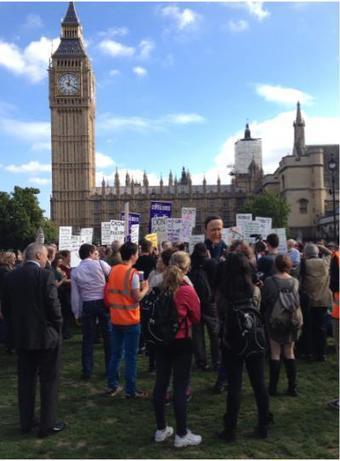
A cursory glance at the comment section of the UK's leading newspapers suggests that democratic engagement is at an all time low; we are generation apathetic. In their annual health check, the Audit of Political Engagement, the Hansard Society paint a bleak picture of participation trends in Britain. Only 41% of those surveyed are committed to voting in the next General Election. Moreover, less than 1% of the population is a member of a political party. However, 38 Degrees, the political activist movement, bucks these downward trends. In the four years since their foundation in 2009, 38 Degrees have amassed a membership of 1.8 million individuals—more than three times the entire combined memberships of all of Britain’s political parties.
To get content containing either thought or leadership enter:
To get content containing both thought and leadership enter:
To get content containing the expression thought leadership enter:
You can enter several keywords and you can refine them whenever you want. Our suggestion engine uses more signals but entering a few keywords here will rapidly give you great content to curate.


 Your new post is loading...
 Scoop.it!