This (would give) a new meaning to the word “encyclical”; it would be not just a circular letter from the Holy Father, but the result of a shared effort by the church as a whole. The church would more truly be speaking “from the people.” … Leaks can be a feature, not a bug. Excerpted …
This looks like a project well worth supporting: We are crowdfunding to connect communities, entrepreneurs & makers with the world’s most powerful energy source, by releasing free construction methods and guides. Free the Sun! The energy from the sun is free, with free construction guides to build high-powered solar concentrators, anyone, anywhere could tap into …
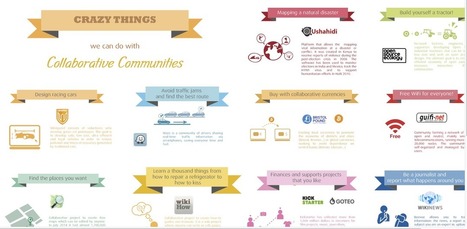
The last in the series of free posters about Commons-Based Peer Production produced by P2Pvalue & designed by Laura Recio shows some of the crazy things we can do with collaborative communities.
Could new free systems, thought of as alternatives to Facebook and Twitter, and with a distributed structure, create a different logic and dynamic from these born on centralized services?
“People centered” means that control of infrastructure, access, distribution, resources, and co-governance are now on the scale of the individual person. When an individual person with this empowerment reaches their individual carrying capacity to operate, they will tend to reach out to others who are operating like them, and a connection-based network will emerge. Economic development here targets individuals operating as self-employed independents who network together. Independents, small businesses, community groups, working together, with government, higher education, and larger business are the new economic driver. The more control people have an on individual scale of infrastructure, access, distribution, resources, and governance, *and* the more connectivity there is between those people, the that more growth happens in “people centered economic development”.
When control of infrastructure, access, distribution, resources, and co-governance are now on the scale of the individual person, a new way of coopertive co-managing of existing resources, and surpluses of production tends to emerge. That new way of co-managing is known as “Resource Sharing”."
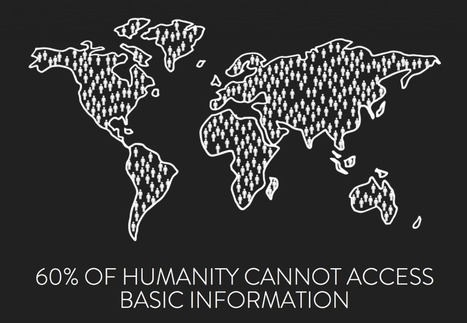
About two thirds of humanity or more than 4 billion people do not have access to the internet. Outernet www.outernet.is has plans to provide those people (and the rest of us as well) with a continuously updated internet library, the content of which can be viewed off line, which means it also works even where there is no internet connection.
Over 100 participants and industry leaders explore issues related to producing and distributing open access content across multiple public broadcasting platforms.The WGBH Educational Foundation, with support from the William and Flora Hewlett Foundation and the Corporation for Public Broadcasting, hosts a conference on Open Content and Public Broadcasting. Listen in as over 100 participants come together with industry leaders to explore issues related to producing and distributing open access content across multiple public broadcasting platforms.
We recently featured Open State cc as a “Project of the Day” on the P2P blog. I first heard about it while watching Dominik Wind’s excellent presentation at this year’s Ouishare Fest. As I expressed in that earlier post, “In talking with others afterwards, we agreed that it had been amongst the most powerful. While other sharing initiatives mentioned environmental conservation as a “positive element” of the mutualization of resources, there was precious little specific talk about restoration or active environmental engagement. Dominic’s talk particularly hit home within this context, as he presented it from a very intimate, familiar standpoint.”
Developing a new Law for the Commons is obviously a significant challenge that is more of an open-ended, long-term adventure than a short, bounded project.
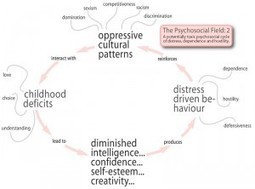
The Psychosocial Field The core elements of the psyCommons proposal are rapport, the quality of felt contact with others, chat, and learning from experience. This inevitably tentative handle on the human condition accounts reasonably well for our capacity to survive, recover and even flourish as a persons. And yet… And yet… rapport can dry up, …
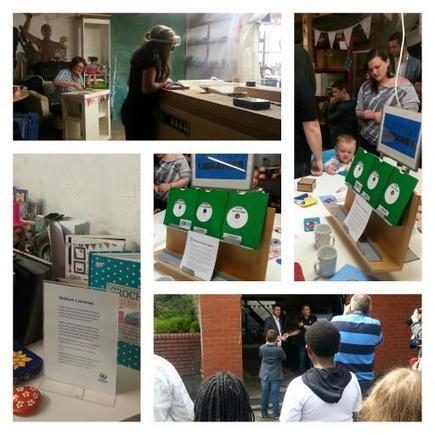
The Common Libraries initiative was established to ‘prototype the library of the future – today’ – to explore, develop and test new ways of working with library users, to support innovation and the evolution of library services, and expand our knowledge or information commons. Accordingly, we conducted a ‘National Library Science Experiment’ and supported x5 ‘Hack the Library’ days to better understand the potential for Common Libraries to enhance the appeal, resilience and sustainability of libraries in future, before presenting our work at two national events for further discussion, with funding from Arts Council England. Today, we’re delighted to publish the findings from our recent activities working with library authorities around the country.
Open Oil is a public domain reference source in textual terms for extractive industries Johnny West writes that: “wWe are working on putting contracts from the world’s oil and mining industries into the commons with the necessary analysis to make them accessible for public debate … We are co-developing a model to factor the effects …
Is it possible to imagine a new sort of synthesis or synergy between the emerging peer production and commons movement on the one hand, and growing, innovative elements of the co-operative and solidarity economy movements on the other?
“Inventing a new global monetary system is – let us concede – unprecedented. But after twenty years of living in networked culture, it’s also safe to say that “the experts” never anticipated crazy ideas like Linux, wikis, social networking, Bittorrent, open design and manufacturing, 3D printing or Bitcoin, let alone that millions of users would adopt such innovations with breathtaking speed. What really needs adjusting is our imagination and courage. “
This text is the result of my intervention in the ‘Hacking the City’ workshop organised by radarq that took place in Seville, Spain, on September 2012. My goal was to think about the concept of Tactical Urbanism and its ability to empower citizens, considering the possibilities offered to us by the digital sphere and new technologies.
To get content containing either thought or leadership enter:
To get content containing both thought and leadership enter:
To get content containing the expression thought leadership enter:
You can enter several keywords and you can refine them whenever you want. Our suggestion engine uses more signals but entering a few keywords here will rapidly give you great content to curate.




 Your new post is loading...
 Scoop.it!