The new economy favors forms of ownership and production that foster democracy and collaboration. You may recall George W. Bush’s blather about an ‘ownership society,’ a greedy scam to privatize Social Security and Medicare. For many years real reformers have been building a real ownership society. A familiar tool is the employee stock ownership plan. (ESOP) Often underestimated, today 11,000 ESOPs now employ nearly 11 million workers. Benefits range from higher job satisfaction and wages to improved productivity and in hard times, fewer layoffs.
Preview for the "Future of Work: How Should We Prepare for the New Economy?" NIF starter video. Order the full-length starter video and the issue guide here: ...
Participatory Economics, or Parecon for short, is an economic system based on democracy, justice and sustainability proposed as an alternative to capitalism
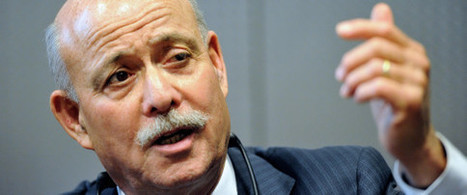
The European: By Lars Mensel and Max Tholl via Huff Post World Post Economist and bestselling author Jeremy Rifkin argues that our grandchildren will pity our working conditions and that a bright future is not a utopian dream but an achievable...
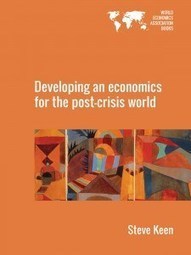
Developing an economics for the post-crisis world Steve Keen Published 2 March 2015 by WEA Books – price: $10 The veracity of mainstream economics has been called into question in the years since the economic crisis began.
The ‘Robin Hood of the Banks’ strikes again. This time the aim is to create a worldwide cooperative to develop and expand a new economy of the commons.
We all sense that power is shifting in the world. We see increasing political protest, a crisis in representation and governance, and upstart businesses upending traditional industries. But the nature of this shift tends to be either wildly romanticized or dangerously underestimated.
As businesses increasingly embrace a not-for-profit culture, an end to overconsumption on a finite planet could finally be in sight. But given the huge lobbying power of vested interests, it will remain impossible to create a truly sustainable world until the illegitimate power of corporations is held in check.
Thanks for showing interest in joining the New Economy Organisers Network (NEON). We want NEON to be a community of campaigners and activists who are clear as to why our network exists, share the same values as others in the network and are interested in working together to build NEON and strengthen the wider movement for an economy based on social and environmental justice.
[MANILA] Faced with rising sea levels and other major challenges, small island developing states (SIDS) are at a crucial turning point and must adopt initiatives that promote a “blue-green economy” strategy.
The new economy has several different names including the sharing economy, the solidarity economy, community resilience, transition, the oppositional economy, and more.
The old political-economic thinking of Karl Polanyi was never properly absorbed into "mainstream" North Atlantic economics: recognizing that land, labor, and finance are not really "commodities" returns institutions and social processes to the center of economic analysis.
To challenge social naturalism, Polanyi argues that labor, land, and money—three of the most important inputs into the production process—are fictitious commodities. Actual commodities are things that are produced for sale on the market. But labor is the work effort of human beings, land is nature that has been carved up into parcels and the supply of money and credit has been for many decades determined by central banks. However, to sustain the social naturalist view of the economy as a self-regulating organism, economists have had to ignore reality and pretend that fictitious commodities are actual commodities.
As Krugman's column suggests, recognizing that these key inputs are not commodities returns institutions and social processes to the center of economic analysis. This focus makes it easier to see the problems in many of the free market claims that derive their power from a naturalistic and unrealistic model of how markets are supposed to work. But just as importantly, this gestalt shift opens up space for new policy ideas because it turns out that progressive reforms do not—like increases in the minimum wage—inevitably produce perverse consequences. There are free lunches out there; we just have to find them.
Given persistent, pressing economic crises, the Obama administration should open an Office of Economic Innovation to consider systemic changes, and involve Marxists and heterodox economists to help visibilize possible solutions growing up alongside capitalism.
Are Uber and Airbnb, new "sharing economy" services that have spent years fighting against regulation, creating a new black economy, or are they a force for good?
Asia Times Online. The Asia News Hub providing the latest news and analysis regarding economics, events and trends in business, economy and politics throughout Asia.
To foster local economic prosperity, livelihoods, and employment, we need to consider how to support existing and emerging industries that do not fit the traditional image of ‘industry’.
What do we do when we share? And how do we support the best of these practices with the design of social and technical systems? We have convened a day of talks and discussion to seek answers.
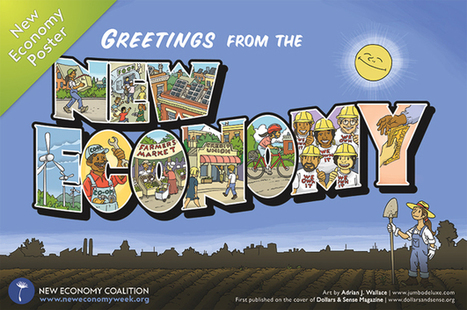
New Economy Week is an opportunity to explore what it would take to build the economy we need, one that works for people, place, and planet. From October 13-19, 2014, we invite you to join us for online and in-person events that highlight successes, ask tough questions, and give life to the claim that another world is possible.
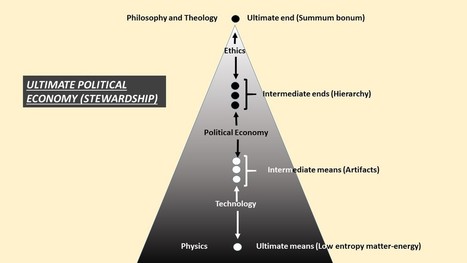
Causation is both bottom-up and top-down: material cause from the bottom, and final cause from the top, as Aristotle might say. Economics, or as I prefer, “political economy,” is in between, and serves to balance desirability (the lure of right purpose) with possibility (the constraints of finitude). We need an economics fit for purpose in a finite and entropic world.
A movement is emerging in many places, under many guises: New Economy (or Economies), Regenerative Economy, Solidarity Economy, Next Economy, Caring Economy, Sharing Economy, Thriving Resilience, Community Resilience, Community Economics, Oppositional Economy, High Road Economy, and other names. It’s a movement to replace the default economy of excess, control, and exploitation with a new economy based on respecting biophysical constraints, preferring decentralization, and supporting mutuality. This movement is a sign of the growing recognition that what often are seen as separate movements—environment, social justice, labor, democracy, indigenous rights—are all deeply interconnected, particularly in the way that the current economic system is a root cause of much that they seek to change.
To get content containing either thought or leadership enter:
To get content containing both thought and leadership enter:
To get content containing the expression thought leadership enter:
You can enter several keywords and you can refine them whenever you want. Our suggestion engine uses more signals but entering a few keywords here will rapidly give you great content to curate.


 Your new post is loading...