Recently, the “I* Group” [1] was invited to participate in the NETmundial Initiative, which is different from the one-time NETmundial meeting in which we participated in April 2014; we endorsed the outcomes of that meeting. This new and different NETmundial Initiative has been organized by the partnership of the Brazilian Internet Steering Committee, the Internet Corporation for Assigned Names and Numbers (ICANN), and the World Economic Forum (WEF) [2]. This announcement has resulted in considerable discussion and concern amongst various stakeholders regarding the purpose, scope, and nature of the proposed activity or organization.
October 08, 2014, 7:20 PM — Overly broad U.S. government surveillance is breaking down trust on the Internet in ways that could hurt users everywhere and make it harder to launch new kinds of services, tech executives told a U.S. senator pushing for reforms.
Happy internet slowdown day! Here are some apropos practical ethics questions for all to discuss as we sit patiently, waiting for the internet to load. What kind of internet ought we to have? Should sovereign nations decide for themselves what kind of internet they will have, or is this an international issue, requiring cooperation between nations? What do particular internet companies owe their competitors, and more vaguely, the internet? What right does an individual or social entity have to know about or to police the storage and usage of data about that individual or social entity? What right does an individual or corporation have to access data or restrict access to data at certain speeds?
The Internet has become a vitally important social infrastructure that profoundly impacts our societies. We are all citizens of an Internet-mediated world whether as the minority who uses it or the majority who does not. In this, our world, the Internet must advance human rights and social justice. Internet governance must be truly democratic.
The next four months are going to determine the future of the Internet. Will it remain free and open with equal access to all? There are powerful corporate interests that want to profit even more than they already do from the Internet at the expense of the public interest. But as a result of the public’s work this week, we now have an opportunity to create the Internet we want.
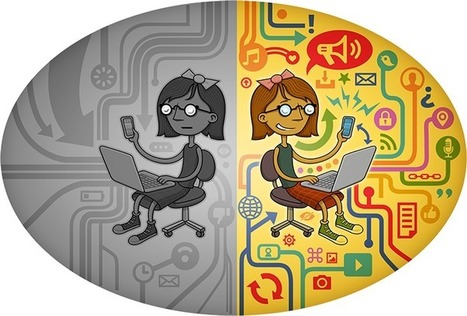
Abstract: This is an article about social-technological development, the rise of certain concepts of controlling peoples digital identities and the data linked to them, and about freedom and self-determination.
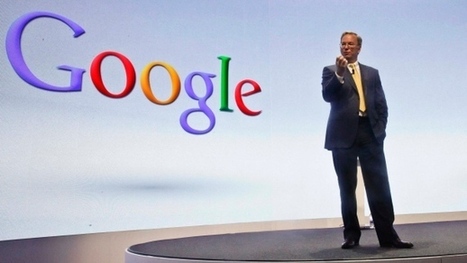
Recall those fabled frogs happy in the magic pond. Playful. Distracted. The water temperature slowly rises, but the frogs don’t notice. By the time it reaches the boiling point, it’s too late to leap to safety. We are as frogs in the digital waters, and Springer CEO Mathias Dopfner has just become our frog town crier. Mr. Dopfner’s „Why We Fear Google“ ( a response to Google Executive Chairman Eric Schmidt’s open letter, „A Chance for Growth“) warns of danger on the move: „The temperatures are rising fast.” If his cry of alarm scares you, that’s good. Why?
We are joined by author and activist Astra Taylor, whose new book, "The People’s Platform: Taking Back Power and Culture in the Digital Age," argues net neutrality is just the beginning of ensuring equal access and representation online. "The utopian potential of the net is real," Taylor notes. "The problem is the underlying economic conditions haven’t changed. The same old business imperatives, the same old incentives that shaped the old model and made it so problematic are still with us. The Internet might have disrupted investigative journalism, but it didn’t disrupt advertising."
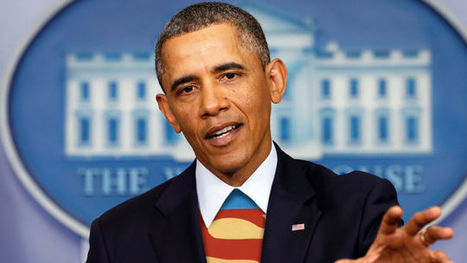
Good news, America. Our president, Barack Obama, is finally standing up for the internet, and asking the FCC to classify it as a public utility. In other words, he's asking the agency not to allow destructive things like fast lanes (a.k.a.
Italy lags behind most of its neighbors in respect to digital infrastructure and culture, Internet access and usage, e-commerce and e-government indicators. But when it comes to the drafting of an Internet Bill of Rights, it stands among the leaders, not the followers. Today marks the first day Italy will open the bill for open consultation via the Civici platform, the first of its kind in Europe.
The Obama administration's calamitous policy of abandoning U.S. control of Internet domain names is being handled by none other than his controversial Chicago crony, Penny Pritzker.Pritzker, the Hyatt billionaire and subprime mortgage lender who withdrew her name from consideration for Secretary of Commerce in 2008 only to be confirmed in 2012, was also a major Obama donor and bundler during his presidential campaigns.
What can be done to reign in this process of personal data commoditisation, invasive surveillance and control of the Internet? The first place to start is with finding an alternative business model to advertising; a model that doesn’t necessitate the wholesale invasion of users’ privacy. Legal means could be adopted to hand control over personal data back to individuals, instead of corporations, as was the case with DNA patenting over the past decade. More accountability and oversight is needed over which organisations (government and private) can collect private data and stored and the conditions under which these data can be accessed (and by whom). Finally, we should treat the Internet as a public good, subject to the ‘tragedy of the commons’, and put in place a regulatory framework that guarantees an open, public and equal-access platform.
Right now the FCC is considering a set of rules that would allow Internet providers to offer faster access to some websites that can afford to pay. We need to stop them.
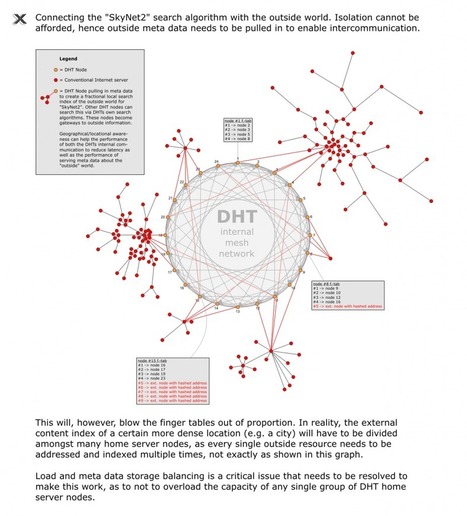
"You end up with a network that is much harder to disrupt," said Stanislav Shalunov, co-founder of Open Garden, a startup that develops peer-to-peer and mesh networking apps.
The Internet is no longer just a “virtual” public square—it’s the actual one. We debate critical issues online. We launch social movements with tweets. Independent media sites and citizen journalists have outposts in every part of the Web. Stories break all the time, from a range of sources. Advocacy groups collect data and blast information to their activists. Social media provides news scoops ahead of press releases.
Russia has taken another major step toward restricting its once freewheeling Internet, as President Vladimir V. Putin quietly signed a new law requiring popular online voices to register with the government, a measure that lawyers, Internet pioneers and political activists said May 6 would give the government a much wider ability to track who said what online.
Scores of communities worldwide have been building these roll-your-own networks—often because a mesh can also be used as a cheap way to access the regular internet. But along the way people are discovering an intriguing upside: Their new digital spaces are autonomous and relatively safe from outside meddling.
To get content containing either thought or leadership enter:
To get content containing both thought and leadership enter:
To get content containing the expression thought leadership enter:
You can enter several keywords and you can refine them whenever you want. Our suggestion engine uses more signals but entering a few keywords here will rapidly give you great content to curate.



 Your new post is loading...
 Scoop.it!