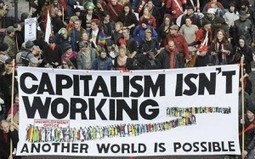
I've given up on fixing the economy. The economy is not broken. It's simply unjust. There's a difference. We have to stop looking at our economy as a broken system, but one that is working absolutely true to its original design. It's time to be pro
In 1989, as the Berlin Wall fell alongside communism in Eastern Europe, pundits in the West proclaimed the triumph of capitalism. The American historian Francis Fukuyamaeven declared “the end of history,” writing in National Interest‘s summer 1989 issue that he saw “the universalization of Western liberal democracy as the final form of human government.”
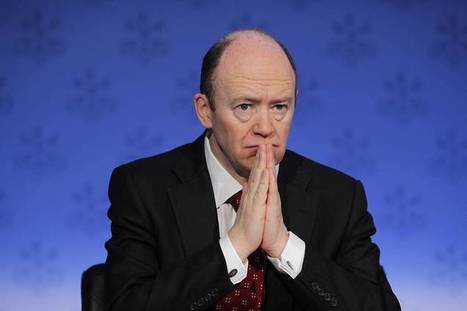
Deutsche Bank announced plans to eliminate 35,000 jobs from its payroll over the next two years as part of a sweeping overhaul under new co-Chief Executive John Cryan.
When even Deutsche Bank is cutting 35% of its staff, something big is happening. : It implies the system itself has reached its limits, and no further growth is possible within the current paradigm. Interest rates are already approximately zero and "Quantitative Easing" has pumped vast amounts of new money into the economy. But it plainly isn't working because even Deutsche Bank is making massive losses... : When this happens it is no longer good enough to say "65,000 of you will continue to have well paid jobs, 35,000 of you will have zero." Because tomorrow the statement will be "50,000 of you will continue to have well paid jobs and 50,000 will have zero." And then 40,000, 30,000, 20, 10. The system itself is broken, and we can't make everybody redundant. We have to build a new system. : We need to build a new system where "Nobody gets everything until everybody gets something." Or "Nobody gets a Porsche until everybody has a bicycle." : When the system itself has reached its limits, a new system has to emerge: one that rebuilds from the ground up and becomes more stable over time, not less; one that starts from a wide and firm foundation.
This week I had the great pleasure to be one of the hosts of a wonderfully energetic and creative two-day summit on the new economy in Bristol, asking what the future could look like for money, business, ownership, cities and much more.
Labour's new Shadow Chancellor John McDonnell speaks to Jon Snow about Jeremy Corbyn, the IRA and capitalism. Subscribe for more like this, every day: http:/...
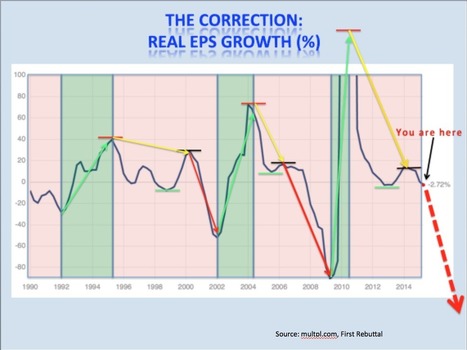
Soc Gen's global head of research, Patrick Legland, has gone on record, according to a MarketWatch article yesterday as saying that the selloff in developed equity markets has gone too far, and he ...
To followers of Ayn Rand and Ronald Reagan, and to all the business people who despise government, 'community' is a form of 'communism.' Even taking the train is too communal for them. Americans have been led to believe that only individuals matter, that every person should fend for him/herself, that "winner-take-all" is the ultimate goal, and that the winners have no responsibility to others.
The left “needs to abandon its mythology of the ‘liberation of the productive forces’”, Ned argues. “Instead of that narrative of progress, we need to realise that industrialism is a 200-year-old bubble that is beginning to burst.”
In the wake of the financial crisis and with the rapid rise of new technologies, award-winning economist and journalist, Paul Mason, believes we are on the cusp ...
#IsItCapitalism #NewEconomyWeek FEATURING: Gar Alperovitz (Next System Project) Sohnie Black (Fund for Democratic Communities) John Fullerton (Capital Instit...
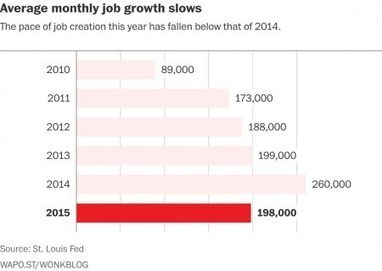
Back last summer, there was growing concern that the world economy, already making the weakest recovery from the deepest slump in production and investment since 1945, was slowing down. Indeed, it ...
June 20 (Bloomberg) -- The fundamental law of capitalism is that if workers have no money, businesses have no customers. That’s why the extreme, and widening, wealth gap in our economy presents not just a moral challenge, but an economic one, too. In a capitalist system, rising inequality creates a death spiral of falling demand that ultimately takes everyone down.
Former Secretary of State for Health Stephen Dorrell, Nobel Prize-winning economist Paul Krugman and Marxist political theorist Alex Callinicos reimagine capitalism and the current economic system.
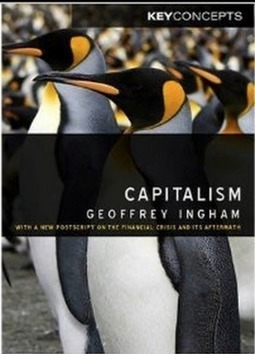
The Power to Create Money out of Thin Air is a review of Geoffrey Ingham’s book, Capitalism (Polity Press, first published 2008). However, like all the best reviews, it has become a hook on which to hang discussion of the author’s contemporary pet themes. Here, these include primarily, capitalism’s ‘elastic production of money’. However, Pettifor also takes the opportunity to explain why misunderstanding about the creation of money is so widespread, and why orthodox economists are mainly responsible for the confusion.
The writing is on the wall: the robots will take our jobs. Martin Ford, author of Rise of the Robots, explains the implications for the capitalist system.
Capitalism is driving itself out of business as the marginal cost to produce just about everything inches closer to zero, Jeremy Rifkin's new book, "The Zero Marginal Cost Society," proposes.
To get content containing either thought or leadership enter:
To get content containing both thought and leadership enter:
To get content containing the expression thought leadership enter:
You can enter several keywords and you can refine them whenever you want. Our suggestion engine uses more signals but entering a few keywords here will rapidly give you great content to curate.



 Your new post is loading...
 Scoop.it!