In addition to our efforts in the P2P Lab and to our collaborators and partners (for example the DLN network or the Athens-basedhackerspace), the TEPSIE report (see the full citation and more info about it at the end) contains some more initiatives with the aim to build alternatives for the Greek society:
Rachel Falconer writes about the cyberfeminist art collective subRosa,a group using science, technology, and social activism to explore and critique the political traction of information and bio technologies on women’s bodies, lives and work.
There is now a choice; never has it been more clear that we stand at a turning point in history, between the ongoing disaster of holding, and guarding, private wealth, and on the other hand openness, sharing, a public world in which the condition of individual advancement is the advancement of humanity - and the condition of the survival of humanity is the advancement of every human and harmony with the natural world.
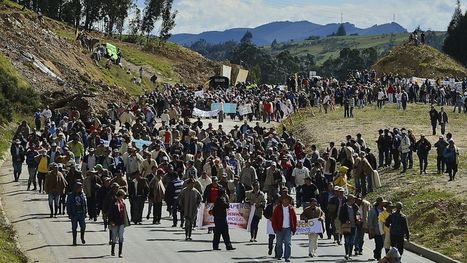
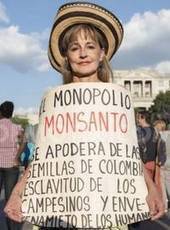
Due to lack of media coverage in the United States, many are unaware that the massive farmer strikes which paralyzed Colombia last month actually stem from a controversial free trade agreement with Washington.
Does a sense of playfulness underpin the modern world? From information sharing to social activism to business training, the dynamics of play are increasingly important in our rapidly evolving world.
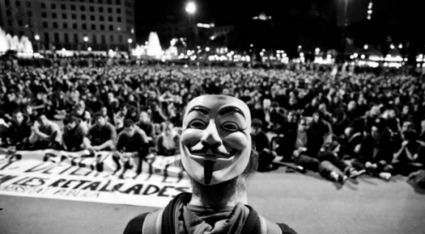
The existing literature on the recent global wave of social protest ranges from theories that regard new media as ‘game-changers’, to those that stress the centrality of global communication networks or of online/offline articulations in the occupied squares, to those that seek explanations not in new media but in the protracted crisis of financial capitalism. This article proposes an alternative theory of the new protest movements centred on the growing convergence of the global movement for digital freedom with local forms of social unrest.
As governments in economic difficulties increasingly turn to environmentally damaging extraction industries for quick cash, citizens of those countries are responding with increasingly louder cries of protest.
Two years ago, we launched October2011.org with “History is Knocking.” We asked if the time might be right for a larger mass of people to rise up against the corporate control of our government and US imperialist policies. We were not certain what the answer would be, but six months later hundreds of thousands of you did rise up in Occupy Encampments across the nation. Many more were inspired to join the work on a broad variety of injustices in their communities.
Activism at this level draws more people into fighting for the environment because they can see the consequences in their own lives—and they will then make connections to what's happening elsewhere around the world.
Watch: Through the eyes of residents, local activists and civil society members, 'City Forgotten' tells the story of Malegaon’s fall from what was once the 'Manchester of India', to a town blighted by communal violence and in serious decline. (15 mins)
The Hungarian sociologist Peter Pal, describing what is happening in Brazil, helps us to understand what these networked revolts have in common. Although there may not yet be categories to describe this new type of movement, these uprisings are all “more insurgent, more movement than party, more flow than discipline, more impulse than purpose – with an uncommon power to bring people together”.
“Traditional historical narratives imply that change comes from the top down, as a result of the actions of about Kings and presidents. But focusing on the characters and personal circumstances of such leaders simplifies the larger forces always at work. We all know that Henry VIII needed a divorce when he founded the Church of England, but at the time time all northern Europe was stepping out from under the wing of the Pope, achieving a measure of independence and of course taking ownership of all the church’s assets. And when that decision was taken at that high level, were all the protestant agitators and martyrs vindicated? Or if the decision was taken in the King’s bed, perhaps their efforts were irrelevant?
The ‘architecture of participation’ in the digital era has opened up the possibility of being a public intellectual to a much wider range of both traditional academics and non-academics alike. Being a public intellectual today relies in a fundamental way on the idea of open knowledge production, an idea that encompasses open software, open access journals, and open data.
Paul Hawken, environmentalist and entrepreneur, believes that the real question of our time is not how social and environmental movements are connected, but rather how they became separated.
A video featuring Paul Hawken, talking about the interconnection of people and the environment. Separation of people and the environment, he proposes, was born out of the will of the privileged. It relates to TimeBanking and other social movements through highlighting the importance of contributing to social benefit and environmental improvement.
It's been said that history repeats itself. If this is true, the best way to understand how to solve tomorrow's challenges is to reflect on history and apply the learnings to today's technology. In this video, Causes, the world's largest online campaigning platform, looks back on the fundamentals and timeless principles of grassroots organizing as inspiration for its new product vision.
The Occupy Movement recently celebrated its second anniversary with very little fanfare leaving many to wonder where all the activists went. It seems they, and many anti-establishment activists, are vacating the system rather than occupying it.
Posted by Activist Post at 8:19 PM Labels: Activism, barter systems, black markets,Economy, Eric Blair, sharing economy, underground Economy, video, virtual black markets
The Occupy Movement recently celebrated its second anniversary with very little fanfare leaving many to wonder where all the activists went. It seems they, and many anti-establishment activists, are vacating the system rather than occupying it.
The richest 400 Americans now own more wealth than the bottom 180 million taken together. The political system is in deadlock. Social and economic pain continue to grow. Environmental devastation and global warming present growing challenges. Is there any path toward a more democratic, equal and ecologically sustainable society? What can one person do?
The Internet provides more opportunity than ever before for people to get involved in making the world a better place. It should be - I'm confident it will be - the greatest campaign organizing tool ever created. Yet for many, online engagement in political and social issues has been an infrequent and shallow experience.
“GLOBALISATION” has become the buzzword of the last two decades. The sudden increase in the exchange of knowledge, trade and capital around the world, driven by technological innovation, from the internet to shipping containers, thrust the term into the limelight.
On Sept. 10 in Colombia, after 21 days of a nationwide strike by thousands of farmers, who were supported by bus and truck drivers, miners, students, and others joining massive demonstrations in cities and towns all around the country in places as far as Boyacá, Cundinamarca, Cauca, Huila, Putumayo, Caldas, Cundinamarca, and Nariño, and blocking more than 40 roads, in an historic moment, protesting farmers forced the Colombian government to negotiate the rejection of a farm bill and the release of detained protesters.
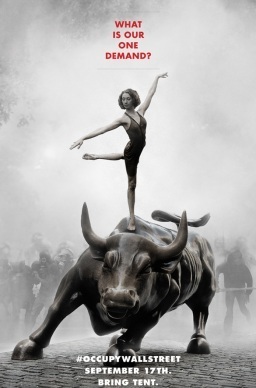
Today, September 17, marks the second anniversary of the Occupy movement. When that movement is mentioned at all in Washington, which is rarely, the tone is dismissive. It didn’t have coherent goals, someone may say. The movement needed an electoral strategy, someone else will add. No wonder it didn’t last.
“We live within networks because we’ve evolved within networks. Regardless of whether you’re connected to the Internet or not, the culture you live in is connected to the Internet, as a fish is connected to water.” Is trying to achieve change over the Internet any use? What's the chasm that separates it from the RealWorld™
Tagged with 15M, Clicktivism, Commons, Copyleft Culture, Indignados, Lawrence of Arabia,Marshall McLuhan, P2P, Spanish Revolution, Technopolitics, Twitter, World War III
To get content containing either thought or leadership enter:
To get content containing both thought and leadership enter:
To get content containing the expression thought leadership enter:
You can enter several keywords and you can refine them whenever you want. Our suggestion engine uses more signals but entering a few keywords here will rapidly give you great content to curate.


 Your new post is loading...