Unless technologies are explicitly designed to reduce inequality, they wind up exacerbating it. Reflections on Yochai Benkler's closing remarks at Ouishare.

Peer2Politics
149.9K views |
+1 today
on peer-to-peer dynamics in politics, the economy and organizations
Curated by
jean lievens
 Your new post is loading...
 Scoop.it! 
How can organisations draw upon traditional models of co-operativism and ownership for the 21st century?

Scoop.it!
The mainstream of the free market libertarian movement in Latin America identifies with the old right-wing elites who have backed military coups.
Scoop.it!

Africa should turn to high-skill manufacturing to aid sustainable growth, writes Hailemichael Teshome Demissie.
Scoop.it!
Leaving the EU could deliver some gains for green businesses, but they are far outweighed by the potential losses and certain disruption,Politics,Policy,Investment ,European Commission,European Union,Conservative Party,Climate Change Act...
Scoop.it!

← Older revision
Revision as of 01:51, 18 June 2016 Line 36: Line 36: * The [http://concernedcitizens.co.nz/ Concerned Citizens Trust] is using Loomio to collectively approve exhibition proposals at their Open-Source Community Gallery.
Scoop.it!
CICOPA is co-organizing this meeting together with NRECA, an organization that represents around 1.000 cooperatives in the USA and Canada providing and/or distributing energy, and with 13 internationally-renowned speakers.
Scoop.it!
Michel Bauwens (Madison, Wisconsin), June 12, 2016: Part One – Analyzing the global situation One of the best books I have read in the last ten years is undoubtedly, The Structure of World History, by Kojin Karatini.
Scoop.it!

Our New Website is Live! We brought together everything we’ve learned about communicating the value of Loomio in a simple compelling way, and combined it with visually engaging illustrations.
Scoop.it!
LET'S WORK TOGETHER ON MAKING BETTER CITIES! https://en.goteo.org/project/civic-practices Crowdfunding campaign for the publication of a book about civi
Scoop.it!

Businesses urgently need innovative people, so we must dispel the myth that creativity is something mysterious that cannot be encouraged
|
Scoop.it!
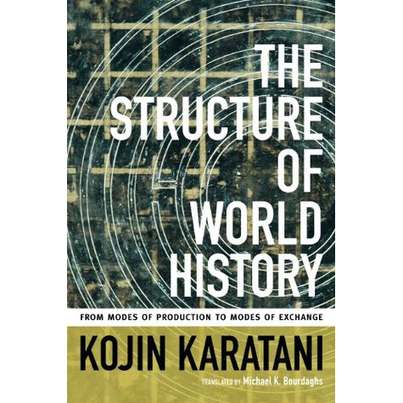
Karatini focuses on world history as an evolution of ‘modes of exchange’, i.e. how humans produce, but most of all, ‘exchange’ value. Like Alan Page Fiske, in ‘Structures of Social Life’, Karatini recognizes four basic ways of doing this, and these modes exist at all times and in all places. For example, while the dominance of capitalism is new, markets have existed since very early times; or, if the dominance of the state was new after the replacement of tribal systems, distribution depending on rank pre-existed its dominance. This insight is very important because it allows us to recognize that any political and economic system is not just one modality, but an integration of modalities. As Dmytri Kleiner says, ‘we live in a multi-modal world’, and ‘if the capitalists won, its because there were capitalists already’.
Scoop.it!
Can the factors creating a slower growth world find open discussion in time to avoid severe social strife and an Age of Stagnation
jean lievens's insight:
COMMONS TRANSITION ECONOMY AND BUSINESS FEATURED PODCAST P2P ECOLOGY P2P SOCIETY AND POLITICScommons tra
Scoop.it!

Uber and Airbnb have to conform to most rules that a traditional business would
Scoop.it!
Small demo project. Import of farmer @Jacob van den Borne awesome data in Unity 3D. Used the HTC Vive SDK to walk on his fields without physically going ...
Scoop.it!

From
qz

Back when humans were first grappling with the impact of a new, global forum for communication, Clay Shirky, a prominent thinker in the digital sphere, made the persuasive argument that the internet made us more creative—even if only in a small way. Indeed, Facebook has arguably made us all writers, since it has become th
Scoop.it!

The MIT Media Lab actively promotes a unique, antidisciplinary culture that goes beyond known boundaries and disciplines and encourages the most unconventional mixing and matching of seemingly disparate research areas.
Scoop.it!
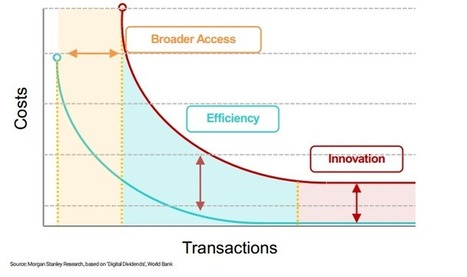
ValueWalk The Sharing Economy Is Only Just Getting Started ValueWalk The rise of the sharing economy has shaken the traditional economy to its core, with companies of all sizes being affected by the decentralised, localised and low-cost sharing...
Scoop.it!
Sociologist Erik Olin Wright explains why a basic income would not be a “disincentive” to work (unlike means-tested anti-poverty programs).
Scoop.it!
Karatini focuses on world history as an evolution of ‘modes of exchange’, i.e. how humans produce, but most of all, ‘exchange’ value. Like Alan Page Fiske, in ‘Structures of Social Life’, Karatini recognizes four basic ways of doing this, and these modes exist at all times and in all places. For example, while the dominance of capitalism is new, markets have existed since very early times; or, if the dominance of the state was new after the replacement of tribal systems, distribution depending on rank pre-existed its dominance. This insight is very important because it allows us to recognize that any political and economic system is not just one modality, but an integration of modalities. As Dmytri Kleiner says, ‘we live in a multi-modal world’, and ‘if the capitalists won, its because there were capitalists already’
|