Dozens of housing and homeless activists stormed the Airbnb headquarters at 888 Brannan Street around noon today. A day before San Francisco voters will decide...
compos sui = in control of oneself This blog is all about identity and how we can create a better, more secure and privacy-conscious world through new identity solutions. The identity solutions of ...
The growth of a real sharing economy depends on community. And it follows that building community is greatly helped by access to common space. That's why cities have been hailed as the great bastions of innovation--the more opportunity people have to connect with one another, the more likely for cross-pollination of ideas.
* Article: The Blind Spot: Uncovering the Grammar of the Social Field. Otto Scharmer. From the abstract: “Today, in most social systems, we collectively produce results that no one wants. These results show up in the form of environmental, social, and cultural destruction. The ecological divide (which disconnects self from nature), the social divide (which …
#IsItCapitalism #NewEconomyWeek FEATURING: Gar Alperovitz (Next System Project) Sohnie Black (Fund for Democratic Communities) John Fullerton (Capital Instit...
My paper for the Integral Theory Conference is finished! Here are some experts from Stein, Z. (2015). Desperate measures: the global crises of measurement and their meta-theoretical solutions. Paper prepared for the 4th Biannual Integral Theory Conference, Sonoma, CA. July 2015. [pdf] Humanity must find a way beyond measures of total abstraction. While universalistic and scientific approaches to …
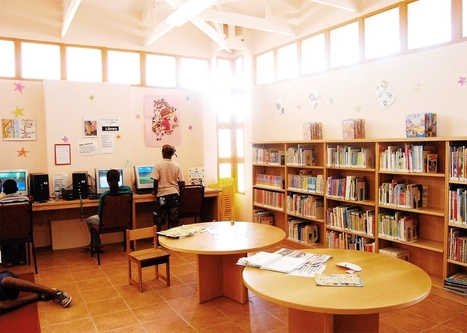
Dumas, a small town in the heart of the Arkansas Delta—where public computers and open Internet access are hard to come by—is home to an ambitious new program to teach digital literacy skills.
This article is part of Future Tense, a collaboration among Arizona State University, New America, and Slate. On Thursday, Nov. 12, Future Tense will host
"New technologies and business models are fundamentally changing the economic landscape across the country, adding value to consumers’ lives and bringing new opportunities for workers. These changes are also raising questions about the changing nature of work in America for businesses, workers, labor organizations, governments, and consumers alike. As our country has at prior moments of workplace change, we must find a path forward that encourages innovation, embraces new models, creates certainty for workers, business, and government and ensures that workers and their families can lead sustainable lives and realize their dreams. Work today takes many forms. Many people move from one employer to another, work outside of a traditional full-time employment relationship (often as part-time workers, independent contractors, freelancers or self-employed workers) and earn income from multiple sources. By some estimates, as many as 53 million Americans are now self-employed. Yet our understanding of the relationship between businesses and workers — and the benefits and protections that evolved to support this relationship — have not kept pace with the rapid changes in the economy. New business models and technological innovations are providing a fresh opportunity to look at longstanding questions related to flexible and temporary work and the types of benefits and responsibilities workers and companies should expect.
This paper drafts a proposal to architect a strength-based systemic global P2P organization aimed at helping humanity become the best it can be in fair, sustainable and free ways.
Since its first edition in 2013, OuiShare Fest has been a participatory event, co-created by its attendees. With OuiShare Fest Barcelona taking place in Spanish 2 weeks, we invite you now to get involved in our next Paris edition to build an amazing Fest 2016, themed After the Gold Rush!
I was delighted to give a key-note talk at the First IASC Thematic Urban Commons Conference last week in Bologna. Here are my speech and the slides. The most beautiful ones were produced by Nikolas...
Commons are a particular type of institutional arrangement for governing the use and disposition of resources. Their salient characteristic, which defines them in contradistinction to property, is that no single person has exclusive control over the use and disposition of any particular resource. Instead, resources governed by commons may be used or disposed of by anyone among some (more or less defined) number of persons, under rules that may range from "anything goes" to quite crisply articulated formal rules that are effectively enforced.
“Data on patterns and infrastructure must be a collective property, managed by the government. Each new player on the market must have a chance to become at least as large as other providers. A decentralized market benefits the user and provides tax revenues that could be collected locally. We look forward to the introduction of …
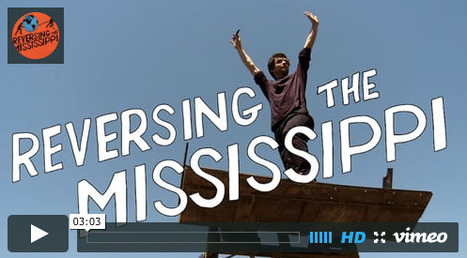
“REVERSING THE MISSISSIPPI is a documentary about a genius technologist and a rebel educator, two pioneers from opposite spectrums with one goal in common: Build a sustainable community. Can two men driven by determination overcome global challenges to change the world?” Watch the trailer here, commentary from Shareable below: Anna Bergren Miller writes: “When filmmaker …
Excerpt from: Stein, Z. (2011). On spiritual teachers and teachings. Journal of Integral Theory and Practice. 6(1), 57-77. [pdf] Religiosity Revisited Sociologically speaking I have not studied any of the new de-institutionalized and de-differentiated forms of religiosity…. maybe not everything on the market is Californian claptrap and neopaganism. – Jürgen Habermas [pictured, speaking with the Pope] There …
It has to be said: the cat pictures might not be enough. The internet definitively sucks sometimes. It’s a willing and fertile host to our most objectionable prejudice, anger and desire; an open marketplace for exploitation, child porn and illicit drugs and weapons. It provides a container for our greed, impatience and emotional evasiveness, and its liberating potential often feels like a false promise buried in a much larger mountain of disconnection, voyeurism and social media-fuelled narciss
For Mason and others networks are a key liberating tool in moving beyond capitalist relations, but networks are not inherently democratising nor free of hierarchy.
To get content containing either thought or leadership enter:
To get content containing both thought and leadership enter:
To get content containing the expression thought leadership enter:
You can enter several keywords and you can refine them whenever you want. Our suggestion engine uses more signals but entering a few keywords here will rapidly give you great content to curate.




 Your new post is loading...
 Scoop.it!