I just returned from Grasse in the south of France, where I took part in curating an experience to reinvent the perfume industry with executive leaders and stakeholders in the supply chain.
Collective intelligence is the idea that a higher level of intelligence can emerge within a group of people than the intelligence of any one member of the group individually. The phenomenon is gaining attention due to advancements in information and communications technology. Group members no longer need to be in the same room. They can be scattered around the world. Despite its recent high media profile, there is ample evidence of collective intelligence in history, and even existing outside of humans.
One Tour’s belief is that collective intelligence can change the world. I think that Delancey Street is striving to build this intelligence from scratch. Criminals who often swore to kill each other -so not particularly thrilled by the collaborative aspect of human relationships- get to learn that it is ok to make mistakes and to ask other co-residents for help.
In his 1937 book, "Think and Grow Rich," author Napoleon Hill identified 13 steps to success, one of which was the power of the mastermind. "No two minds ever come together without thereby creating a third, invisible, intangible force, which may be likened to a third mind," Hill wrote.
Researchers at the Experimental Economics Laboratory in the Universitat Jaume I, coordinated by the lecturer Gerardo Sabater from the Area of Foundations of Economic Analysis, have developed the first Spanish software that leverages the collective intelligence of employees and customers to improve decision-making in the company. The Agora Market platform can implement prediction markets in an enterprise as a tool for improving the efficiency of internal information management and strategic decision-making.
As a result of people connecting during a workshop orroundtable, the collective mind is created. We are aware of this phenomenon known as the “wisdom of crowd.” If people unite, then an additional force emerges and something new that exceeds their capabilities is born between them. Each possesses mediocre intelligence and capabilities and makes mistakes answering questions. However, when they are discussing it all together, listening to others’ opinions and complementing each other, the average response will be correct or very close to the correct one.
The NRC (Nuclear RegulatoryAgency) Probabilistic Risk Assessment gives the precautionary perspective, which is generally a priori, not manifested or empirical. The risk is stated to be at 1:1,000,000 chance of a nuclear accident. At the moment, there are 432reactors in the world. If we do the math, the probability of an accident is one every 2,500 years or the entire history of Western civilization back to the Greeks. Three reactor meltdowns at one time, that would be 1 million cubed giving 18 zeros; a major problem. I would argue that perhaps since it was in one place there may be a problem with the statistics of time and place, but only slight changes to 18 zeros. Prediction is one thing, and empirical is another. The evidence now shows that instead of a nuclear accident every 2,500years we could expect one every seven years, if we look over the past 35 years there have been 5 meltdowns, or one every 7 years. There were meltdowns before that, but this is giving the technology the benefit of the doubt. If we were to say there were five meltdowns over 35 years, that’s bad enough, but if we say there were three meltdowns in one month, or..over a few days at Daiichi, then the picture looks even worse.
This entry was posted on Tuesday, October 22nd, 2013 at 12:01 am and is filed under Collective Intelligence, P2P Energy, P2P Epistemology, P2P Science. You can follow any responses to this entry through the RSS 2.0 feed. You can leave a response, or trackback from your own site.
Adam Ford sits down with Tim van Gelder to talk about Collective Wisdom, Gamification & Hive Minds published on October 15, 2013. Tim van Gelder in interested “Defined narrowly, epistemology is the study of knowledge and justified belief. As the study of knowledge, epistemology is concerned with the following questions: What are the necessary and sufficient conditions of knowledge? What are its sources? What is its structure, and what are its limits?
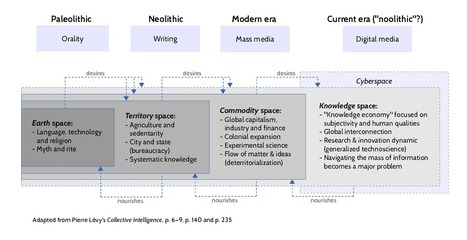
This is a summary and analysis of Pierre Lévy‘s book “Collective Intelligence: mankind’s emerging world in cyberspace”, which provides all direct and indirect quotes in this essay.
“It is a form of universally distributed intelligence, constantly enhanced, coordinated in real time, and resulting in the effective mobilization of skills. I’ll add the following indispensable characteristic to this definition: The basis and goal of collective intelligence is mutual recognition and enrichment of individuals rather than the cult of fetishized or hypostatized communities.”
In his 1937 book, "Think and Grow Rich," author Napoleon Hill identified 13 steps to success, one of which was the power of the mastermind. "No two minds ever come together without thereby creating a third, invisible, intangible force, which may be likened to a third mind," Hill wrote.
Human-centered design processes are obviously important in the work we do, but what's often neglected or left out is some sort of a human evolution in connecting to the intentions of what is desired as an outcome or set of outcomes. One of the themes we explored in this discovery process -- a new economic construct, really -- was conscious capital.
Collective intelligence of the internet is too often sullied by a collective unintelligence, the tendency of people to shoot off unconsidered and ignorant reactions, encouraged by the instant nature of the medium and the cloak of anonymity it gives the user. Public discourse, as witnessed at a literary festival, is a completely different kettle of fish. To start with, experts speak to experts, writers to writers, all of them on a subject they know well, and have worked on for years. The level of conversation and debate, therefore, is at a pretty high level. Interaction with the audience is also well-informed, simply because the people who attend litfests are generally well read, and attend particular sessions because they have a special interest in that subject. The intellectual stimulation that participants and audience derive from a literary festival, not only acts as a spur to further intellectual growth, but it also acts as a catalyst to strike off on diverse and often unplanned intellectual paths.
This is a story about how to run a company, but more specifically, how to run a company that embraces open-source culture--and how the seemingly counter-intuitive principles behind open-source culture seem to be good for GitHub, which is growing quickly, and also apparently just good for its product. And its marketing. And its hiring strategy. And its culture.
What do a computer scientist, a playwright, and a biologist have in common? Collective intelligence, as Radhika Nagpal RI '13 discovered during her fellowship at the Radcliffe Institute. She worked with experimental biologists to develop a better understanding of collective intelligence in social insects through the application of computer science. The professor of computer science at Harvard's School of Engineering and Applied Sciences and a faculty member of the Harvard Wyss Institute of Biologically Inspired Engineering also found a surprising commonality with a playwright and other Radcliffe fellows.
“Historically, the anti-statist tendency in Marxism has been largely carried in a very different ‘worker council’ tradition, that, against the powers of party and state has insisted on the role of workplace assemblies as the loci of decision-making, organization and power. In an essay antediluvian by digital standards, ‘Workers’ Councils and the Economics of a Self-Managed Society,’ written in 1957 but republished in 1972, immediately after the Soviet crushing of Hungary’s Workers Councils, Cornelius Castoriadis noted the frequent failure of this tradition to address the economic problems of a ‘totally self-managed society.’ The question, he wrote, had to be situated ‘firmly in the era of the computer, of the knowledge explosion, of wireless and television, of input-output matrices’, abandoning ‘socialist or anarchist utopias of earlier years’ because ‘the technological infrastructures … are so immeasurably different as to make comparisons rather meaningless’ (Castoriadis, 1972: np).
After years of skepticism about the contribution ordinary people can make to scientific research, the latest thinking is citizen scientists do good science. But can it be trusted?
To get content containing either thought or leadership enter:
To get content containing both thought and leadership enter:
To get content containing the expression thought leadership enter:
You can enter several keywords and you can refine them whenever you want. Our suggestion engine uses more signals but entering a few keywords here will rapidly give you great content to curate.


 Your new post is loading...
 Scoop.it!