One of the abiding debates about the Internet is the extent to which it represents a step change in the way that societies — and economies — will function in the future. What is undeniable is that the Web has sparked a growing number of "free" and "open" movements that challenge current economic models — including the Free and Open Source Software movements, the Open Access Movement, Open Source Journalism, and Creative Commons. Many also believe that the peer-to-peer (P2P) phenomenon has significant implications for the traditional top-down model on which modern societies are based.
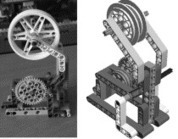
Through the case of the RepRap-based, Lego-built three-dimensional (3D) printing-milling machine, this paper sets out to discuss and illustrate two points: First, on a theoretical level, that modularity, not only in terms of development process but also of hardware components, can catalyze Commons-based peer production’s (CBPP) replication for tangible products enabling social experimentation and learning. Second, the hybrid 3D printing-milling machine demonstrates the digitization of material and the potential of digital fabrication. We show how the synergy of a globally accessible knowledge Commons as well as of the CBPP practices with digital fabrication technologies, which are advancing and becoming more and more accessible, can arguably offer the ability to think globally and produce locally.
"A new system of governance or collaboration that does not follow a competitive hierarchical model will need to employ stigmergy in most of its action based systems. It is neither reasonable nor desirable for individual thought and action to be subjugated to group consensus in matters which do not affect the group, and it is frankly impossible to accomplish complex tasks if every decision must be presented for approval; that is the biggest weakness of the hierarchical model. The incredible success of so many internet projects are the result of stigmergy, not cooperation, and it is stigmergy that will help us build quickly, efficiently and produce results far better than any of us can foresee at the outset."
We produce in the kitchen or in the bathroom. Most people have some fabrication bots at home. The popular 3D printer/mill combines a 3D printer with a computer-controlled milling machine. 3D printers produce three-dimensional objects by printing multiple layers of bioplastics, metal, or ceramic on top of each other, until the desired object is complete. Within several hours, typical home 3D printers can print objects up to 50 by 40 by 30 centimeters large. That’s big enough to print most durable households items, whether crockery, cutlery, games and toys, or tools. Electrical and electronic appliances are made in the same way, except for the actual electric or lighting elements. It’s also common to print replacement parts if something breaks down or doesn’t fit.
In the context of the Ecuadorian transition project towards a open commons-based knowledge society, see Floksociety.org, and to complement the prior analysis of three competing economic models in the age of peer production, I have formulated some transition proposals, on how to get from Phase 2, emerging peer production in the context of the dominance of cognitive and financial capitalism, to Phase 3, a mature peer production economy associated with a ethical economy and a partner state.
This entry was posted on Wednesday, October 9th, 2013 at 2:37 pm and is filed under Commons, Economy and Business, Ethical Economy, P2P Public Policy, P2P Theory,Peer Production. You can follow any responses to this entry through the RSS 2.0 feed. You can leave a response, or trackback from your own site.
This will function as a mini-guide to Peer Production proper, in the more narrow sense, so that this key material is no longer only available through our almost unwieldy section on P2P Business trends in general.
“The goal of this book is to succinctly explain the fundamental problems of society’s current economic system, and to propose an evolutionary solution that consists of 11 new economic concepts. The content will be in text, image, and video form. It offers a unique economic analysis of life as a game to enable easier learning opportunities for readers.”
This is the story of a quest for answers to how a designer can help people create their own products. How we can collaborate globally and produce locally, and how we can make a living while sharing knowledge and designs?
"The International Conference “Innovative, Open and Economically Sustainable Models of Creative Production”, organised by the National Documentation Centre (EKT) on September 30 and October 1 2013, is designed in order to examine and present emerging models of creative production in Greece, as they develop within the wider context of the European tendencies and developments in the field of cultural and creative industries. This international and public event will bring together representatives of contemporary practices, where research and applied innovation, culture and science, creativity and entrepreneurship meet.
Peer Production has published the results of their most recent annual 3D printing survey. The survey probed the use of 3D printers by the public in an effort to understand current state and trends in the personal 3D printing industry.
Agricultural land trust: A legal mechanism that enables private or cooperative organizations to conserve and manage farmland, acknowledging that while the land may be privately held, it is nonetheless a commons upon which future generations depend.
There is a lot of talk about innovation and entrepreneuralism. Most of it tends to focus on "business models". For many, the most difficult part of all this is actually making a sale and generating revenue. When you are offering something new or trying to do things in new ways, generating sales is a complex challenge. Especialy if you are dealing with with immaterial value.
Through the case of the Helix_T wind turbine project, this article sets out to argue two points: first, on a theoretical level, that Commons-based peer production, in conjunction with the emerging technological capabilities of three-dimensional printing, can also produce promising hardware, globally designed and locally produced. Second, the Commons-oriented wind turbine examined here is also meant to practically contribute to the quest for novel solutions to the timely problem of the need for (autonomous) renewable sources of energy, more in the sense of a development process than as a ready-to-apply solution. We demonstrate that it is possible for someone with partial initial knowledge to initiate a similar, complex project based on an interesting idea, and to succeed in implementing it through collaboration with Commons-oriented communities, while using peer-produced products and tools. Given the trends and trajectories both of the current information-based paradigm and the problems of the predominant industrial modes of production with all the collateral damage they entail, this may be considered a positive message indeed.
This research project attempts to examine to what extent the technological capabilities of open source 3D printing could serve as a means of learning and communication. The learning theory of constructionism is used as a theoretical framework in creating an experimental educational scenario focused on 3D design and printing. In this paper, we document our experience and discuss our findings from a three-month project run in two high schools in Ioannina, Greece. 33 students were tasked to collaboratively design and produce, with the aid of an open source 3D printer and a 3D design platform, creative artifacts. Most of these artifacts carry messages in the Braille language. Our next goal, which defined this project's context, is to send the products to blind children inaugurating a novel way of communication and collaboration amongst blind and non-blind students. Our experience, so far, is positive arguing that 3D printing and design can electrify various literacies and creative capacities of children in accordance with the spirit of the interconnected, information-based world.
As human beings we have evolved and continue to enact of a story that has its roots in the agricultural revolution. In this story the world is made for us. We are the pinnacle of evolution. Thus we are entitled to exercise dominion of the resources and creatures of the earth. In short, the idea that the world is made for us is deeply embedded in our psyche. In the last 160 years, the age of fossil fuels, the unparalleled extension of human influence and power by the magic elixir of oil has enabled us to elevate `the truth of our dominion`. We are now the dominant force shaping the face of the planet, the species that ushered in the age of the anthropocene.
“This is the story of a quest for answers to how a designer can help people create their own products. How we can collaborate globally and produce locally, and how we can make a living while sharing knowledge and designs?
This article argues that communism is currently emerging as a new mode of production, namely, peer production (PP), which produces commons instead of commodity. In PP, producers produce commons through voluntary participation in distributed network-based communities of production. Each volunteer chooses the tasks she performs, the amount of time she devotes to the collective production, and the place and time of her productive activity. In terms of distribution, the digital commons are available for free on the net. The rights to relatively scarce commons are still emerging, but they might be relatively restrictive compared with rights to digital commons. Analysing this new mode of production, the article attempts to show why and how it can replace capitalism.
The companies made one fatal error: You can’t truly remedy today’s economic problems by using the same business structures that created the economic problems. Because of their current ownership structure, Airbnb, Lyft, Über, and TaskRabbit could be bought out by ever larger and more centralized companies that won’t necessarily care about the well-being of people using the services, or about the overall abundance of jobs in our economy. There is only one way to ensure that a company will make decisions in the interests of the people it serves: Put those people in control of the company. So let me introduce the T corporation. Most business-savvy people know that there are S corporations (Subchapter S of the Internal Revenue Code) and C corporations (Subchapter C), but almost no one thinks about forming a T corporation (Subchapter T). But T corporations have been around for a long time, and they have a major benefit of not paying tax if 1) they are governed democratically by the shareholders (i.e., everyone gets one vote in the election of the board, regardless of share value) and 2) the earnings of the company are distributed to the shareholders on the basis of how much they patronize (i.e. do business with) the company.
This entry was posted on Saturday, September 28th, 2013 at 11:39 am and is filed under Ethical Economy, P2P Governance, P2P Public Policy, Peer Production, Sharing. You can follow any responses to this entry through the RSS 2.0 feed. You can leave a response, or trackback from your own site.
Peer-to-Peer networks, such as the collaboration of thousands of free producers, have recently emerged as one of the most innovative forces in the traditional business world and in the political world. These free producers, or peer producers as they are also called, work together, unpaid, outside of normal work and business structures to create new designs, learning content, reports, encyclopedias, evaluate patents, and much more.
Peer Production has published the results of their most recent annual 3D printing survey. The survey probed the use of 3D printers by the public in an effort to understand current state and trends in the personal 3D printing industry.
"The word 'commune' arose in the tenth century from the activities of artisans in Italy that created enclosed spaces to defend themselves and their vernacular peer to peer production from the pillaging of the time by overlords. Commune in the middle ages meant 'to wall together' or in other words to create defensive enclosures to protect and enable the emergence of 'fair trade markets'. Then of course there were the three estates, those who fight (nobles), those who pray (clergy) and those who work (serfs). To become free from serfdom, artisanal workers had to build walls to physically protect themselves and indeed peer to peer exchange systems to co-exist and co-develop. They collaborated dynamically to develop equitable markets. To secure the legality to do so, they had to fight to secure town charters.
The Peer Production License (PPL) is an interesting hybrid between a Copyleft license, such as the GPL, and the widely adopted Creative Commons license, such that only other commoners, cooperatives and nonprofits can share and re-use the material, but not commercial entities intent on making profit through the commons without explicit reciprocity.
To get content containing either thought or leadership enter:
To get content containing both thought and leadership enter:
To get content containing the expression thought leadership enter:
You can enter several keywords and you can refine them whenever you want. Our suggestion engine uses more signals but entering a few keywords here will rapidly give you great content to curate.


 Your new post is loading...