SolarCoin is a digital currency rewarding solar energy producers. Launched in January 2014 and inspired from BitCoin and BlockChain Tech whereby transactions are recorded and validated by a peer to peer network of computers, SolarCoin presents the additional advantage of being a tangible virtual currency: in fact, by coupling each MWh of solar electricity produced by a photovoltaic system to the production of a SolarCoin, the virtual world joins our physical world. Put another way, one can also understand that SolarCoin works as Solar-Miles: any solar owner receives SolarCoins for electricity that his photovoltaic installation generates… and it’s free!
Some of you may know I published an opinion piece in the New York Times last month condemning the South Korean government’s move to overhaul history textbooks. I didn’t know but apparently the foreign ministry “lodged a protest against the New York Times” for publishing my piece, according to the Korea Times.
It is quite fitting thatSharitaly, an attempt to “translate” the sharing economy into the Italian context, took place in Milan, a city which has played such an enormous role in the development of workers’ rights in Italy, and is the current business capital of the country.
Reutersreports an impending “crackdown” on Bitcoin in the EU. Other reports suggest France could inhibit Tor and free wi-fi at will. U.S. officials have taken the opportunity to go on the offensive against any form of encryption, with Senator Dianne Feinstein arguingencryption “ought to be able to be pierced.”
“This paper strives to provide a theoretical study for energy production and distribution. We thus examine and discuss the evolution of energy systems technologies and their impact on the global socio-economic structure. We critically analyze the evolution of the energy production infrastructure and then review the renewable and decentralized energy production technologies, while focusing on the concept of microgrids. Ultimately, we propose an alternative model, inspired by the commons- oriented practices, currently observed in the production of information, that utilizes microgrids in order to create a peer-to-peer energy grid and then discuss the conditions necessary for the “energy commons” to emerge.”
“Air is abundant. Competition was an evolutionary requirement for humans based on the fact that there was not enough to go around (scarcity). Thomas Malthus and Charles Darwin believed that this was part of humanities “survival of the fittest”. If humanity had really been behind this theory then doctors, hospitals, medicines and charities would not have been required.
The smart city discourse has become a ‘used future’. It is spouted by consultants and tech advocates, but it does not seem to have much humanity, nor does it include a critical understanding of sustainability and civic engagement.
Adair Turner, Chairman of the Board of the Institute for New Economic Thinking, became Chairman of Britain’s Financial Services Authority just as the world financial crisis erupted in 2008, and he played a leading role in designing a new global regulatory structure. In his new book, Between Debt and the Devil: Money, Credit, and Fixing Global Finance, Turner reveals that out-of-control private debt actually caused the crisis, and he explains what to do about it.
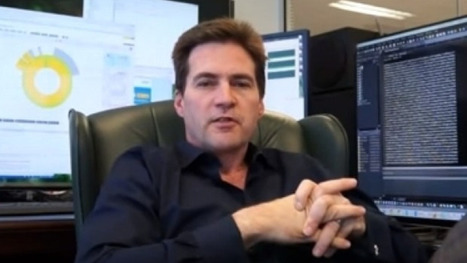
The Bitcoin-sphere has been a-buzz about clumsy revelations that Dr. Craig Wright is Satoshi Nakamoto. I refuse to link to the pieces in mind as these the authors clearly care more about getting clicks than making sure their claims are valid.
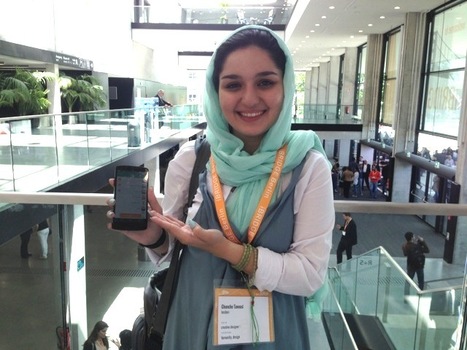
The common myth about women in Iran is that they are seen, but not heard, that they’re not permitted to drive, that they are second-class citizens, and that entrepreneurship and positions of power are out of reach. These notions are wrong. For years, women in Iran have owned and managed businesses, many of them in male dominant industries like oil and gas, construction, mining, and now tech. And now, with such a high number graduating with degrees in science and engineering, there’s a push to get women more involved in Iran’s blossoming startup scene.
While flying cars and (real) hoverboards may not be coming any time soon, there’s a lot of effort and money pooled behind the development of a robust artificial intelligence. That pool just got a lot bigger thanks to a newly formed non-profit backed Tesla and SpaceX founder Elon Musk and other tech luminaries.
While the surge of refugees entering Europe this year has led many state leaders to become more protective of their borders, Germany’s top politicians have handled the situation differently. Humanitarian reasoning aside, Chancellor Angela Merkel and Vice-Chancellor Sigmar Gabriel have framed this influx of people as a chance to combat the “Fachkräftemangel”—Germany’s shortage of skilled labor, which is predicted to rise dramatically due to its aging baby boomer population and high birth deficit.
David Solomonoff, who monitors the intersection between the real and the virtual, cites the article by David Morris (in Aeon magazine) who writes about the Decentralized Autonomous Corporations that operate with minimal human intervention after being put in motion:
“”What an amazing day on Sunday at Mindful Uprising: a pop-up People’s Summit in Melbourne. Thanks Michel Bauwens for presenting your inspirational vision for a p2p commons-based society; Richard and Laurent from Centre for the Future for co-sponsoring and hosting the event with Melbourne Polytechnic; Daryl for bringing the Summit into being; Jose for co-facilitating the Open Space session with me & our Connectors Michelle, Julian, Aidan & Mike. At the end of the day we were proud to announce the formation of the Commons Transition Coalition and now invite our friends in Adelaide (Sharon), Sydney (Declan), Brisbane (Michelle), Canberra (David), NZ (Sam) and others to work with us to develop a charter and plan for 2016.”
Instead of scaling, we’ve seen descaling because individuals need to adopt more jobs, more skills, more crafts just to get by — meaning professionalism is being lost. As well as our day jobs, for example, we are now also being asked to be hoteliers, cab drivers, propagandists, writers, advertisers, administrators, promoters and renters of all our possessions.
When we reflect on how environmental education can be innovated to meet the needs and challenges of today’s world, and if we also consider the role that the arts can play in this, we are well-advised to take a closer look at the groundbreaking work of the great thinker Gregory Bateson. The year 2010 saw the release of a highly interesting documentary on his work, entitled An Ecology of Mind. Completed more than thirty years after his death, filmmaker Nora Bateson (Gregory Bateson’s youngest daughter) directed a compelling hour-long introduction to the world of this thinking. Gregory Bateson was one of the most original thinkers of the late twentieth century. His research covered a vast array of different fields: anthropology, biology, psychology, and philosophy of science. He would often move himself across the boundaries of disciplines, and do so in highly innovative ways. Until now his work has been largely inaccessible to those outside of the academic community. With An Ecology of Mind, this is soon bound to change.
One of the pillars of the dominating troika system in the European Union is the threat that, for any country that leaves the euro system, they will find their substitute currency devalued, thus affecting the savings of the middle classes in those counties. Those middle classes typically being the ones who sway the vote in elections and therefore decide which political parties which are going to govern.
Our farmer-managed seed systems in Africa are being criminalized and displaced by a very aggressive green revolution project of corporate occupation by big multinational companies. This violent agrarian transformation is facing profound objection. African farmer organizations are outraged because decisions have been made and imposed on us in a very patronizing, patriarchal way, as if the agrarian vision and solution has been designed for us.
As the academic year shudders to a close, as teachers and examiners everywhere emerge battered and bug-eyed from beneath slagheaps of assessment papers, I'm struck once again by how a dowdy education system hides its flaws inside larded layers of snobbery and obscurantism.
Nobody knows, and in the style of all good mysteries, nobody is talking. Satoshi Nakamoto is almost certainly a pseudonym, which could be used by anyone. Yet another mad chase for Nakamoto through the Internet this week ended the same way all the searches for him end: (spoiler alert) in dead ends and blind alleys.
To get content containing either thought or leadership enter:
To get content containing both thought and leadership enter:
To get content containing the expression thought leadership enter:
You can enter several keywords and you can refine them whenever you want. Our suggestion engine uses more signals but entering a few keywords here will rapidly give you great content to curate.


 Your new post is loading...