The particular character of what Hugo Chávez called the Bolivarian process lies in the understanding that social transformation can be constructed from two directions, “from above” and “from below.” Bolivarianism—or Chavismo—includes among its participants both traditional organizations and new autonomous groups; it encompasses both state-centric and anti-systemic currents. The process thus differs from traditional Leninist or social democratic approaches, both of which see the state as the central agent of change; it differs as well from movement-based approaches that conceive of no role whatsoever for the state in a process of revolutionary change.
Mainstream political parties will continue to muddle through confected crises unless they urgently engage in a new politics of innovation and institutional renewal. This requires a radical approach to decentralisation and the rejuvenation of local politics
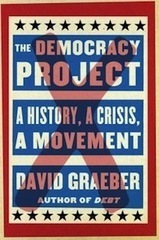
Editor's note: We think we know what democracy is. But do we? Anthropologist David Graeber burst into national consciousness in 2011 with the Occupy movement he helped to spark. The author of Debt: The First 5,000 Years has written a daring book about democracy in America: its origins, its opponents, and its chances of happening today given the stranglehold of the wealthy on our economic and political systems. Part reflection on Occupy Wall Street, the first major stirring of democratic spirit in the living memory of many, and part journey through the questions and tensions surrounding an admittedly difficult concept, Graeber's The Democracy Project: A History, A Crisis, A Movement is a welcome inquiry from an intriguing public intellectual. In the following interview, he discusses some of the major themes of the book.
At a time when 95 per cent of Americans disapprove of their own Congress, what hope is there for democracy in the USA? Plenty, if democracy itself can be transformed. This is the fourth article in our series on “trans-partisan politics”
More century lather, in the 1860, Giuseppe Mazzini wrote a book entitled “The duties of the human being”. The central thesis of the book was that we speak always of rights, but making so we forget that exist “the other side of the coin”, such as the duties. And this forgetful approach will bring the human kind in a age of decay ...
The other consideration that we can make is that the society was not an abstract subject, but the algebraic sum of all citizen and the basic cell of the society was the family. In fact, in the Parliament was present each head of household, older than 20 years.
Clay Shirky, a futurist at New York University, advocated for a "distributed version control democracy" in a recent TED talk. The New York state Legislature is already experimenting with this on its OpenLegislation platform, while the OpenGov Foundation, a nonprofit organization cofounded by Rep. Darrell Issa, R-Calif., is doing something similar on the federal level, allowing anyone to comment on and annotate legislation pending before the House.
There are, in fact, many minds working on various ways to use the internet as a tool for democratic participation. Wikimedia seems like a logical focal points for bringing together collaborative efforts. I’m glad to see that most of these projects are proceeding with the intention of being open to new ideas and evolving as more people use them. So far most of these projects seem to be focused on developing well functioning ways to vote on-line. This is great and definitely needed but I’d like to suggest that voting on such a site would be just one part of broader cultural transformations towards a more participatory world. An ideal democracy wiki site would involve ways for people to organize and work together to make the changes happen which they wish to see rather than just voting and expecting government employees to do all the work. And if people organize on-line they will need real-world spaces to meet in and bring their ideas into fruition. An ideal site should emphasize the need for organizing these spaces and provide support for doing so.
For the uninitiated participatory budgeting (or PB) is a two-and-a-half decade old innovation of direct citizen involvement in decision-making over the allocation of public finances. In simple terms, PB refers to ordinary citizens, instead of public officials, deciding on public spending at local and regional levels (Lerner, 2011). But there are many different variations of PB which range from merely consultative to genuinely participatory, empowering and inclusive (see Sintomer et al., 2008 for descriptions of various models). PB can also be more or less democratic, and not all PB processes contain a democratic component (which suggests that attention to the content and practice of what is often called ‘PB’ is paramount).
"Just as slow food encourages chefs and eaters to become more intimately involved with the production of local food, and slow money helps us become more engaged with our local economy, slow democracy encourages us to govern ourselves locally with processes that are inclusive, deliberative, and citizen powered.
The city of Detroit - home of the US auto industry, militant unionism, and African American political power and culture - is now facing the largest municipal bankruptcy in US history. Since 1950 it has been losing population and tax revenue due to a combination of de-industrialization, outsourcing, and the flight of middle and working class people to the suburbs. Now the state’s Republican rulers are trying to use a financial crisis they helped create in order to gain control of Detroit’s remaining treasures (including its water, land, and art museum) and completely destroy the labor movement and progressive African American political power in the process. Their strategy is to subvert democracy and majority rule by imposing a city manager with dictatorial powers to oversee the selling off of city assets, cutting services and gutting pensions and benefits to satisfy banks and corporate creditors.
In late October, a heated debate between Russell Brand and Jeremy Paxman went viral. Brand — known by most as a spandex-wearing British comedian and ex-husband of singer Katy Perry — proved, if nothing else, that he’s much smarter than he looks. And it all started with a question: “Is it true you don’t even vote?”
In current protest culture the estranged ideologies of anarchism and progressive populism are coming together around a critique of the neoliberal “corporate state” and a new imaginary of mass insurgency.
The PPE propose is to Empower people from diferent communities to understand the political and economical fundaments of the economic crysis, democratising the discussion. By doing so, they allow people to better engage the problems Europe faces today, and look for new solutions.
In this episode of the JustPublics@365 podcast series, I interview Distinguished Professor Frances Fox Piven (Graduate Center, CUNY). Professor Piven is an expert in the development of the welfare state, political movements, urban politics, voting, and electoral politics, and she has been politically engaged with improving the lives of America’s poor since the 1960s.
"When a larger group is set to produce a common argumentation, some kind of facilitation is usually required, something today's forums cannot fully provide.
To get content containing either thought or leadership enter:
To get content containing both thought and leadership enter:
To get content containing the expression thought leadership enter:
You can enter several keywords and you can refine them whenever you want. Our suggestion engine uses more signals but entering a few keywords here will rapidly give you great content to curate.


 Your new post is loading...