Blockchain?What You Need to Know : Decentralization Is Disrupting Vertical IndustriesBlockchains are a new data structure that is secure, cryptography-based, and distributed across a network.
As thousands rely on food banks to make it through the winter and a milk price crash threatens the survival of Britain's independent dairy farmers, Colin Tudge - co-founder of this week's Oxford Real Farming Conference - examines the growing need for an agrarian renaissance to tackle the increasingly obvious failings of neoliberal agriculture.
On the tube speeding across London to my friend’s wedding, I considered the wasteful expense of a dozen wedding receptions I’ve attended before – rammed with jetlagged relatives, screaming kids, and an exhausted couple. I pondered the appeal of being married in my pyjamas. As I arrive at the North London flat, my friend ushered me into her living room where I joined a trio of friends of the bride. We squeezed onto the crowded couch after being welcomed by the couple’s overexcited Rhodesian Ridgeback.
"Development of a more efficacious sharing economy will require constraining expansion of mediated micro-entrepreneurship and serialized rental in favor of modes consistent with communitarian provisioning. Fortunately, the last year has given rise to a few interesting propositions and many innovative social enterprises (first reported by Shareable in "Owning is the New Sharing") with the potential to steer us in a more democratic and accountable direction. Especially notable is a recommendation by Nathan Schneider and Trebor Scholtz urging workers to become owners under the aegis of what they call platform cooperativism. The movement they intend to catalyze through an upcoming event in New York City calls for a deep reconfiguration of the sharing economy premised on producer collaboration and a vision of progressive economic transformation. And Schneider and Scholtz are correct to counsel urgency. Decisive action is indeed necessary before the current VC-backed frontrunners solidify impregnable monopolies in their respective markets. In moving toward platform cooperativism, the availability of open-source software like Sharetribe, which enables social entrepreneurs to easily create new sharing networks is likely to be an important new development.
Henry Tam and Pat Conaty, both eminent cooperativist thinkers in the UK, square it out on the value of Paul Mason’s prescriptions in his book on PostCapitalism: I. The questions by Henry Tam: “I listened to the interview with Paul Mason, and it prompted a few thoughts. His book may deal with some of the …
A remarkable new map of Britain shows how the nation was forged by successive waves of immigration from continental Europe over 10,000 years since the end of the last Ice Age.
They call it a “Sea of Plastic” and the “vast expanse of polytunnels.” The further we drove, nearer and through Almeria, Spain into the city of El Ejido, I started
In a true Future Spoiler, Rick shares with the audience how bitcoin and it's underline technology, the blockchain technology, will influence the power strugg...
Cryptocurrencies (Bitcoin), blockchains, and decentralization) are not just about 1) digitizing and modernizing money, payments, economics, assets, legal contracts, and governance, thereby 2) accelerating the transition to the automation and actualization economy from the labor economy, but 3) more fundamentally, these factors are allowing us to re-explore our reality, and specify it as more internally-determined than externally-determined.
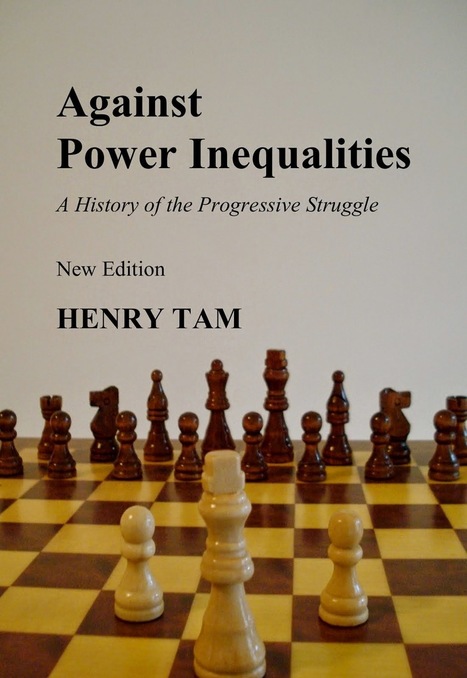
Henry Tam’s ‘Question the Powerful’ collection of writings explore the critical issue of governance in politics and society. They comprise academically acclaimed books on communitarianism, responsibility, and power inequalities; popular dystopian novels; and widely adopted advice on democratic empowerment and cooperative problem-solving.
The Mapping the Next System Webinar, convened by the Real Economy Lab, the Next System Project and the New Economy Coalition took place on December 14 at 5pm GMT with Gus Speth, Jules Peck, Fernanda Ibarra, et al. I have posted my own pre-recorded contribution earlier. Watch the 2-hour record of the conversation here via:
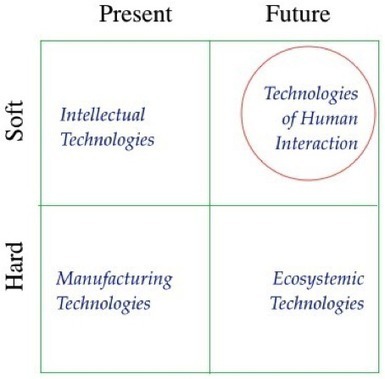
What we need are Technologies of Organizational Communion (TOCs) to serve as evolutionary guidance systems for the Technologies of Information and Communication (TICs – aka ICTs) that now stand the chance of connecting us not only with each other, but with the planet, with future generations, and most importantly, with ourselves. * Article: Alexander Laszlo, …
In a landmark decision, Judge Hill declared “[the youths’] very survival depends upon the will of their elders to act now, decisively and unequivocally, to stem the tide of global warming…before doing so becomes first too costly and then too late.” Highlighting inextricable relationships between navigable waters and the atmosphere, and finding that separating the two is “nonsensical,” the judge found the public trust doctrine mandates that the state act through its designated agency “to protect what it holds in trust.” The court confirmed what the Washington youth and youth across the nation have been arguing in courts of law, that “[t]he state has a constitutional obligation to protect the public’s interest in natural resources held in trust for the common benefit of the people.”
To get content containing either thought or leadership enter:
To get content containing both thought and leadership enter:
To get content containing the expression thought leadership enter:
You can enter several keywords and you can refine them whenever you want. Our suggestion engine uses more signals but entering a few keywords here will rapidly give you great content to curate.




 Your new post is loading...
 Scoop.it!