The Economist offers authoritative insight and opinion on international news, politics, business, finance, science, technology and the connections between them.
Europe is in a profound slump. Despite reassuring voices already predicting an end to the crisis, living and working conditions continue to deteriorate. Poverty and precarity are dramatically increasing across the continent. A social Europe is not on political decision-makers’ agenda.
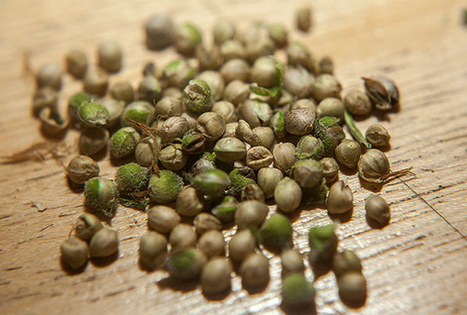
Members of the Greek seed bank Peliti say that keeping their wares in production—instead of in refrigerators—improves the health of the plants they’re working to save.
www.sarantaporo.gr "Οικοδομώντας Κοινότητες Κοινών. Ένα ντοκυμαντέρ για τα δίκτυα της περιοχής Σαρανταπόρου". «Η προσπάθειά μας έχει ως στόχο τη δημιουργία μ...
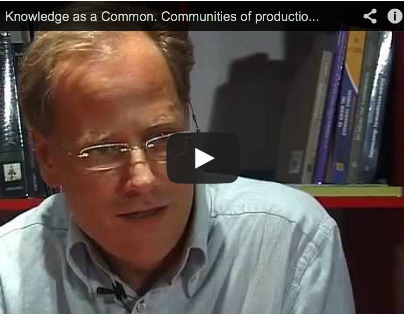
As one of the countries hardest hit by austerity politics, Greece is also in the vanguard of experimentation to find ways beyond the crisis. Now there is a documentary film about the growth of commons-based peer production in Greece, directed by Ilias Marmaras. "Knowledge as a common good: communities of production and sharing in Greece” is a low-budget, high-insight survey of innovative projects such as FabLab Athens, Greek hackerspaces, Frown, an organization that hosts all sorts of maker workshops and presentations, and other projects.
Knowledge as a common good. Communities of production and sharing in Greece. [Greek and English subtitles. Use the CC button at the Youtube player. (Optional...
Οι κοινότητες του ελεύθερου λογισμικού• οι κολλεκτίβες των “hackerspace” και οι ομάδες “κάντο-μόνος-σου”• οι εναλλακτικές οικοκοινότητες• τα κινήματα για ελε...
Crisis. Originally, the word derives from the ancient Greek verb “krinein”, meaning to judge in order to take a decision and its noun, “krisis”, meaning judgment, decision. According to Steven James Venette 1 “crisis is a process of transformation where the old system can no longer be maintained.”
"This research project attempts to examine to what extent the technological capabilities of open source 3D printing could serve as a means of learning and communication. The learning theory of constructionism is used as a theoretical framework in creating an experimental educational scenario focused on 3D design and printing. In this paper, we document our experience and discuss our findings from a three-month project run in two high schools in Ioannina, Greece. 33 students were tasked to collaboratively design and produce, with the aid of an open source 3D printer and a 3D design platform, creative artifacts. Most of these artifacts carry messages in the Braille language. Our next goal, which defined this project’s context, is to send the products to blind children inaugurating a novel way of communication and collaboration amongst blind and non-blind students. Our experience, so far, is positive arguing that 3D printing and design can electrify various literacies and creative capacities of children in accordance with the spirit of the interconnected, information-based world."
The Festival for Solidarity & Cooperative Economy has taken place every October in Athens since 2012. This time round, we want to share it with Europe!
I’ve always considered Syriza to be a pivotal party. It is a party with many roots in the alterglobalization movements of the late nineties, and with a remarkable openness to distributed movements and p2p/commons/sharing ideas. In the last EU elections, they became the first party in Greece. If they would succeed in the next national election, this would be the first anti-austerity party to gain power, and this could create a domino effect in Europe, similar to the effect of the Argentinian crisis of 2001, which led to almost the whole Latin American continent turning away from neoliberalism and setting in place a renewed committment to human solidarity and welfare which led to a strong emergence of p2p dynamics in the continent.
In the following interview, New School professor and economist Richard Wolff provides his analysis of the causes of the economic crisis in Greece and in the eurozone, debunks claims that the Greek economy is recovering and offers his proposal for what a post-capitalist future could look like for Greece and the world.
With the prospect of a Syriza government, everyone is wondering what the future holds for Greece. Whether disaster or deliverance, or just the normal chaos, it is hard to ignore the potential for game-changing repercussions from a Syriza government. On the street however, embittered by the failures of leftist governments in the past to change a corrupt and dysfunctional political system, few people are expecting big things from Syriza. The feeling of popular cynicism and fatalism is palpable. How different will Syriza be?
Syriza’s potential victory in the forthcoming elections in Greece is of the utmost importance for all those who want Europe to change course. Such a victory would be an expression of the demand for dignity and justice: for hope. The threats and pressure applied by EU leaders, the Troika and financial circles to influence the electoral choice of the Greek people are unacceptable.
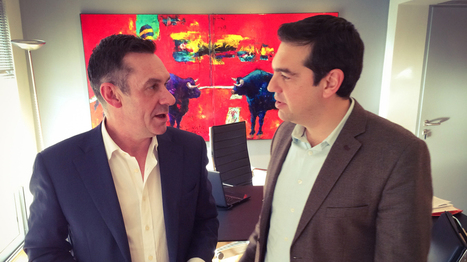
Some of the Syriza members I spoke to are, privately, still not sure they even want to govern. But one thing is certain: when you look him in the eye, Alexis Tsipras most definitely does.
A large portrait of Marxist revolutionary Rosa Luxemburg hangs in the Thessaloniki office of Nikos Samanidis, a founder member of Greece's Coalition of the Radical Left, better known as Syriza.
“The free/open source software and design communities; hackerspaces and the do-it-yourself enthusiasts; movements for an independent Internet; initiatives for free/communal wifi and open access to knowledge; permaculture communities… What do all these have in common? Are they unrelated cases or coincidences? Or could they be seen as seeds of a new civilization full of contradictions and chances for renaissance and change? This documentary — a low-budget yet sublime production — narrates the story of several Greek-based, knowledge-oriented communities that are building the world they want, within the confines of the fragmented world they want to transcend.”
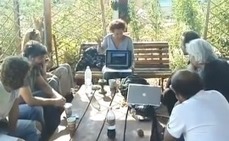
Meeting: Insular environments, empowering technogenesis for a global continent_Report of a round table discussion with a presentation by Michel Bauwens
After the open call for the organization of the 3rd CommonsFest at Heraklion, now comes the 1st open call for organizing CommonsFest in Athens in 2015. We wish a good start and we hope CommonsFest to travel in more cities in Greece and the rest of the world.
The People’s University of Social Solidarity Economy (UnivSSE) was created by PRO.S.K.AL.O. (Cooperation Initiative for Social and Solidarity Economy, www.proskalo.net) in Thessaloniki in 2013.
The Festival is a meeting point, not only for groups and people who participate in solidarity and cooperative economy initiatives, but also for visitors who are looking for an alternative and sustainable way to live. It is a good opportunity for collectives to connect and share knowledge and for visitors to learn and implement new good practices.
Do you remember the serfs and servants and villeins and peasants in the good old times of feudalism and the Middle Ages? If you don’t, I have good news for you! The custom of working in return of goods instead of salary revives in Greece of modern European Union and of exquisite Euro area. The results of a survey conducted by the Labor Institute of the Confederation of Labor Union (GSEE) are shocking but not unexpected. KTG has often reported in the four years of blogging about these sweet little working and payment conditions of modern Greek slaves living under the feudal law of austerity, recession and competitiveness.
To get content containing either thought or leadership enter:
To get content containing both thought and leadership enter:
To get content containing the expression thought leadership enter:
You can enter several keywords and you can refine them whenever you want. Our suggestion engine uses more signals but entering a few keywords here will rapidly give you great content to curate.


 Your new post is loading...
 Scoop.it!