

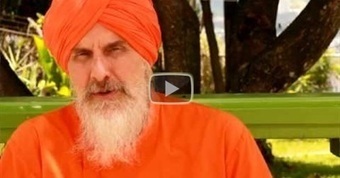
10 minutes of plain-spoken awesome. Economic Democracy is the BIG IDEA of our time. Make sure you don't miss the awesome moment starting at 2:30 that goes until 3:25!
Get Started for FREE
Sign up with Facebook Sign up with X
I don't have a Facebook or a X account


 Your new post is loading... Your new post is loading...
 Scoop.it!
10 minutes of plain-spoken awesome. Economic Democracy is the BIG IDEA of our time. Make sure you don't miss the awesome moment starting at 2:30 that goes until 3:25! 
No comment yet.
Sign up to comment
Scoop.it!
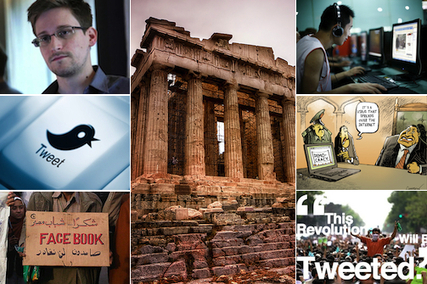
Bitcoin is meant to fix money, social media are seen as an antidote to Rupert Murdoch and assorted tyrants, networked robots are to help countries like Japan deal with demographic declines etc. Perhaps the largest claim is that the Internet has helped (or is about to help) democratize capitalism. Ten years ago that claim struck me as both fascinating and dubious. So, I sat down and wrote an article about it (circa 2004). Its gist: The Internet is a wonderful leveller.

Mlik Sahib's curator insight,
February 22, 2014 11:46 PM
"The good news is that it can. The bad news is that for citizenship to be simultaneouly widespread and valuable, the political sphere must claw back much of the authority that it has lost to the economic sphere; first at the time of the Enclosures and, more recently, after the 2008 debacle. None of that ‘clawing back’ will result automatically from our splendid connectivity through Twitter, Facebook and various other Apps and Internet resources. They may give us voice but they will not grant us isegoria. To create isegoria, and thus to empower citizens broadly, our ‘connected’ social economy must not only allow rulers and citizens to communicate but should also feature multiple networks enabling consumers, labourers and innovators to form units of production which create and distribute value in a participatory manner; in a manner such that no one employs anyone and everyone contributes labour and ideas while being rewarded according to contribution but also need. Of course this requires nothing short of a revolution in the foundations of capitalist production. It will not happen through idle chatter in the social media. If it happens, it will occur as the Internet undermines the currently dominant corporate model which relies on the segregation between non-labouring shareholders and labouring non-owners. Only when the capitalist type of firm loses its ‘evolutionary fitness,’ due to technological Internet-based innovations, and gives its place to a new type of participatory production model, will the political and the economic sphere become integrated again in a manner consistent with democratic principles. Then e’democracy may be born as our e’Demos reclaims control of the economic sphere."
Scoop.it!

Finland now allows citizens to propose new laws online, and if an initiative gathers enough votes, the government must vote on it!
Scoop.it!
This month, Dd is returning to Chiapas, Mexico to continue an initiative we began in 2012 calledEqual Footing. Working with Mayan villages in the Lacondon Jungle, we are supporting their efforts to communicate with the Mexican authorities who have threatened them with eviction from the rainforest where they live.
Scoop.it!

The main driver of inequality -- returns on capital that exceed the rate of economic growth -- is again threatening to generate extreme discontent and undermine democratic values. Thomas Piketty's findings in this ambitious, original, rigorous work will transform debate and set the agenda for the next generation of thought about wealth and inequality.
Scoop.it!
For my digital journalism students, I explain why histories like Zaret's "Origins of Democratic Culture" are important to understanding the implications of today's changing news media landscape to the future of democracy
Scoop.it!

In looking at the world with its widely varying values systems it is interesting to see how the word"democracy" means different things to different people. An example of this is when leaders from the Western developed world speak of democracy they generally mean constitutional democracy based on a universal franchise, multi-party system. These countries generally operate in the Blue/Orange/Green/Yellow spectrum of values systems.
Scoop.it!

Early conceptions of digital democracy as a virtual public sphere or civic commons have been replaced by a new technological optimism for democratic renewal based upon the open and collaborative networking characteristics of social media. This article provides an introduction to a special issue of the international journal Information, Communication & Society, which attempts to present a grounded analysis of these claims drawing upon evidence-based research and analysis. A more cautious approach is suggested for the potential of social media to facilitate more participative democracy while acknowledging its disruptive value for challenging traditional interests and modes of communicative power.
Scoop.it!
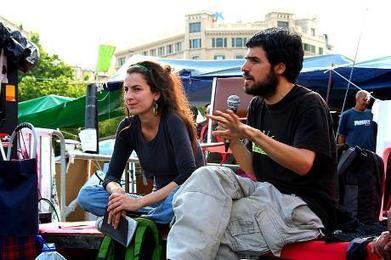
‘If representative democracy is only to choose every four, or five, or six years the person who’s going to do everything they want without taking popular will into account... we are in a sort of trap and I think that’s certainly the case today for Europe and elsewhere.’
Scoop.it!

Squatters in Istanbul reclaim their ‘right to the city’ and fight for social justice in a city where big business sets the urban development agenda.
Scoop.it!

In the last few months, events in Turkey, Egypt, Brazil and North Korea have strained many people’s faith in democracy. Corruption scandals surrounding Turkish Prime Minister Erdogan; the banning of the Muslim Brotherhood in Egypt; mass street protests in Brazil over expensive World Cup soccer stadia; and the apparent consolidation of the ruthless dictatorship of Kim Jong Un make us ask whether democracy, and especially liberal democracy, is simply a Western value that cannot take root in other cultures.
Scoop.it!
In 2005, before the European referundum, while teaching economics and law, Etienne Chouard looked closely to the draft version of the European Constitution. What he discovered changed him forever. He woke up, policatilly. Since then, and independently from any political organizations, he warns us against our apathy, denounces our responsibility and wants to restore the true meaning of democracy. His motto : a Constitution written by citizens and representatives selected by sortition.
Scoop.it!

“As our democracy finds itself under attack by powerful corporate interests, and as the media and academia are increasingly turning away from the type of thoughtful reflection and socially-engaged research that could challenge this state of affairs, we feel that the time has come to take matters into our own hands. In 2014, we want to dramatically expand ROAR – by intensifying our reporting, diversifying our base of contributors, and providing you with the news and analysis you simply don’t find in the mainstream media or the average academic publication.”
|
Scoop.it!

The foundamental question that I inquire in dept is this: “It's possible a P2P society on large scale?” In the last work I have examined the logical and the ethical possibility of a large scale P2P society. And the answer was “not”, because the human beings are free and they can choice between many, but not arbitrary, concepts of “good”. And from a logical point of view, some of these concepts are in contradiction between them. The question of a large scale P2P society has many aspects. This time I wanna examine if there is a possibility in practise. If the greater part of human beings choice the same concept of “good” and choice to associate to it the same concept of “evil”, these humans can live all together in a unique and very large P2P society? If we imagine a P2P society in which every individual can dialogue with every other individual, a big problem open to us: the computational complexity of the scene. The theory of combinations or combinatorics come in help to us.
Scoop.it!
"The foundamental question that I inquire in dept is this: “It's possible a P2P society on large scale?” In the last work I have examined the logical and the ethical possibility of a large scale P2P society.
Scoop.it!

Time magazine's 2006 "Person of the Year" award went not to Ahmadinejad, Chávez, Kim Jong-il, or any other of the usual suspects, but to "you", that is each and every one of us using or creating content on the world wide web. The cover showed a white keyboard with a mirror for a computer screen where readers can see their own reflection. To justify the choice, Time's editors cited the shift from institutions to individuals who are said to be emerging as the citizens of a new digital democracy.
Scoop.it!
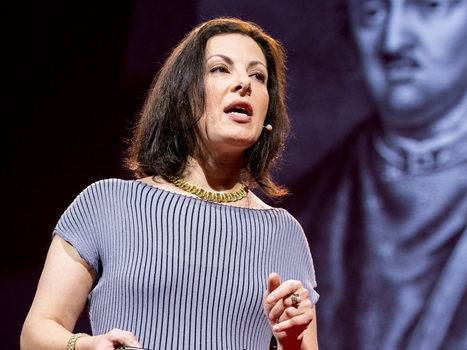
Former White House deputy CTO Beth Noveck shares her vision of practical openness: connecting bureaucracies to citizens, sharing data, and creating a truly participatory democracy.
Scoop.it!

Eduardo and David: Agora Voting is a totally free software voting method, born as Agora Ciudadana (Citizen Agora) in 2008 by a group of developers searching for creating a voting system helpful for Partido de Net (Web Party). At the moment fifteen persons work on this project and it has been employed in two experiences in Spanish Parliament and pirate parties about the world.
Scoop.it!

We designed a voting scheme which allows a group of people to better decide on a common opinion about an issue. Currently, the most used approach is to simply count number of votes against and for, while not taking into account people who do not cast a vote. Our approach is to have each person define delegates whose votes will be counted when he/she does not vote him/herself. In this way we get a social network, a trust network, between users which can be used to transitively compute missing votes. We believe such a result better represents the will of the group.
Scoop.it!
From
phys

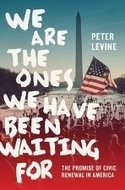
Just as voting participation rates have fallen over the last 40 years, civic engagement is on the decline in the United States, too. But there is some hope for a turnaround, says Peter Levine in his new book, We Are the Ones We Have Been Waiting For: The Promise of Civic Renewal in America (Oxford University Press), in which he offers explanations about why so few people are involved in their communities, provides examples where activism has worked and suggests some idealistic goals.
Scoop.it!

A few months ago, India's Aam Aadmi Party was a curiosity; now, it’s a call for pro-democracy movements elsewhere to step up their game.
Scoop.it!

Mike Schwarz discusses Corporate Watch's new book, Managing Democracy, Managing Dissent – Capitalism, Democracy and the Organisation of Consent, edited by Rebecca Fisher.
Scoop.it!

Democratic reason. Politics, collective intelligence, and the rule of the many
Scoop.it!

Since the dawn of the commercial Internet, there has been the general sentiment permeating Western society that technology is a force for good. Where destructive technological advances, such as the nuclear bomb, were once seen as the inevitable downfall of mankind, the potential of a free communications medium that was resistant to censorship and available to everyone offered hope to millions of oppressed people worldwide.
|





