Real, uncensored airbnb stories from former airbnb hosts and guests. Learn about shady policies, common scams, deleted reviews, & horrible customer service
https://www.youtube.com/watch?v=vmrGqzl96L8 I recommend this lecture by the famous Yochai Benkler (Harvard). This is spot on since it shows that P2P Cooperatives must have a SHARED CORE ( a Commons) from the start that is not centrally power-controlled (state) or commercialy exploited by selfish greed (market focus). It should be stressed that this does not mean…
Michel Bauwens: A note on the post-capitalist strategy of the P2P Foundation How to create a Post-Capitalist strategy? As expressed in our previous posts — where we describe the work of Kojin Karatani— we agree that the present system is based on a trinity of capital-state-nation, and that this reflects the integration of three modes... Continue reading →
Les tecnologies i pràctiques socials de Digital DIY (o "fes-t'ho tu mateix/a digital") possibiliten el prototipatge i la manufactura de baix cost d'objecte
The annual Future of Open Source survey confirms what we all suspected: Open source has won. Companies are wising up to the power of contribution and cooperation. Those who engage benefit from lower friction in their ongoing operations - reducing the burden of regressions, improving the flow of innovation and sharing the task of security review. It’s the ultimate IT lubricant in the Internet age.
Consider this: in just a few short years, the open-source encyclopedia Wikipedia has made closed-source encyclopedias obsolete — both the hard-bound kind and the CD-ROM or commercial online kind. Goodbye World Book and Brittanica.
Dr. Neil Theise, LIver Pathologist and Stem Cell specialist, explains complexity theory, and how sentience could be a function not only of human brains, but of all…
Remanufacturing allows us to use product components again at high quality while reducing energy demand by – in some cases – 80%. Given the material constraints we face, why this is not happening at a wider scale? In this episode, Nabil Nasr puts forward what he sees as the issues holding back remanufacturing.
Organisations that adopt Holacracy often find it’s a big upgrade to their decision-making processes. But implementing Governance meetings is only the beginning of your self-management evolution. Dogmatists may staunchly defend the completeness of the Holacracy Constitution, but I believe on drawing from everything available to craft the right system for your unique organisation. Even if…
"Increasing numbers of citizens have access to digital fabrication equipment via devoted spaces known as Fab Labs, makerspaces and hackerspaces, which are mushrooming globally. Such access enables people to design and make their own products outside of conventional mass production and consumption channels, using technologies such as desktop additive manufacturing equipment (that is, ‘3D printers’), CNC (computer numeric control) milling machines, laser cutters, vinyl cutters and electronics stations for circuit prototyping. The technologies themselves, especially 3D printing, are widely espoused as disruptive technologies that will radically shift production and consumption patterns (Anderson, 2012; Marsh, 2012; Hamermesh, 2014).
Article and image cross-posted from the Sustainable Economies Law Center. Authored by Sara Stephens. We want to create a worker cooperative. What legal entity should we form?
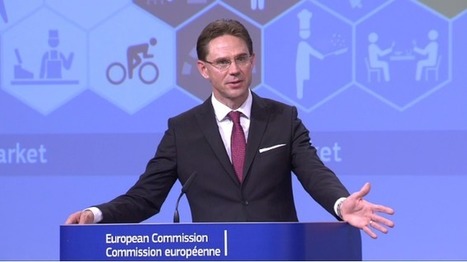
In a communication published earlier this month, the European Commission policy makers explain the key regulatory issues at hand and provide policy guidelines for member states. A short spoiler: it focusses on topics that most of us find dry and even boring. But it is worthwhile understanding the main questions and suggestions raised by the Commission because they will determine the political discourse in the future and therefore affect stakeholders in the collaborative economy. That is why Paula summarizes the most important points for you as short and spicy as possible. Read more...
While researchers are becoming increasingly interested in studying OSS phenomenon, there is still a small number of studies analyzing larger samples of projects investigating the structure of activities among OSS developers. The significant amount of information that has been gathered in the publicly available open-source software repositories and mailing-list archives offers an opportunity to analyze projects structures and participant involvement. In this article, using on commits data from 263 Apache projects repositories (nearly all), we show that although OSS development is often described as collaborative, but it in fact predominantly relies on radically solitary input and individual, non-collaborative contributions. We also show, in the first published study of this magnitude, that the engagement of contributors is based on a power-law distribution.
To get content containing either thought or leadership enter:
To get content containing both thought and leadership enter:
To get content containing the expression thought leadership enter:
You can enter several keywords and you can refine them whenever you want. Our suggestion engine uses more signals but entering a few keywords here will rapidly give you great content to curate.


 Your new post is loading...
 Scoop.it!