Every question has an answer, and we will find it together here. In the spiritual path of knowledge you are not alone, as we all think when we go throug
Over the last two decades, most of my adult life, I've watched as the world has grown more interconnected than ever, fuelled by changes in information technology which have almost universally been ...
We make fiction that disrupts the status quo, examines change as a collective bottom up process, centers marginalized communities - and is neither utopian nor dystopian.
What if we lived in a world where everyone had enough, where every one mattered, where people lived in harmony with nature? In this interview with KPFA host Kris Welch, author Martin Adams says it’s
"Every action and decision we take - or don't - ripples into the future. For the first time we have the capability, the technology, and the knowledge to direct these ripples." Jacque Fresco
What is Ethereum? Can this technology actually support the establishment of a utopian, free, and decentralized society? Or could it instead promote a more dystopian vision of society – or even a Skynet? Before we can understand anything about Ethereum, we must first understand Bitcoin: what it is, and how it works.
Utopianism has, rightly, acquired an unsavory reputation. Since my preoccupations on this blog concern the creation of a place of refuge from Babylon, as well as the opening of a crack in the system where another world is born, I thought it prudent to shine a light on it. If only so I avoid falling into that abyss.
Humanists typically look toward the future with extreme pessimism, assuming conditions of technological oppressiveness: Surveillance is rampant, the human being has been shorn of dignity, the state is overpowering, and individuality is a lost cause before the powerful onslaught of the collective. Zamyatin and Orwell are prime examples of this kind of extrapolation. There are also instances of humanist utopias (beginning with Thomas Moore and continuing with the socialist utopias of William Morris and Edward Bellamy), but they tend to be curiously bloodless, lacking the conviction and richness of the dystopias.
In May 2011, hundreds of thousands of Greeks swarmed into Syntagma Square in Athens to protest against the firesale of their country, their labor rights and their livelihoods to corrupt domestic elites and foreign financial interests.
The ability of men to both construct a utopia and then tear it apart was a lesson that Robert Owen, the Welsh industrialist who founded New Lanark, was soon to learn. After setting up New Lanark he became disenchanted with his dealings with the local authorities in Scotland and headed west to set up a new utopian society, uncluttered, he hoped, by the intransigence of others. He was a man of the noblest intentions, as a letter, dated 1 January, 1816 made clear: “I know that society may be formed so as to exist without crime, without poverty, with health greatly improved, with little, if any misery, and with intelligence and happiness increased a hundredfold: and no obstacle whatsoever intervenes at this moment except ignorance to prevent such a state of society from becoming universal.”
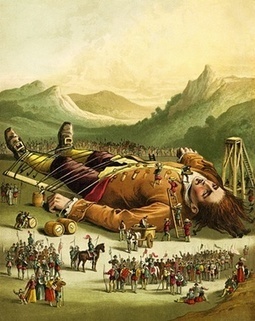
2016 sees the 500th anniversary of a book that generated an idea that has been hotly contested throughout the hundreds of years since its release; that book was 'Utopia' and its author was Thomas More.
What is a perfect society, and what’s the best kind of utopianism? Terry Eagleton looks at future thinking and concludes that our system is run by dreamers who call themselves realists
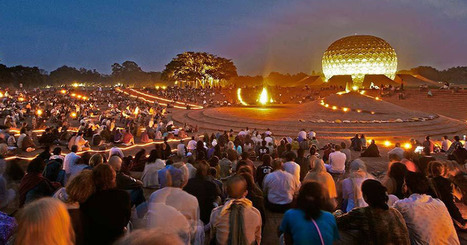
I thought a bottle of red wine would be an appropriate gift to bring to utopia. It was June in Pondicherry, a sleepy beach town off the Bay of Bengal characterized by its post-colonial French influence, and the mid-afternoon heat was oppressive, peaking just above 100 degrees. My clothes were damp by the time I …
The problem with undemocratic institutions – be they the government of a country or a business – is that they do the bidding of those in charge at the top, without being accountable to others who have to live with the consequences of their actions.
So you’d assemble your media habitat, your personal lifeworld of autonomous reality-communities. It was understood that one of the possible lifeworlds you might build for yourself could be what we call a counterculture — a world whose meanings, values and definitions of reality are exactly counter to those of the broadcast. You could increasingly live the life of that world as The Build progressed, and it would bring you to the threshold of secession.”
"with Is It Utopia Yet?, Kat brings us another lively, firsthand account of Twin Oaks' continued development as one of America's most prominent and successful cooperative communities.
The book includes detail about some of the conflicts that Twin Oaks has lived through and the people who were caught up in them. Kat speaks frankly and thoughtfully about the changes Twin Oaks has gone through and her own changing role in the Community.
As a bonus, the 320 page book also contains over sixty cartoons about community living from the pen of Twin Oaks member Jonathan Roth.
What is it really like to live in a "Utopian" community? What happens to the high ideals of equality and social justice under the pressures of daily living with a continually-changing population of nearly a hundred people?
Creating a new society presents many challenges—making a living, inventing a government, sharing the labor, raising children collectively, and reaching agreement about such things as diet, standard of living, and commitment to caring for the environment. Facing these tasks as a group means taking a hard look at the original principles. Does full economic equality really work? "
There is no mystery why libertarians love the Internet and all the freedom-enhancing applications, from open source software to Bitcoin, that thrive in its nurturing embrace. The Internet routes around censorship. It enables peer-to-peer connections that scoff at arbitrary geographical boundaries. It provides infinite access to do-it-yourself information. It fuels dreams of liberation from totalitarian oppression. Give everyone a smartphone, and dictators will fall! (Hell, you can even download the code that will let you 3-D print a gun.)
UMMON THE BREATHTAKING IMAGE of the multitude pouring into streets and plazas around the world in millions to demonstrate against tyranny. Now imagine instead they’re demanding a free and open internet. The likelihood of that is almost zero, we would agree. But why is that? What would have to happen to make that utopian spectacle reality? What insurgent algorithm would get us from here to there? That is the subject of this lecture.
Mr. Allaire’s analogy, which compares the projected expansion of digital currencies to the past development of Internet technology, is enticing. When the Mosaic browser, a forerunner to Netscape Navigator, was launched in 1993 its capabilities were limited. But it soon gave rise to more powerful competitors that pushed web access out to all corners of the globe.
To get content containing either thought or leadership enter:
To get content containing both thought and leadership enter:
To get content containing the expression thought leadership enter:
You can enter several keywords and you can refine them whenever you want. Our suggestion engine uses more signals but entering a few keywords here will rapidly give you great content to curate.


 Your new post is loading...