




Future Hub™ top 10 trend report 2016 examines the major trends influencing change in our world today. Technology, new economies, smart cities, social networks a

 Your new post is loading... Your new post is loading...
 Scoop.it!
Future Hub™ top 10 trend report 2016 examines the major trends influencing change in our world today. Technology, new economies, smart cities, social networks a

No comment yet.
Sign up to comment
Scoop.it!

We are reaching our limits. People working with big corporations can’t stand their jobs. The lack of purpose knocks on your door as if it came from inside you like a yell of despair.
Scoop.it!

I’m no expert on the utopian Star Trek universe. But my interest is growing by the day as I learn more about the futuristic foresight of this sci-fi series; sovereignty, liberty, equality, voluntary cooperation and resource sharing. These are words that could be used to describe the United Federation of Planets, the interstellar Republic of Trekkers.
Scoop.it!
Here is a potpourri of trends catalogued in our buffer for ‘P2P Trend of the Day’. They are all influenced by p2p and commons-driven forces. The links to the explanations can be found here. * A Agrihood * B Borrowing Shops * C Civic Crowdfunding Civil Aerial Mapping Collaborative Credit Collaborative Blocking? Connected Exploration Commons-Based …
Scoop.it!

This was the year in which mass migrations of millions of war refugees [1] were organized by social media (specifically through 'secret' Facebook groups) and in which scores of citizens organized themselves through peer to peer networks to assist them. This is also the year of publication of a major book on transmigration, i.e. the movements of people who come to the West not to stay, but in rotational organization, often organized as ethnic and religious Phyles, as documented in the book by Alain Tarrius, entitled, "Etrangers de passage. Poor to poor, peer to peer" [2] (Editions de l’Aube, 2015). The P2P in the subtitle is justified by the absolutely essential role that the internet plays in all stages of these circuits, for example, from taking orders for Chinese electronics, to warning at which market at which time they will be delivered. One example many Europeans may be familiar with are the indigenous people from Otavallo, Ecuador, with their pan-flute music and sale of Alpacca wool in many European cities with over 40,000 people, and responsible for one third of the local GDP; and also the sufi brotherhoods from Senegal, selling not so authentic luxury goods on the continent's beaches. Tarius has uncovered many such circuits, linking the poor of the Global South, to the immigrant neighborhoods of western countries.
Scoop.it!

From transportation to real estate, the past year has ushered in a sea change in who is buying and selling underutilised assets,Management ,Sharing economy,Resource Efficiency
Scoop.it!

Creating a decent, cryptocurrency-based basic income system now would give every potential beneficiary an incentive to see it grow.
Scoop.it!
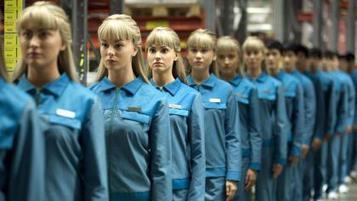
And a recent report noted that the increase in inequality and creation of a permanent, unemployable “underclass” could lead to riots and social unrest. “The central question of 2025 will be: What are people for in a world that does not need their labour?” one analyst commented.
|
Scoop.it!
People around the world are increasingly identifying as global citizens, according to a new BBC poll that shines a light on changing attitudes.
Scoop.it!
Technological innovations, particularly in digital and mobile platforms, have boosted inclusive growth in developing African markets over the past several
Scoop.it!

The history of open source and a glimpse at its future
Scoop.it!

Hold on tight. We are about to enter a period of unprecedented change, like nothing else you have ever seen in the past.
Scoop.it!

What do “identity,” “sharing economy” and “face with tears of joy emoji” have in common? Not a lot at first blush!
Scoop.it!
Creating a decent, cryptocurrency-based basic income system now would give every potential beneficiary an incentive to see it grow.
jean lievens's insight:
This entry was posted on Monday, October 5th, 2015 at 9:21 am and is filed under Collective Intelligence, Economy and Business, Ethical Economy, Featured Trend, Guest Post, P2P Architecture and Urbanism, P2P Development, P2P Money, Peer Property, Sharing. You can follow any responses to this entry through the RSS 2.0 feed. You can leave a response, or trackback from your own site.
Scoop.it!
How will crowdsourcing and the sharing economy develop in the next five years? - Econsultancy (blog)Econsultancy (blog)
|





