The Maker movement meets patent law How many windows are open in the patent fortress The Maker movement and patent law are like two planets moving on the orb...
A former hedge fund manager turned pharmaceutical businessman has purchased the rights to a 62-year-old drug used for treating life-threatening parasitic infections and raised the price overnight from $13.50 per tablet to $750.
IN 1970 the United States recognised the potential of crop science by broadening the scope of patents in agriculture. Patents are supposed to reward inventiveness, so that should have galvanised progress. Yet, despite providing extra protection, that change and a further broadening of the regime in the 1980s led neither to more private research into wheat nor to an increase in yields. Overall, the productivity of American agriculture continued its gentle upward climb, much as it had before.
As much as the official discourse would like it to be, the debate on intellectual property is not about whether authors or inventors would earn the same thing or more if this legal monopoly was abolished. The question is whether we need rents from a monopoly that only exists thanks to legislation for innovation to exist and whether more innovation is created with protection from intellectual property or without it.
Software patents have become every business owner's nightmare. Here, the Electronic Frontier Foundation lays out its argument for abolishing them altogether.
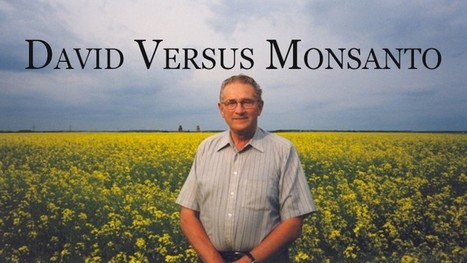
'Nobody has a right to put patents on nature and life!' Imagine that a storm blows across your garden and that now, genetically-manipulated seeds are in your crops. A multi-national corporation pay you a visit, demand that you surrender...
On 12 November 2014, China and the U.S. reached a historic agreement to limit greenhouse gases. Other nations will hopefully follow suit. But even these cuts may not be enough. So how are we going to meet these goals?
Over the last two years, much has been written about patent trolls, firms that make their money asserting patents against other companies, but do not make a useful product of their own. Both the White House and Congressional leaders have called for patent reform to fix the underlying problems that give rise to patent troll lawsuits. Not so fast, say Stephen Haber and Ross Levine in a Wall Street Journal Op-Ed (“The Myth of the Wicked Patent Troll”). We shouldn’t reform the patent system, they say, because there is no evidence that trolls are hindering innovation; these calls are being driven just by a few large companies who don’t want to pay inventors.
Part of the reason for the big automakers' domination for decades has to do with mass production capabilities and the economies of scale that come with it.
If the ecosystem of social change were an orchestra, social enterprise would be an amped-up brass section drowning out all the other instruments and any semblance of nuance. Everywhere you turn now, the talk is about revenue models and about doing well while doing good. In our efforts to better the world, we’ve become enterprise-obsessed.
Software patents aren't dead, but they just took a blow. In a unanimous decision, the Supreme Court has ruled that a series of banking patents didn't cover a concrete software process but an abstract idea, throwing them out and potentially setting a stricter precedent for future patents.
The Commons Strategies Group (Michel Bauwens, Silke Helfrich and David Bollier) ************************************************************************************************************************* David Bollier is a policy strategist, activis
We all know the patent system is broken. But most people believe that the biggest problem with it is abusive litigants who extort so-called “license fees” from small businesses unable to pay the cost of standing up to them in court. Their activities, of course, have no more in common with real patent licensing than a mob protection racket has with the sale of genuine “liability insurance.”
Cancer patients and doctors are devastated by a decision from the full bench of the federal court this morning that private companies have the right to control human genes.
On Tuesday the news that the UK Government had decided to use ODF as its official and default file format started to spread. The full announcement with technical details may be found here; the Document Foundation published its press release on Thursday morning there.
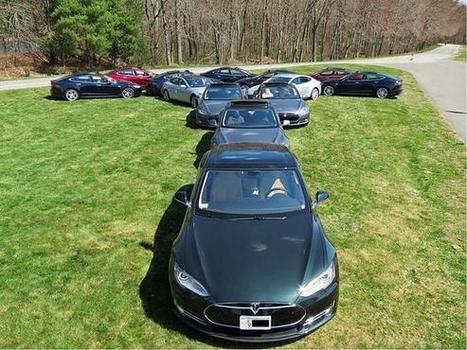
Tesla Motors CEO and Tony Stark do-alike Elon Musk recently raised a great deal of consternation by releasing Tesla’s patents for anyone to use “in good faith”. Amid the hue and cry of befuddled business analysts, multiple theories bubbled up. Is Musk angling to make the Tesla supercharger technology the industry standard? Is he trying to sell batteries from his upcominggigafactories? Does he want more electric cars to give Teslas more legitimacy and attract investment? Is he simply disillusioned with patents and claiming some open-source caché?
Facebook released Slingshot, its second attempt at an impermanent sharing app, last Tuesday. The app borrows heavily, in concept and features, from Snapchat, as well as smaller startups like Frontback and Look.
To get content containing either thought or leadership enter:
To get content containing both thought and leadership enter:
To get content containing the expression thought leadership enter:
You can enter several keywords and you can refine them whenever you want. Our suggestion engine uses more signals but entering a few keywords here will rapidly give you great content to curate.


 Your new post is loading...
 Scoop.it!