The Internet of Communities (IoC) is a vision of a social Web willfully designed to maximize social engagement by introducing a new set of collective incentives. First, the IoC aims to explore how collective reputation can be used as a catalyst to regulate social interactions. Secondly, the IoC promotes internally rewarding incentives rooted in positive emotions and in reciprocity to spark social engagement without the prior need to mobilize financial assets. Collective reputation is chosen as a means for collective governance and internally rewarding incentives are chosen as the prime motive for action. Within this scheme, influence is more likely to shift to those who positively impact their communities, to those who lead by example, and to those who reciprocate with fairness. Grounded in personal fulfilment and in social empowerment, the IoC is therefore an attempt to actualize greater human, social and economic value from online communities. Read our white paper.
By Andy Paice for Enlivening Edge Eros is that juicy energy of attraction, playfulness and creativity that humans experience in all kinds of contexts. So what does this particular energy have to do with organizational development and the movement to Reinvent Organizations? Recently, at the Integral European Conference, I discovered it might just be a vital ingredient in the fuel that drives next-stage organizations. In one workshop, Hilary Bradbury, Dana Carman and Heidi Gutekunst engaged us in creative inquiry for Teal organizations around the question of Eros/Power. While much has been made of the need for introducing Wholeness into the
How can organizations support our authentic and meaningful engagement in work we actually care about? How can we value openness, participation, reputation, legitimacy, connectivity, and abundance in the way we work together? How can we can organize in ways that liberate rather than stifle our creati
Relational Synergistic Design encompasses all of these dimensions. The leadership role is akin to the cell membrane. (Not, as our current models suggest, the central DNA type role.) Once the design has been set in place and the threshold crossing named, the leader becomes almost invisible. Their chief function is to be in constant communication with the interior health of the cell, and to be scanning and collaborating with the exterior immediate world, then into the far off world outside the system, making fine tuned adjustments to the polarity of the cell to maintain its integrity/shape. Because the cell exists always in relationship to the whole, they must do this in full partnership and collaboration with the whole. At the same time, they must prevent any violation of the central DNA.
This presentation explains in a few slides how the convergence of new technologies and new habits and expectations is changing what the user expects from the f…
Sociality is primarily a coordination problem. However, the social (or communication) complexity hypothesis suggests that the kinds of information that can be acquired and processed may limit the size and/or complexity of social groups that a species can maintain. We use an agent-based model to test the hypothesis that the complexity of information processed influences the computational demands involved. We show that successive increases in the kinds of information processed allow organisms to break through the glass ceilings that otherwise limit the size of social groups: larger groups can only be achieved at the cost of more sophisticated kinds of information processing that are disadvantageous when optimal group size is small. These results simultaneously support both the social brain and the social complexity hypotheses.
“The urge to decentralize and autonomize has informed social movements since the 1970s. The language of “decentralized autonomous organization” (DAOs) appeared among the swarms of activists in the late-1990s counter-globalization movement. But the trust-replacing mechanisms of a blockchain offer less an ideology than a method, one which may make it far easier for us to …
Austin Reed. BHS. The world changes. Companies that don’t change slump and die. What’s special about the changes of today? There’s an acronym for everything and the one for this is VUCA. Volatility…
If last time I shared my perspective on how radical openness can be used as a potential leveller to power imbalance in organisations, this time, I would like to share more specific tips from my experience working with organisational and cultural...
Google wants to know the secret to building a more productive team. The tech giant charged a team to find out. The project, known as Project Aristotle, took several years, and included interviews with hundreds of employees and analysis of data about the people on more than 100 active teams at the company. The Googlers looked har
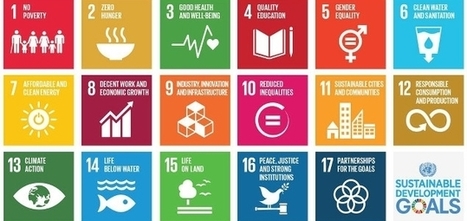
The Global Commission on Business and Sustainable Development — a new commission launched Thursday at the World Economic Forum by the former UN Deputy Secretary General Mark Malloch-Brown and Unilever CEO Paul Polman — will work over the next year to articulate and quantify the compelling economic case for businesses to engage in achieving the Sustainable Development Goals.
Seven Research-Based Principles for Making Organisations Work In The Seven Principles for Making Marriage Work, written with Nan Silver, renowned clinical psychologist and marriage researcher John ...
Written by Jordan Greenhall and originally published in Medium. Human organizational models have long been limited to a small set of effective approaches. For small organizations with fewer than thirty or forty members we have long been able to effectively coordinate group behaviour in a loosely structured form deeply connected to our anthropological origins. The... Read more »
Liip today is green. With that we are not only referring to its logo or the fact that we try to travel by train and compensate our energy consumption, we are also ...
To get content containing either thought or leadership enter:
To get content containing both thought and leadership enter:
To get content containing the expression thought leadership enter:
You can enter several keywords and you can refine them whenever you want. Our suggestion engine uses more signals but entering a few keywords here will rapidly give you great content to curate.


 Your new post is loading...