
RT @OpenAIRE_eu: "Openness as participation" - Notes from #ECSA2016 by @adeppe_SUB https://t.co/ZLA25lpZst @OpenAIRE_eu #openscience #citiz…
Get Started for FREE
Sign up with Facebook Sign up with X
I don't have a Facebook or a X account


 Your new post is loading... Your new post is loading...
 Scoop.it!
RT @OpenAIRE_eu: "Openness as participation" - Notes from #ECSA2016 by @adeppe_SUB https://t.co/ZLA25lpZst @OpenAIRE_eu #openscience #citiz…

No comment yet.
Sign up to comment
Scoop.it!

What's new in Open Science, peer review and publishing? Here's last week's roundup.
Scoop.it!

A new initiative published this week outlines how scientists can make a change to open science practices at an individual level
Scoop.it!

Culture-shifting new initiative to make ‘open science’ a reality, Monash University https://t.co/tWAr1fdiwH
Scoop.it!
The Open Science Framework (OSF) at Notre Dame: Connecting the Workflow and Supporting the Research Mission Andrew Sallans Partnerships Lead Center for Open ...
Scoop.it!
An article in PLOS Biology, and discussed on The Scientist, revealed that, of a random sample of over 400 articles in the biomedical literature, none provided access to all the data!
Scoop.it!

A new university, Valley University of Science and Technology (VUST), has started in Bushenyi District.
Scoop.it!
The funders held a webinar on 10 December 2015 (11:00 EST; 16:00 GMT) to further discuss the Prize with potential entrants and answer questions. For more det...
Scoop.it!

Wikidata is to databases what Wikipedia is to encyclopedias - the free version that anyone can edit. Both aim to share "the sum of all human knowledge" across the world in a multitude of languages, and while Wikidata is younger ...
Scoop.it!
AcademicWires: information and knowledge available to the readers, researchers, students, teachers seeking academic knowledge.
Scoop.it!
Thanks to David Bruggeman’s Dec.8, 2015 posting on his Pasco Phronesis blog, I’ve gotten some details about the European Union’s (EU) Open Science Policy Platform and about a science, technology and arts programme to connect...
Scoop.it!
The landscape of scholarly communication is changing rapidly as calls for “openness” in both research and publishing continue to grow. Panelists presented th...
Scoop.it!
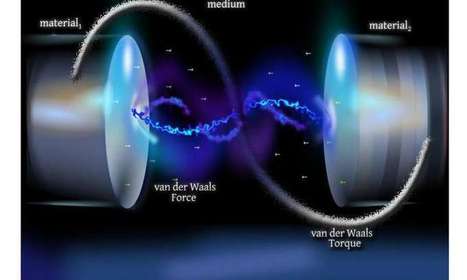
As molecular-level electronic, photonic and biological devices grow smaller, approaching the nanometer scale, chemists, physicists and materials scientists strive to predict the magnitude of the fundamental intermolecular interactions, and whether...
|
Scoop.it!
Learn more about the ways openness, transparency, rapid prototyping, and collaboration are impacting the ways science is both practiced and funded.
Scoop.it!
You are free to download, reuse, and modify the figures from the book.
Scoop.it!
A new initiative published this week outlines how scientists can make a change to open science practices at an individual level
Scoop.it!
Open Science is a key priority of the Dutch Presidency. The Netherlands is committed to open access to scientific publications and the best (...)
Scoop.it!

This is the second event in The Open Science Lecture Series, comprised of 3 lectures and 2 workshops.
More information (in German) about this event, including details of how to register, can be found by clicking here.
Scoop.it!
I’ll be finishing my PhD over the next two months, exciting times! Since I’ve got a thesis to write, I’ll try to keep this post short (or at least written in a short amount of time!). I have to give another shout out to The Peer Reviewers' Openness Initiative (PRO) which is one of several excellent new initiatives in support of open science, and which has already received over 200 signatories. Basically, PRO outlines a mechanism whereby peer reviewers require access to data/analysis code/materials (or at least a reason from the authors why these things are not provided) before conducting a comprehensive review. This is designed to shift incentives and achieve the goal of creating the expectation of open science practices. The advantages that will come with mass uptake of open science practices, particularly in relationship to the PRO initiative, have recently been outlined in excellent blogs by researchers who are more accomplished and qualified than me (e.g. see here , here , here , here , here and here).
Scoop.it!
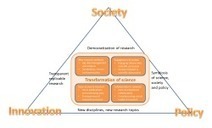
Open science is about the way research is carried out, disseminated, deployed and transformed by digital tools, networks and media.
Scoop.it!
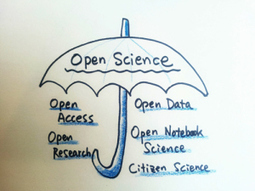
Open data can help boost democracy around the world, wrote Jonathan Gray in The Guardian. Writing in advance of the fifth global Open Data Day, he argued that open data are vital in struggles for social justice and democratic accountability.
Scoop.it!

FOSTER aims to facilitate open science by training researchers about open access and open data.
Scoop.it!

A University of Copenhagen research project has managed to significantly strengthen the self-control of persons with cerebral palsy (CP).
Scoop.it!
December 7th, 2015 WeWork South Station, Boston, Massachusetts eyewire.org
Scoop.it!

An outbreak of new journals in recent years threatens the potential benefits of open-access science
|