Excerpted from Part Six of ‘Super-Smart Democracies: Dissolving Neoliberalism, Elitism and Managerialism’. Just as Copernicus dethroned the Earth from the centre of the Universe, so we now need to dethrone the debt-money system and the power of the plutocrats from the centre of our democratic universe. Without a democratic paradigm that is centred on the …
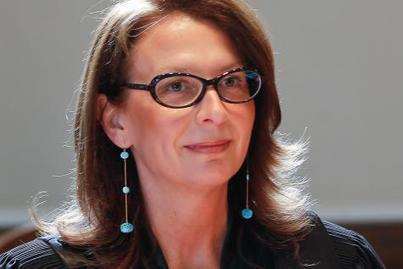
by Manuela Cadelli, President of the Magistrates’ Union of Belgium, via Defend Democracy The time for rhetorical reservations is over. Things have to be called by their name to make it possible for a co-ordinated democratic reaction to be initiated, above all in the public services. Liberalism was a doctrine derived from the philosophy of…
hat does it look like when an ideology dies? As with most things, fiction can be the best guide. In Red Plenty, his magnificent novel-cum-history of the Soviet Union, Francis Spufford charts how the communist dream of building a better, fairer society fell apart.
Financial meltdown, environmental disaster and even the rise of Donald Trump – neoliberalism has played its part in them all. Why has the left failed to come up with an alternative?
Instead of building real value, the "Age of Me" culture is steeped in "how a person with money hires a person without for the lowest possible wage to make as much profit as possible for the one with
The internet is exploding with conversations about the Panama Papers — the largest data dump in history of secret files about rich people hiding and hoarding money. And yet the biggest story of all is hardly getting any attention.
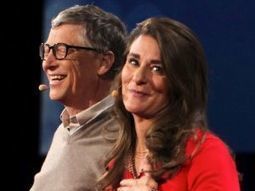
The Gates Foundation - widely assumed to be 'doing good', is imposing a neoliberal model of development and corporate domination that's opening up Africa's agriculture to land and seed-grabbing global agribusiness, writes Colin Todhunter. In the process it is foreclosing on the real solutions - enhancing food security, food sovereignty and the move to agroecological farming.
Anthony Atkinson occupies a unique place among economists. During the past half-century, in defiance of prevailing trends, he managed to place the question of inequality at the center of his work while demonstrating that economics is first and foremost a social and moral science. In his new book, Inequality: What Can Be Done?—more personal than his previous ones and wholly focused on a plan of action—he provides us with the broad outlines of a new radical reformism.
Michael Boezi talks about content strategy, building an audience, and making the shift from employee to small business owner. http://bit.ly/FOW-interview
Neoliberalism is a widely used term today. However, it is often unclear what people refer to when they use it. In its most systematic usage it might refer to a theory, a set of ideas, a political strategy, or a historical period. Could you begin by explaining how you understand neoliberalism?
http://democracynow.org - Brazil’s Senate has forged ahead with impeachment proceedings against President Dilma Rousseff, despite an earlier move by th
Financial meltdown, environmental disaster and even the rise of Donald Trump – neoliberalism has played its part in them all. Why has the left failed to come up with an alternative?
This year’s American electoral shakeup sends us looking for deeper economic tremors. Unemployment is down to 4.9%, even as discouraged workers are reentering the market and the average hourly wage rose 7 cents.
It wasn’t long before I too learned to connect the dots. I learned to see that the austerity-induced Structural Adjustment Program of General Ibrahim Babangida in 1986, then lauded as an ingenious economic solution to Nigeria’s problems, was a creature of the IMF, the World Bank, and the Trojan sentiments of free trade.
The international Left promotes its own image rather than engaging in the bitter reality of resistance against neoliberalism. It does not need to believe in postmodernism because it is postmodernism.
Cultures of Anyone studies the emergence of collaborative and non-hierarchical cultures in the context of the Spanish economic crisis of 2008. It explains how peer-to-peer social networks that have arisen online and social movements such as the Indignados have challenged a longstanding cultural tradition of intellectual elitism and capitalist technocracy in Spain. From the establishment of a technocratic and consumerist culture during the second part of the Franco dictatorship to the transition to neoliberalism that accompanied the ‘transition to democracy,’ intellectuals and ‘experts’ have legitimized contemporary Spanish history as a series of unavoidable steps in a process of ‘modernization.’ But when unemployment skyrocketed and a growing number of people began to feel that the consequences of this Spanish ‘modernization’ had increasingly led to precariousness, this paradigm collapsed. In the wake of Spain’s financial meltdown of 2008, new ‘cultures of anyone’ have emerged around the idea that the people affected by or involved in a situation should be the ones to participate in changing it. Growing through grassroots social movements, digital networks, and spaces traditionally reserved for ‘high culture’ and institutional politics, these cultures promote processes of empowerment and collaborative learning that allow the development of the abilities and knowledge base of ‘anyone,’ regardless of their economic status or institutional affiliations.
Javier Córdova is the President of the Puerto Rican Association of University Professors (A.P.P.U.) at the University of PR-Arecibo campus and also serves on A.P.P.U.’s national board and its Executive Committee. He is also leader of the Working Peoples’ Party. He spoke in San Francisco on July 25, 2015 on the economic crisis in Puerto Rico and the role of the US in pushing privatization and union busting.
The crushing of political choice is not a side-effect of this utopian belief system but a necessary component. Neoliberalism is inherently incompatible with democracy, as people will always rebel against the austerity and fiscal tyranny it prescribes. Something has to give, and it must be the people. This is the true road to serfdom: disinventing …
Global capitalism is the 800-pound gorilla. The twin ecological and economic crises, militarism, the rise of the surveillance state, and a dysfunctional political system can all be traced to its normal operations.
dmfant: Originally posted on George Ritzer: Ride-sharing is a form of prosumption- those who are using (consuming) their cars provide (produce) rides for those in need of them.
To get content containing either thought or leadership enter:
To get content containing both thought and leadership enter:
To get content containing the expression thought leadership enter:
You can enter several keywords and you can refine them whenever you want. Our suggestion engine uses more signals but entering a few keywords here will rapidly give you great content to curate.


 Your new post is loading...


 Scoop.it!



![[Essay] | The Neoliberal Arts, by William Deresiewicz | Harper's Magazine | Peer2Politics | Scoop.it](https://img.scoop.it/NN4ZsZKATFuM5jJwVPs7Pzl72eJkfbmt4t8yenImKBVvK0kTmF0xjctABnaLJIm9)