Official Full-Text Publication: Combining internal and external motivations in multi-actor governance arrangements for biodiversity and ecosystem services on ResearchGate, the professional network for scientists.
He doesn't have time for the economics of selfishness. Nipun Mehta's work is all about a fundamental question we've all asked at one point. Are humans inherently good to one another, or are we inherently selfish?
Human nature is not what we have been told. I couldn’t contain my excitement while watching this video because this is what I have always felt to be true. Not to mention it is now backed by a legitimate study!
“The key message from our work is that workers of all types and in all locations have the potential to be passionate – it’s not limited to a privileged few,” concludes John Hagel, c0-chairman Deloitte Center For The Edge. “Rather than just focusing on recruiting more passionate workers, the big opportunity is to look at the existing workforce and create environments that can tap into, nurture and amplify the passion of every worker already on the job. Without the right work environments, efforts to recruit additional passionate workers will likely be undermined as those new workers become frustrated in environments that do not support passion.”
Across the board, the more CEOs get paid, the worse their companies do over the next three years, according to extensive new research. This is true whether they’re CEOs at the highest end of the pay spectrum or the lowest. “The more CEOs are paid, the worse the firm does over the next three years, as far as stock performance and even accounting performance,” says one of the authors of the study, Michael Cooper of the University of Utah’s David Eccles School of Business.
It's been known that, in fields of work that require cognition, being paid higher amounts actually decreases production and overall performance. The conclusion that was reached in the study (which was done in Harvard and replicated in India) is that you pay people in top, cognitive positions enough money to make it not be a concern for them in order to maximize productivity. The same study also found that, for menial tasks, being paid more increased productivity and performance.
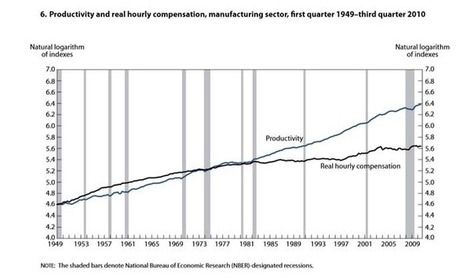
If you want to figure out how to configure compensation packages in your company to maximize performance, here is the data to show you the general principles of what needs to be done. Minimum wages are good, but too high of a minimum wage will kill small companies and start ups. Once you have a solid revenue stream established, it makes sense, based on the research, to divvy up the funds equitably amongst the white collar and blue collar employees, such that the white collar folks, especially on top, get paid a smaller ratio in proportion to the blue collar workers. After all, you can only have so much wealth and derive so much well being from that wealth. What's the point of spoiling productivity in your own company for the sake of it, let alone, for the sake of the whole economy that will benefit from having wealth be significantly more equitably distributed to all of those who produce the wealth?
It's not like a McDonalds or Starbucks job is actually all that easy a job to do. Those who think otherwise clearly never worked or have forgotten what it was like to work in cramped, hot, fast paced environments dealing with the general public.
The science is there. Whether anyone will listen to it without some coercion is another issue.
Sharing economy initiatives such as car clubs are supposed to encourage a sense of community. But Fleura Bardhi, professor of marketing at Cass Business School, tells Della Bradshaw that as they are adopted by the mass consumer selfish motives triumph. The collaborative economy is growing, however.
Why do people spend enormous amounts of free time editing Wikipedia without remuneration? A study attempts to discover by having those people play games. (Why do people edit wikipedia?
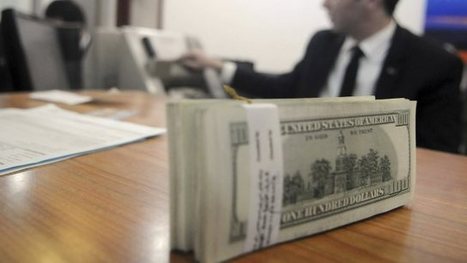
The importance we place on money affects our lives in myriad ways, from where we live to the kind of job we choose to the amount of time we spend on work or leisure.Conventional wisdom—as well as economic theory—says the more of something we have, the less of it we want, but that’s not the case with money, where more is rarely enough.
Jérôme explains the broader research agenda behind the paper. People are collaborating on the Web, sometimes on projects that compete with or replace major products from proprietary businesses and institutions. Standard economic theory doesn’t have a good way of making sense of this with its usual assumptions of behavior guided by perfect rationality and self-interest. Instead, Jérôme will look at Wikipedia where people are not paid and their contributions have no signaling value on the labor market. (Jérôme quotes Kizor: “The problem with Wikipedia is that it only works in practice. In theory it can never work.”)
Bosses play no role in fostering a sense of meaningfulness at work -- but they do have the capacity to destroy it and should stay out of the way, new research shows.
Getting people to work hard and do their best – to be highly motivated – is a central problem not only of individual businesses but of the economy as a whole. Everyone can recognise in themselves what a huge difference being fired-up makes: you confront challenges with energy, you sail through routine tasks, you stay calm under pressure, you come up with solutions to problems. If only we could unlock this kind of attitude in ourselves, we would, more widely, produce a much higher productivity and a flourishing economy.
Ironic that today in the financial press we read that a judge has banned Uber from operating in Spain (although not really, see Enrique Dans' article), and we read about the launch of Sharing Españ...
Generation Y (born roughly between 1980 and 2000) is seemingly the most in-debt, depressed, and unemployed generation in United States history. It is also the most educated.
Adair Jones, a Brainwaves for Leaders staff writer, looks at what is central to human motivation and how we can tap into it to build smart teams that perform. ______________________________________...
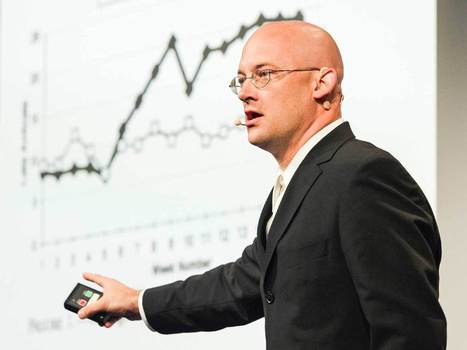
Social media guru Clay Shirky looks at "cognitive surplus" — the shared, online work we do with our spare brain cycles. While we're busy contributing to the web in our small ways, we're building a better, more cooperative world.
In our most recent exploration of what makes an organization “thrivable,” we looked at the personal meaning people find in their work and in their workplaces: Where do we find it? How do we create it? Here’s some of the treasure we discovered along the way. It offers valuable clues for leaders – but most of all for each of us – as we strive to make our work rich with meaning.
Finally, the study of economics must account for the fact that a great deal of value today is actually created without any real commercial activity at all -- no buying or selling, no profits or shareholder value. This is value creation through voluntary cooperation. Wikipedia, open-source software, and crowd service all illustrate the immense value being created by groups of collaborating innovators without increasing any single individual’s wealth.
SHECHEN, NEPAL – “Cooperation,” the Harvard University biologist Martin Nowak has written, is “the architect of creativity throughout evolution, from cells to multicellular creatures to anthills to villages to cities.” As mankind now tries to solve new, global challenges, we must also find new ways to cooperate. The basis for this cooperation must be altruism.
To get content containing either thought or leadership enter:
To get content containing both thought and leadership enter:
To get content containing the expression thought leadership enter:
You can enter several keywords and you can refine them whenever you want. Our suggestion engine uses more signals but entering a few keywords here will rapidly give you great content to curate.


 Your new post is loading...


 Scoop.it!







![Joho the Blog » [berkman] Jérôme Hergeux on the motives of Wikipedians | Peer2Politics | Scoop.it](https://img.scoop.it/50winahZ3jb1pnpU1Z7IsTl72eJkfbmt4t8yenImKBVvK0kTmF0xjctABnaLJIm9)