Open State - A 10-day program of events exploring how open and transparent decision-making, innovation and engagement can address the complex challenges of the future.
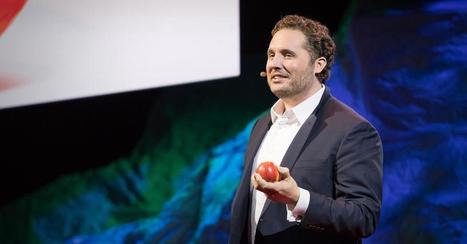
What if we could grow delicious, nutrient-dense food, indoors anywhere in the world? Caleb Harper, director of the Open Agriculture Initiative at the MIT Media Lab, wants to change the food system by connecting growers with technology. Get to know Harper's "food computers" and catch a glimpse of what the future of farming might look like.
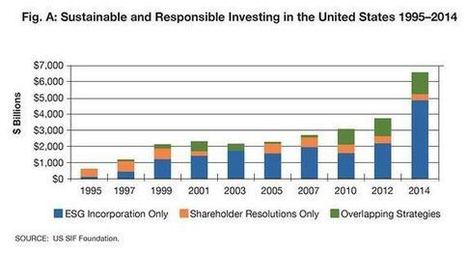
Millennials are earning a reputation for doing things differently. They communicate intensively using social networking, are revolutionizing transportation, and now they are demanding corporate sustainability and accountability.
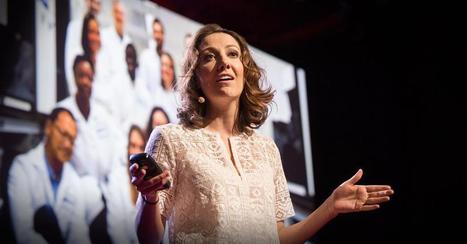
When Ebola broke out in March 2014, Pardis Sabeti and her team got to work sequencing the virus's genome, learning how it mutated and spread. Sabeti immediately released her research online, so virus trackers and scientists from around the world could join in the urgent fight. In this talk, she shows how open cooperation was key to halting the virus ... and to attacking the next one to come along. "We had to work openly, we had to share and we had to work together," Sabeti says. "Let us not let the world be defined by the destruction wrought by one virus, but illuminated by billions of hearts and minds working in unity."
The POC21 Documentary http://poc21.cc POC21 is an international innovation community, that started as an innovation camp. The camp brought together 100+ makers,…
Nicholas Donofrio and Ken Jarboe fervently believe that America's future is all about how well the nation ensures that innovation thrives and education keeps up ...
The European Commission is promoting the strategic role of Innovation Labs. These are new collaborative platforms between the different actors, with the strategic challenge of reinforcing the central competences of society and qualifying them as the unique ways of creation of value and modernity.
The biggest challenges of our time do not require patchwork solutions, innovative smartphone apps, or miracle pills, instead they require systems-level innovations that can tackle the root cause of the world's most serious issues.
Innovation in education can look like lots of things, like incorporating new technology or teaching methods, going on field trips, rejecting social norms, partnering with the local community.
The intent of the patent system is to incentivise innovation and promote the sharing of the results of that development at the end of the patent’s life. The granting of a patent by the state offers a time limited monopoly to the inventor to sell the product of that invention, in exchange for this monopoly , the company agrees to disclose the details of the invention. The basic principle of the patent system is a fair proposal, if you have put in effort and risk to developing something, it is then reasonable that you receive compensation for this. The state intervenes and creates a time-limited monopoly on the behalf of the inventor to protect their investment of time and incentivise others to invest in innovative development. The creation of a monopoly is something which first principle market capitalism abhors, and is not taken lightly, it can introduce market distortions which pull a given market far from being the “perfect market”. The benefit to society in this case comes from the development of a body of published patents which can be studied and developed upon or licensed by others. Previous to the development of patents, specialised technical knowledge was jealously kept within the ranks of mediaeval guilds, with the real danger of losing knowledge or skills if it was not transmitted to the next generation.
What kind of environment spawns genius? That’s the question Eric Weiner tackles in his latest book, “The Geography of Genius,” in which Weiner journeys around the world and through time, from Plato’s Athens to Leonardo da Vinci’s Florence, to find the secret ingredients behind some of the greatest minds in history, and what it means for America today. Economics correspondent Paul Solman reports.
The Documentary is LIVE! Help spread the word. After nearly 2 years of shooting and post production we're finally ready to release the full Driftless Zon
While, some communities have not even launched their first government crowdsourcing initiative, the Finnish government and its citizens have a lot to teach us.
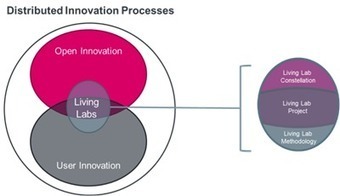
Winner of this year’s Best Paper Awards at the OpenLivingLab Days, Dimitri Schuurman has become a worldwide reference in the field of Living Labs. His latest, award-winning paper, “Living Labs: a systematic literature review”, shed light on the urgent need to clearly define the concept of what is a Living Lab and went forward with a possible solution.
We do workshops, seminars and presentations to help you learn about state-of-the-art open technologies and how to use those, such as 3D printing, programming electronics with Arduino and a lot more.
To get content containing either thought or leadership enter:
To get content containing both thought and leadership enter:
To get content containing the expression thought leadership enter:
You can enter several keywords and you can refine them whenever you want. Our suggestion engine uses more signals but entering a few keywords here will rapidly give you great content to curate.



 Your new post is loading...
 Scoop.it!