


ERCS - Website for an ESRC funded project on the Common Good: Ethics and Rights in Cyber Security
Get Started for FREE
Sign up with Facebook Sign up with X
I don't have a Facebook or a X account


 Your new post is loading... Your new post is loading...
 Scoop.it!
ERCS - Website for an ESRC funded project on the Common Good: Ethics and Rights in Cyber Security 
No comment yet.
Sign up to comment
Scoop.it!

Studies show that participants with a higher socioeconomic status have a greater inclination toward unethical and immoral behavior than others.
Scoop.it!

Our duty is to face the future with the eagerness to be part of it and give it a different shape: that's why we need a new ethic of work, one which is in line with the post-industrial age, an age o...
Scoop.it!

Happy internet slowdown day! Here are some apropos practical ethics questions for all to discuss as we sit patiently, waiting for the internet to load. What kind of internet ought we to have? Should sovereign nations decide for themselves what kind of internet they will have, or is this an international issue, requiring cooperation between nations? What do particular internet companies owe their competitors, and more vaguely, the internet? What right does an individual or social entity have to know about or to police the storage and usage of data about that individual or social entity? What right does an individual or corporation have to access data or restrict access to data at certain speeds?
Scoop.it!

It may be that developing our capacity for empathy is the key to surviving the myriad threats of the 21st century, from war to climate change, as Jeremy Rifkin argued in his 2009 book The Empathetic Civilization[1] and Julian Savulescu and Ingmar Persson argued in their 2012 Unfit for the Future: The Need for Moral Enhancement[2]. Indeed, the growth of civilization over the last tens of thousands of years may have both both depended on, and selected for, the growth of empathy.
Scoop.it!

Scoop.it!
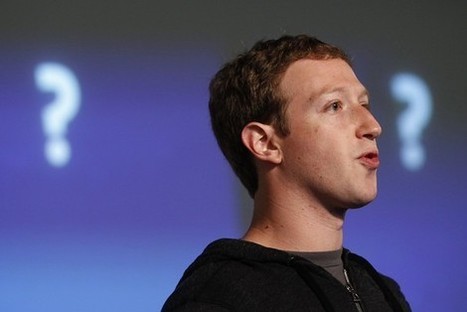
A Facebook study on users' emotions sparked soul-searching among researchers and calls for better ethical guidelines in the online world.
Scoop.it!

From
ieet

Which is more important? The Individual, or the Collective? What if it’s neither? In this multipart Essay, I will explore the worldview underlying my predictions and attempt to illustrate that one can be both a self serving individual only looking out for yourself, while at the same time understanding that it is in your own best interests to be an ethical collectivist, and why long term self interest is best served by reciprocal accountability and an end to secrecy.
Scoop.it!

Many wealthy Americans believe that dysfunctional behavior causes poverty. Their own success, they would insist, derives from good character and a strict work ethic. But they would be missing some of the facts. Ample evidence exists to show a correlation between wealth and unethical behavior, and between wealth and a lack of empathy for others, and between wealth and unproductiveness.
Scoop.it!

Social media and the technologies that drive it were intended to be a force for social good that expanded the individual’s reach beyond his physical proximity. However, over the years since the emergence of the medium many of its users are beginning to see a negative side of its use amongst young people which must be addressed otherwise it will lead to an erosion of core societal values.
|
Scoop.it!

While there is no “politics of abundance,” no theory of the State, there does exist the possibility of living in accordance with an ethic of abundance, an ethic that contributes to emancipation from scarcity and uncertainty.
Scoop.it!

From
ieet
I seem to work a lot. At least, I think I work a lot. Like many in the modern world, I find it pretty hard to tell the difference between work and the rest of my life. Apart from when I’m sleeping, I’m usually reading, writing or thinking (or doing some combination of the three). And since that is essentially what I get paid to do, it is difficult to distinguish between work and leisure. Of course, reading, writing and thinking are features of many jobs. The difference is that, as an academic, I have the luxury of deciding what I should be reading, writing and thinking about.
Scoop.it!

Swiss NGOs have published an ethical ranking of computer and smartphone producers. It judges companies such as Sony and Apple on working conditions in their factories, along with the use of materials from conflict areas and their environmental record.
Scoop.it!

Recently, an article was written about an experiment my company is running which aims to quantify employees through self-monitoring. To say there was some backlash is an understatement. Faced with accusations of “human rights violations”, and threats that someone was going to (excuse my French) take a “dump on my desk”, I was starting to fear the feds were going to come and prosecute me for mal practice…
Scoop.it!
Ethical leadership is considered to be the nourishment for sustained corporate success. These leaders are full of zeal for open and contentious debate, are active in decision-making processes, and are committed to planning for succession. What's not to like? But is it possible to be an ethical leader in today's shareholder-focused economy?
Scoop.it!

Facebook carried out a study in which they manipulated the emotions of FB participants. (The Facebook study was ethical. But is Facebook itself ethical?
Scoop.it!

Besides the good of the individual, there is a good that is linked to living in society: the common good. It is the good of “all of us”, made up of individuals, families and intermediate groups who together constitute society…To desire the common good and strive towards it is a requirement of justice and charity…The more we strive to secure a common good corresponding to the real needs of our neighbours, the more effectively we love them. Every Christian is called to practise this charity, in a manner corresponding to his vocation and according to the degree of influence he wields in thepólis. (p. 7)
Scoop.it!
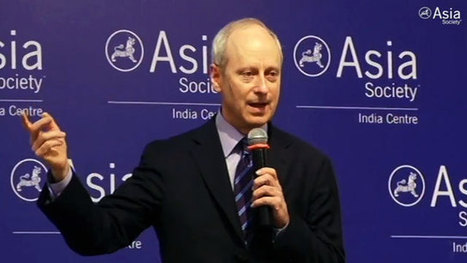
Political philosopher Michael J. Sandel gives a talk based on his recent book "What Money Can't Buy: The Moral Limits of Markets," following introductory remarks by Bunty Chand and Homi Bhabha.
|





