The following is a transcript of a Social Europe podcast in which Social Europe Editor-in-Chief Henning Meyer discusses the impact of the Digital Revolution on the nature of work and inequality with Michael A.
Imagine a place where citizens can deal with the state entirely online, where all health records are electronic and the wait for emergency care is just seven minutes. Singapore? Switzerland? Try Colima, Mexico.
http://www.egs.edu/ Slavoj Žižek, Slovenian philosopher and cultural theorist talking about object small a, digital civilization, desire, psychoanalysis, prosthetic extension, virtual reality, projection, science, language, universality, sexuality, in relation to the authors Freud, Lacan, Kierkegaard and Hegel. Public open lecture for the students and faculty of the European Graduate School EGS Media and Communication Studies department program Saas-Fee Switzerland Europe. 2012. Slavoj Žižek.
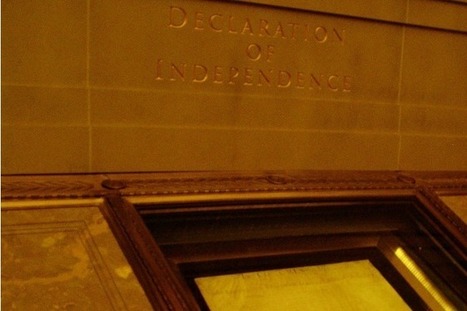
Upon his resignation on July 24, 1789, Charles Thomson handed over the Great Seal of the United States and the Declaration of Independence to Roger Alden, the Deputy Secretary of Foreign Affairs. For those who aren’t familiar with that name, Charles Thomson was the Secretary of the Continental Congress throughout the organization’s 13-year history. While his name doesn’t typically surface in history lessons, his meticulous note taking and transcripts during these formative years of our nation can never be understated. Much about the internal debates on governance, personal freedoms and liberties would have been lost to perpetuity had it not been for Charles Thomson.
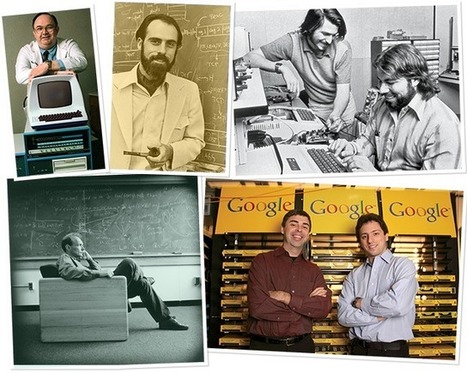
Ken McGoogan, author of 50 Canadians Who Changed the World, offers his picks for individuals who played an important role in advancing the digital age.
Davos 2016: As we enter the Fourth Industrial Revolution – a digital revolution expected to transform society – we have already seen massive technological changes begin to alter the nature of work, but this is just the beginning...
In my last letter, I told you there was a time in the late ’60s when the most critically acclaimed movies and music were also the best selling. The Beatles’s Sgt. Pepper album or Francis Coppola’s Godfather film were just two examples. I said that that is not happening anymore, and I wanted to explore with you why this change occurred. Because I spent the first 30 years of my life producing music, movies, and TV, this question matters to me, and I think it should matter to you. So I want to explore the idea that the last 20 years of technological progress — the digital revolution — have devalued the role of the creative artist in our society.
Six years later, the Economist ran an editorial naming Africa ‘the Hopeless Continent’, claiming “brutality, despotism and corruption exist everywhere”.
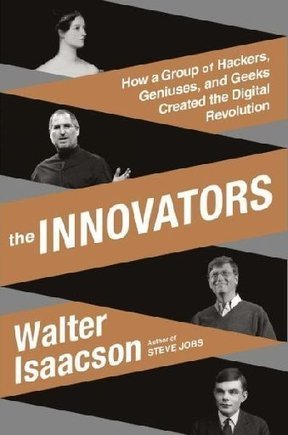
Revolutions usually leave ancient institutions tottering, societies shaken, the streets awash with blood. But what Walter Isaacson calls the “digital revolution” has kept its promise to liberate mankind. Enrichment for the few has been balanced by empowerment for the rest of us, and we can all – as the enraptured Isaacson says – enjoy a “sublime user experience” when we turn on our computers. Wikipedia gives us access to a global mind; on social media we can chat with friends we may never meet and who might not actually exist; blogs “democratise public discourse” by giving a voice to those who were once condemned to mute anonymity. Has heaven really come down to our wired-up, interconnected Earth?
The official definition of Biourbanism starts with the focus on “the urban organism, considering it as a hypercomplex system, according to its internal and external dynamics and their mutual interactions.”
A Guardian Healthcare Professionals Network seminar discussed barriers to digitising services and possible solutions. Gill Hitchcock reports (RT @bernadee_koh: What is stopping a digital revolution in health and social care?
ust as the Industrial Revolution was driven by combining the steam engine with ingenious machinery, the Digital Revolution has been driven by two great innovations: the personal computer and the Internet. The relationship between the two was standoffish at first, and it was only after their development became intertwined that the digital economy began to transform our lives. The result was a shift in influence from an old establishment led by bankers, wise men, and a corporate elite to a new establishment led by the pioneers of technology, information, and entertainment. This digital inflection point occurred in 1994, the year that this magazine began publishing its New Establishment list.
The following was written as a solicited follow-up to my participation in the second planning consultation session of the Cambridge University Centre for Digital Knowledge. The session, held on 7 May 2014 at the Cambridge Centre for Research in the Arts, Social Sciences and Humanities (CRASSH), focused on “digital epistemology,” one of the two intended thematic strands of the Centre for Digital Knowledge. A previous planning consultation at CRASSH that I did not attend focused on the other intended strand of “digital society.”
To get content containing either thought or leadership enter:
To get content containing both thought and leadership enter:
To get content containing the expression thought leadership enter:
You can enter several keywords and you can refine them whenever you want. Our suggestion engine uses more signals but entering a few keywords here will rapidly give you great content to curate.



 Your new post is loading...
 Scoop.it!