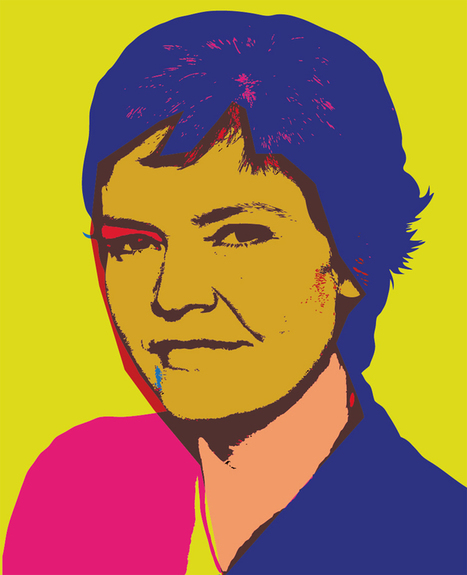
Not very clear, inadequate and a source of misunderstandings: this is why according to Kate Raworth the word degrowth – once its provocative effect is over – should be abandoned in favour of a positive alternative definining this economic theory in...
Both the name and the theory of degrowth aim explicitly to repoliticize environmentalism. Sustainable development and its more recent reincarnation “green growth” depoliticize genuine political antagonisms between alternative visions for the future.
In industrialized societies, where so many people regard economic growth as the essence of human progress, the idea of deliberately rejecting growth is seen as insane. Yet that is more or less what the planet’s ecosystems are saying right now...
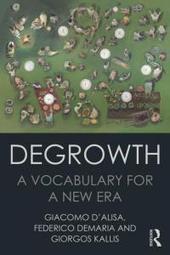
In our recent book “Degrowth. A vocabulary for a new era” we argue that economic growth is not only becoming more and more difficult in advanced economies, but that it is also socially and ecologically unsustainable. The global climate, the welfare state, or social bonds that have lasted for ages, are all sacrificed in the name of appeasing the god of growth .
Convivial degrowth is a relatively new concept, especially in North America. Degrowth ordecroissance has been around for a number of years in France and other parts of Europe, with some proponents even calling it a movement. It is not just (or even) about negative economic growth, as the English word might imply, but rather represents a complex paradigm shift away from our current industrial society and its model and culture of consumption and accumulation.
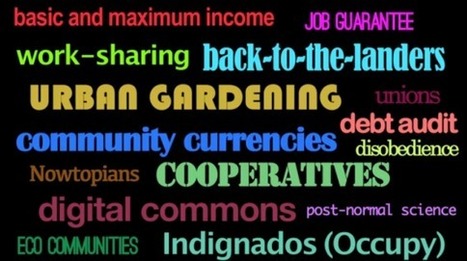
Economic growth is harming the planet, it is incapable of eradicating poverty and it is not making us happier. However, there is no need to worry: there are alternatives and social movements working to end the obsession of continuous growth.
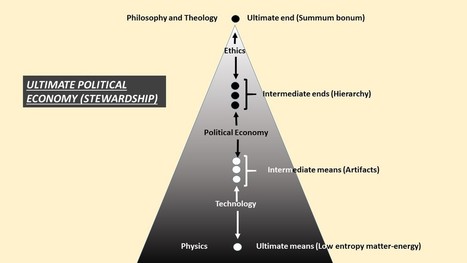
Causation is both bottom-up and top-down: material cause from the bottom, and final cause from the top, as Aristotle might say. Economics, or as I prefer, “political economy,” is in between, and serves to balance desirability (the lure of right purpose) with possibility (the constraints of finitude). We need an economics fit for purpose in a finite and entropic world.
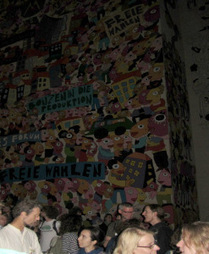
This blog is the fourth in a series of five, each digesting and reflecting on a day at the Degrowth conference in Leipzig, 2nd – 6th September. You can read about Day 1 here, Day 2 here and Day 3here. Below is a summary of my experiences of Day 4 – Friday 5th September – Visions and strategies for transformation.
Upon returning from five fascinating, inspiring and fun days in Leipzig at the Fourth International Conference on Degrowth for Ecological Sustainability and Social Equity last week, I noticed – after some seriously needed rest and a couple of good nights sleep – that I had made 42 pages of notes. Those people who are lovers of light-hearted satirical science-fiction, like myself, may recognise the number 42 as the answer to the ultimate question of life, the universe and everything – at least according to Douglas Adams’ Hitchhikers Guide to the Galaxy.
The French have a much better word for it: 'decroissance'. Using ugly and frightening terms like 'degrowth' won't help pave the way for a new and exciting economics
In industrialized societies, where so many people regard economic growth as the essence of human progress, the idea of deliberately rejecting growth is seen as insane. Yet that is more or less what the planet’s ecosystems are saying right now...
Degrowth is a historical necessity but a very hard political sell, and at the P2P Foundation we use rather the post-growth thematic and a focus on ‘thrivability’. But these proposals from Giorgios Kallis seem entirely reasonable and even vital.
As businesses increasingly embrace a not-for-profit culture, an end to overconsumption on a finite planet could finally be in sight. But given the huge lobbying power of vested interests, it will remain impossible to create a truly sustainable world until the illegitimate power of corporations is held in check.
We need to talk a lot more about sharing as a way to radically reframe the post-growth debate, argues a recent report from the Green House. If growthism is the substitute for a more just and equal society, then it's time that we all start saying so - and embrace a new common sense for sharing.
In preparation for Degrowth I also spent three days in Meissen on a deep-dive with a small group of p2p and commons movement leaders including David Bollier andMichel Bauwens who, in the introduction to his book, both praise Rifkin as a visionary of a new world order.
The transition>>lab and the whole Thinkfarm(I’ve met at least twenty of them!) seemed to be at the 2014 Degrowth Conference in Leipzig. As a matter of fact, the Degrowth conference was a huge mix of activists, researchers, social entrepreneurs, transitioners, ecovillagers, etc. With 3000 participants (750 were international), this was a huge crowd with over 50 sessions running in parallel twice a day for 3 complete days!
To get content containing either thought or leadership enter:
To get content containing both thought and leadership enter:
To get content containing the expression thought leadership enter:
You can enter several keywords and you can refine them whenever you want. Our suggestion engine uses more signals but entering a few keywords here will rapidly give you great content to curate.


 Your new post is loading...







![Yes, we can prosper without growth [VIDEO] | Peer2Politics | Scoop.it](https://img.scoop.it/9QbnTMqXVnYFnZIpsSzNZjl72eJkfbmt4t8yenImKBVvK0kTmF0xjctABnaLJIm9)