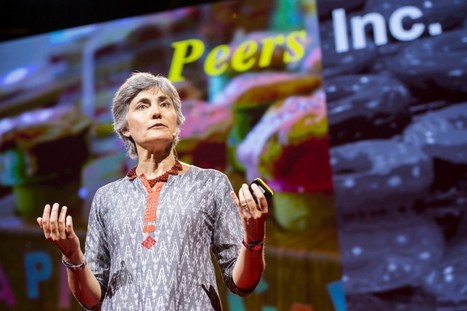
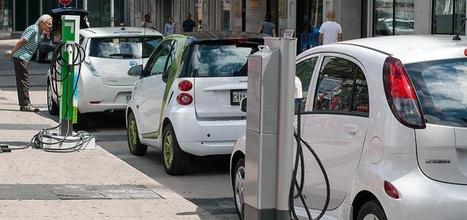
Can autonomous cars give us a do-over with our cities, fossil fuel dependence, affordable housing, and also workers? Robin Chase, author of Peers, Inc and co-founder of Zipcar says yes. Or at least they have the potential to.
The sharing movement is evolving quickly and in many directions. The growth of platform and worker co-ops, increased awareness of the commons, the evolution of coworking, an explosion of tech-enabled sharing services, and more are opening up promising if not challenging frontiers.
Jennifer Dill of Portland State University, on the sharing economy From "Baby You Can Drive My Car" morning session, Transportation and Communities Summit ...
We talk to BlaBlaCar marketing manager Alec Dent about growing a sharing economy company and raising funding in the European tech scene. If you have any ...
In 2007, Robin Chase stood before a packed house at TEDGlobal and opened her heart to the audience. ‘I’m really scared’, she confessed. ‘We need to reduce CO2 emissions in 10 to 15 years by 80% in order to avert catastrophic effects’. Meanwhile, America is obsessed with cars and no one is paying attention. Politicians talk fuel efficiency but what does that achieve? According to Chase: ‘If we started today, 10 years from now … those fuel-efficient cars will reduce our fossil fuel needs by 4%. That is not enough’.
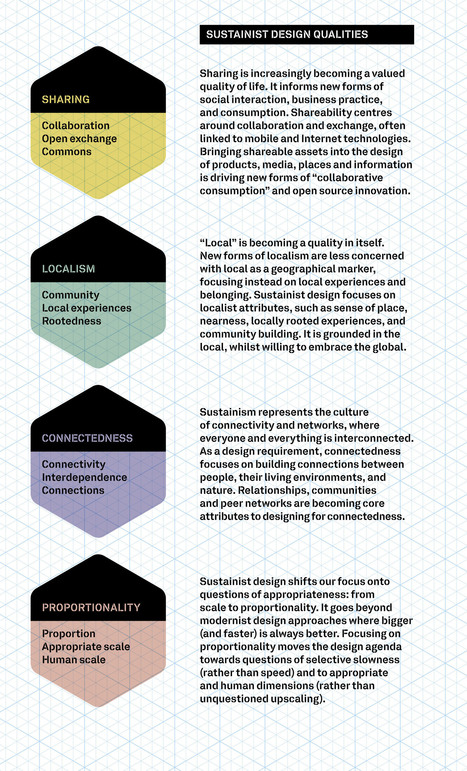
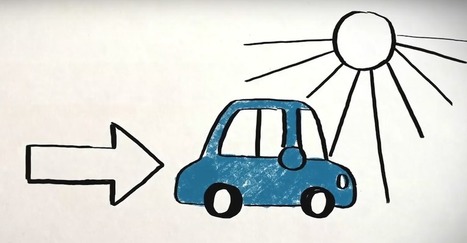
Images and excerpt from the Sustainist Design Guide: How Sharing, Localism, Connectedness, and Proportionality are Creating a New Agenda for Social Design, by Michiel Schwarz and Diana Krabbendam with The Beach Network. Design: Robin Uleman.
Thanks to a city ordinance passed last fall, this will be the first year on-demand ride services like Uber and Lyft will be competing for passengers in Austin during SXSW.
BMW is one of the latest brands to tap into the ‘sharing economy‘ as it rolls out its car sharing scheme DriveNow in London, a response to huge growth in urban living. - Brand Republic
One chilly morning last winter, I reconnected with an old friend, Joel Dietz, on a video chat. We hadn’t seen each other for years, and we’d each had several starts and stops in our lives since. He began telling me about his latest undertaking, Evergreen, a digital currency system that he described as “organic” and “without additives.” I was doing all I could to understand it, and he was struggling to fund it in a way that suited his vision. He needed money, and quickly, but he didn’t want to sabotage his ideals in the process.
Not everyone who needs transit lives within walking distance of a transit stop. Many, including the elderly, need a little help to get to the bus or train. And, as transit-oriented development drives up real estate prices in many areas, transit access is increasingly becoming an equity issue. Building a network of “Sharing Stops” to expand transit access can increase ridership while also increasing social capital in a neighborhood. Here’s how to get started.
The world’s biggest mass migration has hitched a ride on the sharing economy, with hundreds of thousands of Chinese turning to carpooling for their annual pilgrimage home for the lunar new year. The holiday season, which kicks off on Monday, will
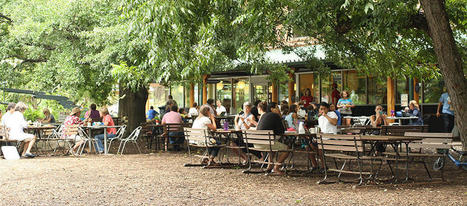
Weaver Street Market in Carrboro, North Carolina, a multistakeholder cooperative combining the interests of workers and consumers. Credit: Weaver Street Market.
Near Me, which enables anyone to create their own sharing platform, is also a valuable resource hub with a blogand podcast about the collaborative economy. The popular Near Me podcast, hosted by Near Me's Kevin Cohen, features thought leaders, pioneers, and movers and shakers of the collaborative movement. Here are their top 10 podcasts, including one with Shareable's co-founder Neal Gorenflo.
What I love best about the sharing economy is how it squeezes good value out of the unused bits of our society that would otherwise go to waste. And nowhere do you have so much waste as in our transportation system. A personal car uses less than 1% of its energy to move a passenger, and 80% of our passenger capacity is driving around empty. That’s hundreds of millions of empty seats in this country! Meanwhile, 45% of the country has no access to transit. What a perfect opportunity to share!
What makes a lot of people uncomfortable about a phenomenon like Uber, when you get right down to it, is how it is owned. As in other mega-Internet companies, a small number of owners poised to take over a global industry—in this case, the taxi industry with ownership currently spread out among local drivers and operators. In response to Uber’s rise, there has been a flurry of proposals for driver-owned alternatives.
LONDON - The humble smartphone could throw a spanner in the works of the car sector's post-crisis turnaround, with the big manufacturers facing a long-term threat from apps that make it easier and cheaper to share or hire vehicles than to buy them.
I see the megatrends, and more particularly the collisions between them, as major drivers for change and innovation across the entire global automotive sector. In particular, I think they will not only transform the lifestyle of individuals, but the culture of society as a whole.
To get content containing either thought or leadership enter:
To get content containing both thought and leadership enter:
To get content containing the expression thought leadership enter:
You can enter several keywords and you can refine them whenever you want. Our suggestion engine uses more signals but entering a few keywords here will rapidly give you great content to curate.




 Your new post is loading...
 Scoop.it!