Speakers: Sandra Gonzalez-Bailon, Stefan Niggemeier, Evgeny Morozov, Richard Allan Theorists such as Yochai Benkler have suggested that the accessibility ...
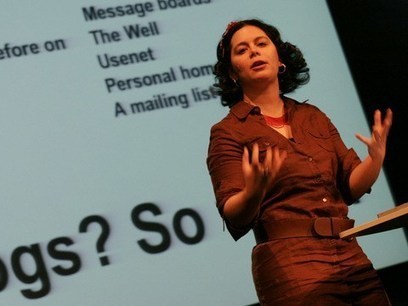
The founding mother of the blog revolution, Movable Type's Mena Trott, talks about the early days of blogging, when she realized that giving regular people the power to share our lives online is the key to building a friendlier, more connected world.
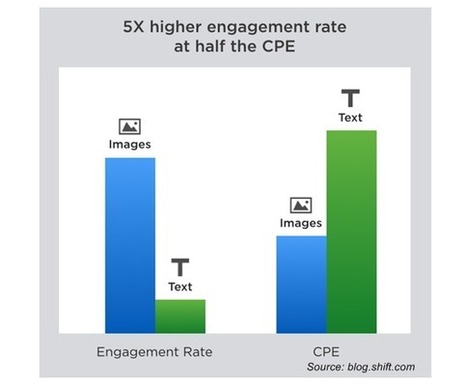
The evolution of blogging from text-based content to a visually-rich medium marks a transformation in the thought process of society. Blogging trends over the years demonstrate a shift in the way that people respond to viral marketing strategies. And in today's mobile world, people are more attracted to pictures and visual graphics than anything else.
Everyone seems to have a blog these days – in fact, as of June, 2014, there were more than 42.5 million blog posts published on WordPress.com alone. That said, to make your blog stand out from the crowd, your posts must be more than just present; they need to be great and consist of these vital elements.
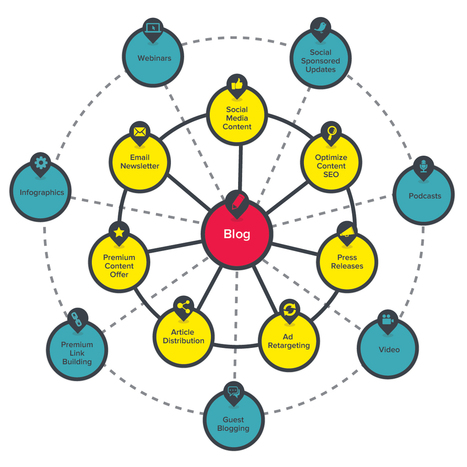
Building a distribution strategy for your blog will give your blog post a longer shelf life past the publish date. Once you get a handle of distributing content across owned channels (e.g. company newsletter, social media, etc.), look to third party platforms like Reddit, Quora and industry specific forums to also re-purpose your content on.
These cases have painted a bleak picture of Internet freedom in Vietnam, a country that blocks Web sites and surveils netizens. The Internet came to Vietnam in the nineteen-nineties, and use of it has grown at a rapid pace ever since. According to figures from 2013, more than one in four Vietnamese said that they had used the Internet in the past week. The Vietnamese government, in response, has tried to rein in dissent by enacting laws that restrict online content, but authorities cannot entirely control the spread of information.
... three ways to deal with the future. Accuracy is the most rewarding way to deal with what will happen tomorrow--if you predict correctly. Accuracy rewards those that put all their bets on one possible outcome.
Learn more about how tech-savvy rebellious Muslims are hacking religion, culture and politics here: http://www.MyIslamBook.com/ -----------------------------...
In an op-ed piece in the New York Times, an author complained about repeatedly being asked to write for free, but what he finds so insulting is something many others see as an opportunity — and it is not going away any time soon
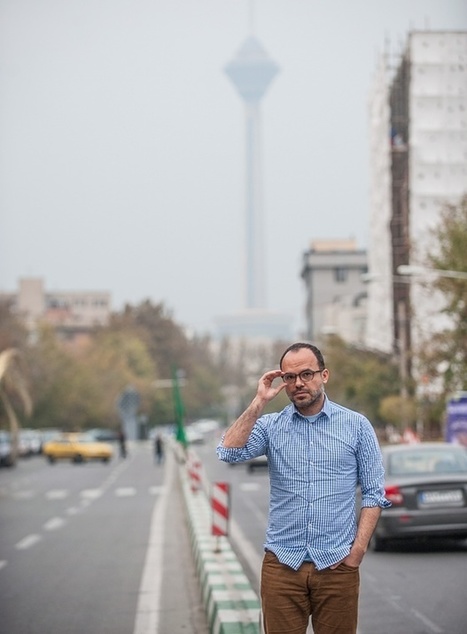
Hossein Derakhshan was imprisoned by the regime for his blogging. On his release, he found the internet stripped of its power to change the world and instead serving up a stream of pointless social trivia
EDUTOPIA has curated a list of blogs, articles, and videos for parents about fostering skills like kindness, empathy, gratitude, resilience, perseverance, and focus in children.
Roon offers premium add-ons for custom domains, custom analytics, and more. Price: Free. See site for add-ons pricing. Medium. Medium is a place to share stories and ideas.
In 2011 the (Dutch) book Society 3.0 was published. It became one of the best selling management books in the Netherlands. It is a story that gets you. Now there is the English updated version and we are ready to conquer the world with the story of Society 3.0.
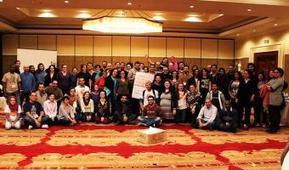
The Arab Bloggers Meeting has been a gathering point for bloggers in the Arab world since 2008 (Beirut 2008 and 2009, Tunis 2011). It is a space for peer learning where we can not only hear about each other’s experiences and provide support, but also to give feedback and share strategy. The Arab world is in particular need for these kinds of conversations, where many countries share uncertain futures. Among the topics discussed are digital security, storytelling, and internet governance structure in the Arab region.
Why have some authoritarian regimes tolerated the spread of new communications technologies? If China is any example, argues Nele Noesselt, it’s because they’re using social media to gauge public opinion, maintain their legitimacy, and avoid having to make serious political reforms.
One of the characteristics of Web 2.0, according to the man who coined the phrase, is to be found in its architecture. As far as Tim O'Reilly is concerned, Web 2.0 tools are configured in such a way that they 'get smarter the more people use them.' This facet was explained very clearly in Michael Wesch's excellent video Web 2.0 .. The Machine is Us/ing Us, which shows how web tools work better the more people use them. Social tagging for example, becomes increasingly stronger as people populate it with content and links. Blogs rely not only on content, but on users, and ultimately on the dialogue that ensues between all those who read the content. In his famous Wired article, Kevin Kelly predicted this by suggesting that Web 2.0 was about leveraging collective intelligence. Web 2.0 has marked a shift in emphasis from the personal computer to the web, and the services it conveys. Web 2.0 is qualitatively different to what preceded it. Essentially, where Web 1.0 was about pushed content, and a 'sticky internet' where users could change very little, the evolution of the web into Web 2.0 has been viewed as epitomising the power of participation, and arguably, it's also about the democratisation of the internet.
To get content containing either thought or leadership enter:
To get content containing both thought and leadership enter:
To get content containing the expression thought leadership enter:
You can enter several keywords and you can refine them whenever you want. Our suggestion engine uses more signals but entering a few keywords here will rapidly give you great content to curate.


 Your new post is loading...
 Scoop.it!