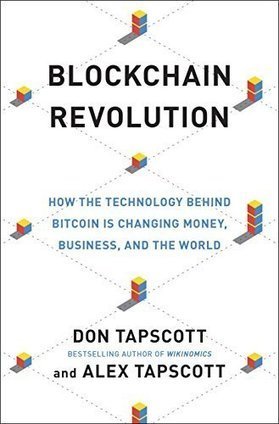
Blockchain technology will have a dramatic impact on business and society, says digital visionary Don Tapscott, by providing a secure, direct way of exchanging money, intellectual property and other rights and assets without the involvement of...
The blockchain is more than an information technology—it's an institutional technology. This means that institutional economics, as well as public choice and constitutional political economy, should provide the toolkit for 'blockchain studies'. That's the argument I'll make at the 2016 Public Choice Society conference this week, where I'll be presenting some of the latest research from the Melbourne…
This week I too was at the Sydney Blockchain Workshop, with both Darcy and Trent. I had the opportunity to participate in the 'Alternative economies and reputation-based systems' session, where I spoke about the economics of emergent economies built on blockchains. Also on the panel was Michel Bauwens (P2P Foundation), Primavera de Filippi (Harvard Berkman Center), and Gregory Meredith (Synereo, which…
This week I'm up in Sydney speaking at Blockchain Workshops. Today I presented these slides based on a working paper with Trent MacDonald (the paper will follow soon, and you can find the abstract below). Our basic argument is that we can explain extensive cooperation by entrepreneurs around the blockchain technology using both entrepreneurial theory and comparative institutional…
Ignore Bitcoin’s challenges. In this interview, Don Tapscott explains why blockchains, the technology underpinning the cryptocurrency, have the potential to revolutionize the world economy.
I clarify the core elements of cryptocurrency and outline a different approach to designing such currencies rooted in biomimicry (how nature functions and scales). I distinguish efficiencies of distributing process as a foundation for decentralized data and decision-making. Then I illustrate an implementation of a currency using these principles to bring a centuries old practice into the digital era. I address a basic vulnerability showing how these design principles can be deployed on a large scale. Finally, I confront social challenges involved in managing crypto systems and an invitation to partnership in building platform which addresses these issues.
Every week you get an invitation to a blockchain conference. Every magazine and newspaper has an article about blockchain, and every company you talk to has an “innovation lab” working on blockchain. You’ve spent more than a few idle moments imagining the possibility and promise blockchain could bring to, well, just about anything! But then you go back to work and nothing has changed, and things are getting even more complicated than before—from regulations to customer expectations. If this feels too close to reality, then this series of articles is for you.
We often hear about how federalism or 'Tiebout' sorting can limit government over-taxation. Taking this one step further some argue that the threat of secession or 'internal exit' has the same effect. And many steps further is the emerging phenomenon of 'cryptosecession.' Cryptosecession is the use of cryptographic and blockchain-based technologies (e.g. Bitcoin, Ethereum, Bitnation) to economically secede from…
I was a guest on the latest episode of the CryptoGoss podcast, talking all things bitcoin and blockchain, with a focus on emergent nations and emergent firms. Most of the discussion is centred on BITNATION—a collaborative platform for do-it-yourself governance, powered by Bitcoin 2.0 blockchain technology. But we also managed to cover my PhD thesis, RMIT's brand…
In December, some well-known tech and finance companies -- including Wells Fargo, Microsoft, JP Morgan and IBM -- revealed a new open source software calle
When Don Tapscott speaks, leaders listen. And this author, analyst, academic and consultant is in no doubt that blockchain technology will change the world – he tells us why
Quote shared via Kindle: "The IBM Institute for Business Value has conducted research into what it calls the five major “vectors of disruption” that will increase our leverage of physical assets as the result of the blockchain-enabled IoT."...
Paul Vigna explains how Bitcoin currency and the blockchain distributed ledger system are laying the groundwork for alternatives to today’s monetary system.
You do not escape the world of big government by wishing for a trustless set of technologies that collectively resemble a technocratic crypto-sovereign.
To get content containing either thought or leadership enter:
To get content containing both thought and leadership enter:
To get content containing the expression thought leadership enter:
You can enter several keywords and you can refine them whenever you want. Our suggestion engine uses more signals but entering a few keywords here will rapidly give you great content to curate.




 Your new post is loading...
 Scoop.it!