Your new post is loading...

|
Scooped by
jean lievens
July 22, 2016 5:26 AM
|
José Luis Carretero MiramarMember of the Institute of Economic Sciences and Self-management (ICEA)Spain Self-management, syndicalism, constituent processes, popular resistance, class positions… thi…
|
|
Scooped by
jean lievens
June 6, 2016 12:33 PM
|
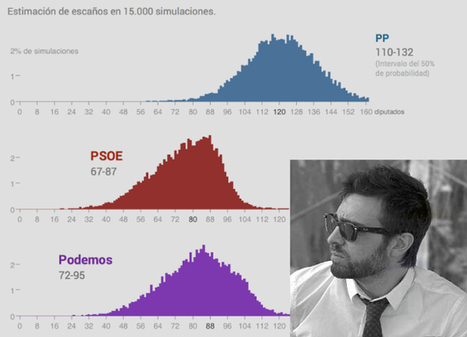
Who is going to win on June 26? Are minority parties in with a chance?
|
|
Scooped by
jean lievens
April 10, 2016 9:54 AM
|
Cooperation in achieving shared objectives and the provision of goods and services that meet the needs of the population and ensure a decent life is, or should be, the purpose of the economy. In this regard, the adoption of new information technologies and communication has greatly reduced transaction costs for coordination and collaboration. If in other historical moments the reduction of these costs explains the emergence of the "traditional" firm as we know it, during the last three decades it has generated an explosion of collaborative activity mediated by Internet through new models of organization, where citizens collaborate supported by digital platforms and other cuttingedge technologies for the achievement of common goals.
|
|
Scooped by
jean lievens
February 18, 2016 11:36 AM
|
An excerpt from "The Transformative Effects of Crisis: A Hitchhiker’s Guide to the New Economic Cultures in Spain and Greece" by Janosch Sbeih
|
|
Scooped by
jean lievens
February 13, 2016 9:21 AM
|
Popular participation, social ideals and ecological sustainability are key attributes of sustainable systems, Claire Fauset writes.
|
|
Scooped by
jean lievens
December 20, 2015 4:56 AM
|
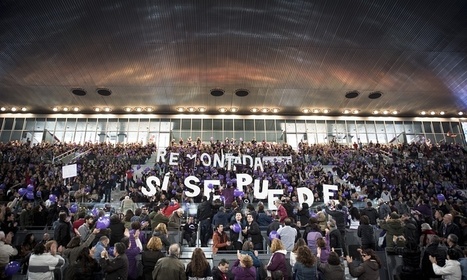
The country’s political convulsions and the rise of Podemos show that the fight against austerity did not die with Syriza in Greece
|
|
Scooped by
jean lievens
October 17, 2015 3:23 PM
|
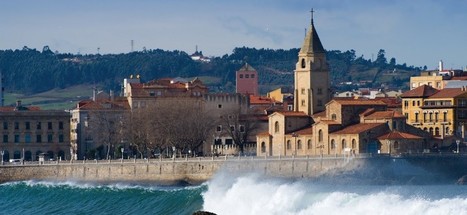
Somero 2015’s five days of workshops, hackathons, and keynotes concluded successfully last Sunday.
|
|
Scooped by
jean lievens
September 6, 2015 12:51 PM
|
A rundown of all that's happening in #Gijón this fall at Somero 2015
|
|
Scooped by
jean lievens
August 11, 2015 3:04 PM
|
|
|
Scooped by
jean lievens
August 9, 2015 6:25 PM
|
"By adopting an action research methodology, I inquire into how far the responses of citizens to the global economic crisis of 2008 lead to the emergence of a new economic culture in Spain and Greece. Since Southern European states follow austerity directives and do not offer sufficient support for their population, communities organise to provide for each other through cooperation and solidarity. Decentralised political and economic movements are building structures to challenge and replace established centralised institutions. As people drop out of the formal economy, they find material relief, ideological support and a sense of belonging in networks of alternative economic practices."
|
|
Scooped by
jean lievens
July 7, 2015 1:30 PM
|
Marinaleda, a remarkable Spanish town, has no unemployment, no police and almost free housing. It reminds us that alternative economic models are not only possible, they already exist.
|
|
Scooped by
jean lievens
June 22, 2015 8:18 AM
|
|
|
Scooped by
jean lievens
May 30, 2015 2:18 PM
|
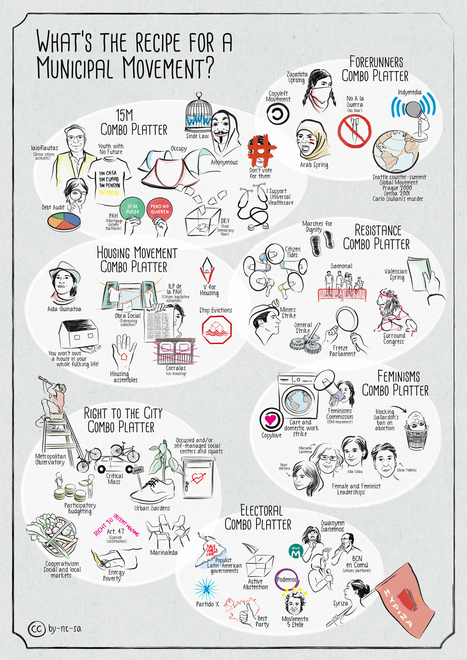
Carlos Delclós writes about new generation of activist-politicians advancing the municipal agenda in Spain.
|
|
|
Scooped by
jean lievens
June 19, 2016 3:33 PM
|
Programme has become a political issue in Europe's third largest city
|
|
Scooped by
jean lievens
May 30, 2016 3:19 PM
|
"No democracy" inside the euro: "If you vote for what you want, the EU will crush you".
|
|
Scooped by
jean lievens
February 25, 2016 8:44 AM
|
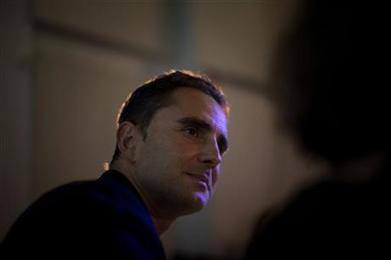
BARCELONA, Spain (AP) — A prominent French whistleblower and Spanish anti-corruption activists who triggered an investigation of a former International Monetary Fund chief announced Thursday they are designing a digital payment system aimed at excluding middlemen companies that make money from online purchases.
|
|
Scooped by
jean lievens
February 13, 2016 9:46 AM
|
Excerpted from from Janosch Sbeih: * Part One: Crisis as Opportunity “Crises offer the opportunity to implement policies that lead to profound political and economic changes on the fast track as societies are in turmoil and unable to organise...
|
|
Scooped by
jean lievens
February 11, 2016 2:17 PM
|
* M.A. Thesis: The Transformative Effects of Crisis: A Hitchhiker’s Guide to the New Economic Cultures in Spain and Greece. Janosch Sbeih.
|
|
Scooped by
jean lievens
October 29, 2015 3:25 AM
|
Barcelona Officials Plan Alternative Currency The New American The Bank of Spain, the Spanish central bank that has now been subordinated to the controversial European Central Bank (ECB), blasted the idea as “impossible in addition to being...
|
|
Scooped by
jean lievens
October 3, 2015 5:41 AM
|
"Since May 2011, the Spanish 15-M Movement (commonly referred as los indignados [the outraged]) has become a major player in the domestic political scenario. Public opinion data reveal that there is a cross-sectional support for the 15-M among the general population in Spain, affecting people of different ages, genders, employment situations and levels of urbanization. The data present a “movement of dissent” and confirm the crisis of the consensual culture of the Spanish political transition from Franco's regime to democracy. The 15-M challenges previous consensus and expresses the need to reform or to overcome the close-knitted institutional map designed by the elites driving the transition. The outraged movement advances and leads a new political culture based on widespread social dissent. Our data suggest an imbalance between the cultural and the political impact of the 15-M, and how this tension will be a central element of cultural and civic life in the next decades in Spain."
|
|
Scooped by
jean lievens
August 15, 2015 3:16 PM
|
“Cultures of Anyone studies the emergence of collaborative and non-hierarchical cultures in the context of the Spanish economic crisis of 2008. It explains how peer-to-peer social networks that have arisen online and social movements such as the Indignadoshave challenged a longstanding cultural tradition of intellectual elitism and capitalist technocracy in Spain. From the establishment of a technocratic and consumerist culture during the second part of the Franco dictatorship to the transition to neoliberalism that accompanied the ‘transition to democracy,’ intellectuals and ‘experts’ have legitimized contemporary Spanish history as a series of unavoidable steps in a process of ‘modernization.’ But when unemployment skyrocketed and a growing number of people began to feel that the consequences of this Spanish ‘modernization’ had increasingly led to precariousness, this paradigm collapsed. In the wake of Spain’s financial meltdown of 2008, new ‘cultures of anyone’ have emerged around the idea that the people affected by or involved in a situation should be the ones to participate in changing it. Growing through grassroots social movements, digital networks, and spaces traditionally reserved for ‘high culture’ and institutional politics, these cultures promote processes of empowerment and collaborative learning that allow the development of the abilities and knowledge base of ‘anyone,’ regardless of their economic status or institutional affiliations.”
|
|
Scooped by
jean lievens
August 9, 2015 6:29 PM
|
Cultures of Anyone studies the emergence of collaborative and non-hierarchical cultures in the context of the Spanish economic crisis of 2008. It explains how peer-to-peer social networks that have arisen online and social movements such as the Indignados have challenged a longstanding cultural tradition of intellectual elitism and capitalist technocracy in Spain. From the establishment of a technocratic and consumerist culture during the second part of the Franco dictatorship to the transition to neoliberalism that accompanied the ‘transition to democracy,’ intellectuals and ‘experts’ have legitimized contemporary Spanish history as a series of unavoidable steps in a process of ‘modernization.’ But when unemployment skyrocketed and a growing number of people began to feel that the consequences of this Spanish ‘modernization’ had increasingly led to precariousness, this paradigm collapsed. In the wake of Spain’s financial meltdown of 2008, new ‘cultures of anyone’ have emerged around the idea that the people affected by or involved in a situation should be the ones to participate in changing it. Growing through grassroots social movements, digital networks, and spaces traditionally reserved for ‘high culture’ and institutional politics, these cultures promote processes of empowerment and collaborative learning that allow the development of the abilities and knowledge base of ‘anyone,’ regardless of their economic status or institutional affiliations.
|
|
Scooped by
jean lievens
July 29, 2015 1:59 PM
|
Cultural leaders urge support for coalition to take radical change from city halls to national government
|
|
Scooped by
jean lievens
July 2, 2015 2:53 PM
|
Nick Dearden: Sixty years ago, half of German war debts were cancelled to build its economy. Yet today, debt is destroying those creditors
|
|
Scooped by
jean lievens
June 17, 2015 11:35 AM
|
The majority of times we think we are not free to think of the world as a unity of people all working towards human development, evolution and res-publica, which- as the Greeks taught us- means contributing to the development of the society's state of the art.
|




 Scoop.it!