Your new post is loading...

|
Scooped by
jean lievens
April 13, 2016 10:25 AM
|
SumOfUs is a global movement of consumers, investors, and workers all around the world, standing together to hold corporations accountable for their actions and forge a new, sustainable and just path for our global economy. It's not going to be fast or easy. But if enough of us come together, we can make a real difference.
|
|
Scooped by
jean lievens
May 27, 2015 12:44 PM
|
Monsanto may be expanding its operations in the United States, but elsewhere, lawmakers, scientists, activists and ordinary citizens are increasingly questioning (and in many cases banning) the introduction of GM crops, along with the use of the glyphosate herbicide (Monsanto’s Roundup).
|
|
Scooped by
jean lievens
April 9, 2015 4:07 PM
|
by Christina Sarich / Natural Society Dare to publish a scientific study against Big Biotech, and Monsanto will defame and discredit you. For the first time, a Monsanto employee admits that there is an entire department within the corporation with the simple task of ‘discrediting’ and ‘debunking’ scientists who speak out against GMOs. The WHO recently classified glyphosate, a chemical in Monsanto’s best-selling herbicide Roundup, as carcinogenic – news that is really heating things up with biote
|
|
Scooped by
jean lievens
January 26, 2015 9:53 AM
|
Company that has come under fire for its genetically modified seeds said its earnings fell 34% in its first fiscal quarter
|
|
Scooped by
jean lievens
January 13, 2015 4:01 AM
|
American biotechnology has turned Argentina into the world’s third-largest soybean producer, but the chemicals powering the boom aren’t confined to soy and cotton and corn fields. They routinely contaminate homes and classrooms and drinking water. A growing chorus of doctors and scientists is warning that their uncontrolled use could be responsible for the increasing number of health problems turning up in hospitals across the South American nation. In the heart of Argentina’s soybean business, house-to-house surveys of 65,000 people in farming communities found cancer rates two to four times higher than the national average, as well as higher rates of hypothyroidism and chronic respiratory illnesses. Associated Press photographer Natacha Pisarenko spent months documenting the issue in farming communities across Argentina.
|
|
Scooped by
jean lievens
October 5, 2014 2:48 PM
|
“While “big data” has enormous potential, the potential is for evil as well as for good. In promoting a “data revolution” as part of any monitoring and accountability mechanism attention must be given to privacy and rights issues. Miniaturization enabled broad participation as shown by the use of mobile cameras to document human rights violations or convene demonstrations during the Arab uprisings. Independent producers can use cheap handheld cameras to create movies able to compete with those from huge Hollywood studios. But “big data” requires harnessing big computing capabilities, so big that they are out of the reach of most civil society organizations and even of most developing countries.
|
|
Scooped by
jean lievens
June 26, 2014 1:45 PM
|
"We had offers from five journal editors to republish the study and we chose Environmental Sciences Europe (published by Springer) because the journal is open source, which will make available the raw data to the scientific community," Gilles-Eric Séralini told the press on Tuesday, six months after the retraction of the study by another publication which judged it insufficiently conclusive. The study, according to Séralini's team, demonstrates chronic toxicity in rats from the world's best-selling herbicide, Roundup, and to a lesser extent from NK603 maize, two products manufactured by the American company Monsanto.
|
|
|
Scooped by
jean lievens
June 21, 2015 1:18 PM
|
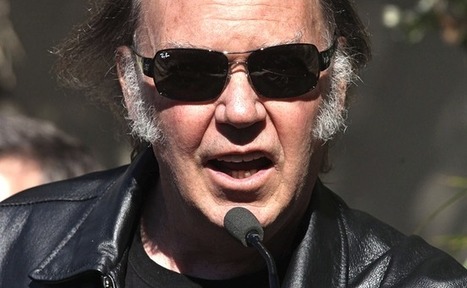
Monsanto, Starbucks and and Walmart criticized Neil Young for his new album, The Monsanto Years, which calls out these large corporations for hurting the common
|
|
Scooped by
jean lievens
May 19, 2015 11:27 AM
|
Synopsis: The decision of the restaurant chain Chipotle to go GMO-free is potentially a huge blow to the agbiotech industry. The decision opens up a crack in the previously solid front offered by the food industry in support of GMOs. Two factors are at work that will widen that crack: the growing unpopularity of GMOs and the pressure being felt by most sectors of the food industry to produce safer, healthier, and more sustainable products. Going GMO-free is a simple and manageable way for stores and brands to meet that demand. Consequently, a race to become GMO-free may be developing. But there is a third factor in this scenario: hazards in the GMO product pipeline. Many new GMOs are expected to be produced using a phenomenon called RNA interference which uses perfectly double stranded RNAs (dsRNAs). Our research shows that RNA molecules exactly like these were tried and rejected by medical researchers in the 1960s and 1970s as being too hazardous for medicine. The scientific literature evaluating the hazards of RNA molecules in crop biotechnology has so far overlooked this important historical research. As this research becomes better known, it will make defending the use of GMOs much harder.
|
|
Scooped by
jean lievens
March 8, 2015 5:25 PM
|
In the face of overwhelming competition skewed by the rules of free trade, farmers in El Salvador have managed to beat the agricultural giants like Monsanto and Dupont to supply local corn seed to thousands of family farmers. Local seed has consistently outperformed the transnational product, and farmers helped develop El Salvador’s own domestic seed supply–all while outsmarting the heavy hand of free trade.
|
|
Scooped by
jean lievens
January 15, 2015 4:13 PM
|
The Dutch parliament banned the sale of Roundup, Monsanto's favorite poison.
|
|
Scooped by
jean lievens
November 25, 2014 2:26 PM
|
If you are a farmer, you save your seeds, even more so if you are a subsistence farmer. It is part of what you do, it is what farmers have done for generations. Save the seeds from the harvest, selecting out the best seeds from the best crops, sowing the seeds, looking after the crop, harvesting the crop, saving the seeds, and so the cycle repeats itself season after season.
|
|
Scooped by
jean lievens
September 2, 2014 5:09 PM
|
I am glad that the future of food is being discussed, and thought about, on farms, in homes, on TV, online and in magazines, especially of The New Yorker’s caliber. The New Yorker has held its content and readership in high regard for so long. The challenge of feeding a growing population with the added obstacle of climate change is an important issue. Specter’s piece, however, is poor journalism. I wonder why a journalist who has been Bureau Chief in Moscow for The New York Times and Bureau Chief in New York for the Washington Post, and clearly is an experienced reporter, would submit such a misleading piece. Or why The New Yorker would allow it to be published as honest reporting, with so many fraudulent assertions and deliberate attempts to skew reality. ‘Seeds of Doubt’ contains many lies and inaccuracies that range from the mundane (we never met in a café but in the lobby of my hotel where I had just arrived from India to attend a High Level Round Table for the post 2015 SDGs of the UN) to grave fallacies that affect people’s lives. The piece has now become fodder for the social media supporting the Biotech Industry. Could it be that rather than serious journalism, the article was intended as a means to strengthen the biotechnology industry’s push to ‘engage consumers’? Although creative license is part of the art of writing, Michael Specter cleverly takes it to another level, by assuming a very clear position without spelling it out.
|


 Scoop.it!