


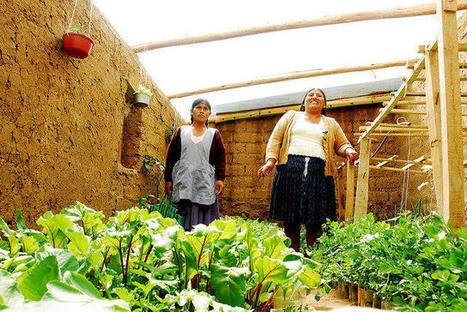
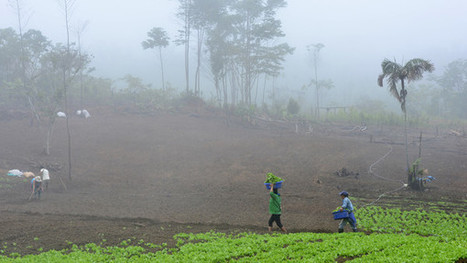
Residents of suburban Sucre in the greenhouse, built with support from a government urban agriculture program. (Frank Chávez / IPS)

 Your new post is loading... Your new post is loading...
 Scoop.it!
Residents of suburban Sucre in the greenhouse, built with support from a government urban agriculture program. (Frank Chávez / IPS) 
No comment yet.
Sign up to comment
Scoop.it!

By Sarah Miers, Consultant to the Social Innovation team at the MIFRoughly 54% of the world’s population resides in cities. By 2050, an additional 2.5 billion people will join this vast urban population.
Scoop.it!

After years of austerity, European citizens are organising resistance and voting against the politics of fear. Will they learn from Latin America's painful experience?
Scoop.it!
American biotechnology has turned Argentina into the world’s third-largest soybean producer, but the chemicals powering the boom aren’t confined to soy and cotton and corn fields. They routinely contaminate homes and classrooms and drinking water. A growing chorus of doctors and scientists is warning that their uncontrolled use could be responsible for the increasing number of health problems turning up in hospitals across the South American nation. In the heart of Argentina’s soybean business, house-to-house surveys of 65,000 people in farming communities found cancer rates two to four times higher than the national average, as well as higher rates of hypothyroidism and chronic respiratory illnesses. Associated Press photographer Natacha Pisarenko spent months documenting the issue in farming communities across Argentina.
Scoop.it!
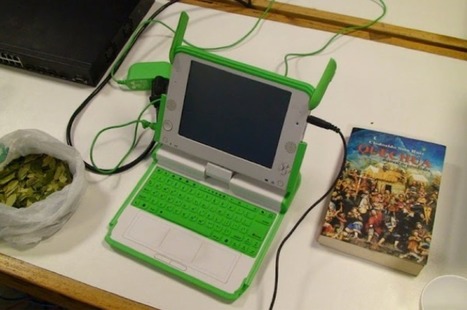
Standing atop a high stage at the Interactive Technology Camp in Lima, public school teacher Eleazar Mamani Pacho flips through several slides featuring the rural elementary school where he works as principal and teacher. The images introduce the Aymara students and indigenous community in the Andean village of Lacachi where he teaches among to his audience, a mixed crowd of elite international policy makers, global education experts, and urban corporate representatives of IT firms sponsoring the education-oriented event – from Microsoft, to Intel and Telefónica. Organized in 2012 by Peru’s Ministry of Education in collaboration with the World Bank and US Embassy at the University of Lima, the two-day event drew over 1000 participants to Peru’s capital city to hear presentations on the latest innovations in educational technologies from a range of stakeholders, institutional actors, and individuals – including educators like Pacho, the only speaker to represent rural schools at the event. A few the images he lingers on showcase his students in the regional dress and dance performed during traditional festivities in Puno, others feature them in groups over the dry flat fields of Puno’s Altiplano. And others feature students working on class activities developed by Pacho which had earned him the invitation to travel from Puno to participate in the global event – those developed as classwork and digital pedagogy for the XO Laptop, the centerpiece of the MIT-launched global One Laptop Per Child initiative.
Scoop.it!

Europe has been recently experiencing a new wave of economic disruption driven by the Internet: the so-called Sharing Economy. Companies like Uber, a service that connects drivers and passengers for short-rides, andAirbnb, a short-term apartment and room rental service, want to change how we take taxis and how we do tourism around the Old Continent.
Scoop.it!
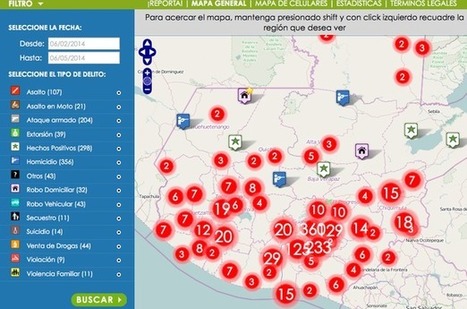
These numbers come courtesy not of Guatemalan law-enforcement but ofAlertos.org, a new platform that recruits citizens to report crimes. And they've enlisted in the effort, using email, Twitter, Facebook, mobile apps, and text messaging to chronicle thousands of criminal activities since last year—in a country where a hobbled police force is struggling to address the fifth-highest murder rate in the world.
Scoop.it!

The Union of South American Nations (UNASUR) has approved plans for a optic fibre mega-ring.

Nicholas Patrie's curator insight,
December 8, 2014 6:15 PM
I did not realize that the countries of south America don't have most of the means of communication that we have here in the US. This ten year plan they have set forward to connect the countries with fiber-optics is very similar to what we have here in our country with all the different cable companies. i wonder since they have much different landscapes and geography if it will be able to set up power lines easily from country to country. i have to believe that setting up power lines through the mountains and through the amazon have to be incredibly tough and cannot be good for the environment. Environmentalists must not be too happy for this one.

Michael Mazo's curator insight,
December 13, 2014 9:43 PM
Fibre-optic cables have been a growing trend across the globe. Fibre optics bring about fast communication speeds and remove the need to rely on others for telecommunications. In building this fibre-optic mega ring South America is taking a step towards an advanced technology that will soon be adopted by everyone across the globe. This brings about more coverage and a cheaper form of communication. UNASUR decision to pass this bill will move South America that much close towards a developed region
Scoop.it!
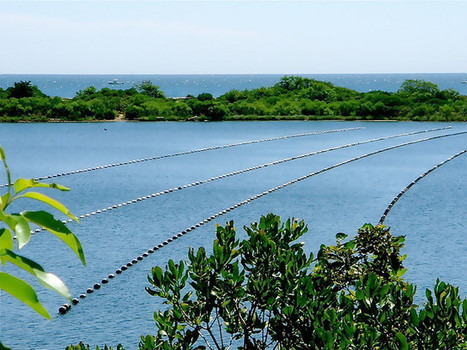
Ricardo Radulovich is building cheap, sustainable sea-farms that could revolutionize agriculture, clean our oceans, and feed millions.
Scoop.it!

In early July, the Uruguayan government had included an article in the Accountability Bill (one omnibus bill that mostly deals with administrative issues), which extended the term of copyright from 50 to 70 years after the author’s death. Article 218 (that was its number in the bill) was included at the request of the Uruguayan Chamber of the Record Industry (CUD, in Spanish) in coordination with Uruguay’s General Association of Authors (AGADU, in Spanish), entities that historically led the copyright law reform, succeeding in imposing growing restrictions. This time, for the first time, they received a political setback, due to strong opposition from many sectors.
|
Scoop.it!
From
www

Imagine a place where citizens can deal with the state entirely online, where all health records are electronic and the wait for emergency care is just seven minutes. Singapore? Switzerland? Try Colima, Mexico.
Scoop.it!

Anyone trying to understand Latin American politics should pay close attention to urban areas.
Scoop.it!

Many commentators have been highlighting the novelty of the Ecuadorian constitution’s recognition of the right to nature and even the concepts of buen vivir and sumak kawsay (‘good living’ in Spanish and Quechua respectively), analyzing them as though they were simple variations of liberal concepts that can be found in other Latin American constitutions. However, the subject encompasses themes that have not yet been sufficiently explored.
Scoop.it!

La Coordinadora of the Lower Lempa and the Bay of Jiquilisco in El Salvador is a grassroots, community-led organization of 27,000 families in more than 100 communities. It is transforming economic and political power and the health of the environment, across the department of Usulután. Pillars of La Coordinadora are participatory democracy, empowerment of women and youth, and – still in the works - education and health care for all. The communities are generating income through a green economy based on ecological agriculture and fishing. La Coordinadora is working to build food sovereignty, protect ecosystems, and preserve the largest remaining mangrove forest in the area.
Scoop.it!
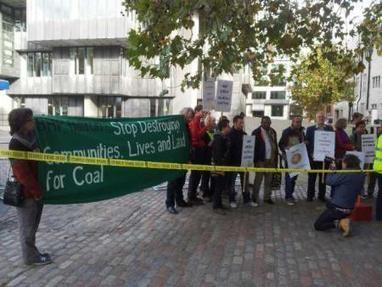
There has to be genuine change and a move away from a model of growth and unsustainable dirty extraction. Otherwise all we are doing is re-arranging the deckchairs on the Titanic to give everyone an equal view of the iceberg.
Scoop.it!

We live in a world where cars can fold into themselves and may soon be levitating. However, this rapid pace of innovation in the automotive sector is not yet crossing over to cities at large. Cities are traditionally slow and resistant to change.
Scoop.it!
trailer of a new documentary about the networked cultures and activisms in brazil and latin america ... (seeking funding at this stage)
Scoop.it!
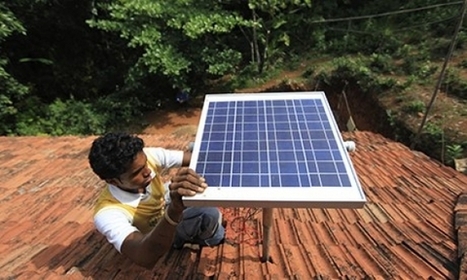
Peru, where currently only some 66% of the population has access to electricity, will install solar panels in a National Photovoltaic Household Electrification Program for 500,000 of the poorest households.

Shareezan's curator insight,
January 22, 2014 11:02 PM
From what i can see, they are installing solar panels in Peru and it's good for the poor. the poor can use the solar panels so that they no need to waste their money on oil fuels. oil fuel is also dangerous to people health. I think the NPHE is doing the very good thing to the poor. But solar panels are so expensive. Solar panels will help them save money, save current and a lot. I wonder where they get the money to pay for the Solar Panels? I wonder why solar panels is so expensive? they should lower down the price.
Scoop.it!

A window into the development of a movement for worker cooperatives in Argentina and its inspiration to workers fighting for dignity and economic equality around the world.
|




