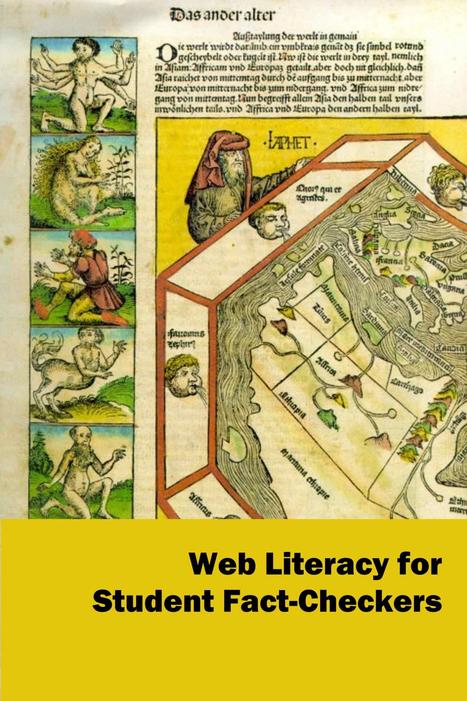
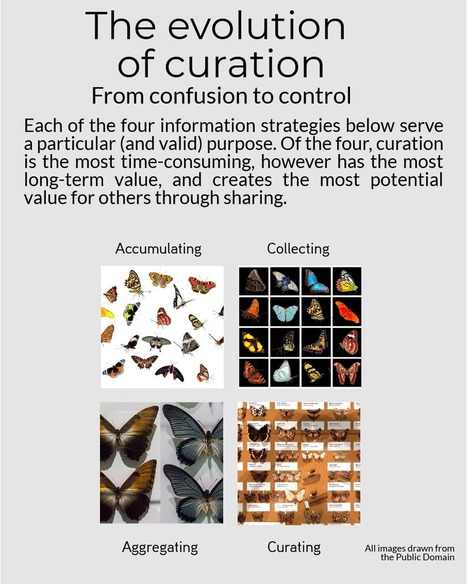
On June 6 2018 there was an interesting webinar on critical reading in higher education (this was the ACRL instruction Section Annua


 Your new post is loading...
 Scoop.it! On June 6 2018 there was an interesting webinar on critical reading in higher education (this was the ACRL instruction Section Annua 
No comment yet.
Sign up to comment
Scoop.it!

On 8 September 2017, we’ll launch a ‘Grow Your Personal Learning Network’ online course for social services staff. This is a course that will be open to anyone who is interested in learning more about the web and social media to support them build personal and professional networks and promote lifelong learning. Given this imminent launch, we thought it timely to share the work we did last year around growing personal learning networks. AN INTRODUCTION Over 2016/17, in partnership with both the University of Strathclyde and University of Dundee, we piloted a ‘Grow your personal learning network’ online course. The six-week course aimed to support two cohorts of students of social work – first year and Masters’ students – to use the web and social media to improve use of, and sharing of information and knowledge and to build their own connections, both personal and professional. It also aspired to promote lifelong learning and to support learning in the transition from education to practice. The idea for running such a course was originally pitched to the Heads of Social Work group, which prompted interest from the University of Strathclyde and the University of Dundee. There was recognition from both of the potential value of social media for improving students’ access to information for education and practice, and for creating their own local, as well as wider networks. This summary report is based on a follow-up review session with course leads at both universities, as well as feedback from students posted to the online forum of each respective course. RATIONALE Personal Learning Networks is different to traditional learning and offers to following benefits to support improved use of evidence: Autonomous and self-directed, with learner controlling how, when and ‘who’ they connect with. Learning is social and adaptable to individuals needs rather than static / prescriptive course content. Continuous part of individuals work flow and not an onerous add on. Bite-sized. Inclusive, supporting connections across sector, professional and non-professional boundaries and hierarchies as well as inclusive of traditional research reports, practitioner wisdom, lived experience and co-creation of new knowledge through interaction. The learning from the two pilots would be shared to support effective use of evidence and knowledge and will also link into strategic conversations, including the review of Social Work Education and Improving Use of Evidence strand in the Social Services Strategy 2015-20. THE COURSE OUTLINE The online courses were set-up on Iriss’ WordPress platform using CoursePress Pro. This provided a closed online learning forum for each cohort. Every week a set of activities were released, together with tips and tools and links to videos and external readings and resources. Each week focused on a different tool or topic. These included: Understanding Personal Learning Networks Twitter Diigo social bookmarking Evernote Scoop It! Personal reflection The programme for the two cohorts was slightly different, tailored and agreed with course leads. For example, University of Dundee requested that a module on Evernote be included, whereas, the University of Strathclyde covered Twitter over two weeks. Activities for each week included engaging with a range of multimedia: written texts, videos, and audio content. It was expected that students would engage with each other using social media they were learning about, such as Twitter and Diigo, as part of the course, and share reflections in the closed online forums as part of the tasks set. The online format supported a self-directed learning approach, which included time management and prioritising in workflow. It offered each cohort of students an online forum where they could post their thoughts and reflections on each week’s tasks, and support each other. The facilitators also offered comment and encouragement. Arguably, this provides a cost-effective way to provide learning; costs were only incurred for the WordPress installation and update. Facilitation, is ‘extra’ in terms of resourcing this. Facilitation The courses were facilitated (online) by an Iriss team member and the university course lead. Facilitators encouraged participation and provided comment where appropriate. The students largely led the discussions, responding to, and commenting on, questions posed as part of the tasks. By way of introduction to the course, the Iriss team provided a one-hour, face-to-face introductory session to both cohorts. ACCREDITATION The courses did not form part of the curriculum at either university and were not formally assessed. On providing evidence of learning and participation in the course, open badges were issued by Iriss in partnership with Scottish Social Services Council (SSSC). Application for open badges was promoted by the course facilitators and was designed to encourage them to think about CPD and post-registration accreditation of learning, as required by qualified and practising social workers. UNIVERSITY OF STRATHCLYDE PILOT: FIRST YEAR UNDERGRADUATE PROGRAMME The course was introduced as part of the ‘Preparing for lifelong learning’ module, which was also six weeks long. This took place during the first weeks of class time in Year 1 of the social work programme, with students on campus. 34 out of 35-student class registered for the course. The PLN course was pitched by the course lead as a way for students, new to university, to take up new tools that would help them in their current studies. It was also promoted as something that would help them as they moved into practice in several years time. Participation was generally good with approximately 15 students participating throughout the six weeks. Only through comment and / or completion of tasks could we measure the level of participation. It’s possible that a number of those who didn’t post comments or complete tasks (but took a more observatory or ‘lurker’ approach), did actually read material, watch videos etc and got some learning from it. Approximately 11 students participated in the Twitter discussion in the second week. A Storify report of the discussion is available: https://storify.com/iriss/grow-your-personal-learning-network 13 students applied for a SSSC open badge at the end of the programme to receive acknowledgement of completion. Overall the course was well received and feedback was largely positive from students. Regular contact/encouragement from Graham (course lead) was considered to have been helpful in promoting engagement – through weekly face-to-face as well as online contact. It was deemed useful ‘to be directive’, encourage the students and ‘check in.’ Feedback from students: “People do not need to wait to get taught, and control over learning transfers to individuals” “I can guarantee that without this gentle push into the social media world I would not have considered it…. This will be invaluable for my further development and education in the years to come as a social work student.” Student plans to continue using social media to support learning: Build in social media/tools to workflow as a habit Use in fallow periods eg travel time Reflection – consolidate/learn from mistakes/put new ideas into action Identify who/what to read/follow Organise/bookmark useful web links Be proactive online in seeking/asking for help Speak to classmates for recommendations about what’s good online Set up own groups to share ideas and ask questions on topics we are unsure about. UNIVERSITY OF DUNDEE PILOT: MASTERS’ PROGRAMME The course was introduced as part of the ‘Leading for change’ module. This was during the second term and final year of the two-year social work Masters programme. It was launched with an introductory face-to-face session, just before students went out on placement. As such, students had no other class contact time during the six weeks of the course. 27 students registered for the PLN course. The PLN course was also open to Educational Psychology students should they wish to engage. This was with a view to promoting cross-sectoral learning, however, only one Ed. Psych. student engaged. The course leader (Shona) was keen to use the PLN course to encourage students to take more of a lead in their own learning. This was about encouraging them to make their own connections across professional and sectoral boundaries, and beyond prescribed university course outlines as core values in lifelong learning to be taken into practice. Unfortunately, participation was generally low, with three or four students actively contributing week to week. In contrast to University of Strathclyde only one student got involved in the Twitter discussion; only one applied for a SSSC open badge. Feedback from students: “This course provided a simple, yet clear overview of some of the apps and tools available to people to help support their learning and manage information.” “I was encouraged to set up a Twitter account and it has proved invaluable this week as I was unable to attend a national Visible Learning conference with John Hattie on Monday, but could keep up to date with all the latest information and research through people tweeting.” “Didn’t make me consider my own role as a leader in practice.” SHARED LEARNING FROM THE TWO PILOTS For participating students: Encourages not just good or best practice, but also ‘next’ practice Encourages continuous learning Alternative viewpoints to your own/can challenge you to think more critically Provides helpful tips (eg through blogs or articles or groups sharing experiences/advice) Improves digital literacy Links with need for CPD throughout career and SSSC requirements Encourages and supports peer support Builds network of people/organisations to share with and learn from Helped them to overcome ‘bad name’ /stigma that social media sometimes gets by showing it usefulness when used ‘correctly’ For facilitators (Iriss and university leads): It worked best to run the course over class time, where university lead could check-in face-to-face with students, address any issues, and encourage participation. The optional nature of course meant that other pieces of work which were accredited got priority, especially when faced with the demands of placements. Facilitation is a not a huge pull on time and generally involves prompting with questions, and providing own insights and comments each week. Allocating time to this was supportive to students and the facilitators themselves. Format and content of workshops was well received – participating students commented that the video tutorials were helpful in understanding how the tools could be used. Cost-effective way to provide learning – the course was built on an already existing WordPress installation.
Scoop.it!

With the vast amount of content that is shared on the Internet, content curation is becoming an essential digital literacy skill for teachers and students.
Scoop.it!

Elizabeth Hutchinson, Head of Schools' Library Service in Guernsey, writes that information literacy is at the centre of student learning, making the role of library staff as important as ever. School libraries and school library professionals have a huge role to play in supporting teaching and... Via Afroditi Fragkou
Scoop.it!
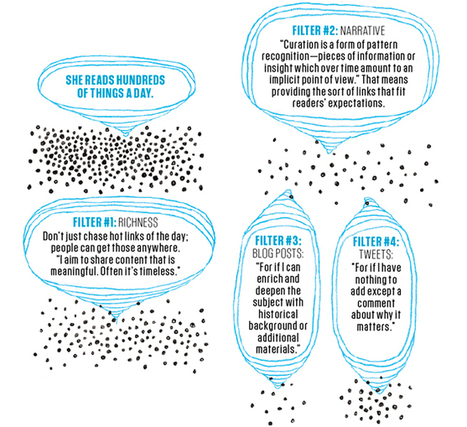
Ibrar Bhatt writes: "Digital curation therefore is not just about finding relevant material, although that is a significant part of it, but is also about creating a specific and unique experience by utilising the resulting materials which then... Via RIVKI GADOT
Scoop.it!
Content Curation for Knowledge Management and Information Literacy. Presentation at Young European Biologists. Heidelberg November 2017
Scoop.it!
 David Harvey - WikipédiaDavid Harvey est né dans le Kent en Angleterre. Il commence son parcours universitaire au département de géographie de l' Université de Cambridge où il obtient son doctorat en géographie (Ph.D) en 1961. Il reçoit alors des influences classiques régionale et historique, qui marqueront sa thèse de doctorat retraçant les changements de localisation de la production de houblon dans le Kent au siècle. information landscapes information literacy is discursive mapping!
Gilbert C FAURE's insight:
landscapes and information literacy... difference and diversity place is a locus of collective memory opposite to space!!! xenophilia, love of difference
Scoop.it!

Individuals and organisations are deluged with information. Getting the most out of it, finding, interpreting and using it requires skills, know-how and judgement. The ability to navigate effectively and confidently through the information maze is known as information literacy. InformAll exists to develop understanding of the importance and relevance of information literacy. We provide a …
Scoop.it!

From
www

How can educators teach elementary and middle school students to be critical consumers of news and media? We asked media literacy experts—teachers and librarians—for their best tips. Here’s what they had to say. Via Nik Peachey
Scoop.it!
The next session I attended at the i3 conference was Edward Luca (an academic librarian at the University of Sydney) on Truly embedded librarianship: rethinking information literacy through understanding disciplinary information practices in higher education. Via Elizabeth E Charles
Scoop.it!
Online learning, new media, connectivism, MOOCs, personal learning environments, new literacy, and more from Stephen Downes Via Dr. Susan Bainbridge
|
Scoop.it!
New Definition (2018) Via Elizabeth E Charles
Scoop.it!

To assess the credibility of the information they find online, students should turn to the power of the web to determine its trustworthiness. Via Afroditi Fragkou
Scoop.it!

Join us on March 22-24, 2018, for the Transmedia Literacy International Conference. This event brings together a vibrant and global community of media and education researchers and innovators. The conference is organized as a part of the dissemination activities of the TRANSLITERACY H2020 action, a project that involves researchers from Europe, Latin America and Australia.…
Scoop.it!
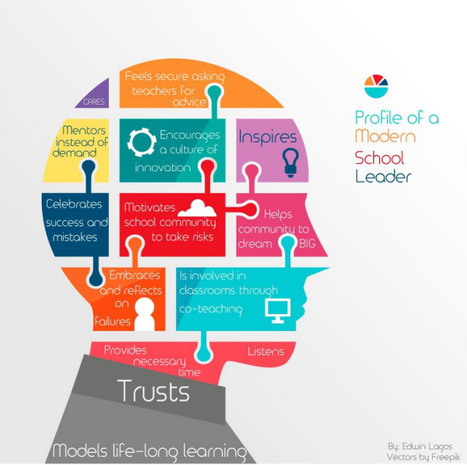
New measures to boost key competences and digital skills, as well as the European dimension of education
1. A Council Recommendation on Key Competences for Lifelong Learning: Building on the Recommendation on Key Competences adopted in 2006, this proposal brings forward important updates reflecting the rapid evolution of teaching and learning since then. It aims to improve the development of key competences of people of all ages throughout their lives and to provide guidance to Member States on how to achieve this objective. A particular focus is placed on promoting entrepreneurial drive and innovation-oriented mindsets in order to unlock personal potential, creativity and self-initiative. Moreover, the Commission is recommending steps to foster competences in science, technology, engineering and mathematics (STEM) and motivate more young people to embark on a career in these fields. The proposals made today should also be seen as part of the answer to urgently improve European education systems to face the many challenges highlighted in the latest PISA survey. More generally, the measures will support Member States in better preparing learners for changing labour markets and for active citizenship in more diverse, mobile, digital and global societies.
2. A Digital Education Action Plan that outlines how the EU can help people, educational institutions and education systems better adapt to life and work in an age of rapid digital change by: making better use of digital technology for teaching and learning; developing the digital competences and skills needed for living and working in an age of digital transformation; and improving education through better data analysis and foresight.
Initiatives include supporting schools with high-speed broadband connections, scaling up a new self-assessment tool for schools on the use of technology for teaching and learning (SELFIE) and a public awareness campaign on online safety, media literacy and cyber hygiene.
3. A Council Recommendation on common values, inclusive education and the European dimension of teaching: This initiative proposes ways in which education can help young people understand the importance of and adhere to common values set out in Article 2 of the Treaty of the European Union. It aims at strengthening social cohesion and contributing to fight the rise of populism, xenophobia, divisive nationalism and the spreading of fake news. The proposal also strengthens inclusive education to promote quality education for all pupils as well as the European dimension of teaching, so children also learn about Europe's common heritage and diversity and get a good understanding of the functioning of the EU. To support these aims, the Commission will take steps to increase virtual exchanges among schools, notably through the successful e-Twinning network, and boost school mobility through the Erasmus+ programme.
Learn more / En savoir plus / Mehr erfahren:
https://www.scoop.it/t/21st-century-learning-and-teaching/?&tag=EU
Via Gust MEES

Gust MEES's curator insight,
January 31, 2018 10:07 AM
New measures to boost key competences and digital skills, as well as the European dimension of education
1. A Council Recommendation on Key Competences for Lifelong Learning: Building on the Recommendation on Key Competences adopted in 2006, this proposal brings forward important updates reflecting the rapid evolution of teaching and learning since then. It aims to improve the development of key competences of people of all ages throughout their lives and to provide guidance to Member States on how to achieve this objective. A particular focus is placed on promoting entrepreneurial drive and innovation-oriented mindsets in order to unlock personal potential, creativity and self-initiative. Moreover, the Commission is recommending steps to foster competences in science, technology, engineering and mathematics (STEM) and motivate more young people to embark on a career in these fields. The proposals made today should also be seen as part of the answer to urgently improve European education systems to face the many challenges highlighted in the latest PISA survey. More generally, the measures will support Member States in better preparing learners for changing labour markets and for active citizenship in more diverse, mobile, digital and global societies.
2. A Digital Education Action Plan that outlines how the EU can help people, educational institutions and education systems better adapt to life and work in an age of rapid digital change by:
Initiatives include supporting schools with high-speed broadband connections, scaling up a new self-assessment tool for schools on the use of technology for teaching and learning (SELFIE) and a public awareness campaign on online safety, media literacy and cyber hygiene.
3. A Council Recommendation on common values, inclusive education and the European dimension of teaching: This initiative proposes ways in which education can help young people understand the importance of and adhere to common values set out in Article 2 of the Treaty of the European Union. It aims at strengthening social cohesion and contributing to fight the rise of populism, xenophobia, divisive nationalism and the spreading of fake news. The proposal also strengthens inclusive education to promote quality education for all pupils as well as the European dimension of teaching, so children also learn about Europe's common heritage and diversity and get a good understanding of the functioning of the EU. To support these aims, the Commission will take steps to increase virtual exchanges among schools, notably through the successful e-Twinning network, and boost school mobility through the Erasmus+ programme.
Learn more / En savoir plus / Mehr erfahren:
https://www.scoop.it/t/21st-century-learning-and-teaching/?&tag=EU
Scoop.it!

The GWLA Student Learning Outcomes task force analyzed the data from over 42,000 first-time, first-year freshmen and over 1700 distinct courses from 12 research institutions to determine the impact(s) of information literacy instruction integrated into course curriculum on several student success measures. Key findings include: Student retention rates are higher for those students whose courses include an information literacy instruction component. On average, First-Year GPA for students whose courses included information literacy instruction was higher than the GPA of students whose courses did not. Students exposed to library instruction interactions successfully completed 1.8 more credit hours per year than their counterparts who did not participate in courses containing information literacy instruction.
Scoop.it!
Presentation at ECIL 2017 "Information Literacy at the work place" focusing on knowledge management in research settings through content curation using Scoop.i…
Scoop.it!

Social collaboration, knowledge management, leadership 2.0, enterprise 2.0, digital transformation, Bonnie Cheuk
Scoop.it!
Scoop.it!
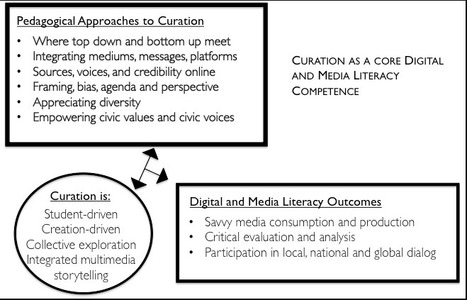
Article: Exploring Curation as a core competency in digital and media literacy education.
In today’s hypermedia landscape, youth and young adults are increasingly using social media platforms, online aggregators and mobile applications for daily information use. Communication educators, armed with a host of free, easy-to-use online tools, have the ability to create dynamic approaches to teaching and learning about information and communication flow online.
In this paper we explore the concept of curation as a student- and creation-driven pedagogical tool to enhance digital and media literacy education. We present a theoretical justification for curation and present six key ways that curation can be used to teach about critical thinking, analysis and expression online.
We utilize a case study of the digital curation platform Storify to explore how curation works in the classroom, and present a framework that integrates curation pedagogy into core media literacy education learning outcomes.
Learn more / En savoir plus / Mehr erfahren:
https://gustmees.wordpress.com/2013/04/25/learn-every-day-a-bit-with-curation/
http://blog.scoop.it/2011/11/30/lord-of-curation-series-gust-mees/
http://www.scoop.it/t/21st-century-learning-and-teaching/?&tag=Curation
https://gustmees.wordpress.com/2015/05/13/andragogy-adult-teaching-how-to-teach-ict/
Via Gust MEES
Gust MEES's curator insight,
July 12, 2017 9:16 AM
Article: Exploring Curation as a core competency in digital and media literacy education.
In today’s hypermedia landscape, youth and young adults are increasingly using social media platforms, online aggregators and mobile applications for daily information use. Communication educators, armed with a host of free, easy-to-use online tools, have the ability to create dynamic approaches to teaching and learning about information and communication flow online.
In this paper we explore the concept of curation as a student- and creation-driven pedagogical tool to enhance digital and media literacy education. We present a theoretical justification for curation and present six key ways that curation can be used to teach about critical thinking, analysis and expression online.
We utilize a case study of the digital curation platform Storify to explore how curation works in the classroom, and present a framework that integrates curation pedagogy into core media literacy education learning outcomes.
Learn more / En savoir plus / Mehr erfahren:
https://gustmees.wordpress.com/2013/04/25/learn-every-day-a-bit-with-curation/
http://blog.scoop.it/2011/11/30/lord-of-curation-series-gust-mees/
http://www.scoop.it/t/21st-century-learning-and-teaching/?&tag=Curation
https://gustmees.wordpress.com/2015/05/13/andragogy-adult-teaching-how-to-teach-ict/

Oskar Almazan's curator insight,
July 12, 2017 9:39 AM
In today’s hypermedia landscape, youth and young adults are increasingly using social media platforms, online aggregators and mobile applications for daily information use. Communication educators, armed with a host of free, easy-to-use online tools, have the ability to create dynamic approaches to teaching and learning about information and communication flow online. In this paper we explore the concept of curation as a student- and creation-driven pedagogical tool to enhance digital and media literacy education. We present a theoretical justification for curation and present six key ways that curation can be used to teach about critical thinking, analysis and expression online. We utilize a case study of the digital curation platform Storify to explore how curation works in the classroom, and present a framework that integrates curation pedagogy into core media literacy education learning outcomes. 2 
Rosemarri Klamn's curator insight,
July 31, 2017 8:01 AM
This concept is new to me, although I have practiced this in different forms. It seems logical to utilize this pedagogical approach to curation for students, parents, and teachers alike. We are all learners in today's rapid pace in technological changes.
Scoop.it!

Today, I keynoted the Annual Learning & Teaching Conference at Queens University Belfast. My title was the same as that of my ebook, The Essential Elements of Digital Literacies, but it included new and updated context. You can find my slides... | Literacies | Dr. Doug Belshaw consults around digital literacies, Open Badges, and educational technology.
Scoop.it!

Reading between the lines with Newsela Founder and CEO Matt Gross. INTERVIEW | by Victor Rivero Reading on a level a student can connect to, and a window to what’s happening in the world—that’s the basic gist. Matt Gross (pictured) is Founder and CEO of Newsela, what one might call a “literacy technology” company. Newsela…
|