Your new post is loading...

|
Scooped by
Gilbert C FAURE
April 13, 2023 11:44 AM
|
In this blog post, you’ll learn how to boost your content curation by providing added value to your audience.
|
|
Scooped by
Gilbert C FAURE
February 15, 2023 6:01 AM
|
Start Today Smarter: Continuous and Collaborative Learning
|
|
Scooped by
Gilbert C FAURE
January 28, 2023 2:56 AM
|
La búsqueda del conocimiento en una Sociedad de la Inteligencia
|
|
Scooped by
Gilbert C FAURE
January 11, 2023 5:34 AM
|
Les recherches en Sciences de Gestion et Sciences des Systèmes d'Information ont proposé diverses analyses des bénéfices des réseaux sociaux et de leurs processus d’adoption. Toutefois, les usages des réseaux sociaux sont multiples et chacun mériterait d’être approfondi. En particulier, la curation digitale est une pratique qui s’impose comme un objet de recherche particulièrement pertinent. Il propose une nouvelle utilisation des réseaux sociaux numériques, potentiellement bénéfique à l’entreprise. Ainsi, il est proposé de rapprocher les notions de curation, réseaux sociaux numériques et connaissance organisationnelle au travers de la problématique suivante : en quoi l’usage professionnel de la curation sur les réseaux sociaux permet-il d’améliorer les connaissances organisationnelles ? Pour y répondre, cette question a été articulée en trois sous-problématiques, permettant trois différents niveaux d’analyse. La première aborde les facteurs influençant l’adoption de la pratique de curation par l’individu ; la deuxième propose d’analyser l’intérêt des réseaux sociaux en tant qu’outil de support pour effectuer la curation de contenu ; la dernière associe les deux notions de curation et réseaux sociaux dans le cadre organisationnel, afin d’en comprendre ses bénéfices. Les cadres théoriques de la richesse des médias, la présence sociale, l'UTAUT et le model SLAM de l'apprentissage organisationnel ont été mobilisés à cet effet. Un questionnaire récoltant 841 réponses et 14 entretiens semi-directifs ont permis de confirmer la présence d'un lien positif entre l'adoption de l'usage de la curation sur les réseaux sociaux et l'amélioration des connaissances individuelles et collectives. Afin qu’elles puissent être converties en connaissances organisationnelles, il a été prouvé que les flux informationnels de l'entreprise doivent être alignés avec les différents niveaux de stock de connaissances.
|
|
Scooped by
Gilbert C FAURE
November 18, 2022 9:51 AM
|
2014 content curation for personal knowledge management
|
|
Scooped by
Gilbert C FAURE
September 14, 2022 2:30 PM
|
Similar to the curator of a gallery who selects relevant artwork for visitors to see, a content curator selects meaningful resources to engage and educate a specific audience. Due to the abundance of online information, learning professionals now have the opportunity to create curated courses from existing content. Through content curation, you can select from the wealth of information online, organize it and find ways to make it more valuable. As a curator and course creator, you provide structure to this open-ended stream of information. This is another way to satisfy the learning needs of a specific audience. Audience members
|
|
Scooped by
Gilbert C FAURE
August 19, 2022 6:02 AM
|
Comparison of social bookmarking curation tools and services.
|
|
Scooped by
Gilbert C FAURE
July 5, 2022 2:07 PM
|
Pour vous aider à concevoir une stratégie de curation de contenu responsable, nous vous proposons dans cet article cinq idées et bonnes pratiques à suivre.
|
|
Scooped by
Gilbert C FAURE
April 15, 2022 2:24 AM
|
In this interview, we talked about the nature of human legacy, the knowledge isolation problem, serendipitous spaced repetition, social knowledge management and collective intelligence, learning in public, the impact of social accountability on note-taking, and more.
|
|
Scooped by
Gilbert C FAURE
April 7, 2022 10:55 AM
|
Curation Analysis System (CAS): A method for analysing digital media content curation
|
|
Scooped by
Gilbert C FAURE
March 26, 2022 5:49 AM
|
Expanding the Conversation: Digital, Media, and Civic Literacies In and Out of the LibraryPresented by College of DuPage Library, DePaul University Library, and Moraine Valley Community College Library The Information Literacy Summit will be held virtually on Friday, April 29, 2022. Registration is free. Register for the IL Summit Keynote Presentation Facing Our Computers: Algorithmic Literacies as PraxisMiriam E. Sweeney, Associate Professor, School of Library and Information Studies, University of Alabama Breakout Sessions Themes: Beyond the Library, Digital Literacy, Disinformation, Civic Literacy, Collaboration, Foundations of IL, FYE, IL in the Disciplines, News & Media Literacy, Social Justice, Technology and Tools Session 1 Student As Interviewer, Faculty Research As Topic: A New Model For University Library PodcastingEdward Remus, Social Sciences Librarian, Northeastern Illinois University Maria Gonzalez, Spring 2021 NEIUideas podcast intern, Northeastern Illinois UniversityJim Laczkowski, Summer 2021 NEIUideas podcast intern, Northeastern Illinois University, Library Associate, Chicago Public LibraryWhen you hear “library podcast,” you probably think of a podcast about libraries. This remains the traditional model, but is it the best model for your library? This panel presents an alternative: a university library podcast about subject faculty research, with interviews conducted by students who are trained by librarians. This model provides students with digital media literacy skills while strengthening partnerships between the library and campus departments. This panel presents a working example of this model alongside resources for starting a similar podcast at your library. It features a project coordinator, a podcasting expert, and an undergraduate student podcaster.Digital Literacy, Technology and Tools, Collaboration Disinformation & the Black Lives Matter Movement: Dismantling Neutrality for the Sake of Information and Racial EqualityFaith C. Rice, Librarian II & Doctoral Student, Dominican UniversityIn 2016, a Russian organization targeted the Black Lives Matter movement through social media, exploiting long-standing misconceptions about identity and inequality as part of their attempt to divide the Black voting community in the U.S. election. This event led to the disinformation phenomenon in which librarians began placing a high priority on information and media literacy. However, LIS professionals approach this task in the traditional manner of maintaining neutrality, which researchers identify as problematic in a profession that is inherently an act of social justice. This presentation will examine and present methods for studying structural inequality as it applies to information literacy.Disinformation, News & Media Literacy, Social Justice “I’m Sensing Some Hostility”: Teaching Students to Overcome Personal Biases When Evaluating SourcesJaclyn Spraetz, Information Literacy Librarian, Miami UniversityNate Floyd, Student Success Librarian for Foundational Learning. Miami UniversityThe hostile media effect helps to explain how opposing partisans believe neutral news reporting is biased against their side. By learning about this media effect, students can uncover their biases and reflect on how partisanship can make evaluating sources more difficult. Presenters will share ideas on how to incorporate the hostile media effect into information literacy instruction and discuss how it can empower students to think critically about political polarization and mistrust in the media.News & Media Literacy, Civic Literacy All We Can TikTok About: Media Literacy Instruction in the TikTok EraKelly Leahy, Student Success & Engagement Librarian, Beloit CollegeHaley Lott, Student Success & Engagement Librarian, Beloit CollegeYou wake up in the morning (feeling like P. Diddy), and the first thing you turn to is your phone, launching TikTok, entering the world of memes and misinformation. We came for the ‘Fancy Like’ dance challenge and gripping stories about the tragic taco-filled Millennial dating scene, but then encountered viral videos filled with questionable medical advice. Join us to discuss our TikTok literacy lesson plan, where we will provide resources to replicate this exercise with your community, and hold a mini-workshop where participants assume the role of ‘student’ to practice viewing and analyzing this new form of media from a casual users’ perspective.Technology and Tools, Digital Literacy, Beyond the Library When Your YouTube Algorithm Scares You: Data, Media, and Civic Literacy in a Semester-Long Library CourseDr. Colleen Harris, Head of Instruction, Engagement, California State University Channel IslandsBeth Blackwood, Digital Curation & Scholarship Librarian, California State University Channel IslandsA librarian redesigned a semester-long general education course providing learners with strategies to help them make sense of and interrogate our information-saturated world in context with data and algorithms. Participants will consider assignment design to engage learners with how data and algorithms function in the technologies they use in their everyday lives, learn how to engage students via traditional and innovative assignments, and will consider ideas for their own data, media, and civic literacy learning outcomes.News & Media Literacy, Civic Literacy Session 2 Bias, Perspective & Fake-News Oh My!: Opening Eyes & Minds in a First-year College Writing CourseMelanie Sellar, Head of Instruction and Assessment, University Library, Santa Clara UniversityRobin Tremblay-McGaw, Lecturer, English Department, Santa Clara UniversityStudent consumption of media and use of algorithmic news platforms has increased during the pandemic, building on an already well-documented reliance. An English faculty member and instruction librarian saw the need and opportunity to help develop students’ critical news literacies, so they collaborated to develop a multi-part, scaffolded assignment for first-year writing students –The Rhetorical Analysis of Bias and Perspective — with an accompanying set of asynchronous and synchronous information literacy activities. Learn about this partnership, explore the instructional materials and activities, and develop some additional ideas to take away for your own instruction.News & Media Literacy; FYE; Foundations of IL The Critical Cataloging Project at Chicago Public Schools – Culturally Responsive MetadataSarah Steiger, Library and Digital Media Manager, Department of Curriculum, Instruction and Digital Learning, Chicago Public SchoolsKara Thorstenson, Director of Libraries and Instructional Technology, Chicago Public SchoolsWhat are the ways that equity shows up in collection development and metadata? How does metadata passively thwart the equity work of collection development? How might I critically examine the subject headings in our school district’s or library’s catalog? Dive into critically examining your collection through keywords, subject headings, embellishments, and removals with Chicago Public Schools, where we are working on the Critical Cataloging Project, an initiative spearheaded by CPS Librarians to remove terms that are historically racist, sexist, ableist, and heteronormative. In this session, we will explore how through strategic partnerships we might transform library systems with micro-adjustments.Foundations of IL, Social Justice, Technology and Tools Where Media Literacy and Civic Literacy Can Unite: Engaging the Progressively Inclusive Representation in the Marvel Cinematic Universe with IL Instruction to Help Students Understand Their Own Civic EngagementHeather F. Ball, Critical Pedagogy Librarian for Student Success, Assistant Professor, St. John’s UniversityDana DeFilippoIn the increasingly accessible information age, it is imperative for users to understand how to discern and decipher certain messages embedded in popular media and culture. By doing so, it enables the user to reach a deeper understanding of the social and cultural issues around them, and how to uncover the motives and meanings behind them. To this end, the authors seek to use the popular media vehicle of the Marvel Cinematic Universe (MCU) to illustrate how to incorporate media literacy into information literacy instruction towards an effort of helping students to understand the possibilities of their own civic engagement.News & Media Literacy, Social Justice, Beyond the Library Embracing “Information Wellness”: A New Paradigm for Teaching Information LiteracyMaya Hobscheid, Instructional Design Librarian, Grand Valley State UniversityMeredith Knoff, Learning Commons Librarian, Indiana University BloomingtonDespite academic libraries’ work to cultivate information literate students, the rapidly evolving information landscape extends beyond the classroom. Because instruction often remains embedded in coursework, it can be difficult to determine if students are transferring information literacy practices beyond graduation. By partnering with units in student life, libraries can adapt wellness to information literacy, creating the concept “information wellness,” to transform how librarians prepare students to successfully navigate the information economy. This approach to teaching students about information production, dissemination, and the role that information plays in their everyday life provides potential to translate information literacy beyond students’ academic career.Beyond the Library, Collaboration Researching Primary Sources and Building OERs with First-Year StudentsBillie Cotterman, Head of Electronic Resources and Access Services, Nebraska Wesleyan UniversityAll first-year students take a seminar at our institution which usually culminates in a research paper. Using Project-Based Learning, I taught two sections of this class how to explore timely historical topics (first, the Civil War/Reconstruction; second, the Holocaust and America’s response) by finding, analyzing, and incorporating primary source documents into their research, which students used to build our class community’s Open Education Resource. In this session, we will explore how to use history and technology to talk about social justice and media literacy; assemble a toolkit of resources; view examples of student projects; and how this might be incorporated into other classes.Technology and Tools, News and Media Literacy, Social Justice Session 3 Civic Literacies and Information Literacy: What a Review of Literature Tells UsLeanna Fry Balci, Instructional Design Librarian, Brigham Young UniversityMatthew Armstrong, Experiential Studio and Online Learning Supervisor, Brigham Young UniversityWe hear a lot about the connection between civic literacy and information literacy, but what does the research actually say about the relationship between the two? This session will explore the connections—or lack thereof—between civic literacy and information literacy skills. The session will also discuss evidence-based best practices for those interested in teaching civic literacy in the context of information literacy. Attendees will leave the session with a better understanding of the research about civic literacy and information literacy, recommendations for future research ideas based on gaps in the literature, and knowledge of best teaching practices.Civic Literacy, Foundations of IL The Broken Mind?: Polarization, Bias, Rationality, & Information LiteracyTroy Swanson, Library Department Chair, Moraine Valley Community CollegeIt is sometimes easy to believe that the mind is broken. Heuristic thinking, my-side bias, and motivated reasoning seem to dominate decision-making and rationality. Current thinking in psychology & neuroscience offers insights that we can apply to information literacy skills. This session seeks to build connections between how the mind works and pedagogical approaches. In this talk, we will consider ways the conscious & unconscious interact, contexts when rationality is successful, and instances when worldview leads to biased decisions.Foundations of IL, Beyond the Library Missing Hand, Missing Information: Using Digital Scholarship to Expand Opportunities for Media Literacy InstructionAbigail Mann, Online Learning Librarian, Illinois Wesleyan UniversityThe hand in question has been missing since 1936. The student-created website contained a picture of its owner and nothing else, not even that she was famous for losing a hand in a munitions explosion. Yet after an online intervention, the turnaround was dramatic: the final website often emphasized an item’s origin and why that mattered. This session focuses on how the pitfalls of digital research can actually become potential, making students more aware of themselves as both consumers and producers of information. It also explores how the digital platform itself might become a space of continued interaction.Digital Literacy, Beyond the Llibrary Teaching Algorithmic Literacy to Promote Critical Information EngagementAshley Shea, Head of Instruction Initiatives, Cornell University LibraryReanna Esmail, Lead Librarian for Instruction, Cornell University LibraryIn this presentation, we will introduce an active learning activity in which we have students review the Split Screen on the Citizen Browser project to start learning about the effects that algorithms are having right now on their information consumption. Attendees will gain an understanding of algorithmic systems, how they influence and bias information retrieval, notable case studies in which biased decision-making is well-documented, and how librarians can teach students some of the skills needed to be savvy information consumers. We will provide strategies to critically engage students in questions about equitable information access, and privacy rights.Technology and Tools, Digital Literacy Not Either/Or but Better: Moving Beyond the CRAAP Test to Teach about Bias FiltersMandi Goodsett, Performing Arts & Humanities Librarian, Cleveland State UniversityMany librarians have pointed out the disadvantages of the CRAAP test for teaching students source evaluation. Mike Caulfield’s SIFT method does a better job of helping students navigate today’s information landscape; however, it doesn’t necessarily explain why some sources are more reliable than others. This session will describe an information literacy concept that addresses this issue: “bias filters.” Bias filters are aspects of the information creation process that help reduce bias in the final product, such as peer review and fact-checking teams. By describing bias filters, librarians can help students understand why some sources, despite being imperfect, are generally trustworthy.Foundations of IL, News & Media Literacy, Disinformation Session 4 Creating to Learn: Propaganda and the Attention EconomyPamela Mann, Associate Research and Instruction Librarian, St. Mary’s College of MarylandChristopher Heckman, Assistant Research and Instruction Librarian, St. Mary’s College of MarylandThis session will present a collaborative project, the Media Literacy Civic Engagement and Democracy Project (MLCED) between the Library and the Center for the Study of Democracy at a small public liberal arts college. Joined by faculty from the departments of International Languages & Cultures and the Fine Arts, we designed a workshop for college students focused on propaganda and the attention economy. Our presentation will provide an overview of the MLCED Project; discuss the planning and implementation of the workshop; including learning outcomes, lesson plans, and readings; potential collaborative partners; and media literacy professional development opportunities.Civic Literacy, News & Media Literacy, IL in the Disciplines, Collaboration Teaching Information and Media Literacy Skills for Application both Inside and Outside the ClassroomBrooke Gross, Research & Instruction Librarian and Assistant Professor, University of MississippiAdam Clemons, Research & Instruction Librarian and Assistant Professor, University of MississippiFor several years, librarians at the University of Mississippi have taught traditional information literacy sessions to students on academic probation, particularly those seeking readmission to the college after academic suspension or dismissal. These library sessions, instructional materials, and activities have recently been retooled to include more emphasis on critical thinking and media literacy. This presentation will describe how our instruction has evolved, focusing on changes to our pedagogical approach, session content, and assessment methods. We will also discuss key challenges and opportunities related to teaching information and media literacy beyond academic endeavors, conducting a sample hands-on activity.Foundations of IL, News & Media Literacy Information Literacy as Voting Literacy: Creating a Consultation Service to Educate Students about the Electoral ProcessEmily Alford, Head of Government Information, Maps, and Microform Services, Indiana University BloomingtonMeredith Knoff, Learning Commons Librarian, Indiana University BloomingtonThis session will discuss how a government information librarian and instruction/public services librarian created a one-on-one consultation service for students focused on voter registration and searching for and evaluating electoral information, such as candidate voting records, ballot measures, and identifying bias in information sources. Attendees will discuss the challenges and limitations of engaging in political discussions in public institutions, how to engage local partners, and outreach strategies for promoting a consultation service. The session will end with attendees identifying ways to launch a similar service at their own library.Civic Literacy, Collaboration Adding a Little Mystery to a University FYE Program: How Librarians Developed a Mystery Game to Teach Fundamental Search Skills to First YearsYi Han, Assistant Dean for Student Engagement, Illinois Institute of TechnologyNichole Novak, Online Learning and Instruction Librarian, Illinois Institute of TechnologyThis session will cover how one library team identified and collaborated with campus partners on a first-year experience (FYE) program by designing a library module that included creative and fun ways to teach first-year students fundamental search skills and lessen library anxiety. Presenters will share their successes and challenges in setting manageable learning goals and developing a lesson plan as well as the importance of test runs with feedback, program assessment, and scheduling. Librarians who want to learn how to inject some challenging fun into an FYE program should attend.Collaboration, FYE, Foundations of IL Small Actions, Grassroots Efforts, and Community Building: Inspiring Fresh Perspectives on Teaching Information Literacy in a Time of UncertaintyAndrea Baer, Public Services Librarian, Rowan UniversityDan Kipnis, Life Sciences Librarian, Rowan UniversityIn this workshop, two academic librarians will share their grassroots approach to fostering civic and digital literacies through their work in teaching “lateral reading” and online source evaluation. We will reflect on how a small action, creating an online research guide, was a seed for growing roots – connections and relationships – and for expanding our own teaching and our educational outreach. While we’ll touch on work with lateral reading, our primary focus will be reflecting with fellow librarians on small actions as regenerative responses to burnout and as starting points for more collective engagement in civic literacy education.Civic Literacy, Digital Literacy, Collaboration
|
|
Scooped by
Gilbert C FAURE
January 7, 2022 3:55 AM
|
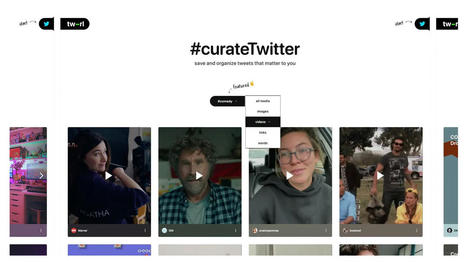
Twrl est un outil de curation pour Twitter tout à fait génial. Il permet de sauvegarder des tweets ou des threads sur Twitter à la volée.
|
|
Scooped by
Gilbert C FAURE
June 14, 2021 9:28 AM
|
Le POD est un magazine grand public de séléction de podcasts natifs et de rattrapages. Il est édité et publié plusieurs dans l'année avec une version papier diffusée dans plusieurs lieux. I
|
|
|
Scooped by
Gilbert C FAURE
February 27, 2023 8:56 AM
|
|
|
Scooped by
Gilbert C FAURE
January 31, 2023 3:52 AM
|
Il faut commencer par se mettre d'accord sur les termes : qu'est-ce que faire de la veille, qu'est-ce que la syndication de contenu, un outil de bookmarking, qu'est-ce que la curation, etc.
|
|
Scooped by
Gilbert C FAURE
January 22, 2023 1:56 AM
|
Gust MEES is an ICT course instructor with specialization on ICT Security. He is also a member of the "Advisory Board" of Luxembourg Safer Internet, called now BEESECURE, http://www.lisa-stopline.lu and an official partner of different Luxembourgish Government realizations, such as http://www.cases.lu and MySecureIt (in French) and member of the Internet Society Luxembourg http://www.isoc.lu
|
|
Scooped by
Gilbert C FAURE
December 24, 2022 2:54 AM
|
ChatGPT répond à ma question
La curation de contenus peut être un outil très utile pour l'enseignement et l'apprentissage. Elle peut être utilisée de différentes manières : -
Sélection de contenu de qualité: en curant du contenu sur un sujet spécifique, vous pouvez facilement trouver des ressources de qualité pour votre classe ou votre cours. Vous pouvez utiliser ces ressources pour illustrer des concepts ou pour renforcer les connaissances de vos étudiants. -
Création de parcours d'apprentissage: vous pouvez utiliser la curation de contenus pour créer des parcours d'apprentissage qui guident vos étudiants à travers le contenu sur un sujet spécifique. Cela peut être très utile pour les cours en ligne ou les programmes d'apprentissage à distance. -
Encourager la recherche et l'analyse: en demandant à vos étudiants de curater du contenu sur un sujet spécifique, vous pouvez les encourager à faire des recherches approfondies et à analyser le contenu qu'ils trouvent. Cela peut être une activité très enrichissante pour eux et les aider à développer des compétences en matière de recherche et d'analyse. -
Favoriser la collaboration et l'échange d'idées: la curation de contenus peut également être utilisée pour favoriser la collaboration et l'échange d'idées entre les étudiants. Par exemple, vous pouvez demander à chaque étudiant de curater du contenu sur un sujet spécifique et de le partager avec le reste de la classe. Cela peut être une façon intéressante de découvrir de nouvelles perspectives et d'engager les étudiants dans le processus d'apprentissage. Click here to edit the content
|
|
Scooped by
Gilbert C FAURE
October 18, 2022 7:32 AM
|
Get an overview of content curation and learning, find relevant papers, and identify important concepts.
|
|
Scooped by
Gilbert C FAURE
August 26, 2022 4:30 AM
|
|
|
Scooped by
Gilbert C FAURE
August 13, 2022 10:46 AM
|
Find and pick the best content curation tools for all needs. Whether you want to get ideas, collect information for research, or manage your content strategy effectively.
|
|
Scooped by
Gilbert C FAURE
May 24, 2022 9:19 AM
|
Information Matters (IM) is a digital-only communication translational forum for information science, bringing relevant and current research evidence and industry developments, news, and opinion to a global public audience free of charge.
|
|
Scooped by
Gilbert C FAURE
April 13, 2022 4:57 AM
|
|
|
Scooped by
Gilbert C FAURE
April 5, 2022 11:28 AM
|
I’d argue that content curation is one of the most important pursuits someone could take on in today’s online scenario.Especially in the upcoming Curator Economy, the role of content curators in…...
|
|
Scooped by
Gilbert C FAURE
February 17, 2022 2:51 AM
|
This is the fourth of eight expanded articles from each of the points in the initial article in this newsletter, "L&D is Behind the Times: Here's How We Catch-Up." This article focuses on point #4: Curate first, create second.
|
|
Scooped by
Gilbert C FAURE
December 23, 2021 5:17 AM
|
|


 Scoop.it!