

|
Scooped by
Beth Kanter
onto Nonprofit Capacity Building and Training April 22, 2014 10:52 PM
|
 Scoop.it!


No comment yet.
Sign up to comment

|
|
Scooped by
Beth Kanter
onto Nonprofit Capacity Building and Training April 22, 2014 10:52 PM
|
Scoop.it!
 Your new post is loading...
 Your new post is loading...
Your new post is loading...
Scoop.it!
Post by beth.kanter. Do you consider yourself to be an agile learner? If yes, how do cultivate that skill in your work and life?
Scoop.it!
Using pen and paper for note-taking helps boost memory and the ability to understand, more so than laptops.
Scoop.it!
Beth Kanter's insight:
Virtual sticky note app
Scoop.it!
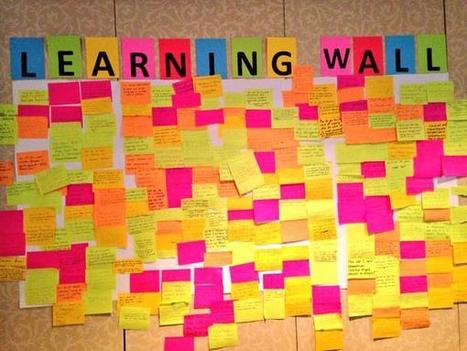
Best indicator of a vibrant learning community: a full, themed learning wall! #facilitatorsdream #C4C2015 pic.twitter.com/4bJhzHSp7d
Beth Kanter's insight:
Scoop.it!

Some of my best lessons in what it means to hold space for people came from a palliative care nurse.
Beth Kanter's insight:
Via Hildy Gottlieb FB gorup TIps 1. Give people permission to trust their own intuition and wisdom.
Scoop.it!
Beth Kanter's insight:
As a presenter:
You, not the learner, are doing all the work for them. It’s your understanding and not theirs…yet. No, I’m not saying that effective instruction is pointless. It is necessary. However, the key to effective learning opportunities is active audience involvement. Want more information on developmental learning the futility of covering content? Read
Scoop.it!

How eLearning Professionals Can Direct Learners’ Attention. At this article you will find 5 Tips To Direct Your Learners’ Attention.
Scoop.it!
Beth Kanter's insight:
Closing the Triangle drawing - nice way to integrate network concept into a convening.
Scoop.it!

This is an invaluable collection of practical and accessible tools to create the kinds of organizational and personal change described in What is Transformation? and Transforming Organizations. Each tool is simple and specific, results-oriented, with the potential to revolutionize your…Read more ›
Scoop.it!
Would you like to boost learning. Check this article to find out 6 Online Collaboration Tools and Strategies For Boosting Learning.
Scoop.it!
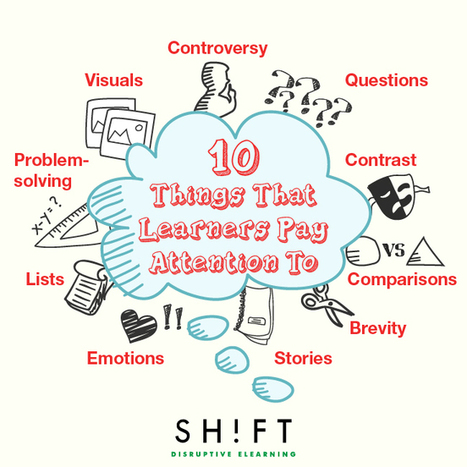
"Even more than other types of education, eLearning must struggle to attract learners' attention: the Internet is full of distractions, and adult learners are both busier and more free to indulge in distractions. Helping students to pay attention is a primary concern of training professionals, so here are some optimal methods to win the attention game in eLearning." Via Beth Dichter

Audrey's curator insight,
October 3, 2014 1:26 PM
These are certainly true. Have a look at www.hotmoodle.com

Bernard VULLIERME's curator insight,
October 20, 2014 5:30 AM
Rien de nouveau sous le soleil du bon e:enseignant, mais plus d'exigences … 
clare o'shea's curator insight,
February 5, 2015 1:49 PM
and ask indviduals questions every 2-3 minutes - but always label the behaviour first! so it is a positive experience not a catching out!! |
Scoop.it!

When I say “icebreaker,” what images or feelings come to mind? For some people, they think “Yay, a fun game to get to know people!” For others, it is a swirling vortex of darkness and hatred. A whi...
Scoop.it!
Ideaflip is an ingenious tool for evolving ideas together in an organic, kinetic way.
Scoop.it!
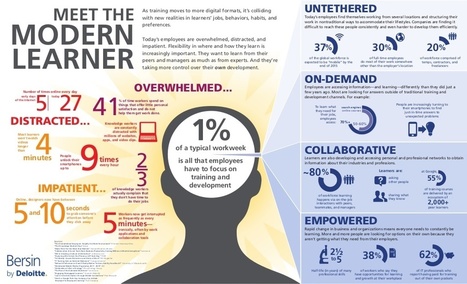
There's a new buzz phrase going around town these days in the L&D and talent development communities. That phrase is micro-learning. The infographic on the modern learner, published by Ber
Scoop.it!
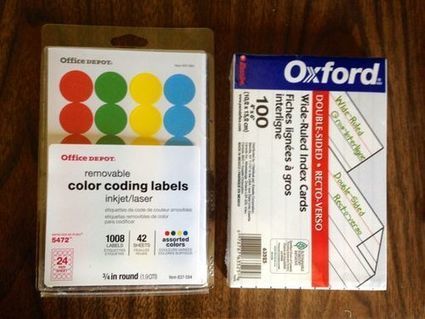
For the Professional Social Media class I teach at Sonoma State University, I created an exercise designed to help folks practice both content creation and looking at metrics. Nonprofit’s can use this at a staff meeting or other gathering to...
Beth Kanter's insight:
Focus on pattern recognition skills, but need to align the sense-making with objectives and audience. Perhaps as a build off an exercise that flows from POST to Content Strategy to Measurement.
Scoop.it!
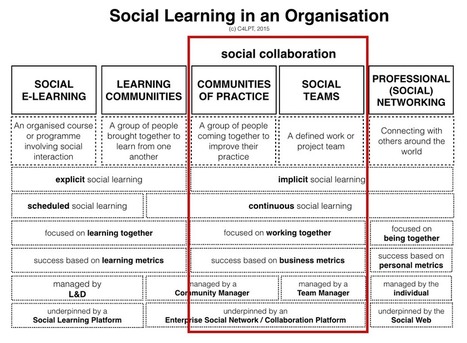
In my framework of Modern Workplace Learning (see diagram on right) I use the term social collaboration to label an important new element of work of the modern-day L&D department. I deliberate...
Scoop.it!

Click to download a printable version of this document. Why is brainstorming Important? It encourages collaborative thinking and engages team members. It allows individuals to meet and collectively share thoughts. It broadens individual and team perspectives, allowing for new and unexpected ideas. It anticipates unexpected questions and unforeseen “bumps in the road.” It …
Scoop.it!

Sharon Boller’s work has explored the divide between remembering and forgetting extensively in 2014. Her white paper, When Remembering Really Matters, identifies eight strategies, four for learning and four for remembering, that help fight forgetting.
Beth Kanter's insight:
Sharon Boller’s work has explored the divide between remembering and forgetting extensively in 2014. Her white paper, When Remembering Really Matters, identifies eight strategies, four for learning and four for remembering, that help fight forgetting. Before we can remember anything, we have to first learn it! Research (and experience) tells us that motivation, relevant practice, and specific, timely feedback are all required for learning… but that’s not the whole story. These are all essential parts of the learning process, but we have to take remembering into consideration to complete our recipe. WHAT ELEMENTS ARE REQUIRED TO REMEMBER?In her white paper and presentation, Sharon presents four strategies to use when you really want learners to remember:
Scoop.it!

Communities of practice are groups of people who share a concern or a passion for something they do and learn how to do it better as they interact regularly.
Scoop.it!
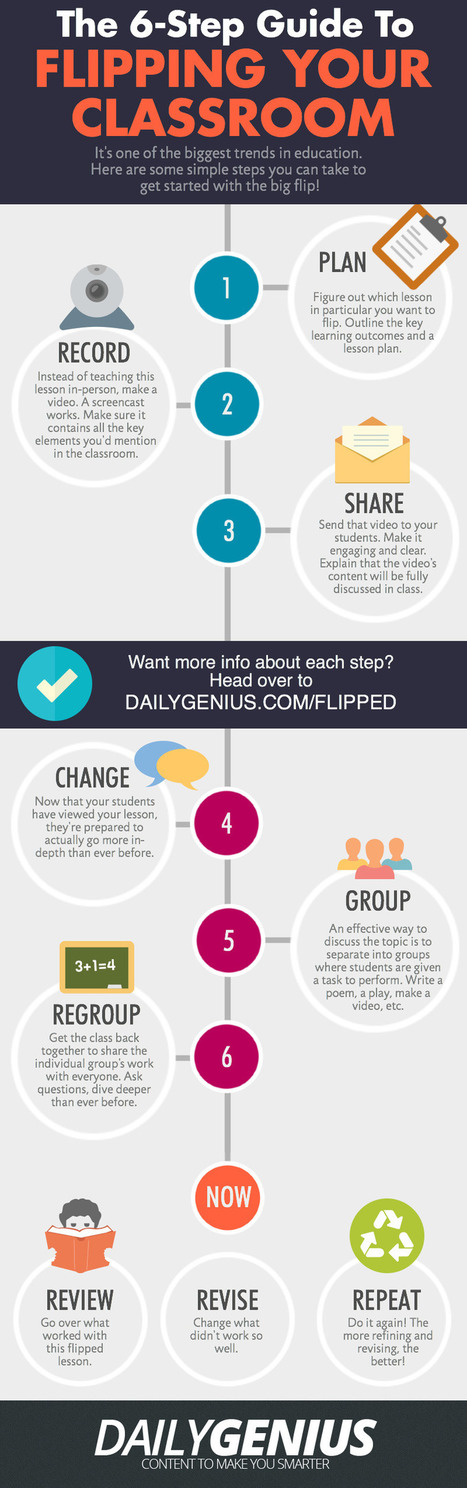
It’s one of the most talked-about trends in education right now. Right behind the iPad and Common Core. Flipping your classroom is a trend that doesn’t seem to be going away any time soon. That’s great, because it offers a lot of advantages for your classroom regardless of your students’ age or what subject matter you’re presenting in your classroom. If you’re new to the concept, flipping your classroom can feel a little bit overwhelming: How much should I switch around? What is best for the classroom vs at home? Why am I doing this again anyway?

Kristen McGowan's comment,
August 9, 2014 5:21 PM
This was an incredibly quick read being an infographic. While flipping the classroom sounds like a daunting process, this 6 step guide provides a clear sequence on how to initiate this change.

Tina Jameson's curator insight,
March 6, 2016 8:51 PM
Info-graphic guide to help anyone new to the idea of Flipped Classroom teaching.

Jose Barrera's curator insight,
September 9, 2023 12:52 PM
This image with these steps has motivated me to record my videos and provide guidance for my students. I have students who struggle understanding my lesson at time, if I give them the option of watching it over, I think they could understand algebra better and get the results we need.
Scoop.it!
Sharon Thomson: These online group collaboration tools have enabled smooth and fast communication, collaboration among distantly located students and their instructors. Thus students can gain more from the experience of their instructors. These tools along with instructional design and implementation strategies devised by instructors has led to enhancement of knowledge and sharpening of students’ skills. This has allowed educational benefits to reach to more and more students globally beyond the confines of classrooms

Gary Harwell's curator insight,
July 31, 2014 1:00 AM
Telling students to work together isnot enough. It has to be done correctly.

Ann Luzeckyj's curator insight,
August 7, 2014 7:45 PM
More about technology than first year - but all useful I hope! |










Planning learning spaces becomes more complex every day. Whereas once this process amounted to providing mainly places for quiet, individual concentration, today it means creating more places that accommodate a wide range of activities, technologies, and participants – both in-person and connected virtually. In these spaces, people need to be able to create, retrieve, combine, display, share and information, then do it all over again, all in a space that they can easily reconfigure and is well supported by staff that meet and anticipate their needs.
North Carolina State University (NCSU) Libraries and its Distance Education and Learning Technology Applications (DELTA) are partnering with strategic consultants brightspot strategy and AECOM to design, share, and promote an updated model for institutions to plan and support technology-rich informal learning spaces. This Learning Space Toolkit will include a roadmap to guide the process along with tools and techniques for assessing needs, understanding technology, describing spaces, planning and delivering support services, and assembling space, technology, and services to meet needs, even as they change.
The Toolkit will be freely available as a resource on the web and will be developed using a collaborative process that shares thinking early and often from the broader community. The resources developed will support the full lifecycle of a project, from defining the goals and needs early on to constructing the space to supporting and assessing it. By using the Toolkit, institutions will be better equipped to orchestrate the planning process so that learners are better supported and space, technology, and services are effective.