blogging about a theme that I have spoken about in a few settings - a major theme of my research interests, progress to date thanks to support from NIHR Brain Medtech Innovation Cooperative, and NIHR ARC EOE and UKRI
Get Started for FREE
Sign up with Facebook Sign up with X
I don't have a Facebook or a X account


|
Scooped by
Andrew Bateman
onto Can Social Media Improve Health? November 22, 2020 8:34 AM
|
 Scoop.it!
blogging about a theme that I have spoken about in a few settings - a major theme of my research interests, progress to date thanks to support from NIHR Brain Medtech Innovation Cooperative, and NIHR ARC EOE and UKRI


 Your new post is loading...
 Your new post is loading...
Your new post is loading...
Scoop.it!

Andrew Bateman's insight:
I've set this picture as the lead for this set of scoops - as it captures in one great graphic what is meant my social media. so of course this rhetorical question, might be better put..."how can social media improve health"?.... and the answer is surely in many ways ...through promoting advances in evidence (ie staff improving their knowledge) (patients improving their knowledge of their condition), knowledge about systems that contributing to providing health (and this knowledge is needed by patients and health employees alike) i have curated some interesting sites here that explain the 'new NHS'; sharing experiences and, well, how many more ways?... https://www.nice.org.uk/about/what-we-do/our-programmes/evidence-standards-framework-for-digital-health-technologies
Prism updated hyperlink

Scoop.it!
Andrew Bateman's insight:
updated link to conversation prism
Scoop.it!

From
quabble

One joyful app for sleep, meditation, anxiety management, journaling, virtual pet care and more! Start your daily mental wellness journey here.
Scoop.it!
Resources for Stroke Survivors and their families: which social media accounts do you think are worth a follow? Key influencers? Thanks for your suggestions…
Andrew Bateman's insight:
I thought it was interesting to compare responses on LinkedIn and X.com. I am aware that a lot of people are migrating away from X due to inherent problems. I had some helpful replies on LinkedIn mentioning gaming, tiktok and various appropriate charities. I had a similar number of 'impressions' on both platforms
Scoop.it!
The long read: The government is about to award a £480m contract to build a vast new database of patient data. But if people don’t trust it, they’ll opt out – I know, because I felt I had to
Andrew Bateman's insight:
this is an interesting read, and thought provoking about the data trail we create. i'm sitting this next to the information about the recently updated #HCPCstandards as mentioned by @
Scoop.it!
Presentation at 11th European Breast Cancer Conference #EBCC-11, Barcelona, Spain, March 22, 2018
Andrew Bateman's insight:
Of the many folk I follow on twitter @jbbc Marie is someone I’d not met before today! This slide deck defo fits into this collection, inspiring in many ways. I spotted it over on twitter, resonates for me with my talk about holistic neurorehab online. We had a great chat about our mutual interests and I hope we can do some interesting and strategically impactful work together in the future!
Scoop.it!

Using CBT. I've talked in the past about the problems I've had post-stroke with some situations. In particular three places:
Andrew Bateman's insight:
In my lecture webcast today (in Japan) -perhaps of interest to my colleagues in attending the The 44th Annual Scientific Meeting of Japan Society for Higher Brain Dysfunction http://jshbd44.umin.jp/web_conference/index.html I attempt to outline some of my thoughts about the possibilities of providing Holistic Neuropsychological Rehabilitation online & interactively. I mention the role of "blogging for rehab". I think that there's an intrinsic value in sharing your story, not least to help make sense of a traumatic event for yourself, but also clearly it can help others. Somehow by the miracle of random memories coming to mind, today I recalled someone who has influenced this thinking and I found his blog that remains very interesting and helpful. I think that this was possibly one of the first examples of a detailed reflective analysis that I had read in this format.
Scoop.it!

a site that provides a curated list of relevant apps for rehabilitation
Andrew Bateman's insight:
like care opinion, here's a place to rate Apps that may be helpful
Scoop.it!
The UK's independent non-profit feedback platform for health and social care. Share your story - help make our services better.
Andrew Bateman's insight:
a bit like trip-advisor for health?
Scoop.it!
Andrew Bateman's insight:
In my talk for UCLP "models of neurorehab" conference (7 Dec 2017) I am aiming to argue for much more engagement with Social Media, that there ways of harnessing it to support rehab endeavours, and 'not being alone' is one of the real benefits of current technology. However Angela Kerr is reported to have spoke about the horrible "Social Media Menances" who take advantage of vulnerable people.
Scoop.it!
Andrew Bateman's insight:
Here is an interesting article about the consequences for a clinician of accepting a friend request from a patient's family... greater insight into their role an impact as a clinician.
Scoop.it!

ABOUT RECOVERY 2.0 Recovery 2.0 is a global movement that embraces an holistic approach to recovery from addiction of all kinds. The community honors all effective paths to recovery and emphasizes the importance of mind-body practices such as yoga and meditation, athletics, nutrition and community as part of an effective path to recovery and joy …
Scoop.it!

A registered nurse in Saskatchewan, Canada, posted a comment on social media regarding the care of her grandfather who had recently passed away at a long-term care facility. The comment suggested the staff suffered from a lack of compassion and education. To this nurse’s surprise, charges were filed against her license for harming the standing of the profession of nursing under Canada’s “Registered Nurses Act.” She was found guilty and ordered to pay a $5,000 fine as well as an additional $25,000 for the costs of the investigation and hearing. I take issue with this decision. Why? Because she was acting as a daughter in speaking her mind regarding her grandfather’s long term care experience. However, nurses are considered to be professionals 24 hours a day. For this particular nurse’s story, we can take away that whatever you put on social media can come back to haunt you. Brittany Wilson, “the Nerdy Nurse,” was quoted in an article posted on nurse.org titled “Must Read Social Media Advice for Nurses” in which she discussed “dos and don’ts” for nurses using social media. The following suggestions are very helpful: Nurses should talk only about themselves, the nursing profession, their family, hobbies, and interests.Never talk about patients or identifiable coworkers.Avoid identifying your employer on your social media profile or in your postings.Become keenly aware of your employer’s social media policies.Don’t post online that you are at work as this could put you and your home at risk.Don’t use the employer’s internet to post and don’t post to social media site while at work.Don’t post anything online which you would not say in front of your boss or human resource director.Don’t do anything that you would be embarrassed to say to your own mother, your clergy, your boss or potential employer.Realize that nothing on line is ever really anonymous.Don’t do anything that could degrade or embarrass the nursing profession.Uplift the nursing profession.Furthermore, NEVER talk about patients on social media! In one situation, several nurses at a children’s hospital posted funeral arrangements for a long-time patient. This could have and may have indirectly identified the deceased child to anyone who then would read arrangements for the child. All the nurses were disciplined by the Board of Nursing. Remember, you are a professional and want to represent your profession in a positive light. What are your thoughts on social media and nursing? Do you utilize it? If so, what suggestions might you have to keep your license safe? Please leave your comments below. Via Plus91
Andrew Bateman's insight:
a cautionary tale!
|
Scoop.it!
Andrew Bateman's insight:
very interesting development: the webpage states "KCUNAC was born during a time of growing demand for homegrown alternatives to major social media platforms. During a trade dispute between the USA and Canada, many people began prioritizing Canadian-made products. A Facebook group called “Made in Canada” quickly became a hub for people to share information about which products were truly made or sourced in Canada. As this community grew, so did a larger conversation—why isn’t there a social media platform that aligns with these values? Users began asking for an alternative to Facebook and X, where they could connect without excessive restrictions and censorship. That’s when KCUNAC was created—a platform that gives people more control over their online communities while maintaining a space for free expression. What We OfferKCUNAC is designed to put users in control. Unlike other platforms that impose strict moderation and content policies, KCUNAC provides the tools for group admins and page creators to manage their own communities without interference. Our core features include:
A Platform Built for You At KCUNAC, we believe in freedom of community management, user-driven experiences, and an open environment for discussion. Whether you're here to build a community, share your passions, or simply connect with others, KCUNAC is your space to do so—on your terms. Join us and be part of a platform that values freedom, community, and control. Welcome to KCUNAC."
i will explore with interest for health benefits
Scoop.it!
Calm Harm is a free app to help teenagers manage the urge to self-harm. Available on Google Play & App Store.
Scoop.it!

AI voice recorder, communication & active learning productivity app for brain training, dyslexia, ADHD, autism. Improve memory recall now.
Scoop.it!
From
x
Andrew Bateman's insight:
getting ready for a workshop online with East Anglia Stroke Association participants, I posted this message on three platforms, x.com; linkedIn and bluesky. Simon's reply via x.com about a new online forum seems rather interesting.
Scoop.it!
UKABIF innovation award deadline coming up! 29 September 2023
Andrew Bateman's insight:
It's not too late for you to submit your innovation for consideration at this fabulous summit - raise awareness of your idea and benefit from support from NIHR BrainMic
Scoop.it!
blogging about a theme that I have spoken about in a few settings - a major theme of my research interests, progress to date thanks to support from NIHR Brain Medtech Innovation Cooperative, and NIHR ARC EOE and UKRI
Andrew Bateman's insight:
After my lecture in Japan (November 2020), I had some very encouraging questions and comments. Most meaningful for me, were from my very good friend Occupational Therapist Nozomi Ooyama (she did her Masters here in Bangor, UK and was also a Visiting Scholar at OZC)
She asked... ". I understood the possibility of online interventions and believe it should be developed. Is it possible to take the cost for online sessions in the uk? Or do you think it is desirable to use it as supplemental materials of face-to-face interventions? My answer is as follows: Yes I think it is possible as you know the UK costing model is different but for example, the Improve Access to Psychological Therapy Programme (IAPT) includes Computerised intervetions as part of the pathway https://www.nice.org.uk/about/what-we-do/our-programmes/nice-advice/iapt Personally I think there are three key reasons to add it into our repertoire: 1. In the UK we have long waiting lists for face to face therapy: while waiting, online intervention may be better than nothing (? This is a hypothesis to be tested ! – what are the risks? ?frequency of adverse outcomes)
2. During therapy, supplementing face-to-face sessions with online work could help deepen and embed learning. It could be a way of managing “homework”.
3. After therapy, our clients often ask for “top up” or refreshers. Having an account where you can go back and look at your materials could be very valuable.
What I would like to see doesn’t really exist yet, but building this is a dream of mine in collaboration with colleagues and investors I might secure one day. So yes in short I see it to be very desirable to smarten up our offer for our patients.
I have added this exchange to my growing "wakelet" page about this topic
Scoop.it!
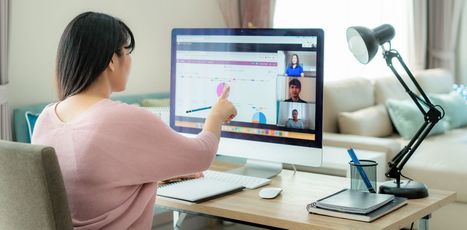
Cloud-based platform designed to facilitate best-practice goal setting in rehabilitation.
Andrew Bateman's insight:
Far too long since i updated this page, but prompted by the Conference in Japan The 44th Annual Scientific Meeting of Japan Society for Higher Brain Dysfunction i thought it would be good to share this resource for my friends at the meeting! " An example of a "closed social media" site - a platform for clinicians to work together securely to manage rehabilitation goal setting.
Scoop.it!
Andrew Bateman's insight:
very helpful article outlining in some detail why this is important
Scoop.it!
A helpful guide to health professionals who have done small research projects.. a nice paragraph about blogging and vlogging in here too.
Andrew Bateman's insight:
some top tips from an experienced group
Scoop.it!
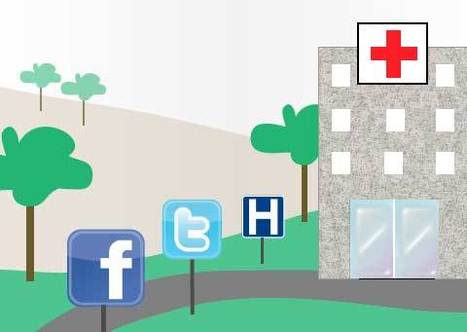
Engaging your brand in social media is kind of a no-brainer – unless you’re in the healthcare industry. In our experience, some health organizations have been hesitant to foray into social media due to confusion about what to discuss, how to engage with patients, or fear of running afoul of HIPAA regulations. This series attempts to break down the basics and offer some guidance as to how to navigate the social media waters. The goals of social media in the healthcare industry are different than other industries. You’re not going to sell a coat or alarm clock with your social presence. Rather, focus on being less direct-response oriented and focus more on brand-building. There’s a logical chain of events that can occur if you do one thing with your messaging: Anticipate and answer patient questions before they have to askIf you can do this, that information will relieve some of the intimidation and fear they experience → That helps patients feel empowered to make the best-informed decision for themselves and their families → And creating that positive experience for patients builds strong relationships with existing & potential patients → which all funnels into brand preference. To accomplish the above, there are some simple rules to follow: Keep it simple but professional. Use clear language and vernacular if discussing complex medical procedures.Make it relatable – show the audience you understand them. One of the best ways to do that? See above: keep it simple.Serve as a community resource. This could mean posting healthy recipes, introducing new providers to your network, discussing the latest flu outbreak you’ve seen in your facility, or offering tips on how to avoid getting sick.Be responsive. If someone reaches out to you with a question or comment, respond to them. People will see your response, so take the high road if it’s a negative comment (or ignore it if it seems like someone is just trolling). Negative comments are a way to improve your organization. Take them seriously and try to start a discussion with the person who posted it. Find out what needs fixing. Generally speaking, though, take all conversations offline (call the patient, or have them call you, or stop in to see you) if there is risk of violating HIPAA restrictions.Be visual whenever possible and include photos, simple graphics, or videos in your posts. Statistically, posts with a visual component typically get more reach and engagement.Via Plus91
Scoop.it!

From now on, I won’t be building any more native apps. All my apps going forward will be progressive web apps. Progressive web apps are web applications which are designed to work even more…
Andrew Bateman's insight:
this topic is outside my knowledge base but a helpful reminder of the ongoing evolution of technology and for those of us trying to develop resources for patients, we need to keep in mind our rehab theories and methods so that we can float over the developments. How we do resilient thinking to these developments is something I'd especially be interested to hear about!
Scoop.it!
Andrew Bateman's insight:
how do you keep track of developments in health apps? this seems like one good source of intelligence
|







After my lecture in Japan (November 2020), I had some very encouraging questions and comments. Most meaningful for me, were from my very good friend Occupational Therapist Nozomi Ooyama (she did her Masters here in Bangor, UK and was also a Visiting Scholar at OZC)
She asked... ". I understood the possibility of online interventions and believe it should be developed. Is it possible to take the cost for online sessions in the uk? Or do you think it is desirable to use it as supplemental materials of face-to-face interventions?
My answer is as follows:
Yes I think it is possible as you know the UK costing model is different but for example, the Improve Access to Psychological Therapy Programme (IAPT) includes Computerised intervetions as part of the pathway https://www.nice.org.uk/about/what-we-do/our-programmes/nice-advice/iapt
Personally I think there are three key reasons to add it into our repertoire:
1. In the UK we have long waiting lists for face to face therapy: while waiting, online intervention may be better than nothing (? This is a hypothesis to be tested ! – what are the risks? ?frequency of adverse outcomes)
2. During therapy, supplementing face-to-face sessions with online work could help deepen and embed learning. It could be a way of managing “homework”.
3. After therapy, our clients often ask for “top up” or refreshers. Having an account where you can go back and look at your materials could be very valuable.
What I would like to see doesn’t really exist yet, but building this is a dream of mine in collaboration with colleagues and investors I might secure one day.
So yes in short I see it to be very desirable to smarten up our offer for our patients.
I have added this exchange to my growing "wakelet" page about this topic