Although many restaurateurs are still unsure if they will ever open their doors again, there are plenty — from fast-food operators to chefs at the most elite temples of haute cuisine — who spend their days strategizing how to get back to hosting diners.
Culinary and health organizations are drawing up guidelines and protocols for re-creating the American dining room as a safe space — even while acknowledging that could take many months or even longer to happen.
The first step in the long crawl back will be setting standards to protect workers and diners. “The most pragmatic thing we need to figure out right now is safety protocol,” said David Chang, the restaurateur and media star. “We are all asking for that, and no one really knows.”
The questions pile up fast. Should you rely on disposable paper menus, or is wiping down plastic-covered ones safe? What kind of thermometers are best to check employees’ health, and will diners submit to temperature checks? Can air-conditioning spread the virus? What is a restaurant’s liability if a customer gets sick? How does a sommelier taste wine while wearing a mask, and how do you rewrite a menu so cooks can stay safe in the tight confines of a restaurant kitchen?
“Once you go down this rabbit hole, it’s going to make your brain bleed,” Mr. Chang said.
In the United States, the rules dictating what is safe in a restaurant are anything but clear, even as states begin allowing them to reopen.
Last Thursday, the National Restaurant Association, whose members are largely chain restaurants, sent out a general set of guidelines that defers to government regulations, which will likely vary. They leave taking employees’ temperatures to the restaurant owner’s discretion, and recommend that restaurants follow state or local rules on the use of masks. Other suggestions include eliminating unwrapped straws, salad bars, buffets and cut lemons.
Independent restaurant owners are working with one another and some culinary organizations to develop more detailed protocols. Many have referenced a playbook put out by Syed Asim Hussain, a founder of Black Sheep Restaurants, in Hong Kong, which includes both science and tips on the art of hospitality.
“Guests are very sensitive to hygiene,” the guide states, “and anything that even looks messy will translate to unclean in their minds, so everyone’s uniforms, hair, nails, any surfaces guests can see, it all needs to be tidy and spotless, now more than ever.”


 Your new post is loading...


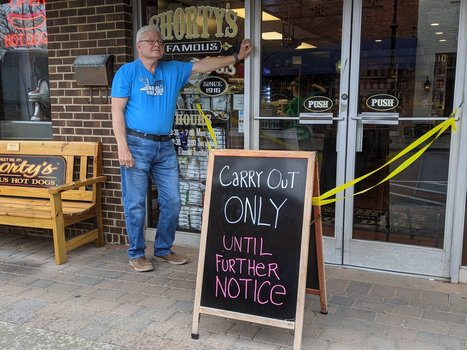







Thank you Zoning Hearing Board for giving zoning relief for this huger than normal signage. When other stores are allowed to open, maybe they will also want bigger signs. Meanwhile, there was at least one complaint sent to the Supervisors regarding the "Chaotic" nature of the ZHB meeting. Listen to the complaint here: https://soundcloud.com/user-944327486/zhb-zoom-meeting-complaint/s-fVuHNalXZXw