Your new post is loading...


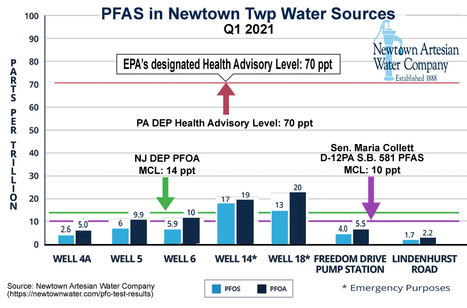
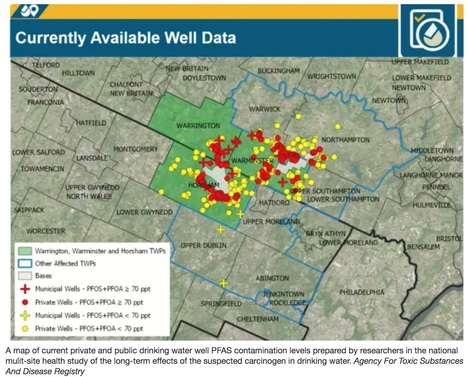
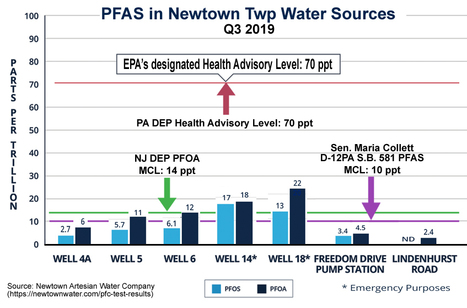
Per- and polyfluoroalkyl substances (PFAS), often called “forever chemicals,” are manmade chemicals containing carbon and fluorine atoms. They have been used for decades in many consumer products and industrial processes.
PFAS are of a special concern near the proposed sewage treatment plant because PFAS levels are exceptionally high in the water and fish there. The Pennsylvania Department of Environmental Protection (PA DEP) and the U.S. Geological Survey did a study of PFAS in rivers, streams, and lakes throughout Pennsylvania, and the sample from Neshaminy Creek in Langhorne had the highest PFAS out of all 178 locations tested statewide.
Wastewater entering sewage treatment plants from both homes and industrial facilities contains PFAS. Residential sources include disposal and excretion of consumer products
However, traditional wastewater treatment does not remove PFAS, and the PFAS remain in the wastewater released as effluent and in the solid sludge (called biosolids). The biosolids are disposed of by spreading on farmland as fertilizer, in landfills, or by incineration (burning), and PFAS are released into the environment with all of these disposal methods.
New environmental regulations for emerging contaminants are not a question of if, but when. These rules will demand expensive upgrades that will have a greater cost impact on smaller facilities like the proposed Newtown plant yet these expenses have not been factored into its cost estimates.