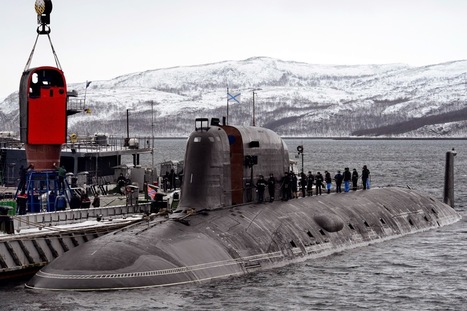
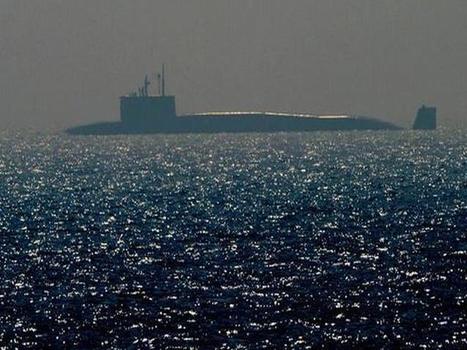
It is quite frequently reported that Northern Machine-Building Enterprise (SevMash) will build either seven or eight Severodvinsk-class nuclear-powered multipurpose submarines - Project 885 and 885M - by 2020. In November 2012, ITAR-TASS reported that "SevMash will build seven Project 885 and 885M Yasen fourth-generation nuclear-powered strike submarines by 2021..." A year ago, an unnamed "defense industry source" told RIA Novosti that "the Russian Navy plans to receive no less than eight submarines of this type by 2020." And in April of this year, ITAR-TASS changed its 2012 forecast and reported that "SevMash shall build eight Yasen and Yasen-M nuclear-powered submarines by 2020."
Are these numbers and timelines real?
Construction of the first (and only) Project 885 hull, "Severodvinsk", took 20 years from keel-laying to delivery. During that time, requirements were changed and new design specifications were implemented. The second unit, "Kazan", was laid down in July 2009 and is being built under the improved Project 885M design. Initial reporting indicated "Kazan" would be delivered in 2014. The delivery date, however, began slipping into 2015, 2016, and now 2017. A 2017 delivery would equate to eight years since the hull was laid - a lot better than 20 years.
After reviewing equipment delivery schedules, the actual timelines for only seven units looks something like this:
HULLNAMELAIDLAUNCHED DELIVERED
160Severodvinsk Dec 1993 Jun 2010 Dec 2013
161Kazan Jul 2009 (2016) 4Q2017
162Novosibirsk Jul 2013 (2019)
163Krasnoyarsk Jul 2014 (2019)
164 (2015) (2020)
165 (2015) (2021)
166 (2015) (2022)
Unless SevMash production and contractor-supplied equipment deliveries can be sped up, delivering more than five submarines by the end of 2020 appears improbable.
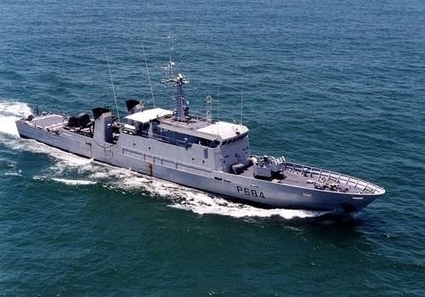
"Qui de Piriou ou Socarenam va construire les deux patrouilleurs légers destinés à la Guyane pour remplacer La Gracieuse et La Capricieuse (photo ci-dessus), les P400 vieillissants?" (lire mon post ici)...
Réponse: la Socarenam. Le chantier de Boulogne a appris il y a quelques jours que son offre a été retenue et que la notification officielle interviendrait avant le 31 décembre....
Lire l'intégralité de l'article sur le blog "Lignes de Défense" de Philippe Chapleau :
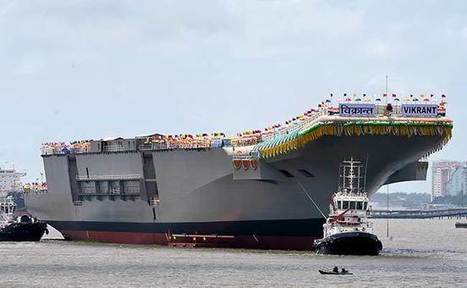
New Delhi: India's new aircraft carrier, INS Vikrant (named after India's first carrier), has bust its budget by 600 per cent. It will now cost a whopping nearly Rs. 19,000 crore instead of the original estimate of about Rs. 3,000 crore. The warship, India's first home-built aircraft carrier, is presently being fitted out in Kochi and will be the Navy's flagship once it enters service in a few years.
According to the Standing Committee's report, three major indigenous warship programmes are collectively a whopping Rs. 29,000 crore over budget. The three destroyers of the Project 15 class, the first of which, INS Kolkata, has just been commissioned, are about Rs. 8,000 crore over-budget. Similarly, corvettes of the Project 28 class, which are being constructed at Garden Reach in Kolkata, will cost about Rs. 8,000 crore instead of Rs. 3,000 crore. There are several reasons why these cost and time over-runs are taking place. According to the parliamentary committee's report, construction costs for the Kolkata Class destroyers went up because Mazgaon Docks, Mumbai, where the ships were meant to be built, was already constructing other ships. With a delay in the construction of the ships, the cost of materials went up and there was also a delay in the supply of warship-grade steel from Russia along with higher labour costs. Further, the identification and assessment of the costs of weapons and sensors was also delayed and the revised estimated was well over-budget. Similarly, in the case of the Project 28 corvettes, there was a delay in producing indigenous warship-grade steel, the development of which became a priority because of the massive costs associated with importing this grade of steel from traditional exporters such as Russia. The new, indigenous replacement, developed by the Steel Authority of India was complex to handle and required new techniques in welding. With a further delay in conducting trials of various systems from competing firms, the overall project costs escalated because of an increase in development costs and the decision to use new, state-of-the-art systems. Construction of the new aircraft carrier Vikrant also suffered because of the non-availability of warship -grade steel. Also, new technologies in constructing aircraft carriers had to be mastered. According to the Standing Committee Report, there was "inadequate domain knowledge" in carrier construction along with the emergence of new technological advances and new generation equipment which needed to be factored in. Most importantly, the report identifies that the government's sanction for the complex project in 2002 came "at a time when the form & fit (of) the warship was still emerging." The Standing Committee Report points to glaring lapses in the pace of indigenous warship construction particularly at a time when the Chinese Navy is growing at a very fast pace by inducting an entirely new generation of destroyers, corvettes and frigates. To match this, the Indian Navy needs to desperately induct new warships at a faster pace. In 2012, the government's Defence Acquisition Committee had approved 198 ships and submarines for the Indian Navy. The present force level is 127 ships and 15 submarines.
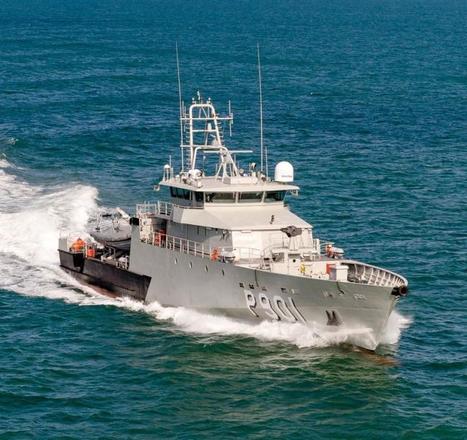
Sistership du Castor, livré en juillet dernier à Belgique, le Pollux a été mis à flot hier au chantier Socarenam de Boulogne-sur-Mer. Prévu pour être réceptionné par la composante maritime belge en avril prochain, ce bâtiment mesure 52 mètres de long pour 9.3 mètres de large, avec un tirant d’eau de 3.4 mètres et un déplacement de 448 tonnes en charge.
Capables d’atteindre la vitesse de 22 nœuds grâce à deux moteurs diesels MTU de 2880 kW chacun, les patrouilleurs de ce type sont mis en œuvre par 12 marins seulement et disposent de logements pour 18 personnes supplémentaires. Ce complément peut, notamment, être constitué d’équipes de visite appelées à effectuer des interceptions et contrôles de navires au moyen d'une embarcation semi-rigide de 9 mètres. L’armement des bâtiments est composé d’un canon télé-opéré de 12.7mm Sea deFNder, développé par FN Herstal. Un système de commande et de contrôle SEWACO, fourni par Thales, gère les senseurs et le canon, les consoles étant situées en passerelle...
Lire l'intégralité de l'article sur Mer et Marine :
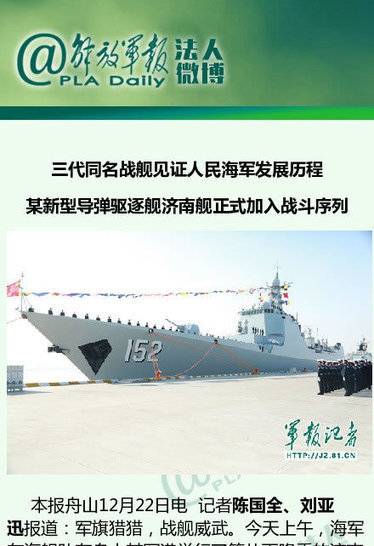
The Chinese Navy (PLAN) commissioned its fifth Type 052C Destroyer (Luyang II class) Jinan (hull number 152) on December 22nd according to the Chinese military official daily publication PLA Daily. Jinan is the fifth of six Type 052C Destroyers ordered by the PLAN. Meanwhile, the Type 052D Destroyer (Luyang III class) programme continues.
It took the PLAN a while to commission Jinan: 1105 days as the vessel was launched on December 15 2011. For comparision, it took "only" 800 days to commission the first 3 Type 052D Lanzhou, Haikou and Changchun. The reason for the delay is not clear at this time.
According to the PLAN: "Type 052C vessels are new-generation guided missile destroyers independently researched, developed, designed and manufactured by China. With a maximum length of 155 meters, width of 17 meters, and a full load displacement of 6,000-plus tons, this new-type destroyer is equipped with multiple sets of new-type weapons and equipment independently researched and developed by China. With advanced performance and state-of-the-art equipment, it is able to attack surface ships and submarines either independently or in coordination with other naval forces, and has stronger combat capabilities of long-distance alerting and detection as well as area air-defense."
The commissioning ceremony took place at the PLAN East China Sea Fleet's port in Zhoushan.
Type 052D programme update Meanwhile the second Type 052D Destroyer is in final system outfitting stage at the Changxing Jiangnan shipyard in Shanghai and should start sea trials in 2015. Also at the Shanghai shipyard are the third and fifth hulls still under construction in the docks. According to the Chinese spotters who took the above pictures in Shanghai, the sixth hull should be launched in early 2015, blocks of the seventh hull are already in the construction block (laid down) and blocks of the eighth hull are already being produced. Kunming (hull number 172), the first Type 052D destroyer (Luyang III class) was commissioned in March 2014. At least 12 vessel of this class are expected to be inducted in the PLAN.
The Type 052D "Kunming" class (Nato designation: Luyang III) is the latest generation of guided-missile destroyer (DDG) of the Chinese Navy. It is based on its predecessor, the Type 052C DDG and likely shares the same hull. However the Type 052D incorporates many improvements in terms of design as well as sensors and weapons fit. This new class of vessel is considered as the Chinese equivalent to the American AEGIS destroyers.
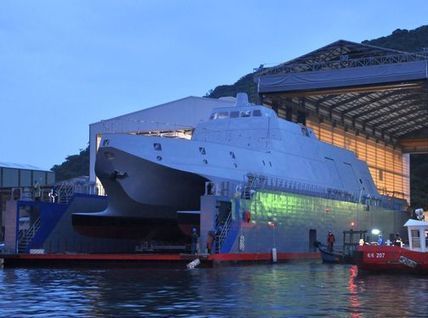
Taipei, Dec. 19 (CNA) The Navy is set to take delivery of its first locally designed stealth missile corvette from a Taiwanese shipbuilder during a ceremony slated for Dec. 23, the Ministry of National Defense said Friday. During the ceremony in a commercial harbor in Suao, the 500-ton corvette -- the Tuo Jiang ("Tuo River") -- will be officially transferred from Lung Teh Shipbuilding Co. to the Navy. After receiving the corvette, the Navy will begin training personnel to familiarize them with the craft, and Navy officials did not think it would take long before the vessel is put into service. The corvette will be based in Suao, Yilan County, according to the Navy. Earlier this month, the Navy released a video showing sea trials of the Tuo Jiang and said the results of the tests were satisfactory. Naval officials praised the boat's high performance and high mobility, noting that the corvette reached a maximum speed of more than 38 knots during the recent sea trials. The twin-hull Hsun-hai class corvette will be equipped with several weapons, including the locally developed Hsiung Feng II and Hsiung Feng III anti-ship missiles, the Navy said. Commissioned by the Navy, Lung Teh Shipbuilding Co. began construction of the Tuo Jiang in November 2012, and it was christened in March this year. It has a range of 2,000 nautical miles, measures 60.4 meters in length and 14 meters in width, and takes a crew of 41 people. The Navy plans to commission between eight and 12 of the corvettes if sufficient funds can be obtained in the future .
Peru signs a contract with Spanish shipyard Construcciones Navales P. Freire S.A. to build a new polar research vessel
Keel laying is expected in 2015, with the final trials phase for the new vessel scheduled to begin in December 2017
The Peruvian Navy (Marina de Guerra del Peru, or MGP) has signed a contract with Spanish shipyard Construcciones Navales P. Freire S.A. for the build of its new polar oceanographic research vessel (Buque Oceanografico Polar, or BOP).
IHS Jane's reported on 9 December that the contract was due for completion before the end of the month. The acquisition was confirmed on 12 December, with the signing in Lima of a EUR79.2 million (USD97.3 million) contract.
Russia’s third Borei-class nuclear-powered submarine Vladimir Monomakh has officially become part of the Russian Navy. Armed with Bulava ballistic missiles, the SSBNs of this class are the planet’s most advanced nuclear deterrence tool.
Russian Defense Minister Sergey Shoigu attended the ceremony of raising the Russian Navy colors on the submarine on Friday, December 19.
The Borei-class, Project 955, fourth generation SSBN (Ship, Submersible, Ballistic, Nuclear) Vladimir Monomakh has been built at Sevmash shipyard in Russia’s White Sea port of Severmorsk. It followed two first vessels of the same project, the lead vessel of the series SSBN Yuriy Dolgorukiy and SSBN Alexander Nevsky, which both joined the Russian Navy in 2013.
According to the Russian military, Borei-class are state-of-the-art submarines, featuring characteristics superior to any submarine currently in service worldwide.
The Borei-class subs are replacing outgoing nuclear subs of the previous generation and are set to become the backbone of Russia’s sea-based nuclear defenses.
A Borei-class sub is 170 meters long and 13.5 meters wide, and can dive up to 450 meters.
They have a compact, hydro-dynamically efficient hull for reduced broadband noise and are the first to use pump-jet propulsion among Russian submarines. Their submerged cruise speed is at least 30 knots (56 kilometers per hour).
Safety measures for the subs include a rescue chamber that can host all 107 crew members.
The primary weapon of the Borei SSBNs is the Bulava SLBM (Submarine Launched Ballistic Missile, SS-NX-30 by NATO designation) solid fuel missile with well over a 9,000 kilometer firing range capability. Bulava’s payload is 6 to 10 hypersonic, individually guided, maneuverable nuclear warheads with a yield of 100 to 150 kilotons each.
Each Borei submarine, designed by the Rubin Central Design Bureau for Marine Engineering in St Petersburg, is armed with 16 Bulava intercontinental ballistic missiles.
The Bulava missile has had a somewhat troublesome development history, with technical glitches plaguing the early tests. Altogether there have been 22 launches in the SLBM’s history. However, out of the last 10 launches, only one failed.
The SSBN Vladimir Monomakh was handed over to the Russian Navy on December 10, having completed all trials and tests, including a successful Bulava launch in September.
The underwater missile launch was carried out from the White Sea off the northwest Russian coast. All warheads hit the Kura test range in the Kamchatka Peninsula in the Russian Far East, the Defense Ministry said in a statement.
That missile launch was followed by two more successful launches carried out by the SSBN Yury Dolgorukiy in October and the SSBN Alexander Nevsky in November.
A fourth Borei-class submarine, Knyaz Vladimir, is currently under construction in Severomorsk, while a fifth, Knyaz Oleg, was laid down at the Sevmash shipyard in July.
The SSBN Knyaz Oleg will become the first of the upgraded Project 955A submarines, which will boast smaller hulls and cons as well as even better acoustics and lower sound levels.
The sixth Borei-class sub, SSBN Knyaz Suvorov, will be laid down in Severomorsk on December 21.
By 2020, the Defense Ministry plans to have eight Borei-class subs as the backbone of the naval component of the country’s strategic nuclear deterrent.
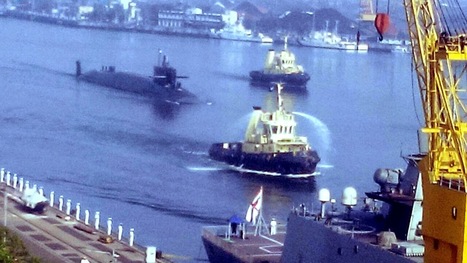
Here's another photograph of India's indigenously developed nuclear-powered ballistic missile submarine Arihant leaving Visakhapatnam harbour on Monday. It isn't clear who took this photograph -- it arrived from multiple sources, (including on Whatsapp) but without credit. So if anyone knows where this is from, please let me know. Clearly taken from dockyard with two tugs guiding the submarine out, two Coast Guard vessels in the background and a naval ship (frigate?) in the foreground.
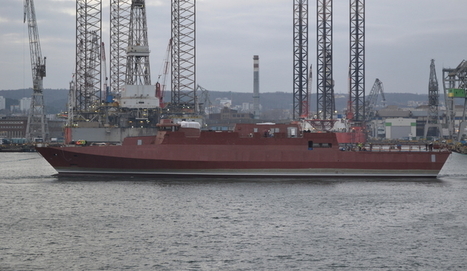
Yestserday, at the Gdynia Navy Shipyard, hull of the “Ślązak” class patrol vessel has been test-launched.
According to the official press release “one of the aims of the launching operation was to verify the current weight of the vessel via a capacity test, and to prepare the ship for installation of the propellers”.
Launching was carried out by getting the vessel out of the dock and mooring it at the southern pier. Later the dock-support has been changed into so called “second variant of docking”, and the hull was inserted into the dock again. Nothing surprising happened during the operation, and, what is even more important, the ship stays on the surface of the water, as expected.
Data on completeness of works
According to the information released by the Navy Shipyard on occasion of the launch, the machinery in the “Ślązak’s” engine room has been 90% complete (including: the engines, gearbox, turbine, electric energy generating devices, pumps, compressors, shafts, artillery equipment supports), structural mounts for the systems have gained 80% degree of readiness, while the hull completion status is claimed to be at the stage of 98%. It is estimated that the vessel weighs ca. 1700 tonnes.
What is more, an Organization – Preparation Group selected from the Combat Vessels Squadron takes part in the process of constructing the new patrol vessel (according to the Regulations of Service for the Navy Vessels). At the moment that group consists of 20 persons. What is more, specialized training programme has been started in November this year, by the suppliers of equipment. Future crew of the vessel is to take part in that training. Commander of the future vessel has also been selected – ex-commander of the Missile Vessel, ORP Grom – Commandor 2nd Lieutenant Sebastiana Kała.
„Ślązak” - what will it be?
Ślązak is to be a patrol vessel based on the Gawron corvette. Difference is, that Ślązak will not be equipped with the ASW systems and weaponry, it will also not be equipped with anti-ship missiles and surface to air missiles other than Grom MANPADS.
Current tasks to be fulfilled by this vessel include:
Destroying naval and aerial targets, smaller vessels and asymmetric threats;
Patrolling and protecting sea communication routes and harbour approach paths;
Escorting and protecting commercial vessels;
Monitoring sea routes, as an element of international forces;
Anti-pirate operations;
Providing support and cooperating with Special Forces;
Functioning as an ad hoc base for helicopters;
Taking part in humanitarian and environment-protection operations.
Standard displacement mass of the vessel is to be as much as 1800 tonnes, total length – 95.2 m, width – 13.5 m, height to the level of the board – 9.35 m, displacement – 3.6 m. The ship is to be able to operate autonomously for a period of 30 days.
Mixed propulsion system consists of 2 main engines (power output: 2 x 3240 kW) and a turbine, maximum power of which is to be as much as 25 000 Kw. All that is to allow the ship to reach speeds of up to 30 knots. Range of the vessel – 2000 NM at at 18 knots and 4500 NM at 14 knots. Ship’s power plant is equipped with 4 generators, 600 kW each. Additional equipment includes bow azimuth thruster, which improves manoeuvrability, and active stabilizers, which improve comfort for the crew.
The vessel command system is to be supplied by the Thales company. Armament - OTO Melara 76 mm cannon, 2 MARLIN – WS 30 mm cannon, 4 GROM missile launchers and 4 .50 cal. heavy machine guns.
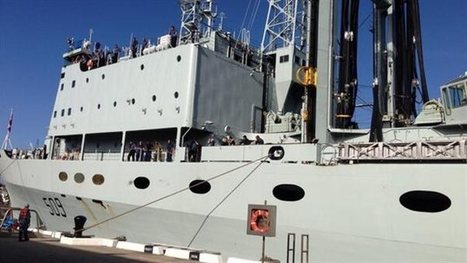
Une étude portant sur les façons dont la marine canadienne pourra combler son manque de navires ravitailleurs est entre les mains du ministre de la Défense nationale, Rob Nicholson, mais elle ne contiendra pas toutes les solutions possibles.
Le choix du modèle de navire qui remplacera le NCSM Preserver et le NCSM Protecteur, qui seront mis hors de service plus tôt que prévu, divise de plus en plus les milieux militaires canadiens.
Le gouvernement Harper envisage de construire deux navires de soutien interarmées à Vancouver dans le cadre de la Stratégie nationale d'approvisionnement en matière de construction navale, mais ces vaisseaux ne seront pas construits d'ici huit ans. En attendant, la Défense nationale cherche une façon de combler le manque de bateaux.
Diverses solutions ont été proposées au ministre, a affirmé le commandant de la marine canadienne, le vice-amiral Mark Norman, à un comité de la Chambre des communes, le mois dernier. Toutefois, l'ébauche d'un rapport indépendant ne fera pas partie de l'étude soumise au ministre. Ce document remet en question l'idée d'attendre la fin de la construction de ces bateaux. L'analyse en question, rédigée par deux experts de l'Institut de la conférence des associations de défense, traîne dans les bureaux du directeur parlementaire du budget (DPB). Elle devait faire partie du rapport du DPB sur la question, mais elle a été laissée de côté parce que des officiers supérieurs de la marine à la retraite désapprouvaient les recommandations.
Le colonel à la retraite George Petrolekas et un spécialiste des questions militaires, Dave Perry, proposaient l'achat d'un navire français de la classe Mistral et de convertir au moins deux pétroliers civils pour les missions de ravitaillement. Selon eux, cette solution donnerait une plus grande capacité et une plus grande flexibilité à la marine canadienne tout en coûtant moins cher que le programme actuel.
Le DPB refuse de discuter des raisons qui l'ont poussé à ne pas inclure cette recommandation dans son rapport final. Il s'est contenté de dire qu'il avait commandé plusieurs études pour faire le tour de la question.
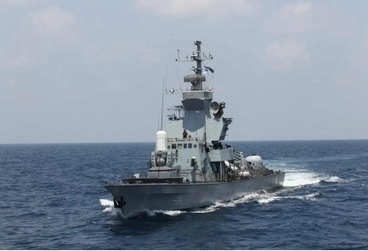
Under a deal reached with Israel in November, Germany earmarks up to 115 million euros ($143 million) for four new corvette warships for the Israeli Navy • Contract could be finalized before the end of this year, German government spokesman says.
Germany plans to finance part of the cost of four new corvette warships for the Israeli Navy made by German firm Thyssen Krupp, under a deal struck with Israel in November, the German government said on Monday.
Following approval by German parliament's budget committee, the contract could be finalized before the end of this year, government spokesman Steffen Seibert said.
As part of its atonement for the Holocaust, Germany is committed to Israel's security and has often helped pay for the cost of military equipment such as submarines.
The mass-circulation Bild am Sonntag newspaper reported on Sunday that Berlin had earmarked up to 115 million euros ($143 million) for the warships -- which would cost around 1 billion euros ($1.2 billion) in total.
Seibert declined to comment on the size of the German contribution.
En septembre dernier, il semblait qu'Israël avait choisi la voie d'un appel d'offres international après un premier échec d'une consultation restreinte avec l'Allemagne :
being prepared for shipment to the place of their service. December 4 in St. Petersburg JSC "Admiralty Shipyards" was signed deed of Vietnamese Navy diesel-electric submarine HQ-184 "Haiphong" project 06361. Submarine HQ-184 "Hải Phòng" or "Haiphong" became the third boat project 06361 as part of the Navy in Vietnam (and simultaneously the 34th boat in this series delivered for export). In accordance with the signed in December 2009 contract, Vietnam, a total of six diesel-electric submarines have to get 06,361 project. Boat serial number number 01341 was founded 28.03.2012, launched on 28/08/2013 and passed in the Vietnamese Navy 12.04.2014 year. Vietnamese Navy transport vessels used to deliver built for them on the "Admiralty Shipyards" in St. Petersburg submarines. This is done to reduce the cost of the resource submarines.
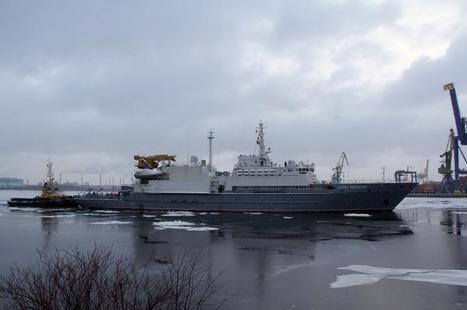
Savlage ship "Igor Belousov" yesterday December 25 set out to sea on the shipbuilder's next phase sea trials. The vessel will be undergoing trials until December 31, 2014, the Russian Ministry of Defense said Thursday. During the sea trials a team of the shipbuilding company and the ship's crew (Admiralty Shipyards) will be testing navigation system of the vessel, including that of the radio navigation station and echo sounders, systems that provide vital functions for the ship and tested power plant operations in the different modes. The next stage of the shipbuilder's sea trials will be carried out January 23 to February 8, 2015. The sea-going salvage, SAR vessel "Igor Belousov" was built for the Russian Navy at Admiralty Shipyards and was designed to carry out rescue of the crews from stricken submarines submerged on the surface, to supply the stricken vessels with the air, electricity and life-saving equipment. The vessel features capabilities to conduct search and examination of stricken vessels or facilities in a given area, also as part of the international maritime rescue units.
Key characteristics: DWL length - 97.8 m, BWL - 17.2 m, depth amidships - 10.6 m, displacement – 5,037 tonnes. Seaworthiness: safety at sea - unlimited, while lowering / hoisting of a DSRV - sea swells of No 3 to 4, of a diving bell - No 5, maximum speed - 15 knots, economic speed cruising range - 3500 nm, complement - 96, accommodations for rescued people - 120 (60 - in pressure chambers).
Admiralty Shipyards (Admiralteysky Verfy) is the oldest Russian shipbuilder, founded back in 1704. Admiralty Shipyards specializes in design, construction and upgrade of civil vessels and warships for the Russian Navy. As of today, the Company has built more than 300 submarines (including 41 nuclear-powered subs) and 68 deep submergence vehicles and ROVs.
Severodvinsk, Russia based Sevmash Shipyard (Sevmash, part of the United Shipbuilding Corporation) on 26 December 2014 held a ceremonial keel-laying of the nuclear-powered Borey-A class submarine (Project 955A) "Generalissimus Suvorov," the Corporation's press release said.
The ceremony dedicated to the 75th anniversary of "Sevmash" was attended by Deputy Prime Minister Dmitry Rogozin, first VP of the USC Group Leonid Strugov, the naval architercture and marine engineering firm Rubin's CEO Igor Vilnit, Sevmash Director General Mikhalil Budnichenko, heads of business partners, representatives of the Navy Сommand.
United Shipbuilding Corporation was founded in 2007 as a 100-percent state-owned group of companies by the Presidential Decree № 394 (March 21, 2007). The Corp. consolidates about 70% of the domestic shipbuilding industry and incorporates three regional shipbuilding centers, nine engineering and design offices and 39 dockyards. The Corp’s largest shipbuilding assets include Kaliningrad-based JSC Yantar Shipyard, JSC Admiralty Shipyards (St. Petersburg), JSC PA Sevmash (Severodvinsk), JSC DVZ Zvezda (Vladivostok) and Baltic Shipyard Besides, UCS holds a 50% stake in Arctech Helsinki Shipyard, a joint venture with STX Finland Cruise Oy. The Corporation participates in several major international projects: construction of a new mega shipyard Zvezda-DSME through a JV with Daewoo Shipbuilding & Marine Engeneering (South Korea), the construction in conjunction with Yantai Raffles (Singapore) of Vostok-Raffles Shipyard. The Group builds ships for Russian customers and exports its products to 20 countries.
Kolkata: India will now export two warships to Sri Lanka after delivering a warship to Mauritius for the first time, Minister of State for Defence Production Rao Inderjit Singh said on Saturday.
"From Sri Lanka, we have received an order to build two off-shore patrol vehicles (OPV) and they are under construction in Goa Shipyard," the minister said on the sidelines of the ceremonial delivery of warship CGS Barracuda to the Mauritian Coast Guard.
He said the ships are entirely indigenously built and there hasn't been any technology cooperation with any foreign partners.
"This is the first time the export barrier has been breached... This will be the first in the long line of ships that we hope to export from our country... I think the country can feel proud that the ship-building industry has come of age," the minister said.
CGS Barracuda is an OPV built by government-owned 'mini ratna' Garden Reach Shipbuilders and Engineers (GRSE) and is priced at $58.5 million. The warship completed sea trials last month after which the official hand over process was started.
The 83 crew capacity warship will be used by the Mauritian Coast Guard for anti-piracy and anti-poaching operations. Besides, it is also capable of search and rescue missions, transportation of small detachment of troops and helicopter operations and can handle external firefighting. The warship can also be used for cargo handling.
"The ship is provided with improved habitability and hosts all modern facilities (for the crew) with fully air-conditioned modular accommodation," chairman and managing director of GRSE, Rear Admiral (retd) A. K. Verma, said.
Kolkata-based GRSE has built 92 warships for the Indian Navy and the Coast Guard since inception including the country's first indigenously built warship in 1961.
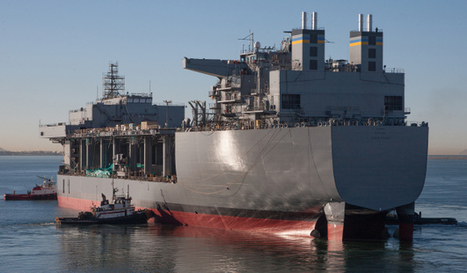
General Dynamics NASSCO has been awarded a $498 million contract to build the fourth Mobile Landing Platform that will be the second configured as a so-called Afloat Forward Staging Base for mine countermeasure (MCM) helicopters and special operations forces (SOF) and U.S. Marines, the company announced on Monday.
“Under this option, NASSCO will provide the detail design and construction efforts to build the second AFSB of the Mobile Landing Platform-class ships,” read a statement from NASSCO.
The contract modification that funds the construction follows the first AFSB — USNS Lewis B. Puller (MLP-3/AFSB-1) — which was launched at the San Diego yard in November.
The 764-foot ship will field large helicopter deck capable of fielding MH-53E Sea Dragon MCM helos and provide accommodations for up to 250.
Lewis B. Puller is slated to become operational in 2015 and will likely replace the current AFSB stand in — USS Ponce (AFSB-(I)-15).
The second AFSB — contracted on Friday — will most likely based in the Pacific.
U.S. Military Sealift Command (MSC) took delivery of the second MLP — USNS John Glenn (MLP-2) — in March.
MSC will operate all four ships.
The following is the Dec. 19, 2014 DoD contract announcement on the second AFSB.
General Dynamics National Steel and Shipbuilding Co., San Diego, California, is being awarded a $498,116,529 modification to a previously awarded fixed-price-incentive, firm-target contract (N00024-09-C-2229) for the procurement of the detail, design and construction of the fourth Mobile Landing Platform Afloat Forward Staging Base. Work will be performed in: San Diego, California (70 percent); Pittsburgh, Pennsylvania (7 percent); Chesapeake, Virginia (7 percent); Beloit, Wisconsin (6 percent); Iron Mountain, Michigan (2 percent); and various locations in the United States (0.8 percent); work is expected to be completed by March 2018. Fiscal 2014 shipbuilding and conversion (Navy) contract funds in the amount of $498,116,529 will be obligated at time of award and will not expire at the end of the current fiscal year. The Naval Sea Systems Command, Washington, District of Columbia, is the contracting activity.
The Ministry of Defence of India intends to take from Russia to lease a second nuclear submarine Project 971 "Pike-B." On this, as reported by The Times of India, India's Defense Minister Shri Manohar Parrikar. The possibility of the ship in rent was discussed during the visit to India of Russian President Vladimir Putin December 11, 2014. The new ship will enable the Indian Navy to strengthen its presence in the world's oceans, as well as enhance the training of submariners.
According Parrikara, the final decision on leasing the second submarine of Project 971 is still pending. Indian military department is currently considering two options: rent the second ship of the "Pike-B" or a lease renewal submarine "Chakra" (K-152 "Seal"), received in January 2012 under a contract of lease for a period of ten years. When it is the Ministry of Defence intends to make the final choice is still unknown.
Indian military department is interested in renting the submarine "Irbis" Project 971I tab which took place in 1994. Readiness of the ship with the serial number 519 is estimated at 46-48 per cent; at the time of freezing construction in the "Amur plant" in 2011 was formed by submarine pressure hull. Earlier, the Ministry of Defence of India has announced that it is ready to consider funding the completion of the submarine and its subsequent lease.
Currently, the Indian Navy submarine worth "Chakra", built in the Russian project "Pike-B." Contract on leasing the ship was signed in 2004, and its value was more than $ 900 million (it was originally set at $ 650 million). Delivery of the ship to the customer regularly delayed; the contract of 2004 it was assumed that India will be "Chakra" in 2008.
"Chakra" is a third-generation submarine. Submerged displacement of the ship is 12.8 thousand tons. K-152 is capable of speeds up to 30 knots and dive to a depth of 600 meters. The ship is equipped with four torpedo tubes and four 533 mm - 650 mm caliber.
On Saturday, defence shipbuilder, Garden Reach Shipyard & Engineers (GRSE) will hand over to Mauritius a 1,300-tonne offshore patrol vessel (OPV) named “Barracuda”. This $58 million (Rs 365 crore) vessel is the first warship ordered by a foreign country from an Indian shipyard.
Meanwhile, GRSE is bidding to build two frigates for the Philippines Navy, for an estimated Rs 1,000 crore each. If GRSE wins that order --- for which major global shipyards are bidding, including Navantia of Spain, STX of France and Korean majors, Hyundai and Daewoo --- it would be the first time a warship designed and built in India is selected in an international tender.
India has gifted several warships to smaller Indian Ocean countries like Maldives, Seychelles and Mauritius. It has sold used vessels, such as a Sukanya-class OPV that now serves as the Sri Lankan navy’s flagship.
GRSE is also finalizing the design of a series of 140-tonne Fast Patrol Boats for the Vietnam Navy. New Delhi has offered a line of credit to Vietnam for that order.
Yet this is the first time an Indian shipyard has been commissioned to design and build a warship to specifications formulated by a buyer country. This marks an important first landmark in the Bharatiya Janata Party (BJP)-led government’s drive to increase defence exports.
According to figures tabled in parliament on November 28, India’s total defence exports were Rs 446.75 crore in 2012-13; 686.27 crore in 2013-14 and Rs 166.67 crore this year, up to Sept 2014. The export of the Barracuda would, therefore, be a significant success.
The need to support defence exports has been understood for some time, with the United Progressive Alliance government formulating a “Defence Exports Strategy” and simplifying the procedure for granting export sanctions.
The BJP’s election manifesto in 2014 pledged: “We will encourage domestic industry to have a larger share in design and production of military hardware and platforms for both domestic use and exports, in a competitive environment.”
Senior naval officers have long argued for exporting warships to friendly countries in the Indo-Pacific region. This, they said, would strengthen India’s security partnerships, while providing economy of scale to India’s warship builders and ancillary companies.
Amongst all three services, the navy has most decisively promoted indigenous warship design and construction. All 41 warships currently on order for the navy are being built in Indian shipyards.
“Building in India provides significant cost advantages like cheaper labour, when compared with most foreign shipyards”, points out GRSE chief, Rear Admiral AK Verma (Retired).
As an example of successful indigenization, Verma points to the Kamorta-class anti-submarine corvettes that GRSE is building. He says: “The challenge is not just to build warships in India, but to also increase the indigenous content of each vessel. In the Kamorta-class, we have brought the overall indigenous content to about 90 per cent.”
Several navy chiefs have lamented the relative failure to indigenize engines, weapons and sensors. Earlier this month, the navy chief, Admiral RK Dhowan estimated that the float component of our warships (i.e. the hull) was more than 95 per cent indigenous; the move component (engine and transmission) was sometimes just 60 per cent; while the high-tech fight component (weapons and sensors) was barely 35-40 per cent indigenous.
Even so, the Mauritius coast guard is said to be pleased with the performance of the Barracuda, which has completed a month of sea trials. The GRSE chief says the vessel delivered a top speed of 22.5 knots (42 kilometres per hour), against the customer’s requirement of 20 knots (37 kilometres per hour).
The Barracuda has been designed for the usual OPV tasks --- anti-piracy; anti-smuggling; anti-poaching and search and rescue --- as well as additional tasks specified by Mauritius. The additional capabilities include: pollution response; external fire fighting; and the movement by sea of troops.
The Barracuda will be handed over by Minister of State for Defence, Rao Inderjit Singh, to the Mauritius government at Kolkata on Saturday.
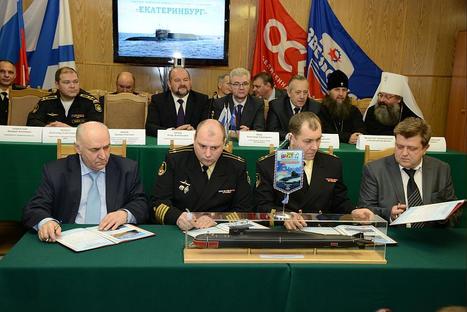
Zvezdochka shipyard has completed repair and extension of the lifetime of the strategic nuclear-powered submarine Yekaterinburg (project 667BDRM), the shipyard says in its press release. The ship has been officially delivered to Russian Navy on December 19, 2014.
In June 2012, the ship was delivered to Zvezdochka (Severodvinsk) for repair and extension of the ship’s lifetime by 3 years. In early June 2014, the Yekaterinburg left the slip dock of Ship Repair Center ‘Zvezdochka’, the outfitting work was completed in the first half of November 2014 and the ship started shipbuilder’s sea trials. It took three weeks to test all the systems and mechanisms of the submarine.
The construction of Project 667BDRM Delfin-class (Delta IV) submarines commenced in 1981 at Northern Machine-Building Enterprise (Sevmash). In 1984-1990, RF Navy was expanded with seven ships of this type. As of today, RF Navy numbers six submarines of Project 667BDRM. In 1999-2012, all the ships of this project underwent interim overhaul and modernization at Zvezdochka Shipyard.
The Yekaterinburg was laid down on 17 February 1982 at the Russian Northern Machine-Building Enterprise (Sevmash). She was commissioned into the Soviet Navy in 1985. After the collapse of the Soviet Union, the submarine continued to serve in the Russian Navy. Initially known only by her hull number, in February 1999 she was renamed after the city of Yekaterinburg. Zvezdochka carried out interim overhaul and modernization of the Yekaterinburg in 2003.
According to open sources, the Project 667BDRM Delfin-class (Delta IV) submarines have a length of 167m, breadth - 12 m, displacement - about 12,000 tons, maximum depth - 400 meters, underwater speed - up to 24 knots, crew - 140 people. Armaments include a D-9RM missile system (16 RSM-54 ballistic missiles) and four 533-mm torpedo tubes (18 torpedoes). The Project 667BDRM was designed by the St. Petersburg-based Rubin Marine Equipment Design Bureau.
Severodvinsk-based Zvezdochka Shipyard (Ship Repair Center ‘Zvezdochka’) is a diversified shipbuilding enterprise. It has two covered slipways with seven shipbuilding yards, which are designed for retrofitting and construction of vessels with a launching weight of up to 18,000 tons. The firm is majority owned by Northern Shipbuilding and Ship Repair Center, part of JSC United Shipbuilding Corporation.
Les délégations égyptiennes se succèdent en France en vue de conclure au plus vite l’achat d’au moins une frégate de type FREMM. La Caire est très pressé car les Egyptiens souhaitent disposer du bâtiment pour l’été 2015. L’idée est, en effet, que le nouveau navire amiral de la flotte égyptienne ouvre une grande revue navale marquant la fin des travaux d'élargissement du canal de Suez. Un chantier de grande ampleur voulu par le président Abdel Fattah al-Sissi et pour lequel les contrats avec les sociétés chargées des travaux ont été signés fin octobre. D’un coût estimé à plus de 8 milliards de dollars, le projet porte sur l’élargissement d’une partie du canal et la réalisation, sur une trentaine de kilomètres, d’un nouvel ouvrage parallèle à la voie historique. La construction de différents tunnels est également prévue. La fin du chantier est programmée en août prochain.
Pour tenir les délais extrêmement courts souhaités par l’Egypte, la France propose de lui transférer la Normandie, seconde FREMM de la Marine nationale, que DCNS doit normalement livrer cet hiver à la flotte française. Un autre bâtiment pourrait ensuite suivre,...
Lire l'intégralité de l'article sur Mer et Marine :
SUBMARINE "KRONSHTADT": FIRST MODULE ON BUILDING WAY! December 15, 2014
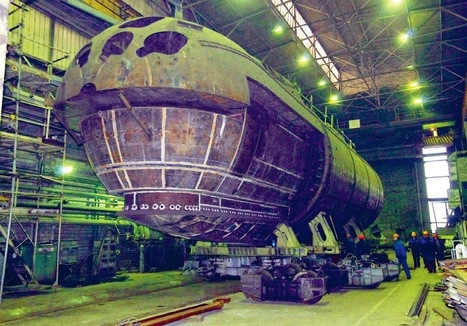
In the coming days, the bow module section of the second Project 677/Lada-class submarine "Kronshtadt" will be transported from Workshop 9 to Workshop 12. Today, construction of the serially-produced unit, which was restarted in July 2013, is in full swing.
In 2009, the Ministry of Defense ordered a halt to the construction of "Kronshtadt", which was laid down in 2005. Four years later, this unique project was given a "second life" - a state contract to continue construction was signed by RF deputy defense minister Yuriy Borisov and Admiralty Shipyards general director Aleksandr Buzakov.
New Life for Lada Project Today, the bow and stern module sections of the second Project 677 submarine are in Workshop 9, and internal structures requiring rework have been dismantled. The bow module is being prepared for transport to a construction way in Workshop 12. It's symbolic that Bay 6, the same bay used for the construction of "Sank-Peterburg", has been prepared to receive the new bow module.
Work continues on the stern module - a joint in the fourth compartment has already been cut, and upgrades to the end of the stern section is underway.
"In accordance with drawings we received from our designer, Rubin Central Design Bureau of Naval Technology, adjustments were made to the design of the shaft line, which is why the stern section tip is undergoing modifications. To this end, serious efforts are underway," explains project manager and Construction Department 6 senior builder Viktor Mishkin. "The layout of some spaces has changed somewhat - mostly in the fourth and fifth compartments, where the diesel generators and electric propulsion motor are located. Work is also underway to improve designs; this requirement arose while the first hull was being tested."
According to the project manager, the changes being made are primarily focused on improving technical characteristics and habitability, as well as simplifying the ability to service onboard systems.
At the same time as the submarine's construction, a lot of effort is underway to survey structures that were completed earlier. Outfitting buildings and units and machine-building equipment have been activated.
According to Viktor Mishkin, construction of the submarine hasn't reached the most intensive phase yet. Only the scope of work clearly defined by the designers are underway: "As soon as we receive drawings, we immediately start working. First and foremost, the reliability of the submarine depends on clear adherence to the parameters set forth in the design."
Workshop 9 employees - builders under the supervision of Oleg Sosunov, assemblers led by Nikolay Borisenko, teams of welders nuder Roman Shemenkov and Valeriy Kichigin - are now actively involved in the construction. Preparation of the bow module section for transport to Workshop 12 is being handled by Vladimir Kozlov's assembly team and Yevgeniy Agapov's metal worker team. These are the same workers who participated in construction of the first Project Lada submarine.
A majority of the work is also being performed by Workshops 6 and 7 and by machine-building production personnel.
The transfer of the stern module section into Workshop 12 is scheduled for spring 2015. During this time, the submarine's hull will be prepared for insulation work. "Habitability conditions inside the submarine depend on the quality of insulation, and this step also helps prevent accumulation of condensation, which is not desired when operating machinery," explains Viktor Mishkin. "After insulation work, the module section can be moved to the construction way, where installation of equipment will begin."
Upon completion of the first stage of construction in Workshop 9, all factory teams will be brought in to work on the submarine.
We Create... And Build Despite the fact that "Kronshtadt" is not a lead hull, it is being built using a corrected technical design. "Nearly 20 years have passed since the draft design was completed," says Construction Department 6 senior builder Mark Khazanov. "Since then, based on construction and testing experience, new types of equipment and requirements have materialized, which the designer has reviewed and which will be introduced during construction. We could consider that, at some level, "Kronshtadt" - for us - is a submarine that isn't being built, but rather created. There's a difference!"
New, Modern! Currently, Project 677 submarines are the most modern non-nuclear submarines. Despite the large scope of work, timelines for building this unique submarine are rather tight: according to the signed documents, the transfer of "Kronshtadt" to the Russian Navy is scheduled for 2017.
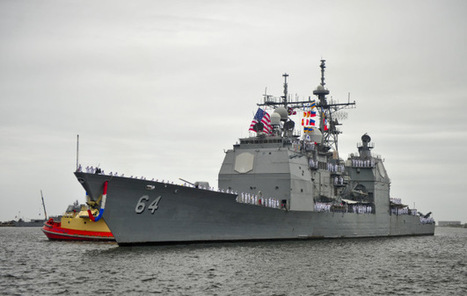
While the Navy’s long range cruiser program is still in flux, the modernization effort for the Navy’s Ticonderoga-class (CG-47) guided missile cruisers has begun with USS Cowpens (CG-63) and USS Gettysburg (CG-64), the service told USNI News this week.
The $350 million-per-hull effort, paid for by a fund Congress established last year, will upgrade the ship’s hull, mechanical and engineering spaces, improve some aspects of the crew’s quarters, upgrade the cruisers to operate in the Navy’s Naval Integrated Fire Control-Counter Air (NIFC-CA) concept and field Raytheon’s Standard Missile (SM) 6.
Work has already begun on Gettysburg and work on Cowpens is scheduled for next year.
The upgrades are the service’s first step in its controversial plan to modernize and preserve up to 11 cruisers and keep Ticonderogas well into the 2040s. “The ships would be minimally manned while in that reduced status and, as the other 11 active cruisers reach the end of their service life, cruisers in lay-up would be modernized and returned to operational status,” read a recent description of the program from the Congressional Budget Office. “Using that approach, the Navy would be able to maintain at least 11 operationally active cruisers (1 for each of the Navy’s planned 11 carrier strike groups) through 2034, with the last cruiser retiring in 2044.”
Absent a new large surface combatant capable of handling the air defense commander role for the carrier strike group, the service has reiterated over the course of the year.
The Navy had planned to include a position for the air defense commander on a planned Flight IV version of its Arleigh Burke guided missile destroyer (DDG-51) but shelved those plans due to the looming costs of the Ohio-replacement nuclear ballistic missile submarine program.
As part of the recently passed Fiscal Year 2015 National Defense Authorization Act (NDAA), Congress decided to allow the service to move ahead with the plan and has adopted a wait-and-see attitude moving further deliberation into the debate over the FY 2016 Navy budget.
“They can stand down two this year but [the bill] doesn’t address what they do in future years,” a legislative staffer told reporters last month.
USNI News understands the Navy is still formulating how it wants to proceed with cruiser modernization after the respite from the 2015 NDAA.
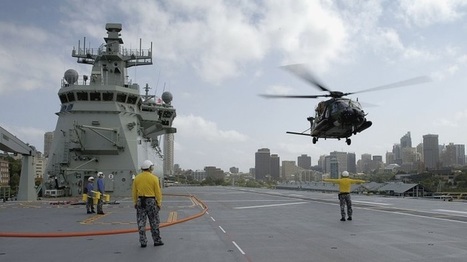
The Royal Australian Navy (RAN) will commence first-of-class flight trials on board its newly-commissioned landing helicopter dock (LHD) vessel HMAS Canberra in March 2015, the service told IHS Jane's on 16 December.
The 27,800-tonne amphibious ship was commissioned on 28 November and is expected to significantly improve the RAN's sealift and amphibious capability once it is cleared to operate aircraft such as the MRH-90 multirole helicopter, the S-70B-2 Seahawk, and the CH-47F Chinook.
Commander Michael Waddell, Officer in Charge of the RAN's Aircraft Maintenance and Flight Trials Unit (AMAFTU), told IHS Jane's that Canberra first embarked an MRH-90 and an S-70B-2 on 26 November while the ship was alongside at the RAN's Fleet Base East in Sydney. However, the purpose of this first embarkation was to conduct deck-handling trials including parking and lashing procedures, and did not involve flight operations.
"The actual flight trials while the ship is at sea will be conducted for about eight weeks from early March 2015," said Cdr Waddell. He added that the trials are designed to define the ship/helicopter operating limits (SHOLs) within which the different helicopter types can be employed from the LHD.
"These trials involve measuring the directions in which the winds come from, determining at which speeds we can operate for both vessel and aircraft, and identifying any other potentially difficult issues for each of the landing spots on the ship," said Cdr Waddell. Canberra has six helicopter landing spots on its flight deck.
Based on data collected from these trials, the AMAFTU will define a set of SHOLs that will specify parameters for the safe operation of aircraft on board. "These include parameters such as the aircraft's maximum weight, the maximum wind strength, and the amount of fuel in the aircraft while operating," said Cdr Waddell.
Although the trials in March 2015 will only involve the MRH-90 and the S-70B-2, Cdr Waddell said that data collected can also be used to come up with operating recommendations for other aircraft such as the MH-60R, although in the case of the MH-60R the service has made no plans to embark such aircraft on Canberra as yet.
"We can also use the information collected to provide limited clearances for other aircraft types from other nations, such as the S-61 Sea King and AS332 Super Puma, if they want to visit," he added.
"Our preference would be to be able to operate any helicopter in the Australian Defence Force on the ship if possible," said Cdr Waddell, although he added that there are no plans currently to embark any other aircraft on the LHDs besides the MRH-90, the S-70B-2, the Tiger Armed Reconnaissance Helicopter, and the CH-47F. The Tiger and the CH-47F will undergo sea trials on board Canberra in 2016.
Cdr Waddell also told IHS Jane's that the deployment of unmanned aerial vehicles (UAVs) on board Canberra is "something that is being discussed", although there are currently no concrete plans to do so as the RAN has yet to make a decision on the acquisition of UAVs.
"When we do start making more use of UAVs, and I think that's probably something that will occur, then Canberra will be a great platform to operate from and we would get involved in clearing that," said Cdr Waddell.
COMMENT
Although the Canberra class is currently only intended to operate rotary-wing aircraft, the retention of the ski-ramp forward (a legacy of the design's antecedents in Spain's Juan Carlos I strategic projection ship) has raised the possibility that the ships could, in due course, operate fixed-wing short take-off and vertical landing (STOVL) aircraft, write Ridzwan Rahmat and Richard Scott .
In May 2014, a spokesman for Defence Minister David Johnston told IHS Jane's that the country will consider acquiring the STOVL variant of the Lockheed Martin F-35 Lightning II Joint Strike Fighter. The spokesman was responding to media reports suggesting that Australian Prime Minister Tony Abbott has instructed planners to examine the possibility of buying F-35Bs to operate from the Canberra-class LHDs.
However, an independent analysis published by the Australian Strategic Policy Institute in November 2014 concluded that the benefits of reintroducing organic fixed-wing air power into the Australian Defence Force (ADF) "would be marginal at best, wouldn't be commensurate with the costs and other consequences for the ADF, and would potentially divert funding and attention from more valuable [programmes]".
VISAKHAPATNAM: India's first indigenous nuclear submarine INS Arihant had finally made its maiden foray into the wide-open sea in Bay of Bengal on Monday. The 6,000-tonne vessel commenced its sea trials off Visakhapatnam coast in the presence of defence minister Manohar Parrikar who was on his first visit to the Eastern Naval Command (ENC) in Visakhapatnam after taking charge of the post.
The much-awaited milestone marking the sea trials of INS Arihant, was achieved within a fortnight after Navy chief admiral RK Dhowan said that the nuclear submarine will soon undergo sea trials. The top brass of Indian Navy at Eastern Naval Command (ENC), Nuclear Power Corporation of India (NPCI) and the Baba Atomic Research Centre (BARC) who are stationed in the city for the past couple of days, also witnessed the historical event.
Parrikar who arrived by a special flight on Monday morning around 9 am, went to the Naval Dockyard in a convoy. During his brief visit, he was introduced to the ENC top officials followed by visit to the sea where INS Arihant took part in sea trials. Later, he left for Delhi by a special flight.
To get content containing either thought or leadership enter:
To get content containing both thought and leadership enter:
To get content containing the expression thought leadership enter:
You can enter several keywords and you can refine them whenever you want. Our suggestion engine uses more signals but entering a few keywords here will rapidly give you great content to curate.


 Your new post is loading...