Your new post is loading...

|
Scooped by
Patrick H.
July 1, 2013 4:08 AM
|
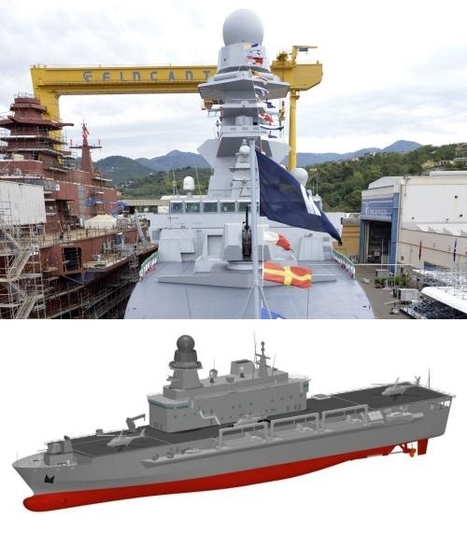
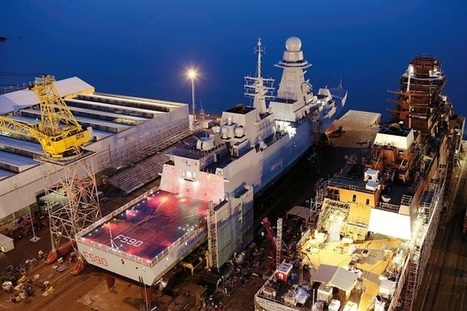
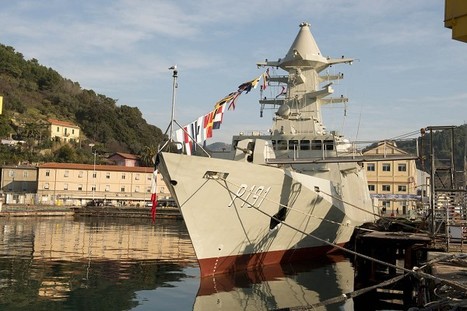
Le BDSL algérien à gauche, le long de la FREMM italienne Carlo Margottini, lancée le 29 juin. crédits : FINCANTIERI. L’assemblage du futur Bâtiment de Débarquement et de Soutien Logistique (BDSL) de la marine algérienne, dont la découpe de la première tôle est intervenue le 11 janvier 2012 au chantier Fincantieri de Riva Trigoso, près de Gênes, est entré dans sa phase finale. La coque est presque terminée et l’îlot en place, la mise à flot étant prévue dans les prochains mois pour une livraison en 2014. Version agrandie et améliorée des bâtiments amphibie italiens du type San Giorgio, le futur BDSL algérien, qui pourrait être nommé Kallat Beni Abbes, mesurera 143 mètres de long pour 21.5 mètres de large, son déplacement en charge atteignant 9000 tonnes. Capable d'atteindre la vitesse de 20 noeuds grâce à deux moteurs diesels, avec une autonomie de 6000 milles à vitesse économique, le bâtiment disposera d’un pont d’envol continu, avec deux spots d’appontage pour hélicoptères à l’avant et à l’arrière. La partie du pont au niveau de l’îlot sera dotée d’un ascenseur pouvant accueillir une machine de 30 tonnes et donnant accès à un hangar pouvant abriter 5 hélicoptères lourds.... Lire l'intégralité de l'article sur Mer et Marine : http://www.meretmarine.com/fr/content/la-construction-du-bdsl-algerien-avance
|
|
Scooped by
Patrick H.
June 24, 2013 6:32 AM
|
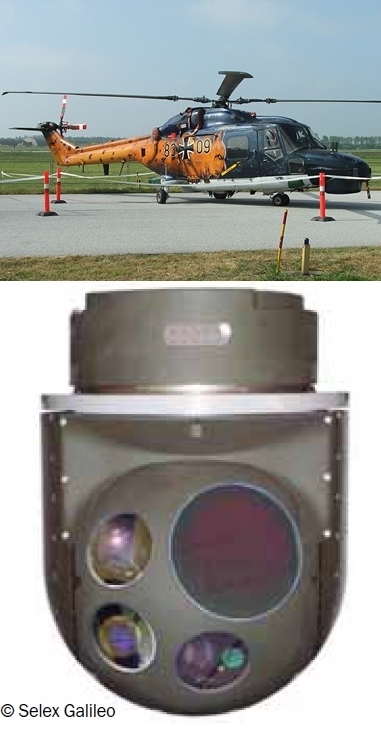
The German Ministry of Defence (MoD) has contracted Selex ES to develop and deliver Titan 385ES-HD enhanced stability high-definition turrets in support of the German Navy (Deutsche Marine) Sea Lynx Mk88A helicopters. Under the €5m contract, Selex will deliver the turrets for installation onboard Sea Lynx Mk88A helicopters to enhance surveillance capabilities at night and in poor visibility conditions for German Navy pilots. Selex ES Optronics & Communication Systems marketing vice-president Mark Byfield said: "The stabilised, high-definition image that the Titan provides can really give crews an edge when it comes to situational awareness." Combining high-performance sensors into a single line replaceable unit (LRU) solution, the Titan 385ES multi-sensor turret system is designed to meet current operational airborne observation, surveillance and reconnaissance requirements. The turret payload comprises a cooled, high-definition thermal imaging camera, in addition to cameras for uncooled thermal imaging camera and low-level light. Fitted with an embedded auto-tracker, Titan 385ES is capable of operating on any of the imaging sensor channels, and can provide forward-looking IR capabilities for the Lynx helicopter. The German Navy is currently upgrading seven Lynx Mk88A helicopters to naval Super Lynx, which are capable of conducting anti-surface warfare, anti-submarine warfare, search-and-rescue and utility operations. Each helicopter features an L-3 Communications AN/AQS-18 active dipping sonar, Sea Skua all-weather anti-ship missile, and Seaspray Mark 3000 alongside accommodating a range of depth charges. Selex is scheduled to deliver the first 385ES-HD turret to the navy later this year.
|
|
Scooped by
Patrick H.
May 23, 2013 2:58 AM
|
Le groupe néerlandais de construction navale Damen, associé au chantier italien Vittoria, vient de remporter un appel d’offre européen pour la construction de deux patrouilleurs pour la douane italienne. Le choix de l’administration italienne s’est porté sur le modèle Stan Patrols 5509, mesurant 50.2 mètres de long pour une vitesse maximale de 35 noeuds, la gamme actuellement la plus vendue par Damen. Les deux navires seront assemblés en Italie à partir d’un kit d’éléments préfabriqués.
|
|
Scooped by
Patrick H.
May 20, 2013 8:25 AM
|
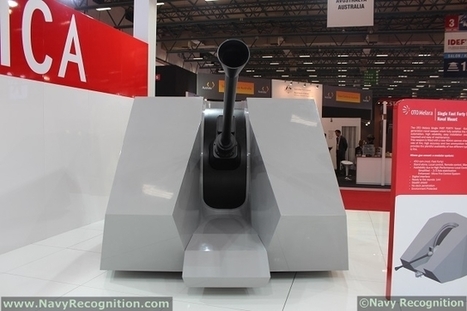
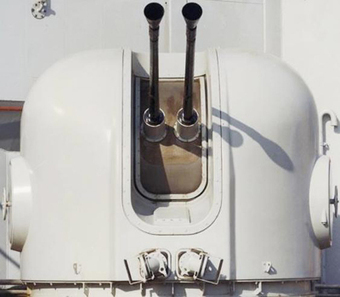
At the IDEF 2013 defense exhibition which was held recently Istanbul, Turkey, Italian company Oto Melara unveiled for the first time the 40mm single FAST FORTY naval mounting with dual feeding system (type C) with stealth cupola. The Oto Melara Single Fast Forty Gun Mount is a new generation naval weapon, which fully satisfies the requirements of full automation, high reliability, easy installation (no deck penetration) and ease of maintenance.
This weapon is fitted with a 40mm cannon characterized with high rate of fire, high accuracy and two ammunition feeding system that provides the plentiful availability of two different types of rounds ready to fire. The Oto Melara Single Fast Forty Gun Mount with stealth cupola has the same gun as the existing “40mm Single Fast Forty”, but it was subjected to a technological update.
Specifications of the 40mm gun mount:
» 450 rpm (mod. Fast Forty)
» Stand alone, Local control, Remote control, Mannned
» Availability due to High Performance Local Control:
Simplified - 2/3 Axis stabilization
Enhanced - Micro fire control system
» Digital interface
» Ready to fire rounds: 144
» Stealth cupola
» No deck penetration
» Environment Protected
This new gun mount will be installed on Turkish Navy future LST ships, in a manned version.
|
|
Scooped by
Patrick H.
April 26, 2013 9:28 AM
|
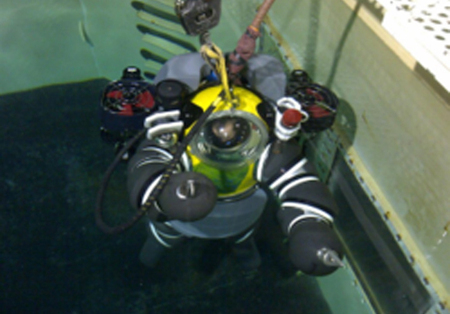
OceanWorks International announces the successful delivery of a major system upgrade for the first of the Italian Navy’s three Atmospheric Diving Systems (ADS). After its previous refurbishment in 1999, the first Italian HARDSUIT™ was returned to OceanWorks International for the latest configuration upgrade. The upgrade to the QUANTUM II configuration offers much improved operational, maintenance and training features including more powerful SAAB Seaeye SM7 thrusters and a completely re-designed and upgraded electronics, communication and monitoring system to allow better control and monitoring of the system performance by pilot and supervisor. The contract included provision of a temporary replacement ADS system to ensure that the Italian Navy did not experience any interruption of their rescue and salvage capabilities during the upgrade and refurbishment period. A 2-week pilot and technician training course is also provided to ensure that the Navy remain current on the advanced functions of the upgraded system. The upgrades and major survey along with the training represent a strong commitment by the Italian Navy to the HARDSUIT™ ADS system as the cornerstone of their submarine rescue capability. “The Italian Navy has been a loyal customer of the OceanWorks HARDSUIT™ ADS for many years” states Rod Stanley, Chief Executive Officer at OceanWorks International. “We are happy to continue supporting the Italian Navy in their efforts”. OceanWorks International is an internationally recognized subsea technology company specializing in the design and manufacture of manned / unmanned subsea systems and specialized equipment for military, oil and gas, scientific, and other marine markets. Offering a full range of subsea system engineering, design and analysis, fabrication, testing, and project management services, OceanWorks International has been at the cutting edge of deep submergence and diving technology, operations, and support for over 20 years.
|
|
Scooped by
Patrick H.
March 27, 2013 2:08 PM
|
ROME, 27 mars 2013 (AFP) - Le quartier général de la marine de l'Alliance atlantique en Méditerranée (HQ MC Naples) a fermé mercredi après quarante ans d'activité et sera transféré à Northwood, en Grande-Bretagne, dans le cadre du redéploiement des forces armées de l'OTAN en Europe. La base de commandement employait 180 militaires, issus de 19 nations, sur l'îlot de Nisida, situé en face à la ville de Naples, dans le sud de l'Italie. Le centre de commandement maritime allié "MC Naples" était chargé depuis 1972 du contrôle de la navigation et des communications en mer Méditerranée. Ses membres ont joué un rôle actif lors de la guerre du Golfe et des crises dans les Balkans, et dernièrement lors de la crise libyenne. En décembre 2012, le centre de Commandement interarmes "JFC Naples" avait quitté sa base historique de Bagnoli, près de Naples, pour des locaux modernes situés dans la même région. La petite île de Nisida, qui aurait été décrite par Homère, et qui abrite un centre de détention pour mineurs, n'a pas encore reçu de nouvelle affectation.
|
|
Scooped by
Patrick H.
March 19, 2013 6:46 AM
|
La Marine italienne crée une nouvelle force de débarquement, la Brigade San Marco
The ltalian Navy stood up a new formation known as the San Marco Brigade on 1 March as part of a reorganisation of the navy's landing force announced last year. The original plans have been revised to give the new brigade base protection responsibilities for naval installations throughout ltaly.
The new brigade consists of three regiments. The 1st San Marco Regiment has a force of around 1,000 marines and includes the Grado amphibious assault battalion comprising all of the brigade's assault infantry elements, plus medium mortars and anti-tank missiles. The regiment's combat support battalion includes heavier assets such as 120 mm mortars and long-range anti-tank missiles plus scout, engineering, nuclear, biological, and chernical, and air defence assets, as well as a reconnaissance/underwater demolition team company. The other elements of the 1st Regiment are a combat service support battalion and an air and tire coordination and control company. The 1 st Regiment includes all of the brigade's mobility amphibious tracked armoured vehicles, Lince protected patrol vehicles, and in the future the
8x8-wheeled amphibious armoured vehicle that is soon to be adopted by the force. The 2nd San Marco Regiment has a reduced strength of a round 500, subdivided into a naval operations battalion with two companies, each with 10 boarding teams, and a deployable harbaur/ force protection battalion. The 3rd Regiment includes the Caorle training battalion and three base protection battalions (North, Centre, and South), as well as a national emergency company. A brigade headquarters, a head quarters support battalion, and a landing craft group complete the organisation of the brigade. The reorganisation is designed to improve the operational effectiveness of the ltalian Navy in the amphibious, naval operations and force protection domains. The San Marco Brigade organisation will be tested in the coming months, with minor changes possible before its structure is frozen. Source : Jane's Defence Weekly
|
|
Scooped by
Patrick H.
March 12, 2013 4:54 AM
|
A la suite d’accusations de corruption à l’encontre de la compagnie italienne Finmeccanica, le ministère indien de la défense a décidé de suspendre la décision sur l’achat de 100 torpilles Black Shark — qui devaient être achetées à une filiale de Finmeccanica — destinées aux 6 sous-marins Scorpene. Le gouvernement indien n’a pas pris de décision sur l’achat de ces torpilles lourdes à longue portée. Elles sont fabriquées par Whitehead Alenia Sistemi Subacquei, une filiale de Finmeccanica. Pour obtenir un contrat pour des hélicoptères, de hauts responsables de Finmeccanica et de sa filiale britannique AgustaWestland sont soupçonnés de corruption. A la suite de ces allégations, le ministère indien de la défense a bloqué la livraison des hélicoptères et les paiements à la compagnie. A ce stade, on ignore ce que le ministère va faire pour les contrats négociés ou signés avec d’autres filiales du groupe Finmeccanica. Le ministre de la défense, A K Antony, a annoncé que le ministère avait reçu des plaintes sur ce contrat d’un concurrent et de parlementaires. Aucun nom n’a été cité. Un comité technique spécial a été constitué afin de revoir le processus d’évaluation et les plaintes. Référence : Deccan Herald (Inde)
|
|
Scooped by
Patrick H.
March 7, 2013 4:44 AM
|
Yesterday, at Fincantieri’s shipyard in Riva Trigoso (Sestri Levante, Genoa), there was the ceremony to mark the cutting of the first sheeting for the sixth Fremm vessel. This is a further step in the European Multi Mission Frigate construction program, the most important joint initiative to date among European industries in the Naval Defence field. The ship, which will be delivered in the first months of 2017, will be 144 metres long, 19.7 metres wide with a displacement at full load of approximately 6,500 tons.
Capable of reaching speeds of over 27 knots, the vessel will have an availability of 200 berths and a crew of 145.
This is a highly flexible vessel, able to operate in a wide range of scenarios, especially in patrolling and safeguarding the Mediterranean area.
Prime contractor for Italy on the Fremm program is Orizzonte Sistemi Navali. Included within the current framework of the program for ltaly are six vessels and an option for a further four which has still to be exercised.
|
|
Scooped by
Patrick H.
February 23, 2013 3:52 PM
|
During NAVDEX 2013 Oto Melara, a world leader in naval weapon systems, presented for the first time a full scale model of its HITROLE-G RWS naval weapon system.
The Oto Melara HITROLE RWS is a modern, fully stabilised, electrically operated and remotely controlled naval
weapon system for policing operations and countering asymmetric threats.
The turret can be easily operated by a single operator through a Remote Control Console and joystick or can be controlled by the ship’s Combat Management System. The combination of the optical sight, the ballistic computer with very high speed computation, the outstanding elevation angle (exceeding the 75°) and the possibility to be equipped with different cannons, grant to the User a multi-role capabilities and a very flexible deployment. The new HITROLE-G is an evolution of the existing HITROLES RWS featuring the GAU-19A triple 12.7 mm gun and a low radar cross-section design.
More than 150 HITROLE RWSs have been produced so far and they are in service with more than 10 Navies or Coast Guards all over the world, in some cases as primary weapon on board of small and fast ships for patrolling and in some others as secondary armament on board of corvettes.
|
|
Scooped by
Patrick H.
February 5, 2013 4:07 AM
|
La Marine italienne réduit son format et rationnalise sa flotte pour plus d'efficience
|
|
Scooped by
Patrick H.
January 8, 2013 12:38 PM
|
The delivery ceremony of two vessels for the United Arab Emirates Navy was held today at the Fincantieri shipyard in Muggiano (La Spezia).
These were an "Abu Dhabi Class" corvette, launched in February 2011, and the "Ghantut" patrol vessel, launched at the same yard in January 2012. In the presence of Rear Admiral Ibrahim Salem Mohamed Al-Musharrakh, Head of the UAE Navy, Admiral Luigi Binelli Mantelli, Italian Navy Chief of Staff, who was represented on this occasion by Vice Admiral Alberto Gauzolino, Logistic Support and Light houses Inspector, Vice Admiral Andrea Toscano, Commander in Chief Northern Tyrrhenian Sea Department Italian Navy, Vice Admiral Ernesto Nencioni, Director for Naval Armaments and Alberto Maestrini, Fincantieri Executive Senior Vice President Naval Vessels, the ceremony began with the characteristic recitation of the Qur'an in accordance with the dictates of Islam. Exemplifying Fincantieri's product excellence, both vessels stand out for their high level of flexibility in being able to carry out different types of mission in national and international waters (from patrol and surveillance, to defence against air and surface threats and attack against both land and sea targets), as well as for their high standards of accommodation and safety. As evidence of the strategic importance of the Middle East market and the strong and fruitful partnership initiated with the Emirates, Fincantieri has set up the company Etihad Ship Building in Abu Dhabi as a joint venture with Al Fattan Ship Industries and Melara Middle East; the purpose of the company, which is already operational, is to design, construct and sell both civilian and military ships, as well as carry out maintenance and refitting.
In fact, now more than ever, securing foreign orders means ships being built in local shipyards. It is therefore necessary to be suitably equipped to ensure that customers obtain quality and rapid delivery.
Fincantieri will be present from 17 to 21 February at the important "Idex" defence industry exhibition in Abu Dhabi, with an exhibit on the megayacht sector.
|
|
Scooped by
Patrick H.
January 8, 2013 2:07 AM
|
Les deux militaires italiens, membres de l’équipe de protection embarquée à bord du pétrolier Enrica Lexie, ont pu regagner l'Italie après 10 mois de détention en Inde. Les hommes avaient été accusés par les autorités indiennes d’avoir tué deux pêcheurs qui passaient à proximité du navire. Les militaires italiens ont, de leur côté, toujours affirmé avoir respecté les règles d’engagement en matière de lutte contre la piraterie et avoir effectué des tirs de semonce vers l’embarcation. Après des mois de tensions diplomatiques et de procédures judiciaires, les deux hommes ont pu quitter l’Inde après que l’Italie ait versé un million d’euros de caution à la Haute Cour du Kerala. Mais les deux hommes, renvoyés pour homicides, devront retourner à Cochin pour y être jugés dans les semaines qui viennent.
|
|
|
Scooped by
Patrick H.
June 25, 2013 2:45 AM
|
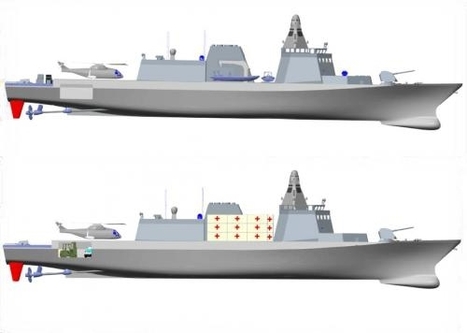
A côté de ces frégates de premier rang fortement armées, le PAM est imaginé pour succéder au cours des 10 à 15 prochaines années à cinq types de bâtiments actuellement en service dans la Marina militare.... ...L’objectif du projet PAM est donc de remplacer le gros de la flotte de surface italienne par une plateforme polyvalente afin de réaliser d’importantes économies d’échelle, tant pour la construction que pour la maintenance et même l’exploitation, avec des besoins réduits en termes de formation du personnel, les équipages devenant interchangeables. Pour cela, une architecture très modulaire est imaginée, afin que les bâtiments soient plus ou moins équipés et puissent, ainsi, assurer différents types de mission. ... ...La plateforme présentée offre différentes zones pouvant être reconfigurées en fonction de la mission. Ainsi, la partie centrale, au niveau de la cheminée, présenterait une importante surface de pont avec une grue afin d’installer des embarcations rapides ou bien des conteneurs (autour de 24 EVP)... Lire l'intégralité de l'article sur Mer et Marine : http://www.meretmarine.com/fr/content/un-nouveau-batiment-pour-remplacer-le-gros-de-la-flotte-italienne
|
|
Scooped by
Patrick H.
May 31, 2013 8:30 AM
|
The Italian Navy has taken delivery of the first Frégate Européen multi-mission (FREMM) vessel, Carlo Bergamini, at the Fincantieri shipyard in Muggiano, La Spezia, Italy. The delivery is part of a contract awarded to Orizzonte Sistemi Navali to build ten vessels for the Italian Navy to replace the ageing Fincantieri-built Lupo and Maestrale-class ships by 2021. Established in late-2002, the FREMM multi-mission ship programme is part of a major cooperation agreement between France and Italy, under which 11 frigates will be built for France as well, with the deliveries closing in 2022. Orizzonte Sistemi Navali (51% Fincantieri, 49% Finmeccanica) is the prime contractor for Italy, while Armaris, a joint venture between DCNS and Thales, is the prime contractor for France under the FREMM programme. Italy will receive the vessels in two versions: an anti-submarine warfare (ASW) model and a general-purpose (GP) vehicle. The 144m-long and 19.7m-wide Carlo Bergamini has a full-load displacement capacity of 6,500t, a maximum speed of 27k and an accommodation capacity of 145. The Italian FREMM vessels will be armed with the SAAM Aster 15 missile system, Teseo Mk2 sea-skimming anti-ship missiles and MBDA's Milas all-weather weapon system to support anti-submarine warfare (ASW) and anti-air warfare missions. In addition, the ships will be equipped with EMPAR G-band multifunction phased array radar and Galileo Avionica silent acquisition surveillance system (SASS) to serve as infrared search and track (IRST) system. Capable of supporting a range of missions and better safeguard the Mediterranean area, the FREMM frigates will also be used to conduct broad maritime defence strategies such as deterrence, protection, crisis mitigation and power projection.
|
|
Scooped by
Patrick H.
May 20, 2013 12:27 PM
|
ROME — As warships get sleeker and stealthier, the head of the Italian Navy wants to buck the trend and plan a one-size-fits-all warship that will be cheap, roomy and dual use, even making space for containers on deck. Adm. Giuseppe Di Giorgi, who took over the Navy in January, told Defense News in an interview that he is pushing for a new generation of vessels that could be a floating hospital in disaster zones on one day and fight high-intensity wars the next. Di Giorgi’s plans come as Italy makes deep cuts to its armed forces, with around 30 naval vessels of various classes due out of service over the next decade, and only six to 10 fregata multi-missione (FREMM) ships slated to enter service. Hence, the Navy chief’s plan to buy up to 12 vessels, weighing 3,500 to 4,000 tons, 125 meters long and 15 meters wide, and which he says can replace the whole range of ships being phased out, at lower cost. Those dimensions would make the ships slightly smaller than the FREMMs. “We need to replace the Maestrale class and the Soldati class of vessels, as well as the corvettes and patrol vessels, vessels which are on average 30 years old,” he said. That would mean a vessel up to 4,000 tons replacing 2,000-ton patrol vessels. “The ship I have in mind to accompany the FREMMs would be conceived from the start as dual use, fast and modular,” he said. Di Giorgi said the new vessel would achieve a top speed of at least 35 knots, “with a traditional, combined use of turbines and diesels, possibly two of each,” he said. “It’s a concept in its early stages, but the General Staff has given preliminary approval for six vessels,” he said, referring to the type as a “simplified FREMM.” The cost, he said, would be about two-thirds of the price of a FREMM. Building big would mean saving money, Di Giorgi said. “This ship will have a huge potential for growth, with just a 127mm gun on the bow and a 76mm gun in the stern at the start, and it would be able to host further armaments. “And if I want to install an armament, its size means I don’t have to dismantle the whole vessel,” he said. “And that means I will save over the life of the vessel because I will not have paid out so much to update armaments or the radar. Furthermore, with more space, I can be more flexible about the systems I use, and maintenance will cost less. Additionally, the use of the ship becomes more extensive, since it will be used in rough weather that could stop a smaller vessel.” Di Giorgi’s ship would have a hangar for two NH90s or one AW101 helicopter and a fixed-array radar, an evolution from the rotating Empar used on the FREMMs. Technicalities aside, the ship’s planned dual-use capability is no afterthought, and could help the program win funding from politicians who are being forced to cut spending and have a rapidly declining interest in backing high-priced, purely military programs such as the F-35 Joint Strike Fighter. Below the flight deck, the ship will contain ample space for modular loads, with two large openings on the side of the vessel to receive them, including mine-hunting systems and underwater vehicles for special operations. The ship also will contain a hospital to be used by Italy’s civil protection agency, and equipment for use by civil research and environmental protection agencies. At the center of the ship’s deck, a large space could be used to carry four 15-meter special operations craft or two ramp-equipped landing craft, but also containers for civil use, with a crane to load and unload. “The ship would be able to provide electricity and clean water to a community of 6,000 people, so that in case of a natural disaster, the ship could dock and supply water and electricity to a small town,” Di Giorgi said. “Its high speed would also allow the ship to respond fast to disasters.” The Navy recently took part in an exercise with the civil protection agency that simulated relief work after an earthquake. “If you look at the map of Italy, you see that this ship, with its helicopters, could dock and reach any part of the country,” Di Giorgi said. To accommodate passengers, the ship would have 230 beds, despite requiring a crew of only 90. “The modularity of this project is very much the idea behind the littoral combat ship,” said Christian Le Miere, senior fellow for naval forces and maritime security at the International Institute for Strategic Studies in London. “It makes sense if you want to go multimission; you just need to be aware of the concerns over the time it takes to switch modules,” he said. Le Miere said one concern about replacing various classes of naval vessels with one type is that if the type experienced a technical problem, that could temporarily take all of them out of service. The dual-use concept, he said, is a sign of the times. “Militaries in Europe today are not designed for high-intensity, state-on-state wars, so this makes sense,” Le Miere said. “But if they do look to source funding from other Italian government ministries because of the civil application, there could be questions about how to share time on the vessels. Bureaucracy can be a challenge.” Apart from the new vessel, Di Giorgi said he has a handful of other vessels on his wish list, including a new submarine rescue ship with oceanographic capabilities, as well as a supply ship. For the new type, he said he would rely on in-house design work to get development underway. “We have reactivated our center for ship design to optimize costs, to reduce spending on development and increase money available for production.”
|
|
Scooped by
Patrick H.
May 12, 2013 2:35 PM
|
PARIS —France is talking to British and Italian partners to develop the new technology (NT) version of the Aster 30 Block 1, a French source briefed on the subject said. The UK is looking to improve its Type 45 destroyer, and the Aster 30 NT could be part of an upgrade of the ship’s combat system, the source said. In London, a Defence Ministry spokesman said talks are in the early stages with Paris and Rome on extending the Aster program. “We can confirm UK interest in understanding the French and Italian forward program for Aster new technology and how future co-operative opportunities could be exploited between the three nations,” the spokesman said. “Discussions are at an exploratory stage between France, Italy and the UK and are linked to not just Aster NT but also how the three nations will support the Aster capability through life,” he said. In Rome, a source said a debate on the Aster NT was still going on inside the Italian defense establishment, with no decision made yet. The NT upgrade would allow the Aster 30 to hit enemy missiles with a range of 1,000 kilometers. The Block 1 model used by the French and Italian armies can intercept incoming missiles with a range of 600 kilometers, such as the Scud B. Development of the Aster would be sensible, a senior analyst said, as there is a move toward extended air defense systems and Britain lacks an alternative product, other than to buy American. “That would be the most logical way to tackle it,” said Nick Witney, senior policy fellow at think tank European Council for Foreign Relations (ECFR). Witney and Olivier de France co-authored an ECFR research paper titled “Europe’s Strategic Cacophony,” published April 25. Other options for MBDA would be to co-develop Aster if the missile were picked by an export client such as Turkey or Qatar, the French source said. The NT is on the roadmap to the Aster Block 2, which would intercept weapons that have a range of 3,000 kilometers. A Block 2 weapon could be delivered some time after 2020, but first a deal must be struck for the intermediate NT version.
|
|
Scooped by
Patrick H.
April 5, 2013 3:57 PM
|
05/04/2013 (Infodefensa.com) E. Saumeth, Cartagena de Indias - The Colombian Navy has signed contracts for the purchase of two new pieces of 40 mm , and the model chosen cannon 40L/70 OTO-Melara Compact TWIN Bitubo , according to reliable sources confirmed Infodefensa sector. One of the new pieces will replace the current strength of the OPV "July 20" and the second equip the OPV "August 7 "currently under construction (both manufactured by the Colombian shipyard COTECMAR). The process of modernization of the artillery of the OPV went forward from earlier this year ( see note ) and has completed the purchase of Oto-Melara model. The new guns, strengthen and increase the firepower of the ships and homogenizarán naval artillery systems of the Colombian Navy, with consequent advantages logistical, technical and maintenance. It is recalled that Colombia has a significant shipbuilding industry, led by its shipyard COTECMAR, which designs and manufactures at present various types of boats, including OPV models and CPV-40.
|
|
Scooped by
Patrick H.
March 22, 2013 3:09 AM
|
ROME — The Italian government said on March 21 it would return to India two Italian marines that New Delhi is seeking to try on charges of killing two Indian fishermen. The marines are accused of shooting the fishermen as they guarded an Italian flagged merchant vessel from pirates in the Indian Ocean in 2012. The men were arrested by Indian authorities but allowed to return to Italy in February to vote in a general election on condition they return. The Italian government at first decided not to deliver the men, claiming they should face justice in Italy because the incident occurred in international waters. Explaining the surprise decision to return the marines, the Italian government said it had received guarantees from India that their “fundamental rights” would be respected. Italian Foreign Undersecretary Staffan De Mistura said New Delhi had promised the men would not face the death penalty. The men, Massimiliano Latorre and Salvatore Girone, will live at the Italian Embassy in New Delhi, officials said. The move follows diplomatic pressure from India. On March 14, India’s top court told Italy’s ambassador not to leave the country without its permission after Prime Minister Manmohan Singh warned Italian authorities to “keep their word,” and promised fall-out for bilateral relations if they did not.
|
|
Scooped by
Patrick H.
March 17, 2013 5:02 AM
|
Beechcraft SKA 350ER MPA equipped with a retractable electro-optical system and ventral radome
After more than 80 hours of flight testing, Selex ES, a Finmeccanica company, have handed over to Corporate Aircraft SA, exclusive distributor of Beechcraft, purc hasing as prime contractor for an undisclosed end-user a Beechcraft King Air 350ER equipped with the company’s Airborne Tactical Observation and Surveillance (ATOS) system. The end user has expressed their satisfaction with the system performance demonstra ted during the flight tests. Under the programme, Selex ES has been responsible for the design and integration of a complete surveillance solution for the customer’s maritime patrol aircraft. The solution provided saw a Beechcraft SKA 350ER equipped with a retractable electro-optical system and ventral radome, all integrated together under the ATOS system. The modifications, which have been certified by the European Aviation Safety Agency, grants the aircraft the capability to patrol for more than six hours, an equivalent performance to the VIP version of the aircraft.
The ATOS, which includes electro-optics, a laser illuminator and the T200 Gabbiano radar to provide 360 degree coverage, has been expertly integrated into the King Air aircraft by drawing on Selex ES’s more than 10 years of experience with the system across a number of existing customers.
|
|
Scooped by
Patrick H.
March 12, 2013 4:11 AM
|
ROME - The Italian foreign ministry on Monday said two Italian marines accused of killing two Indian fishermen they mistook for pirates would not return to India when their court-allowed leave runs out at the end of this month. “This was a decision taken by the whole government,” Italian Defence Minister Giampaolo di Paola told Italian news channel TgCom24. “Our marines will return to service,” he said. Massimiliano Latorre and Salvatore Girone returned to Italy on February 23 after India’s Supreme Court said they could visit their homeland for a month to vote in elections on February 24-25 since Italy does not allow postal ballots for non-expatriates.“Italy has informed the Indian government that, given the formal international controversy between the two states, the two marines... will not return to India when their leave runs out,” the foreign ministry in Rome said in a statement.Italy “is ready to reach an agreement to resolve the controversy including through international arbitration or a judicial resolution,” it said.The two marines, who were guarding an oil tanker when it was approached by a fishing boat near the port city of Kochi in February 2012, are charged with murder.The case, which was transferred last month from a local court in the southern Indian state of Kerala to a “special court” in New Delhi, has caused diplomatic tensions between India and Italy.Rome has argued that the Indian courts have no jurisdiction to try the marines because the incident took place in international waters.The marines were granted special permission once before, to return home to Italy for Christmas, but later returned to India.Armed guards are increasingly deployed on cargo ships and tankers in the Indian Ocean to tackle the threat posed by Somali pirates, who often hold ships and crews hostage for months demanding multi-million-dollar ransoms.
|
|
Scooped by
Patrick H.
March 5, 2013 3:27 AM
|
Interview de l'Amiral Giuseppe de Giorgi, CEMM de la Marine italienne : réformes d'organisation, RSA, programmes...
Besides an accelerated reduction in the size of its fleet, the Italian Navy recently launched a process to extensively rationalise its organisation in line with cuts to both its personnel and budget.
Despite the budget cuts, however, the service is looking to new vessels designed to cope with evolving missions and improve the quality of life for its personnel white introducing the latest generation of equipment, according to newly appointed Italian Navy Chief of Staff Admiral Giuseppe De Giorgi, who took up h is post on 28 January.
To improve overall efficiency and streamline the chain of command, the Italian Navy is transferring every residual operational and management function to the operational command represented by Fleet Command (CINCNAV: or Commander-in-Chief of the Fleet).
Two new commands responsible for training and logistics will also be established.
"We are adopting an organisation based on output," said Adm De Giorgi. "The naval stations, previously assigned to the District Commands, will move under the Fleet Command as well as the support structures that
provide maintenance to the naval assets up to the second level. These [facilities] today belong to the navy's three dockyard clusters of La Spezia and Taranto in north and southeastern Italy respectively and Augusta in Sicily.
"Thanks to this, CINCNAV will be able to improve overall operational readiness and efficiency while the naval station commands will directly manage the funding allocated [to them], avoiding administrative delays. We
expect to complete these activities, together with establishing the logistics and training commands, in about one year, regrouping all the numerous inspectorates that up to now have dealt with training and logistic support," said the admiral.
The navy's three dockyards will be responsible for scheduled dock maintenance alongside more complex activities. The dockyards will also be available for contractual commercial work, with the navy receiving compensation through the provision of services and material.
"To further enhance operational readiness, we have consolidated the Submarine Force Command within the navy's General Staff [in Rome], which will now be responsible for command functions, specialist personnel,
training, operations, requirements, and administration duties. The Fleet Command HQs near Rome recently qualified new facilities, introducing new maritime situational awareness command and control centres for both national and international activities,"said Adm De Giorgi.
The Logistics Command, headquartered in Naples in facilities previously used by NATO Maritime Command Naples, will be the exclusive body entrusted with technical and logistical support to the navy's ships and commands. Revenues from the sale of surplus and unaffordable facilities will be used for repairs and to bring facilities and equipment, such as personnel accommodation, into compliance with the navy's new standards.
The navy's educational establishments, meanwhile, will be united under a new command headquartered in Ancona on the Adriatic Sea. "Besides this," said Adm De Giorgi, "we are reforming the Naval Academy course, reducing it to three years to allow new officers to embark on ships as soon as possible and complete the educational pattern later on." Adm De Giorgi added that the navy "is looking to boost its special forces capabilities, while our service's landing force will have a more combatant-oriented structure with the creation of a brigade-sized force, including three regiments with different skills and tasks, but without a personnel increase. The first will play a purely operation al role in amphibious contexts ... while the second will mainly focus on boarding acriviries, maritime traffic control and harbour protection .... The third will deal mainly with defending the service's installations."
In the 2012-2018 period, the Italian Navy will lose seven vessels, split between Artigliere-class fleet patrol ships and Maestrale class frigares, three Lerici-class mine countermeasures vessels, six Minerva-class corvettes, and 12 replenishment and training vessels, along with two Sauro-class submarines. "This accelerated decommissioning plan regarding the oldest and heaviest manned vessels,as well as those most costly to maintain, is the only available solution to concentrate the reduced resources on the most recently commissioned ships," the admiral explained.
The plan will also free up 1,500 positions within the navy, which will support an overall personnel reduction from the official level of 34,000 to 27,000 in 2024, although recruitment limitations mean thar the current effective strength is only 31,000.
The navy's reformed acquisition programme will introduce into service in the period from 2012-2018 just five Bergamini class FREMM multirole frigates (the sixth arriving in 2019), two new enhanced U-212A ·type submarines, and one multirole support ship.
Regarding its aviation assets, the Italian Navy also aims to increase its 22-aircraft AgusraWesrland EH101 helicopter fleet to compensate for an expected reduction in the number of ATR 7 2MP maritime patrol aircraft (MPAs). Additionally, "deliveries of [NH90 helicopters] continue, while arrival of the ScanEagle unmanned air system is awaited, initially for anti-piracy operations", the admiral said, adding that the first of 15 F-35B Joint Strike Fighters on order would be received from 2017. Luca Peruzzi JDW Correspondent, Genoa
|
|
Scooped by
Patrick H.
February 15, 2013 2:53 AM
|
Emmené par le porte-aéronefs Cavour, le groupe aéronaval italien a quitté sa grande base de Tarente pour un déploiement de plusieurs semaines en Méditerranée orientale. L’objectif, pour la Marina militare, est notamment de renforcer la coopération avec deux de ses alliés au sein de l’OTAN, la Grèce et la Turquie. L’article est disponible sur le site du journal. Référence : Mer & marine The Italian task force commanded by Rear Admiral Carlo Massagli, consists of carrier ITS C-550 Cavour, destroyer D-554 ITS Calio Dulio and the fleet tanker A-5327 ITS Stromboli. The destroyer and the tanker have docked at the Aksaz Naval Base adjacent to the touristic town of Marmaris (9 feb). The highly visible aircraft carrier however docked at the port in Marmaris usually used by large passenger ships. According to Wikipedia, Cavour was laid down by Fincantieri on 17 July 2001, and she was launched from the RivaTrigoso shipyard in SestriLevante, on 20 July 2004. The ship is designed to combine fixed wing V/STOL and helicopter air operations, command and control operations and the transport of military or civil personnel and heavy vehicles. The 134 metre, 2,800 m2 hangar space can double as a vehicle hold capable of holding up to 24 main battle tanks or many more lighter vehicles, and is fitted aft with access ramps rated to 70 tons, as well as two elevators rated up to 30 tons for aircraft. Cavour can also operate as Landing Platform Helicopter (LPH), accommodating heavy transport helicopters and 325 marines. The ship is armed with following weapons: 4 × 8 cell A-43 Sylver launchers carrying the MBDA Aster 15 surface to air missile2 × Oto Melara 76/62 mm Super Rapido gun3 × Oerlikon Contraves25/80 mm AA gun
|
|
Scooped by
Patrick H.
January 17, 2013 9:31 AM
|
At EURONAVAL 2012, held 22-26 October 2012 at Paris Le Bourget, MBDA successfully exhibited a new simulation system for the CWSP (Compact Warfare System Package) naval warfare system. The highly innovative CWSP solution combines MBDA's SIMBAD-RC surface-to-air and Marte MK2/N antiship missile systems within a coordinated package designed to equip fast patrol boats and/or auxiliary and support vessels. The MBDA Simulation team and IBR Sistemi have worked together to develop a high-end innovative simulator to train teams in complex defence missions in littoral scenarios. The system configuration exhibited presented the reconstruction of the main deck of an OPV fully furnished with all the consoles in working order to manage the weapon system and to drive the patrol boat. The realism of the simulation allows trainees and skilled officers to experience missions that would otherwise be difficult to be achieved in reality. The simulation system can manage a large number of vehicles, sensors and effectors in the same scenario. The physical behaviour of fast and maneuvering boats is perfectly reproduced in any weather and sea condition. 3D reproduction of the landscape and infrastructures is highly accurate. Please contact IBR Sistemi to find out more.
|
|
Scooped by
Patrick H.
January 8, 2013 2:39 AM
|
The Saab group has signed a framework agreement with Italian Piaggio Aero Industries for the integration of surveillance systems in the Multirole Patrol Aircraft – a new surveillance aircraft based on Piaggio Aero’s business plane. The order is valued at Euro 15.5 million. Within the framework agreement Saab receives an initial order for the delivery and integration of the surveillance system MPA Mission System. The order comprises two MPA aircraft and requires Saab to integrate a package of advanced surveillance equipment comprising of sensors, radar, infra-red cameras and a mission system. Deliveries are scheduled for the period 2012 to 2015. The aircraft will be able to perform surveillance of broad areas for more than 6 hours at low altitude in coastal or offshore waters. The aircraft offers large, stand up cabin allowing spacious installation of mission equipment while providing maximum crew comfort for enhanced missions. It will be able to fly up to 41,000 feet, with endurance of 10 plus flight hours, cruise at a speed of 350 knots and fly at a maximum range of 3,300 nautical miles. The MPA is an evolution of the Piaggio Aero P.180 Avanti II platform, modified to meet land, coastal, maritime and offshore security requirements. The MPA’s main features are an enhanced airframe, increased maximum take-off weight, additional fuel tanks and a new aerodynamic configuration with a reinforced wing providing an increased surface and higher aspect ratio. An evolution of the P.180 Avanti’s patented Three-Lifting-Surface Configuration (3LSC), the modified aerodynamic configuration designed for special mission applications underwent extensive Reynolds low speed/high speed wind tunnel testing at ONERA, to validate design and performance. ‘During testing it demonstrated an 30% reduction of required power, in comparison to its nearest competitor’ – Piaggio communique said. Piaggio Aero launched the Piaggio Aero MPA at the Farnborough 2012 airshow, with the signature of a contract with Abu Dhabi Autonomous System Investments (ADASI). The contract covered the complete development of the MPA aircraft, including the roll out of two prototypes with first flight scheduled for 2014. ”The newly designed Piaggio Aero MPA aircraft will allow us to enter the surveillance sector and diversify our business profile with the development of this new state of the art multirole platform” said Alberto Galassi, Piaggio Aero CEO.
|