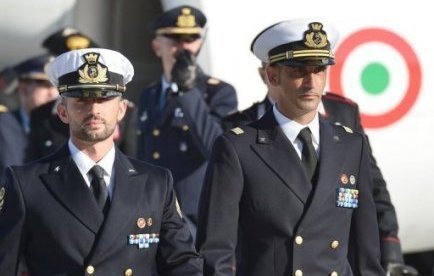
ROME, 8 février (Reuters) - Le gouvernement italien a vivement critiqué samedi la décision des autorités de New Delhi de juger sur la base d'une législation antiterroriste de sécurité maritime deux fusiliers-marins italiens accusés d'avoir tué deux pêcheurs indiens en février 2012 au large de l'Inde.
Les deux "marò", Massimiliano Latorre et Salvatore Girone, faisaient partie d'une unité chargée d'assurer la protection d'un navire marchand contre la piraterie au large de l'Etat du Kerala, dans le sud de l'Inde.
Ils ont ouvert le feu sur des marins-pêcheurs indiens qu'ils avaient pris pour des pirates.
Vendredi, la justice indienne a annoncé que les deux militaires seraient bien jugés en vertu de la législation antiterroriste et anti-piraterie, tout en excluant que la peine de mort prévue par ce texte soit prononcée contre eux.
Le ministère italien de la Justice a répliqué qu'il utiliserait toutes les voies juridiques, "avec la plus grande fermeté", pour que cette législation ne soit pas utilisée contre les deux accusés.
"Certaines indications en provenance de New Delhi sur les procédures juridiques visant nos 'marò' suscitent ma stupéfaction et mon indignation", a déclaré dans un communiqué la ministre de la Justice, Emma Bonino.
"Notre volonté de ramener à la maison Massimiliano Lattore et Salvatore Girone est plus forte que jamais", a-t-elle ajouté. (Naomi O'Leary; Guy Kerivel pour le service français).
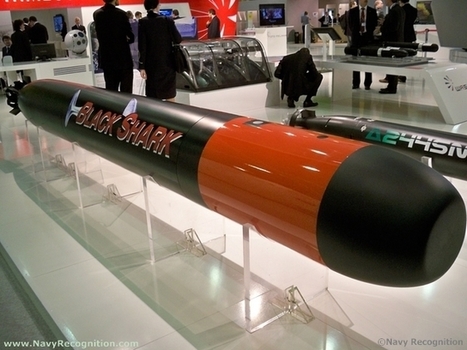
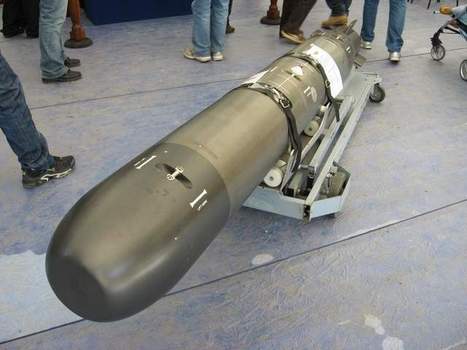
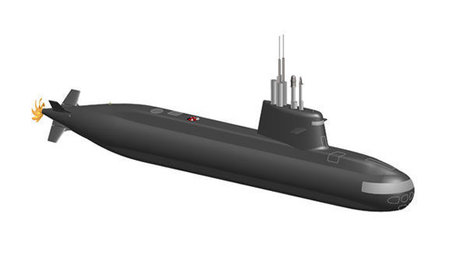
On January 28th the new Black Shark Advanced (BSA), produced by WASS was launched for the first time ever from the submarine SCIRE’. The torpedo launched in “Push Out” mode (water ram expulsion system, which ejects the torpedo by means high water-pressure), was equipped in a totally innovative way, thanks to the new Lithium-Polymer Battery.
The launch, called “Short-Fire”, took place in the La Spezia gulf and was aimed at testing the WASS progresses in the frame of the project “New Heavyweight Torpedo”, developed in cooperation with the Italian Navy. The successful launch represents another step ahead, toward the acquisition by the Italian Navy. “The Black Shark is the result of Italian research and cutting-edge technology– said Alessandro Franzoni, Chief Executive Officer of WASS – example of the national excellence in the field of underwater defence equipment through the use of innovative technical solutions for the propulsion systems, power generation and electro-acoustics. Thanks to its high quality standards it will succeed in all main international markets.” Over the next few years, the Black Shark Advanced is expected to replace the old A-184 Heavyweight Torpedo, now supplied to submarines of the Italian Navy, increasing significantly the ability to defend the waters and the Italian homeland.
Le 14 août dernier, la Royal Australian Navy (RAN) a réalisé le premier tir de combat d’une torpille légère MU90, torpille développée par le groupement européen d’intérêt économique EUROTORP formé par DCNS, Thales et l’entreprise italienne WASS. Tirée à partir de la frégate « HMAS STUART » de la classe ANZAC, la torpille a détecté, classifié puis engagé avec sa charge creuse* la cible immergée, représentative d’un sous-marin de petite dimension.
La MU90 EUROTORP en « pole position »
Ces résultats ouvrent la porte à de nouvelles opportunités pour la torpille MU90 qui pourrait aussi équiper les avions de patrouille et les hélicoptères de la Marine australienne. Cette dernière reconnait en effet les performances de cette torpille légère : « La torpille MU90 améliore considérablement les performances en lutte anti sous-marine de tous les navires de combat de surface de la Royal Australian Navy (RAN). Cette arme dote la RAN d’une capacité d’engagement des sous-marins à grande distance, inégalée parmi toutes les autres torpilles légères ».**
Deux nouvelles marines viennent aussi d’acquérir la MU90 en 2013, ce qui porte maintenant à 8 le nombre de marines équipées dans le monde.
* La charge creuse est un type de munition destiné à percer un blindage.
** Extrait du communiqué officiel du Ministère de la Défense australienne après le tir de combat MU90 le 14 août 2013.
ROME — The Italian Navy has secured funding for 10 large ships it plans to build rapidly over the next decade as the bulk of the current fleet goes out of service, the head of the Navy told Defense News in an interview.
Italy’s 2014 state budget, approved in late December, contains a €5.8 billion (US $7.8 billion) funding package for the new vessels, mainly a new multipurpose ship conceived by Navy planners to fight wars as well as handle humanitarian relief operations.
“There are funds to build 10 vessels, possibly meaning eight multipurpose ships, one amphibious ship and a logistics vessel,” said Navy chief Adm. Giuseppe De Giorgi, who added the Navy had an eventual requirement for 12 multipurpose ships.
“I am satisfied with the budget law,” he said. “This gives us some oxygen.”
This year, De Giorgi said, he hopes to sign contracts for the multipurpose ships, — the design of which is still evolving. The work will likely go to Italian shipyard Fincantieri.
Construction of the first vessel would take two years, with a launch in three, delivery in four and entry into service in five years. “We would like to see all of them in service within a decade,” he said.
The €5.8 billion funding will not all go to the Navy. Under a system used in Italy for other large procurement programs, the government will take out bank loans to fund the program, then release the €5.8 billion over a number of years to repay the loans with interest.
De Giorgi said stripping off the interest repayments, the Navy would have about €4.5 billion to spend. With the multipurpose ships costing around €350 million each, the money might cover the 10 vessels, as well as two smaller minesweepers, he said.
The amphibious ship would replace one of three aging landing platform dock vessels and make good on a procurement plan for such a vessel that has been on standby for a number of years.
De Giorgi said the new buys needed to be finalized “as soon as possible,” adding that 50 of the Navy’s 60 vessels will go out of service in the next decade.
One analyst said that because the Navy received a large amount of funds for fleet renewal in the 1970s, it is no coincidence that many ships are heading out of service around the same time, making a second round of large investment essential.
“Without these new funds, Admiral De Giorgi would have managed to find money for one or two vessels at best through normal funding channels and thus go into a dangerous block obsolescence,” said retired Rear Adm. Michele Cosentino, a naval analyst and writer.
De Giorgi has ordered the initial design work to be done in-house, masterminding the concept work with Navy designers, rather than giving a development contract to Fincantieri, a move he said would save money and speed up the construction.
“We have returned to how the Navy did things in the 1970s and 1980s,” he said.
The baseline design offers two cannons — a 127mm gun in the bow and a 76mm gun at the stern — along with a hangar for two NH90 helicopters, the option of carrying containers or small boats on deck, and a varying number of launch cells for the Aster 30 missile. Some of the vessels could mount the Scalp Naval missile, or as an alternative, the Tomahawk cruise missile, he said.
Renderings released by the Navy show the design is evolving. One design features the flight deck ending short of the stern of the vessel to make room for the 76mm gun, another shows it extending to the stern with no gun.
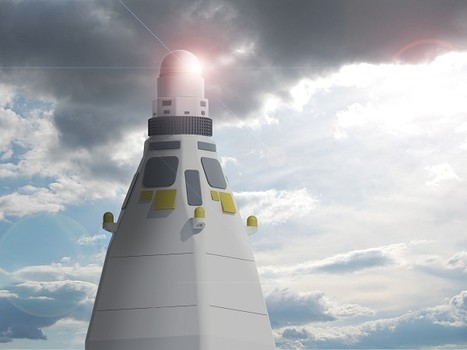
Early designs featured the integrated mast, known as the Unimast, now being offered by Italy’s Selex ES, which combines numerous functions while overcoming the typical problems of signal interference. The Unimast, with its radar composed of fixed arrays, is due to be installed on future multimission frigates (FREMMs), replacing the current Empar radar.
One recent design of the multipurpose ship did not, however, include the mast and shows various emitters, including the fixed array radar, integrated into the bridge structure.
“By doing that, we could make maintenance of the various components easier,” De Giorgi said.
Apart from finding funding for its multipurpose ships, the Navy has also recently received funds to order its seventh and eighth FREMMs, part of a planned order of 10. The two vessels will be general purpose variants, an industrial source said, and the eighth will offer the Unimast, De Giorgi said.
Both will offer an increase of 3 to 4 knots in diesel cruising, up from the current 16 knots, he said. When ordered, the ninth and tenth FREMMs may mount the Scalp Naval missile, he added.
Italian Navy's most senior officer has announced a 10-year plan to build 25 naval ships fitted with diesel/LNG powerplantsFincantieri has begun design studies for 12 offshore patrol vessels and a subsurface support ship fitted with dual-fuel engines
The Italian Navy is planning to order 25 new 'environmentally friendly' patrol ships and auxiliaries fitted with power and propulsion systems burning liquified natural gas (LNG) and diesel.
With dual-fuel engines likely to be retrofitted in some existing vessels also, the 'Flotta Verde' (Green Fleet) project will allow vessels to access ports and waterways with 'clean air' environmental regulations, giving the navy increased operational flexibility.
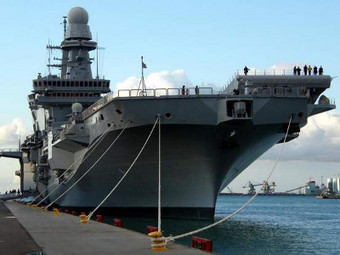
On 22 November, after staying in harbour for four days, Cavour Naval Group Cavour, represented by the Cavour aircraft carrier and the frigate Bergamini, sailed from the port of Jeddah, Saudi Arabia. This constitutes the first stage of a navigation that will touch a dozen of harbours which began last November 13 from Civitavecchia.
The visit to Saudi Arabia has played a major role in what was the occasion to celebrate the anniversary of 80 years of relations between Italy and the Middle Eastern country, a celebration that was attended by the Ambassador Mario Boffo and Italian General Consul Simone Petroni and authority of both Arabia and Italian Governments and the private sector.
During the days in the harbour, Finmeccanica had a chance to show off the capabilities and products of the Group companies present in a stand aboard the Cavour aircraft carrier: AgustaWestland, OTO Melara, Selex ES, WASS, Telespazio and MBDA.
A fleet of Italian Navy (Marina Militare) vessels led by the aircraft carrier Cavour today set off on an unusual trip around the Middle East and Africa that will combine crew training and diplomacy with a privately funded sales trip for Italian industry. The Cavour, loaded with sales teams from defence companies such as Finmeccanica, Fincantieri, Elettronica and Beretta, will turn the vessel into a “large defence show like Le Bourget,” DefenseNews quoted Italian Defence Minister Mario Mauro as saying at a conference announcing the mission earlier this month. Setting up mobile showrooms alongside defence firms on board will be the makers of Italian furniture and civilian aircraft, as well as representatives of the Italian Red Cross and other humanitarian organisations. The rationale behind the travelling sales mission, which will call at 19 ports before returning to Italy in April, is that companies on board will foot the bill, effectively underwriting crew training as regular funding for exercises dries up, the Gannett Company publication said. Industry will pay more than €10 million for fuel costs and €3 million for other expenses, including port fees, while the Navy will pick up the €7 million wages bill, said Navy Chief Admiral Giuseppe De Giorgi. Addressing the news conference, Italy’s military chief of staff, Admiral Luigi Binelli Mantelli, spoke of the benefits of being able to “train our crews for five months in a challenging climate, far from home.” Accompanying the Cavour will be the patrol vessel Comandante Borsini, the support ship Etna and the multi-mission frigate Bergamini. The Navy has been pushing to find creative ways to fund crew training while maintenance and operations budgets are eroding as planners divert large amounts for personnel spending, DefenseNews reported. In the three-year budget published this year, maintenance and operations funding slips from €1.33 billion this year to €1.32 billion in 2014 and to €1.3 billion in 2015. Apart from training, De Giorgi said the mission would help spur co-operation with allied navies the four vessel fleet calls on during the trip, including Mozambique, where the Italian and local navies are due to sign a co-operation deal. The marketing of Italian naval vessels also would be on the agenda in the Arabian Gulf, Morocco, South Africa and Mozambique, while in Angola, talks would continue about Italian industry helping to develop a new type vessel for the local navy, he said. The 27 600-ton Cavour has been involved in marketing activities before. In 2010, its maiden mission took it to earthquake-stricken Haiti with aid, earthmoving vehicles, hospital facilities and 900 personnel. But it also stopped off in Brazil, ostensibly to take on Brazilian medical personnel, but also to support Rome’s efforts to market naval vessels to Brazil. Finmeccanica and Fincantieri, the two state-controlled companies that team on Italy’s naval construction, footed most of the bill for the mission. This time, the mission has a more determinedly commercial profile, with potential buyers scheduled to board the Cavour at each port to view displays. The five month voyage was confirmed by Counsellor Luigi Diodati of the Italian Embassy in South Africa. He said further details, including exactly which South African ports the Cavour and her escorts would call on, would be made available in due course. For companies in the Finmeccanica group, the voyage allows a focus on the gulf ports in Saudi Arabia, the United Arab Emirates, Oman, Qatar and Kuwait.
AgustaWestland will be parking an NH90 and AW101 helicopter on board the Cavour, while Oto Melara will promote its new guided munitions and Selex ES the combat management system it installed on Cavour. Torpedo unit WASS will promote its Black Shark torpedo, while visitors also will see the Storm Shadow, Meteor and Brimstone missiles built by MBDA, in which Finmeccanica holds a stake. Small-vessel builder Intermarine is joining the trip, as is small arms maker Beretta...
Ouest France se ait aussi l'écho de cette opération très particulière et se demande si les industriels français ne devraient pa en faire autant autour du CDG :
The Department of Weapons and Electronic of the Colombian Navy - DARET - successfully managed to integrate all your system naval fire control and combat "Barracuda" by OTO-Melara gun TWIN 40L/70. The results of the integration to automated and remotely operate the new guns TWIN Bitubo 40L/70 Compact , which shall install the OPV-80 " 20 July "and" August 7 "Colombian forward within the ARC plan to strengthen and expand heat capacity of the vessels and homogenize naval artillery systems, with consequent advantages logistical, technical and maintenance.
ROME — After flying its unarmed Predator and Reaper UAVs over Iraq, Afghanistan and Libya, the Italian Air Force has now deployed its Reapers over civilian airspace in the Mediterranean to help rescue migrants attempting the perilous sea crossing from Africa.
The UAVs are part of Operation Mare Nostrum, a dragnet organized by the Air Force and Italian Navy that also involves helicopters and four Navy vessels, including the landing platform dock ship San Marco, which can scoop up migrant vessels in its floodable dock.
The operation was launched after huge losses of life in the Mediterranean as migrants pack onto rickety boats and attempt to reach Sicily or the Italian island of Lampedusa, which is 70 miles from the African coast — closer to Africa than the Italian mainland. Smugglers often send the migrants to sea in unstable, overcrowded vessels that run out of fuel.
On Oct. 3, a ship caught fire and capsized half a mile from the coast of Lampedusa. Of some 500 migrants aboard, mainly Eritreans escaping their country’s dictatorship, 364 died. A second vessel, this one packed with Syrians escaping their civil war, sank 60 miles from Lampedusa on Oct. 11. Dozens of bodies were recovered.
More than 8,000 migrants crossed to Italy and Malta in the first half of this year, up from 4,500 in the same period of 2012, a surge attributed to rising instability in Africa and the Middle East. Recent weeks have seen another spike as migrants try to cross before winter weather makes sailing even tougher.
The deployment of Italy’s Reapers from their base at Amendola in southern Italy, and possibly from Sigonella air base in Sicily in the days to come, follows years of efforts to craft a legislative framework to allow UAV flights in airspace. Italy’s UAVs already have designated air corridors that allow them to fly around the south coast of Italy.
Reports have surfaced that Air Force UAVs are already used in law enforcement operations, including the shadowing of mafia suspects in Sicily, although the Italian Air Force has declined to comment.
International waters around Italy are covered by a so-called Flight Information Region — an airspace zone —monitored by Italy.
“To fly UAVs there, we would work with Italian civilian aviation authorities,” said an Air Force spokesman. “Coordination with Eurocontrol, EASA [European Air Safety Agency] or ICAO [International Civil Aviation Organization] is needed only in case of significant changes to the continental air traffic flows, which is not the case.”
If the UAVs need to fly into the Flight Information Regions monitored by neighboring countries such as Tunisia, Libya or Egypt, he said, permission would be needed from those countries to create a segregated airspace zone in which UAVs could fly.
The UAVs will be flown using both line of sight and satellite navigation, and fly missions up to 20 hours using their electro-optical, radar and IR sensors...
Selex ES, a Finmeccanica company, has revealed UNIMAST, its new integrated multi-sensor naval mast at DSEi 2013. UNIMAST brings together air and surface target detection and tracking, communications, IFF and electronic warfare capabilities housed in a single, low-radar cross section profile structure featuring a single management system. The latter integrates the operations of multifunctional 3D AESA radars, phased array IFF operating at Mode 5 and below, optronic systems, communication suites (including tactical data links) and EW systems.
UNIMAST offers significant operational effectiveness benefits over the conventional approach of adding and replacing separate mast sub-systems over time, with the risks of sub-optimal performance and mutual interference. Every sensor has an unobstructed field of view, and systems can operate simultaneously without conflicting. All systems can be operated from a common System Manager, which acts as the “brain” of the integrated mast.
“The UNIMAST will make a huge difference to a vessel’s operational capability. Historically, Navies installed and qualified multiple sub-systems, and then struggled to operate them simultaneously to their optimum performance - those days are over.” said Lorenzo Mariani, Managing Director of Selex ES’s Land & Naval division, adding; “Our expertise goes from large systems integration through to best-of-breed enabling-sensors and communications, so we’re able to combine systems into a single structure and ensure they operate seamlessly together.”
The UNIMAST is a modular system which will be reconfigured depending on the vessel mission.
Italy sent a destroyer to the Lebanese coast within the scope of UNIFIL to protect its military personnel against any developments in the case of possible intervention in Syri.
Speaking on 'SKY TG 24' tv channel, Luigi Binelli-Mantelli, Chief of General Staff stated that one ship had departed to protect for more than a thousand Italian soldiers along the east Mediterranean Sea.
The Andrea Doria destroyer would be sent with 1 helicopter and 195 military personnel as well as the Maestrale frigate, according to the information Italian press received from the Ministry of Defense on Wednesday,
However, Binelli-Mantelli stressed only "one ship" would be sent.
KARACHI: Pakistan Navy (PN) inducted two ATR-72 aircrafts in its fleet to enhance its operational flexibility and reach, a ceremony was held to at PNS Mehran with Chief of Naval Staff Admiral Mohammad Asif Sandila as chief guest. Speaking at the occasion, Sandila said that at sea we are entrusted with the added responsibilities of countering terrorism including drugs, arms and human smuggling, which has led to more focused maritime security operations. According to details provided by PN official handout, ATRs are modern and widely operated turboprop platforms equipped with state of the art Traffic Collision Avoidance System (TCAS) installed. Average ground speed of the aircraft is 250 knots with an endurance of about six hours, the document further said. Veteran Naval Aviators, Pakistan Navy Flag Officers and civilian and military dignitaries attended the ceremony.
En l'absence de détails sur la configuration détaillée de l'appareil livré au Pakistan, on pourra consulter la fiche détaillée de la flotte ATR-72 commandée par la Marine turque :
Saturday, June 29, 2013THE FIRST MULTIPURPOSE FRIGATE LAUNCHED: THE “CARLO MARGOTTINI”
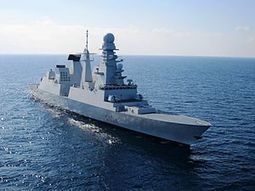
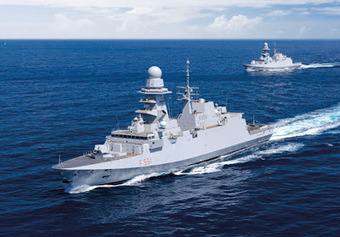
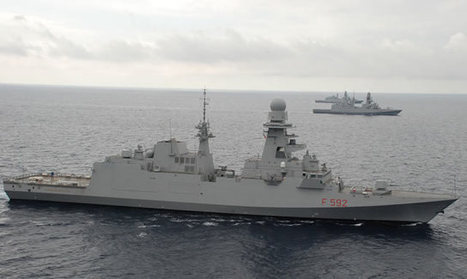
Italo-French Fremm program continues Riva Trigoso, 29 June 2013 - Today Riva Trigoso (Genoa) shipyard celebrated the launch of the frigate “Carlo Margottini”, the third of a series of Fremm vessels - Multi Mission European Frigates, ordered from Fincantieri by the Italian Navy within the framework of an Italo-French program of cooperation. Godmother to the ship was Ms. Stefania Portaccio, granddaughter of Captain Carlo Margottini. The frigate was named in honour of Captain Carlo Margottini, who was decorated for military valour after the sinking of Nave Artigliere in 1940. Present at the ceremony were, among others, Roberta Pinotti, Italian Under Secretary of Defence, Claudio Burlando, Governor of Liguria, Admiral Luigi Binelli Mantelli, Chief of the Italian Defence General Staff, Admiral Giuseppe De Giorgi, Chief of the Italian Navy, and Giuseppe Bono, CEO of Fincantieri. The vessel, which is due for delivery in early 2014 in Muggiano (La Spezia), will feature a high degree of flexibility, capable of operating in all tactical situations. 144 metres long with a beam of 19.7 metres, the ship will have a displacement at full load of approximately 6,700 tonnes. The “Carlo Margottini” will have a maximum speed of over 27 knots and will provide accommodation for a crew of 200. The ships in the FREMM program constitute state of the art vessels of European and Italian defence in the Mediterranean and will replace the “Lupo” and “Maestrale” class frigates built by Fincantieri in the 1970s. Participating in the initiative as prime contractor for Italy is Orizzonte Sistemi Navali (51% Fincantieri, 49% Finmeccanica) and, as prime contractor for France, Armaris (DCNS + Thales). The cooperation has drawn of the highly positive experience of the previous Italo-French program “Orizzonte” under which two frigates were built for the Italian Navy, the ”Andrea Doria” and the “Caio Duilio”.
Italian Fincantieri consortium reports that it is exploring the possibility of establishing a shipyard in the Kenyan port city of Mombasa, which would strengthen existing relations with the Kenyan Navy.
In an interview with Kenyan media aboard the Italian Navy aircraft carrier 'Cavour' when it called at Mombasa as part of its Africa and Middle East promotional voyage, Fincantieri International Business Consultant (Naval Vessel Building Unit) Ezio Vernetti said the company hopes to set up a plant in Kenya before the end of this year.
Vernetti said that the company's long-standing relationship with the Kenyan Navy made Mombasa an ideal choice for the African plant, which will most likely focus on the supply of new vessels and the maintenance and refurbishment of existing Kenyan naval vessels with an eye for making inroads into the continental vessel sales, refurbishment and upgrade market.
By moving to Mombasa, Fincantierri seeks to consolidate a cordial business relationship with the Kenyan Navy three years after fulfilling a contract for refurbishing the navy's fast attack craft KNS Nyayo and KNS Umoja. As part of the mid-life refurbishment process, Fincantieri replaced approximately a third of the structure on each vessel and rebuilt their hulls. The company also worked on the propulsion systems, propellers, electrical equipment, furnishings, installation and flooring. It replaced all the command and control equipment on the vessels and installed new equipment, including Furano navigation radar. Fincantieri also removed the four launchers for the Oto Melara/Matra Otomat Mk 2 SSM system.
The 'Cavour', which is accompanied by three support ships, is on a tour of Middle Eastern and African ports where it is promoting the sale of mostly military hardware with on-board exhibitions by various companies.
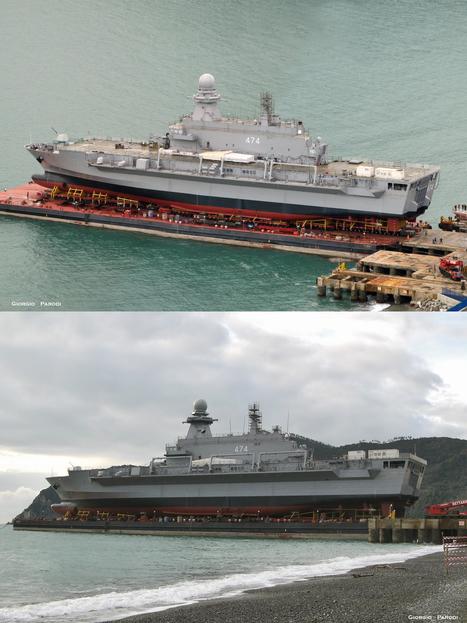
The Algerian Navy's new multipurpose landing helicopter dock (LHD) ship entered the water for the first time on 14 January at Italian shipbuilder Fincantieri's Muggiano shipyard in La Spezia, Italy.
Built under the prime contractorship of Orizzonte Sistemi Navali (OSN), a Fincantieri/Selex ES joint venture, the BDSL (Bâtiment de Débarquement et de Soutien Logistique) vessel Kalaat Beni-Abbes (474) was originally scheduled for launch on 14 December 2013. However, because of an incident unrelated to the ship's delivery programme, the launch was delayed and the ship finally left Riva Trigoso's main shipyard by barge on 8 January, heading for Muggiano.
The completion of hull and superstructure build up to the point of formal launch was achieved 30 months after contract date.
Although OSN has not released details of the ship construction and outfitting programme, IHS Jane's understands that the programme is running ahead of schedule. OSN had already begun harbour acceptance trials in advance of the vessel sailing from Riva Trigoso, with sea trials scheduled to begin by April (two months ahead of schedule).
It is understood that platform and combat system customer acceptance trials will be completed before September, when the ship is scheduled for handover to the Algerian Navy.
Following handover, the ship will remain in Italy until the first quarter of 2015 for crew and maintenance staff training under the supervision of the Italian Navy.
As a subcontractor to OSN, the Italian Navy has taken on the task of developing the ship's training and qualification syllabus, providing (together with industry) shore- and sea-based training for the crew and support personnel at facilities in La Spezia and Taranto.
In October 2013 the first 100 out of a total of 180 personnel to be trained arrived in Taranto for a programme that included safety and emergency procedures familiarisation. In December an initial group of 45 personnel began platform systems and equipment courses at Fincantieri's recently activated training academy near Muggiano: this phase was conducted by industrial personnel as well as representatives from the Italian Navy's construction, test, and outfitting centre. Once these courses are completed, further shore-based training will take place under the Italian Navy team before the crew moves to on-ship training and support.
Beyond this, the crew will begin preparing to sail the vessel independently under the Italian Navy's Fleet Command, with the basic operational sea training phase commencing in Taranto. Here, the crew can use the Italian Navy's new warship simulator provided by ECA Sindel. The simulator replicates the LHD's integrated bridge, and combat information and platform control centres.
A live-firing exercise is expected to conclude crew qualification in the first quarter of 2015.
Although the vessel is based on the design of the Italian Navy's landing platform dock ITS San Giusto (L 9894), Kalaat Beni-Abbes is larger and has been redesigned according to the latest safety, MARPOL environmental protection, and construction standards. Designed and built under Italy's RINA SpA classification guidelines with the service notation 'amphibious warfare ship', the vessel's accommodation facilities and air-conditioning systems have been derived from Fincantieri's cruise ship-building work.
The 8,800-tonne full-load displacement vessel is 142.9 m long and 21.5 m in beam. It can carry more than 600 personnel, including a 152-strong crew, a flight operations detachment, and embarked amphibious forces. Along with the capacity to host an amphibious force command-and-control facility, the vessel has a stern dock able to carry three landing craft mechanised (LCM), and can also embark three landing craft vehicle and personnel (LCVP) vessels together with one landing craft personnel (LCP) and two rigid hull inflatable boats (RHIBs).
The three 19.5 m LCMs, based on the Italian Navy's LCMs designed by Cantiere Navale Vittoria and able to carry a 30-tonne load, are being built by Algeria's ECRN (Enterprise de Construction et Reparation Navales) near Mers-El-Kebir. IHS Jane's understands that the first LCM began acceptance trials in December.
Up to 15 armoured vehicles can be carried in the hangar space, which can be accessed by a starboard-side folding ramp and a 30-tonne elevator amidships. Soft-skinned vehicles and containers can be accommodated on a flight deck that also has two helicopter landing spots (the aft spot able to accommodate an AgustaWestland AW101 aircraft). The ship has space for an extended hospital facility, including a surgery and up to 60 beds.
The combat system is based on the Athena-C combat management system (CMS) supplied by Selex ES. Elettronica has provided the electronic warfare fit, while OTO Melara has supplied countermeasures launchers. Armament includes a single OTO Melara 76/62 Super Rapid gun, two 25 mm guns, and an eight-cell Sylver A50 vertical launcher hosting Aster 15 surface-to-air missiles.
The Selex ES MFRA active array radar provides situational awareness and missile fire control. A SIR phased-array IFF is also fitted, together with a gun fire-control system and navigation/helicopter control radars.
The Seastema (a Fincantieri/ABB joint venture) integrated platform management system manages the vessel's hull, mechanical, and electrical systems, including the ship's electrical supply, bow thrusters, emergency diesel generators, and propulsion plant. The latter is based around two 6,000 kW-rated Wärtsila 12V32 diesel engines, driving two controllable-pitch propellers via Siemens gearboxes to achieve a 20 kt maximum speed.
Within weeks of the defence ministry cancelling the Rs3,600 crore deal with AgustaWestland to procure 12 VVIP choppers, it has quietly gone ahead and cleared another multi-million dollar deal with Finmeccanica, Agusta’s parent company, for the procurement of 98 torpedoes for the navy.
So, was this deal done because all the processes for the torpedo deal were declared as ‘clean’ by various committees? Or was it done despite the fact that Augusta Westland could soon find itself blacklisted? Once blacklisted all companies in the group including the parent company, in this case Finmeccanica, also face the axe.
Significantly, this deal has been struck at a time when the process of blacklisting Finmeccanica has begun. A top defence ministry source told dna that about a fortnight ago, the Defence Acquisition Council headed by Antony cleared the proposal to procure Black Shark torpedoes for $300 million for the navy. “Now, it will go to the cabinet committee on security for the final nod,” said a senior ministry officer.
Black Shark torpedoes are multi-purpose weapons designed to launch from both submarines and surface vessels. They are manufactured by a Finmeccanica company called WASS (Whitehead Alenia Sistemi Subacquei).
According to sources, the Indian navy will arm its Scorpene and conventional submarines with Black Shark torpedoes which have a range of 30 miles and can be launched from submarines and warships. Of the 98 torpedoes that India has sought, 20 would be procured from the original equipment manufacturer and the rest would be manufactured by Bharat Dynamics under licence in India. Transfer of technology under the contract will allow maintenance and overhaul of the torpedoes.
Some MPs questioned the procurement process and levelled allegations. Antony set up a Special Technical Oversight Committee to look into the complaints. The committee in its May 2013 report said the procurement process was carried out in a transparent manne
The future flagship of the Algerian fleet, an Amphibious Ship type BDSL"Batiment et de Débarquement de Soutien Logistics" commissioned from Orrizonte Sistemi Navali (a joint venture of Fincantieri and Selex Sistemi Integrati).
Specifications : -Total displacement = 9000 tons -Length = 142.9 meters -Width = 21.5 meters -Flight deck with two runways and landing pads for heavy-lift helicopters in the extremities and 30-ton lift in the central part of the deck -The power plant includes two diesel engines Wärtsilä 12V32 rated at 6000 kW -The maximum speed = 20 knots -Cruising range = 11,265 km -Generation of electricity will be provided by four diesel generators Isotta Fraschini V1716 C2ME capacity of 1300 kW and one emergency V1708 T3 of 600 kW -Armament includes MBDA SAAM-ESD (Aster missiles + A50 launcher Sylver) behind the island superstructure + Oto Melara 76/62 Super Rapid + 2 Single 25mm -The electronic structure will include Selex Sistemi Integrati EMPAR + AESA radar of CICS Athena-C + navigation radar and flight control by -gosopoznavaniya SIR + Communication system supplied by Selex Elsag + EW systems produced by Elettronica and Thales + two SCLAR-H decoy launchers -The Algerian helicopter landing ship dock can accommodate 3 Landing Craft Mechanized (LCM) + 3 small Landing Craft Vehicle Personnel (LCVP) + 1 large Landing Craft Personnel (LCP) + 2 semi-rigid boats. The garage can accommodate up to 15 armored vehicles. -The crew = 150 people -The landing force = 440 people
The delivery of the Italian FREMM Virginio Fasan, the first in ASW configuration, was held today at the FINCANTIERI shipyard in Muggiano (La Spezia). Virginio Fasan was delivered to the customer with an outstanding state of readiness,Orizzonte Sistemi Naval said in a release. All the scheduled complex and meaningful operations were performed in due time. Within the current framework of the FREMM Program for Italy eight vessels are included and an option for additional two, which has still to be exercised. The whole Program is in line with the scheduled timeline thanks to the cooperative synergy among OCCAR, Italian Navy and national Industries. OCCAR (Organisation for Joint Armament Cooperation) is the contracting Authority for the FREMM Program, Orizzonte Sistemi Navali (51% Fincantieri, 49% Selex ES) is the Prime Contractor for Italy. The FREMM Carlo Margottini, the second in ASW configuration, is taking its paces through its sea trials and will be delivered in the early months of 2014. The Italian FREMM Frigates represent a technological excellence: 144 metrs long with a displacement at full load of approximately 6,700 tons, the ships have been designed for achieving a maximum speed of over 27 knots and providing accommodation up to 200 people (crew and additional personnel), granting high degree of flexibility and the capability to operate in a wide range of scenarios and in all tactical situations.
ROME — With a new CEO at the helm, Italian torpedo-maker WASS is testing the waters for closer European cooperation in torpedo work, four years after the abrupt meltdown of its partnership with France’s DCNS and Thales.
“WASS has focused on self-sufficiency while also looking for alternatives, but alternatives did not appear, and we saw it was difficult to remain alone,” said CEO Alessandro Franzoni, adding that he wants to again “consider WASS part of the European scenario.”
Until 2009, WASS, which is a unit of Finmeccanica, worked closely with DCNS and Thales, first on individual programs such as the MU90 light torpedo and the Black Shark heavy torpedo, as well as on ambitious plans to merge into two joint ventures with the underwater units of the two firms, one covering torpedoes and the other acoustic activity.
But a row over control not only ended talks on the joint ventures but also put on hold cooperation on individual programs.
Instead of pushing on with placing the Black Shark — originally an Italian program — on French Navy nuclear subs, the French firms forged a partnership with Germany’s Atlas and are now developing the F21 heavy torpedo, with sea trials underway this year.
But now, Franzoni said WASS is again interested in European tie-ups.
“We are not in negotiation with anyone right now, but a European solution, a consolidation of this industry, is possible,” he said.
Franzoni said he is cautious about teaming WASS with Atlas, claiming they have a large overlap, while the German firm is the only other company already offering a heavy torpedo, the DM2A4. “But imagine what could happen if the two joined forces and coordinated research?” he said.
Franzoni, who took over at WASS in March, has a proven track record at Finmeccanica. He held various posts at Alenia Aermacchi in the past decade and worked on the F-35, C-27J, M-346 and Superjet programs, among others.
As a first step to European rapprochement, Franzoni has already overseen the resurrection of the Eurotorp alliance between WASS, Thales and DCNS, the bedrock of the original Italo-French torpedo alliance, which marketed the MU90 but fell apart along with the greater plans for mergers in 2009.
“Eurotorp had stalled due to the failure of the talks to create two new firms,” Franzoni said. “But we have now agreed to keep it going partly in response to demand from customers, partly because of mid-life upgrade opportunities and partly due to renewed good relations with the French,” he said.
WASS is now working on reducing costs for the ship- and helicopter-launched MU90 and is working on contracts for two Mediterranean navies, thought to be Morocco and Algeria.
Reuniting on the Black Shark looks like a tougher proposition. Under the original partnership, DCNS provided the battery and the torpedo was destined for French subs.
Now, France has teamed with Atlas for its heavy torpedo requirement, although Franzoni said he is still waiting to see concrete results of the alliance.
Meanwhile, WASS has developed its own batteries for the Black Shark, meaning it can do without the original French input.
The firm’s new primary battery — which is a one-time use battery to be used in live firings — is based on aluminum and silver oxide cells first developed by US firm Yardney. When the US discontinued the work, WASS took it over, Franzoni said.
The secondary batteries, which are lithium polymer, rechargeable and used in practice firings, are a step up from the French equivalents, he said. “They are WASS-patented and can be recharged 100 times, compared to 20 times for the French batteries, and they recharge five times faster, which means they can be used more often in training.”
The new batteries will be sea-tested next year and will be used in the Black Shark Advanced torpedo for the Italian Navy. “We want to sign with Italy in 2014 to coincide with the arrival of its new submarines,” said Franzoni, who added he would propose using the new battery technology on the MU90.
Ahead of the Black Shark order for the Italians, WASS is readying an order of 24 torpedoes for a Southeast Asian Navy.
Franzoni said he is aware that potential export nations are increasingly thinking of building their own torpedoes in house instead of buying from firms like WASS. “We need to work with them,” on technology-sharing programs, he said, naming South Korea, India and Turkey as possible targets for dual-development proposals.
Meanwhile, the firm is ramping up its countermeasure systems, which account for 30 percent of revenue against 50 percent for torpedoes. The firm is also working on an unmanned undersea vehicle it says will use the secondary battery and the optical cable developed for the Black Shark and be able to dive 10,000 meters and travel 50 kilometers from the ship controlling it. An autonomous version is also being considered.
“We don’t know of any other [remotely operated vehicle] that can do that while supplying live data,” Franzoni said. “The head of the Italian Navy has said he wants an unmanned undersea vehicle on every new, multipurpose ship he wants to buy, and we also see opportunities in the oil and gas and undersea archeology markets,” he said.
NHI is proud to announce that the first NH90 NFH Step B, has been delivered today to the Italian Navy. This fully operational naval helicopter will be assigned to the 5th Helicopter Squadron of the Italian Navy at the Sarzana-Luni base. The Italian Navy has ordered 56 NH90s, 46 of which in the NFH variant. “This NH90 Step B will allow its crews to fully take advantage of its tremendous mission system” explains Xavier Poupardin, Delegated Managing Director of NHIndustries. The Step B configuration features a range of significant advancements in mission capability including mission systems integration for both air-to-surface missiles such as the Marte MK/2S and torpedoes, advanced satellite and encrypted communications, radar and avionics capability enhancements. Next year the five previously delivered Italian Navy NH90NFH in Step A (MOC, Meaningful Operation Capability) standard, will begin to be retrofitted to bring them to the final configuration. "The NH90 NFH is the most recent and versatile helicopter for naval warfare" it is designed according to precise NATO Staff Requirements. It is equipped with a state of the art weapon system combining on a modern platform several types of sensors with a complete weapon suite. The NH90 NFH is able to perform a wide range of missions such as Anti-Submarine Warfare, Anti-Surface Warfare, SAR, Transport, Special Ops support, Boarding, Medical Evacuation, Maritime reconnaissance and Anti-Piracy In any type of environment. It can safely operate from a ship even in rough weather. The NH90 is the optimal choice for tactical transport, naval operations thanks to its large full composite airframe, its excellent power to weight ratio; and its wide range of rôle equipment. It features a redundant Fly-by-Wire flight control system for reduced Pilot’s workload and enhanced flight characteristics. As of today, more than 164 helicopters have been delivered and are in service in Germany, France, Belgium, Italy, The Netherlands, Sweden, Finland, Norway, Greece, Oman, Australia and New Zealand. The twin-engine, medium-size NH90 helicopter program is managed by the consortium NHIndustries, the Company owned by AgustaWestland SpA (32%), Eurocopter (62.5%), and Fokker Aerostructures (5.5%).
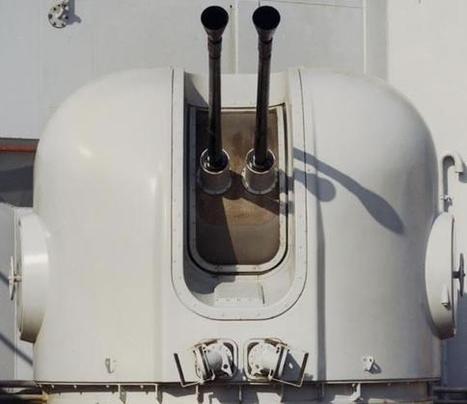
(Infodefensa.com) E. Saumeth, Cartagena - The European company OTO Melara has officially offered the Colombian Navy, the system 127/64 LW "Vulcan" MCGS , in the framework of seminars on new naval equipment were issued in recent days.
This model is part of the portfolio of guns and ammunition generation, which is being made available ARC OTO Melara company, in order to participate in the development of new platforms Strategic Surface-PES- it plans to build Colombia to before 2026.
According to statements to Infodefensa.com the Director of Sales for Latin America, Andrea Guidugli , the Italian company is in the position to offer the Vulcan cannon and ammunition, " a large-offset technology transfer and in order to produce a system that suits the strategic and tactical needs of the Colombian Navy. "
The system 127/64 LW, is designed in a modular fashion, with a dome type "stealth" of weight, with a loading system with automatic handling of ammunition and 64 gauge tube cooled CMS interface.
This gun has a weight of 28.9 tons, with a rate of fire of 35 RXM and extended ranges of up to 100 kilometers. Its elevation is -12 ° / +70 ° with time correction ronza 240 <7 seconds and 80 ° elevation <4 seconds and a fire accuracy <0.5 mrad.
Similarly ammunition has offered Vulcan 127 BER, GLR and GLR-SAL , so as to achieve goals modalities fire NSFS, ASuW and AAW , with ranges of up to 100 kilometers.
Note that the 127/64 mm, is (and will be) in service with the navies of Germany (F125), Italy (Fremm) and Algeria (Meko A200).
On 26 September 2013, in La Spezia bay, a great day occurred for OCCAR, OSN and the Italian Navy. Three IT FREMM ships, ITS Carlo BERGAMINI (already delivered to the Italian Navy and now engaged in completing some minor works after the official acceptance by the Italian Navy on 29 May 2013), Virginio FASAN (engaged in Platform and Combat system preparatory trials for the delivery to the Navy) and Carlo MARGOTTINI (at her first sea going) were together at sea.
This unique event gives proof of the high level of synergy among Industry, OCCAR and the Italian Navy by respecting the planned objectives and the capability and attitude to work together.The three ships, while performing the scheduled activities, were able to carry out impressive and outstanding kinematic manoeuvres, recorded by two Helicopters, anticipating for the first time the future “normal operation” and the ability to work together as a “FREMM task force”.
After several manoeuvres, the three ships positively concluded their combined work, with the full satisfaction and the pride of OCCAR and its FREMM Programme Division. ITS Virginio FASAN and Carlo MARGOTTINI continued their own programme schedule of trials into the evening.
At the end of the day the final balance was absolutely satisfactory: all the scheduled trials were carried out without any significant defect recorded, showing once again the level of maturity achieved by the FREMM Programme and giving a good feeling with respect of the next High Level Obiectives to be reached, such as the Final Official Acceptance by the IT Navy of Virginio FASAN in December 2013 and Carlo MARGOTTINI in mid-February 2014. Overall the entire programme runs according to the original schedule.
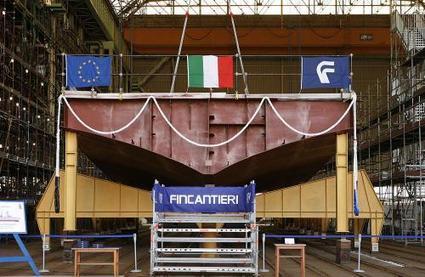
Le chantier Fincantieri de Riva Trigoso, près de Gênes, a procédé le 6 septembre à la mise sur cale de la sixième frégate multi-missions (FREMM) italienne. Ce bâtiment, qui sera baptisé Luigi Rizzo, doit être livré en 2017 à la Marina militare. Celle-ci a réceptionné la tête de série du programme, le Carlo Bergamini, le 29 mai dernier, et ce sera prochainement le tour du Virginio Fasan. La troisième FREMM italienne, le Carlo Margottini, a quant à elle été mise à flot le 29 juin. Les deux suivantes, qui seront nommées Carabiniere et Alpino, sont en cours d’assemblage à Riva Trigoso...
Lire l'intégralité de l'article sur Mer et Marine :
NRP Figueira da Foz (P361) - the Portuguese Navy's second of two Viana do Castelo-class multi-purpose NPO (Navio de Patrulha Oceânica) offshore patrol vessels - will be delivered to the navy equipped with the Modular Advanced Remotely controlled Lightweight Naval Weapon Station (MARLIN WS) system.
The ships are designed and built by Portuguese shipbuilder ENVC (Estaleiros Navais de Viana do Castelo). Two weapon stations were purchased in 2010 under a EUR4 million (USD5.3 million) contract awarded to Finmeccanica's OTO Melara by the Portuguese defence procurement agency DGAIED (Direção-Geral de Armamento e Infra-Estruturas de Defesa). The turrets are to be delivered from the navy's main base near Lisbon to the ENVC shipyard in northwest Portugal.
ST. PETERSBURG, July 5 (RIA Novosti) – Russia and Italy have decided to optimize their joint next-generation diesel submarine project, a Russian naval design bureau said Friday.
The S-1000, a 1,000-ton diesel submarine, is a joint project begun in 2004 by Russian submarine builder Rubin and Italy’s Fincantieri. Russia and Italy presented a mockup model of the S-1000 at an international arms show in France in October 2006.
Andrei Baranov, deputy head of the Rubin Central Design Bureau, said that in its proposed configuration, the S-1000 is of “little interest” for potential clients, adding that a decision had been made to improve the project and target specific countries that need a submarine fleet.
The submarine was originally designed for anti-submarine and anti-ship warfare, reconnaissance missions, and transportation of up to 12 troops. It is 56.2 meters long, has a top speed of 14 knots and is equipped with a new fuel cell-powered Air Independent Propulsion (AIP) system developed by the Italian firm.
Although its exterior will stay as designed, there will be considerable changes to “what’s inside” the submarine, Baranov said, adding that the target regions for selling submarine would remain the Middle East and Southeast Asia.
He cited several reasons for the upgrading the sub, including to market it to the Russian and Italian navies. He said the S-1000 design was drawn up almost a decade ago and much has changed since then. And, he noted, such small submarines are currently in great demand in the world, and there is intense competition on the market.
“Countries that are actively looking for new submarines are setting some totally unexpected demands for those ships,” he said.
To get content containing either thought or leadership enter:
To get content containing both thought and leadership enter:
To get content containing the expression thought leadership enter:
You can enter several keywords and you can refine them whenever you want. Our suggestion engine uses more signals but entering a few keywords here will rapidly give you great content to curate.


 Your new post is loading...