Your new post is loading...

|
Scooped by
Paula Bell
February 14, 2013 11:04 AM
|
Virtualization presents some unique possibilities to IT but it also presents some unique problems One of the biggest areas of concern for IT managers
|
|
Scooped by
Paula Bell
February 12, 2013 8:55 AM
|
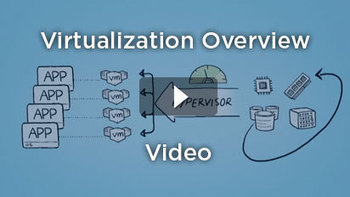
Learn how virtualization improves the efficiency and availability of IT resources and applications. Run multiple operating systems on a virtual machine or virtual server.
|
|
Scooped by
Paula Bell
January 31, 2013 11:01 AM
|
|
|
Scooped by
Paula Bell
January 22, 2013 2:51 PM
|
Janjaap Ruijssenaars' design can be printed from sand 'just by pressing enter'. But is this high-speed construction a welcome change?
|
|
Scooped by
Paula Bell
January 11, 2013 4:37 AM
|
|
|
Scooped by
Paula Bell
January 10, 2013 4:21 PM
|
From Oregon to Taiwan, a guided tour of the worldwide web's physical infrastructure
|
|
Scooped by
Paula Bell
December 13, 2012 10:01 AM
|
This site provides a wealth of technology information sheets for pupils and teachers
|
|
Scooped by
Paula Bell
November 30, 2012 5:37 AM
|
PCB Heaven!Electronic theory, schematic circuits and PIC tutorials...
|
|
Scooped by
Paula Bell
November 24, 2012 8:00 PM
|
|
|
Scooped by
Paula Bell
November 24, 2012 10:13 AM
|
Computer recycling or electronic recycling is the recycling or reuse of computers or other electronic devices. It includes both finding another use for materials (such as donation to charity), and having systems dismantled, in a manner that allows for the safe extraction of the constituent materials for reuse in other products.
Obsolete computers or other electronics are a valuable source for secondary raw materials, if treated properly; if not treated properly, they are a source of toxins and carcinogens. Rapid technology change, low initial cost, and planned obsolescence have resulted in a fast-growing surplus of computers or other electronic components around the globe. Technical solutions are available, but in most cases a legal framework, a collection system, logistics, and other services need to be implemented before applying a technical solution. The U.S. Environmental Protection Agency, estimates 30 to 40 million surplus PCs, classified as "hazardous household waste",[2] would be ready for end-of-life management in the next few years. The U.S. National Safety Council estimates that 75% of all personal computers ever sold are now surplus electronics.[3]
In 2007, the United States Environmental Protection Agency (EPA) said that more than 63 million computers in the U.S. were traded in for replacements or discarded. Today, 15% of electronic devices and equipment are recycled in the United States. Most electronic waste is sent to landfills or incinerated, which releases materials such as lead, mercury, or cadmium into the soil, groundwater, and atmosphere, thus having a negative impact on the environment. Many materials used in computer hardware can be recovered by recycling for use in future production. Reuse of tin, silicon, iron, aluminium, and a variety of plastics that are present in bulk in computers or other electronics can reduce the costs of constructing new systems. Components frequently contain lead, copper, gold, and other valuable materials suitable for reclamation.
|
|
Scooped by
Paula Bell
November 24, 2012 9:18 AM
|
Waste electrical and electronic equipment (WEEE) - how is it recycled video...
|
|
Scooped by
Paula Bell
November 23, 2012 9:52 AM
|
Your resource for greener electronics
EPEAT® is a comprehensive environmental rating that helps identify greener computers and other electronic equipment for your business, agency or organization, or for your personal use.
|
|
Scooped by
Paula Bell
November 23, 2012 8:44 AM
|
|
|
|
Scooped by
Paula Bell
February 12, 2013 8:59 AM
|
|
|
Scooped by
Paula Bell
February 6, 2013 9:10 AM
|
Access information on EPEAT® including criteria & verification, purchaser resources and manufacturer resources.
|
|
Scooped by
Paula Bell
January 31, 2013 11:00 AM
|
|
|
Scooped by
Paula Bell
January 15, 2013 1:46 PM
|
Got any spare Lego? Invention by American college student recycles plastic household scrap into 3D-printing material
|
|
Scooped by
Paula Bell
January 10, 2013 4:47 PM
|
Additive manufacturing or 3D printing[1] is a process of making three dimensional solid objects from a digital model. 3D printing is achieved using additive processes, where an object is created by laying down successive layers of material.[2] 3D printing is considered distinct from traditional machining techniques (subtractive processes) which mostly rely on the removal of material by methods such as cutting and drilling.
3D printing is usually performed by a materials printer using digital technology. Since the start of the twenty-first century there has been a large growth in the sales of these machines, and their price has dropped substantially.[3]
The technology is used in jewellery, footwear, industrial design, architecture, engineering and construction (AEC), automotive, aerospace, dental and medical industries, education, geographic information systems, civil engineering, and many other fields.
|
|
Scooped by
Paula Bell
December 23, 2012 4:53 PM
|
Food vs. fuel is the dilemma regarding the risk of diverting farmland or crops for biofuels production in detriment of the food supply on a global scale. The "food vs. fuel" or "food or fuel" debate is international in scope, with valid arguments on all sides of the issue. There is disagreement about how significant the issue is, what is causing it, and what can or should be done about it.[1][2][3][4][5]
Biofuel production has increased in recent years. Some commodities like maize (corn), sugar cane or vegetable oil can be used either as food, feed, or to make biofuels. For example, since 2006, a portion of land that was also formerly used to grow other crops in the United States is now used to grow corn for biofuels, and a larger share of corn is destined to ethanol production, reaching 25% in 2007.[6] A major debate exists on the extent to which biofuels policies contributed to high agricultural prices levels and volatility. A recent study for the International Centre for Trade and Sustainable Development shows that market-driven expansion of ethanol in the US increased maize prices by 21 percent in 2009, in comparison with what prices would have been had ethanol production been frozen at 2004 levels.[5]Lester R. Brown claimed that, since converting the entire grain harvest of the US would only produce 16% of its auto fuel needs, energy markets are effectively placed in competition with food markets for scarce arable land, resulting in higher food prices.[7] A lot of R&D efforts are currently being put into the production of second generation biofuels from non-food crops, crop residues and waste.[8]Second generation biofuels could hence potentially combine farming for food and fuel and moreover, electricity could be generated simultaneously, which could be beneficial for developing countries and rural areas in developed countries.[9] With global demand for biofuels on the increase due to the oil price increases taking place since 2003 and the desire to reduce oil dependency as well as reduce GHG emissions from transportation, there is also fear of the potential destruction of natural habitats by being converted into farmland.[10] Environmental groups have raised concerns about this trade-off for several years,[11][12][13][14] but now the debate reached a global scale due to the 2007–2008 world food price crisis. On the other hand, several studies do show that biofuel production can be significantly increased without increased acreage. Therefore stating that the crisis in hand relies on the food scarcity.[15][16][17]
Brazil has been considered to have the world's first sustainable biofuels economy[18][19][20] and its government claims Brazil's sugar cane based ethanol industry has not contributed to the 2008 food crisis.[20][21] A World Bank policy research working paper released in July 2008[22] concluded that "...large increases in biofuels production in the United States and Europe are the main reason behind the steep rise in global food prices", and also stated that "Brazil's sugar-based ethanol did not push food prices appreciably higher".[23][24] However, a 2010 study also by the World Bank concluded that their previous study may have overestimated the contribution of biofuel production, as "the effect of biofuels on food prices has not been as large as originally thought, but that the use of commodities by financial investors (the so-called "financialisation of commodities") may have been partly responsible for the 2007/08 spike."[25] A 2008 independent study by OECD also found that the impact of biofuels on food prices are much smaller.[26]
|
|
Scooped by
Paula Bell
December 11, 2012 9:31 AM
|
The technology in smartphones and laptops includes minerals mined in areas of Africa riven by warfare. But fighting back does not mean giving up technology, reports Kate Dailey.
|
|
Scooped by
Paula Bell
November 25, 2012 10:44 AM
|
My old laptop has finally given up. I'd like an iPad or a small laptop but I'm concerned about poor factory conditions and the mining for the minerals that go into them.
|
|
Scooped by
Paula Bell
November 24, 2012 10:17 AM
|
Sustainable Information Technology Focus...
|
|
Scooped by
Paula Bell
November 24, 2012 9:37 AM
|
Ask Jack: A reader wants to buy a tablet for her partner's birthday, but would prefer something more ethical than an iPad...
|
|
Scooped by
Paula Bell
November 23, 2012 10:05 AM
|
|
|
Scooped by
Paula Bell
November 23, 2012 9:49 AM
|
Guidance on energy efficiency....
|





 Scoop.it!