Today Kyle Stern @stern_history uses Marvel’s “Civil War” to teach Government Regulation. The test scores show it is working. Understand how a teacher can use graphic novels (a/k/a Comic Books) to meet standards, excite kids, and teach at the same time. It can be done!
Today Kyle Stern @stern_history uses Marvel’s “Civil War” to teach Government Regulation. The test scores show it is working. Understand how a teacher can use graphic novels (a/k/a Comic Books) to meet standards, excite kids, and teach at the same time. It can be done!
When visiting my son’s first grade classroom, I noticed something about the seven-year-old kids he was surrounded by. The girls were stronger and more decisive – the first to raise their hands, confidently answer questions and eagerly run to the front of the classroom to showcase their work.
This behavior struck me, as it stands in stark contrast with what I’ve often observed at conferences throughout my career. At these high profile events, women are prone to habits that make them appear less confident than the men in the room. I’ve noticed that when presented with uncomfortable situations, women – both speakers and audience members – are more likely to giggle or fidget. And when making a point, women tend to provide too many supporting details, as if they have to try harder to convince the audience.
In reflecting on this, I recognize that I too have been hesitant at times during large format Q&A sessions. If women are confident and strong by nature – as witnessed by the behavior in my son’s classroom – when do we start to question ourselves?
"When visiting my son’s first grade classroom, I noticed something about the seven-year-old kids he was surrounded by. The girls were stronger and more decisive – the first to raise their hands, confidently answer questions and eagerly run to the front of the classroom to showcase their work."
You couldn’t miss the headlines and page one stories across Australia recently about the decline of Australian children’s writing skills. The release of results of national tests in literacy and numeracy meant we were treated to a range of colour-coded tables and various info graphics that highlighted ‘successes’ and ‘failures’ and that dire, downward trend. A few reports were quite positive about improved reading scores and an improvement in writing in the early years of schooling. However, most media stories delivered the same grim message that Australian students have a ‘major problem’ with writing.
Of course politicians and media commentators got on board, keen to add their comments about it all. The release of NAPLAN (National Assessment Program – Literacy and Numeracy) every year in Australia offers a great media opportunity for many pundits. Unfortunately the solutions suggested were predictable to educators: more testing, more data-based evidence, more accountability, more direct instruction, more ‘accountability’.
Of course politicians and media commentators got on board, keen to add their comments about it all. The release of NAPLAN (National Assessment Program – Literacy and Numeracy) every year in Australia offers a great media opportunity for many pundits. Unfortunately the solutions suggested were predictable to educators: more testing, more data-based evidence, more accountability, more direct instruction, more ‘accountability’.
Like The House I Live In, this film warns that Americans will lose their country if they let themselves be turned into "suckers" by the forces of fanaticism and hatred. This thesis is rendered more powerful by the ever-present example of Nazi Germany, whose capsule history is dramatized as part of this film. There's a great deal of good sense in this film and more than a bit of wartime populism: "Let's not think about 'we' and 'they.' Let's think about 'us'!"]
Like The House I Live In, this film warns that Americans will lose their country if they let themselves be turned into "suckers" by the forces of fanaticism and hatred.
As part of a wider study, this paper reports on Australian educators’ understanding of children’s typical and problematic sexual behaviour and their source of training in this area. A sample of 107 educators from government, independent and Catholic primary schools, preschools and care organisations across Australia answered an online questionnaire regarding their understanding of and experiences with children’s problematic sexual behaviours and their management strategies. The majority of educators were able to identify children’s age-appropriate typical sexual behaviour and some elements of problematic sexual behaviour; however, individual knowledge was not extensive. Approximately 35% (n = 35) of educators said they had not been trained in identifying and responding to children’s problematic sexual behaviour. Of those who said they had received training, the majority (82%, n = 53) described having participated in a compulsory course on reporting suspected abuse to government (a mandated reporting course). Ninety per cent (n = 89) of educators reported that courses specific to children’s problematic sexual behaviours should be offered. This suggests that mandated reporting courses do not offer in-depth training specific to problematic sexual behaviour. Implications for professional development are discussed.
Curiosity about body parts, self-exploration, looking at or touching other children’s bodies, and interest in toileting activities are all typical sexual behaviours of young children. However, when asked about this, some educators only identified the first two as such. More worryingly, 17 per cent of those surveyed misidentified typical sexual behaviours as problematic. These are some of the findings of a newly released study by three education academics from the University of South Australia, published in Sex Education.
The world record-breaking How Ridiculous trio will be the main attraction at this year’s Curtin University Open Day, where visitors will have the opportunity to take part in a unique basketball game.
The How Ridiculous team, which includes two Curtin alumni, will be bringing their basketball stunts to Open Day, which is the University’s largest annual event.
Curtin University Vice-President Corporate Relations Ms Valerie Raubenheimer said it was fantastic that the two alumni were coming back to Curtin to reconnect with the University.
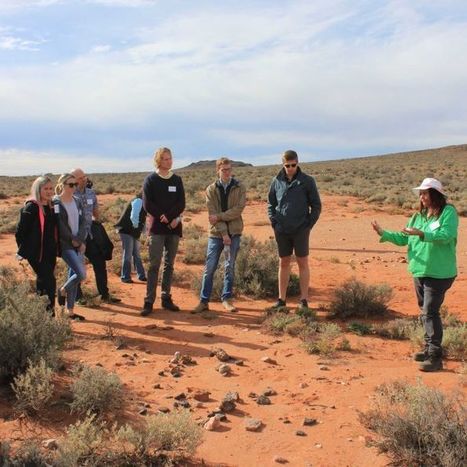
Aboriginal community members and elders in far west New South Wales take beginning school teachers on an excursion to help them understand Indigenous culture and traditions.
More than enough books, TED Talks, and blog posts have described the potential of storytelling. Stories often enhance our endeavors, whether in business communication or in learning, in political rhetoric or in our overall understanding of the world. The emphasis on the special essence of the story suggests an existence of a certain kind of magic. Could a story work like an elixir?
For us, this notion of the magic in stories paved the way for our “digital alchemy” effort co-teaching Networked Narratives — a 2017 open course based on a digital storytelling class at Kean University that extended to participants across the country as well as Mexico, Australia, and Egypt. Spread across blogs, twitter, web annotation, “hacked videos,” bots, memes, gifs, and padlets, the experience aimed to not only push participants to create digital media, but to build capabilities in collaborative storytelling which aspire to transformation and social change for the better.
In this DML Central series of posts, we will share the emergent practices and results of our Networked Narratives experience. Our design is at once loose and improvised. Here we reveal via a screenplay how the weave of our design was spun.
In this DML Central series of posts, we will share the emergent practices and results of our Networked Narratives experience. Our design is at once loose and improvised. Here we reveal via a screenplay how the weave of our design was spun.
“We are not weak, we are not damaged, we are not sick, we don't need to be cured, we don't need to be fixed. It's the rest of the world that needs to catch up with us.”
For adults with autism, the early years navigating school and playground friendships can be the toughest. But a diagnosis can provide answers and a light at the end of the tunnel.
This is the challenge we've had working with educators and psychologists wanting to pathologise the autistic child.
Intervention should be as much about understanding and reassuring the neurotypical as it is about trying to shoe horn autistic kids into neurotypical boxes.
It's startling to think about how we've got a spaceship billions of miles away rendezvousing with Pluto, yet here on Earth there are major aspects of our own anatomy that we're almost completely ignorant about. We've climbed Everest, sent men to the moon, and invented the Internet — but we still don't know how our brains work. The positive outlook is that many health, science, and research specialists believe we're on the precipice of some major neuroscientific breakthroughs.
One example of a recent discovery with major implications is our further understanding of neuroplasticity. Simply put, we used to think our brain was what it was — unchangeable, unalterable. We were stuck with what nature gave us. In actuality, our brains are like plastic. We can alter neurochemistry to change beliefs, thoughts processes, emotions, etc. You are the architect of your brain. You also have the power to act against dangerous impulses such as addiction. The therapeutic possibilities here are endless.
Below, broken up into two parts, is a terrific infographic detailing the essence of what we know about neuroplasticity and how it works. It was created by the folks at Alta Mira, a San Francisco-area rehabilitation and recovery center.
Between 2010 and 2015, the enrollment of education majors in 15 University of North Carolina institutions with schools of education dropped from 15,000 to 10,454, a 30 percent reduction. According to the university system, a quarter of the state's public school teachers leave the job in their first five years. While teacher recruitment and retention appears to be a nationwide problem, North Carolina is tackling the situation by proposing legislation that would allow faculty from higher education to work as adjunct instructors within K-12 schools in core academic subjects without a teaching license.
Senate Bill 448, known as "Professors in the Classroom," would allow school districts to contract with a college instructor to serve as an adjunct instructor" as long as he or she can pass a criminal background check and comes prepared to teach younger students. That means undergoing preservice training from an educator "preparation program" on subjects that don't come up much in a college environment: student management, communicating for "defusing and de-escalating disruptive or dangerous behavior," "safe and appropriate use of seclusion and restraint," and identifying and working with children with disabilities.
Prime Minister Malcolm Turnbull has announced the Coalition Government will replace skilled 457 visas with a new category to give Australians top priority for jobs.
Turnbull made the announcement on Facebook, saying he said would “put jobs first” and “Australians first”.
The four-year visas for skilled migrants would be replaced with a new temporary visa with added requirements, including work experience and better English-language skills
“Australians must have priority for Australian jobs – so we’re abolishing the [class] 457 visas, the visas that bring temporary foreign workers into our country,” he said.
“We will no longer let 457 visas be passports to jobs that could and should go to Australians.”
He added that it’s important that organisations still get access to the skills they need to grow and invest.
“So the 457 visa will be replaced by a new temporary visa specifically designed to recruit the best and the brightest in the national interest,” he said.
Turnbull said the new visa would “better target genuine skills shortages”. Moreover, it would feature new requirements such as previous work experience, better English language proficiency and labour market testing.
He also said the government would establish a new training fund for Australians to fill skills gaps.
“Our reforms will have a simple focus: Australian jobs, and Australian values.”
The number of 457 visa holders has dropped to about 45,000 in the past year, well below its peak of over 100,000 issued annually under the former Labor Government.
Opposition Leader Bill Shorten promised last week that Labor would "crack down on dodgy" 457 visas if they were in government.
Speaking of the cost of living, how much do you need to live on? Surveys show most people's answer is: just a bit more than I'm getting at present. Trouble is, they keep saying that no matter how much their income rises.
One way to convince yourself you're not doing all that well is to compare what you earn with people of your acquaintance who're earning a lot more than you.
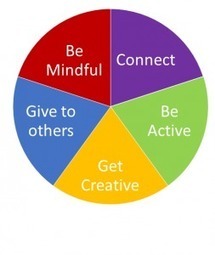
The Digital 5 A Day provides a simple framework that reflects the concerns of parents/ carers as well as children’s behaviours and needs. It can also act as a base for family agreements about internet and digital device use throughout both the holidays and term time.
Based on the NHS’s evidence-based ‘Five steps to better mental wellbeing’, the 5 A Day campaign gives children and parents easy to follow, practical steps to achieve a healthy and balanced digital diet.
Many of us believe there are two driving forces behind the person known as “you”: nature and nurture. But, according to personality and motivational psychologist Brian R. Little, there’s a third: projects.
There are two ways in which you can think about your personality. The first is in terms of the personality attributes that you have, or your openness to experience, conscientiousness, extraversion, agreeability and neuroticism (what I call the Big Five personality traits). The second is in terms of what you do, or your personal projects: for example, “get over my social anxiety,” “deliver an awesome pitch in my sales meeting,” or “stop procrastinating.” By studying our personal projects, the “doings” of daily lives, we can get a different perspective and greater scope to reflect on our lives than the study of our “havings” alone.
In 1914, Ralph Kerwineo, a self-assigned man from Milwaukee, had a dalliance with a woman who was not his wife, prompting his actual wife to report to the authorities that her husband wasn’t biologically a man at all. Kerwineo was arrested for disorderly conduct, but later freed. He was told by the judge he ought to dress as a woman while in Milwaukee if he wanted to stay out of trouble.
The sharing of political opinion on social media is now ubiquitous. But what does it mean for democracy?
For years, debate has raged about the significance of symbolic, expressive political activity at the level of the everyday citizen.
Critics fear it is simply self-satisfying “slacktivism”. It gives people an easy way to feel they’re contributing to a cause while substituting for more intensive political participation.
Conversely, optimists see a flourishing of civic engagement on the internet that gives people an accessible entry point into politics. If it helps them to develop a sense of political identity and agency, that enables more participation down the line.
These contrasting positions both have merit. Yet are those who take them asking the right questions in the first place?
By evaluating online political expression only in terms of possible impacts on traditional political activity, we risk sidestepping a far more crucial set of issues.
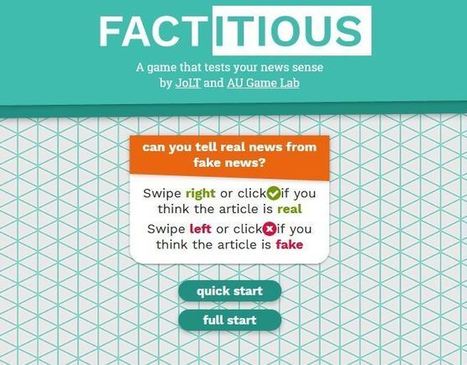
Factitious is an engaging online game to teach about fake news. It could be a fun activity to do to finish-up a more extensive lesson on the topic.
You can learn more about it at NPR’s article, To Test Your Fake News Judgment, Play This Game.
You can also find lots of resources on teaching about fake news at The Best Tools & Lessons For Teaching Information Literacy, including the lesson plan I did for The NY Times.
The OECD’s latest Starting Strong report provides an update on early childhood education opportunities across the developed world, and a fresh insight into how Australian children are faring.
The Starting Strong series, which began in 2001, provides valuable comparisons and analysis of early childhood education systems, and has been highly influential in the development of early years policy globally. Australian governments drew heavily on this resource in the development of our National Quality Framework and Early Years Learning Framework.
Researchers in Michigan show that project-based learning in high-poverty communities can produce statistically significant gains in social studies and informational reading.
From clusters of college closures and dramatic budgetary cuts to technological advances and data security breaches, changes in higher education have institutions contemplating strategies that will enable them to thrive in the future. But how do colleges and universities determine which strategies to focus on first, or most?
When navigating the industry’s tectonic shifts, institutions can find a North Star in their students. Increased diversity in student bodies—whether that means ethnicity, gender, beliefs, age, economic status or culture—the way they learn and the way they want to learn are the best indicators of the way forward.
We are misnamed. We call ourselves Homo sapiens, the “wise man,” but that’s more of a boast than a description. What makes us wise? What sets us apart from other animals? Various answers have been proposed — language, tools, cooperation, culture, tasting bad to predators — but none is unique to humans.
What best distinguishes our species is an ability that scientists are just beginning to appreciate: We contemplate the future. Our singular foresight created civilization and sustains society. It usually lifts our spirits, but it’s also the source of most depression and anxiety, whether we’re evaluating our own lives or worrying about the nation. Other animals have springtime rituals for educating the young, but only we subject them to “commencement” speeches grandly informing them that today is the first day of the rest of their lives.
In a paper published in Social Psychological and Personality Science, the Curtin University-led research showed the self-esteem of Australian high school students, university students and the general public had not changed from 1978 to 2014.
Lead researcher Dr Takeshi Hamamura, from the School of Psychology and Speech Pathology at Curtin University, said the finding suggests the notion of younger generations becoming more self-centred may be incorrect in Australia.
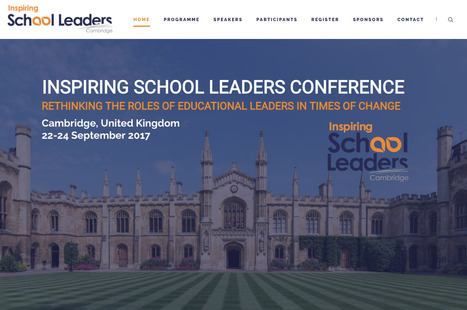
Inspiring School Leaders is a remarkable initiative that brings school leaders around the world together for an innovative conference on latest global trends and practices on school management and educational leadership. With keynote speeches, lectures and concurrent workshop sessions, educational leadership will be discussed thoroughly from different aspects.
The primary aims of Inspiring School Leaders Cambridge are to explore latest trends that will transform education by re-considering the role of school leaders in instructional excellence and to offer a host of new strategies to make a difference in your school community and expand your leadership capacity.
The conference is designed for educators, administrators and professionals who are directly or indirectly involved in school leadership. ISL will provide a platform where they can reflect on their own leadership and best practices of educational leadership with renowned academics, experts and educators.
Inspiring School Leaders is a remarkable initiative that brings school leaders around the world together for an innovative conference on latest global trends and practices on school management and educational leadership. With keynote speeches, lectures and concurrent workshop sessions, educational leadership will be discussed thoroughly from different aspects.
The primary aims of Inspiring School Leaders Cambridge are to explore latest trends that will transform education by re-considering the role of school leaders in instructional excellence and to offer a host of new strategies to make a difference in your school community and expand your leadership capacity.
The conference is designed for educators, administrators and professionals who are directly or indirectly involved in school leadership. ISL will provide a platform where they can reflect on their own leadership and best practices of educational leadership with renowned academics, experts and educators.
As the development of artificial intelligence continues at breakneck speed, questions about whether we understand what we are getting ourselves into persist. One fear is that increasingly intelligent robots will take all our jobs. Another fear is that we will create a world where a superintelligence will one day decide that it has no need for humans. This fear is well-explored in popular culture, through books and films like the Terminator series.
Another possibility is maybe the one that makes the most sense - since humans are the ones creating them, the machines and machine intelligences are likely to behave just like humans. For better or worse. DeepMind, Google’s cutting-edge AI company, has shown just that.
To get content containing either thought or leadership enter:
To get content containing both thought and leadership enter:
To get content containing the expression thought leadership enter:
You can enter several keywords and you can refine them whenever you want. Our suggestion engine uses more signals but entering a few keywords here will rapidly give you great content to curate.


 Your new post is loading...