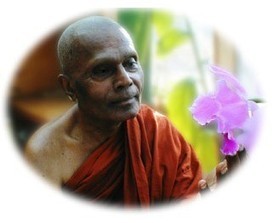
Mindfulness finds its roots in the East, as it is considered one of the seven factors of enlightenment in Buddhism. The idea was picked up in the West and introduced in modern clinical psychology and psychiatry in the 1970s, ...


 Your new post is loading...
 Your new post is loading...
Your new post is loading...
 Scoop.it!
Mindfulness finds its roots in the East, as it is considered one of the seven factors of enlightenment in Buddhism. The idea was picked up in the West and introduced in modern clinical psychology and psychiatry in the 1970s, ...

No comment yet.
Sign up to comment
Scoop.it!

A good friend--I'll call her Tandy here--is a huge fan of meditation. She spends a good hour each day practicing "mindfulness." She credits her practice with a more calm demeanor, a faster-working brain and a healthier body. She's certainly not...
Scoop.it!

Increase productivity with Zen-like focus by using this mindfulness meditation technique & free meditation mp3.
ozziegontang's insight:
While the measure of performance is performance, there are moments when it is important to quiet the brain chatter, the money mind, the self talk, and just be present. One can listen to a CD or audio to help. Simply sitting quietly for 5 minutes and focusing on observing one's in-breath and out-breath needs nothing but oneself.
Scoop.it!

The Center for Contemplative Mind in Society is aiming to show how meditation techniques can bolster productivity and creativity in organizations.
ozziegontang's insight:
"After thorough observation, investigation, analysis and reflection, when you find that anything agrees with reason and your experience, and is conducive to the good and benefit of one and all, and of the world at large; accept only that as true, and shape your life in accordance with it; and live up to it."
These words, the Buddha went on to say, must be applied to his own teachings.
As Maribai Bush is showing, it is about the practice. At the end of the article she shares: "It turns out that people work better when they are happy and feel aligned with their work. I know I do. "

Annette Schmeling's curator insight,
January 10, 2013 11:30 AM
Happiness Trap! The practice of meditation in the business world is increasingly moving from the fringe to the mainstream.
"Neuroscientists have confirmed much of what we were experiencing: that meditation improves attention, reduces stress hormones, increases appreciation and compassion for others and helps us recover faster from negative information."
When is more better than enough?
Scoop.it!

It sounds like a simple concept: the idea that we can actually stop our busy, racing minds (“monkey minds,” as they’re called in Buddhism) for short periods of time and actually pay attention to the present moment.
There is even some evidence, from a group at the University of Rochester, that mindfulness may lead to fewer errors among practicing physicians, by preventing them from making decisions too quickly before they have considered all the possible causes of a given illness and all the treatments that might be available.
ozziegontang's insight:
Over and over again it comes back to the doing. Doing the practice. Being 100% committed means that one does what one is committed to no matter how one is feelings.
Scoop.it!
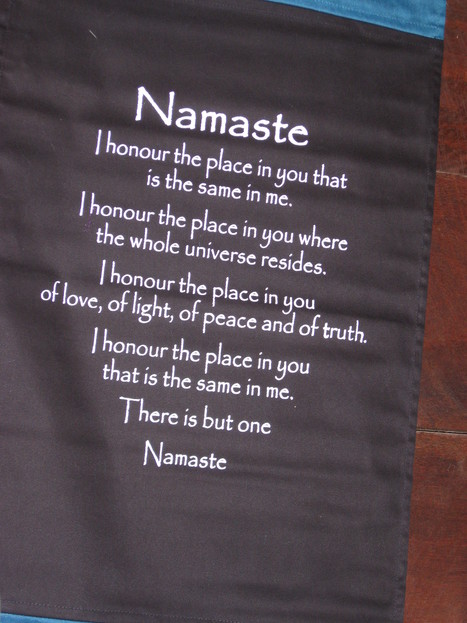
Stories were a very important part of my leadership style at the many companies which I was either the Chairman, The President or the CEO. I tried to give each manager or executive who reports directly to me: 1) a copy of “The Go Getter” booklet by Peter Kyne 2) a copy of the Abilene Paradox by Jerry Harvey Check out the Abilene DVD at CRM Learning 3) a copy of my speech on the 8 Success Traits
As a result – a part of our short hand language or style became such comments: Is he/she lucky?Is he/she a Go Getter?Are we about to take a trip to Abilene?Is it clear to you that this project is a “blue vaser?”Hope this helps. Best regards. Red
ozziegontang's insight:
Red Scott has been an inspiration to thousands of individuals. His insights and wisdom delivered in a folksy and humorous way through his many stories have taught lessons that need to be taught.
I am pleased to be among those whose livws he has touched.
His life is and has been about being a Blue-Vaser.

's comment December 22, 2012 2:38 PM
Love this Ozzie! Thanks for finding and sharing this article. Happy holidays!
Scoop.it!

I have a bit of a problem with that. When you understand the underlying physiology of mindfulness, you begin to see that any discussion about human change, learning, education, even politics and social issues, ends up being about mindfulness. That's because mindfulness, in some ways, is simply the opposite of mindlessness. And mindlessness is the cause of a tremendous amount of human suffering....
You can experience the world through your narrative circuitry, which will be useful for planning, goal setting, and strategizing. You can also experience the world more directly, which enables more sensory information to be perceived. Experiencing the world through the direct experience network allows you to get closer to the reality of any event. You perceive more information about events occurring around you, as well as more accurate information about these events. Noticing more real-time information makes you more flexible in how you respond to the world. You also become less imprisoned by the past, your habits, expectations or assumptions, and more able to respond to events as they unfold. Via Annette Schmeling
ozziegontang's insight:
“The Road goes ever on and on Down from the door where it began. Now far ahead the Road has gone, And I must follow, if I can, Pursuing it with eager feet, Until it joins some larger way Where many paths and errands meet. And whither then? I cannot say”
― J.R.R. Tolkien, The Fellowship of the Ring If I experience the world more directly I may be more able to respond to the unfolding events awake, aware, mindful and in the present moment.
Scoop.it!

The 14th Dalai Lama 1989 Nobel Peace Laureate His Holiness the 14th Dalai Lama, Tenzin Gyatso, is both the head of state and the spiritual leader of Tibet. Via Annette Schmeling
ozziegontang's insight:
This comes by way of Annette Schmeling's Mindfulness Based Leadership as suggested by Dennis T O'Connor, two dear friends who have assisted me in becoming more mindful and present in all that I am.
Much to be reflected upon from the Dalai Lama's lecture especially regarding what are we doing to guide our leaders. It is the awareness of: Be the Change I want to be in the world.
Scoop.it!

Ever since the financial crisis of 2008, I have sensed from many leaders that they want to do a better job of leading in accordance with their personal values. The crisis exposed the fallacies of measuring success in monetary ...
ozziegontang's insight:
It's the practice of Mindfulness that may help me and you become better leaders. First of our own lives and then possibly by example to the lives of those that we contribute to.
Scoop.it!
Center for Digital Business at MIT, Andrew McAfee‘s job these days is, he says, to “try to understand all the different things that technology is doing to the business world, all the different ways that it’s changing innovation and productivity and process execution, and then, at a higher level, try to understand how it’s affecting the work force and how it’s affecting competition.”
ozziegontang's insight:
Andrew McAfee gives a wonderful interview. What is especially interesting is looking back at what has happened since he wrote his book: Enterprise 2.0: The Dawn of Emergent Collaboration
Scoop.it!

Growth or control. You can't have both. Leaders need to decide which direction they will go. The paradox is that to grow, you need to give up some control.
ozziegontang's insight:
The reality is that there is only one person I can control and I see him everytime I look in a mirror. Lee Thayer one of the early thought leaders on Communication is still writing, teaching and consulting. Actually today is his birthday. If you go to Mindful Leadership in the Product section of http://mindfulness.com, you can see the 10 books he has written in the past 6 years and his foundational work: Leadership: Thinking Being Doing.
Throughout these book on Leadership, he talks about being in the Learning Mode, and how difficult it is for us to be in the learning more more that our sliding back into the Knowing Mode.
|
Scoop.it!

Undeniably, sooner or later, we all have to deal with life’s realities -- those hard surprises and unknowns that can literally change everything in less
ozziegontang's insight:
Mindfulness, Resilience, Reframe, Recontexualize. A look at looking at things differently. Short and a good summary of dealing with my interpretation of my experiences. I don't learn from my experiences. I learn from my INTERPRETATION of my experiences. Some ways of altering the way I interpret something, some experience, some person, some event.
Scoop.it!
The famous entrepreneur and philanthropist on how a successful business can make a difference and make money.
ozziegontang's insight:
Each of us has a unique contribution to make to the world. It is about the global community that can take leaders to make a difference in thinking globaly and acting locally. Or starting locally and see how one's contribution is helpful to all the world.
Scoop.it!

The first master of the art believed in ethos, pathos, and logos.
ozziegontang's insight:
This is what I shared:
Enjoyed reading your article.
Wanted to share a quote from my mentor, Lee Thayer. In the opening chapter of his book “Communication!: A Radically new Approach to Life’s Most Perplexing Problem” he shared:-----
“…what “communicates” is the interpretation that someone makes of a happening, a situation, an image, or an utterance. A person may be listening to you. But what that person is hearing is not what you said, but her own interpretation of what you may (or may not) have said. All of the actual consequences of any communication encounter flow from the interpretations that people make of things. That may or may not be what was intended. But the power player in any communication situation is the “receiver,” not the “sender.”-----
“…Never mistake your interpretation for reality. Just know that you have to live with the consequences of how you, and others, interpret things. What “communicates’” is whatever a person pays attention to and however she interprets it. You do not control her interpretations, nor does she control yours. That’s how the process works. If you have a different conception of the process, you may want to consider this one. It has far fewer bumps in the road, fewer problems.”-----
The 9 or 10 books Lee’s written in the past 5 or 6 years contain the seminal ideas he’s been sharing on Communication, Leadership and high performance organizations for the past 45 years. And most people have never heard of him.
Scoop.it!

An artcile about the growing trend in mindfulness training, supported by evidence from neuroscience, to help leaders be more present at work.
Scoop.it!

"Red" Scott's Business Cardinals
As he reminded his listeners most were memorialized as a result of mistakes, errors of judgment and/or unfortunate experiences.
ozziegontang's insight:
When Red would speak to TEC/Vistage groups, he reminded those attending that he came to learn 3 things from those listening to his "Pearls from Paris (TX) or Coyote Culture presentations. When he would learn something from the group, he would stop, take a red felt tipped pen and place a start on the person's table tent.
I am pleased to say that I was one of those individuals. It was sharing that the word "enthusiasm" comes from the Greek "en theos" or "the god within." When the Greeks saw someone with a passion for whatever whatever moved them, they said " the god within him burns."
Scoop.it!
Get Influence - Tool for Influencing Using Psychology on the App Store. See screenshots and ratings, and read customer reviews. (Want to be more influential in 2013?
ozziegontang's insight:
Was wondering if you really Get Influence. Am thinking it is something that others give you because of the competence and performance that one exemplifies. I think it's more about contribution and the unique contribution one can make to the community of mankind and then to the world.
I've always liked the statement: we are all stardust.

Create Wise Leader's comment,
January 4, 2013 12:43 PM
Yes I agree that influence is something others give you because of your competence and performance. This Influence App enables leaders to better understand how other people like to be communicated with and therefore influenced. If the leader gets this right other people will give them infleunce. Communicating in a way that works for other people should assist the leader in making their unique contribution.
Scoop.it!

During the past decade, a growing number of companies and organizations have discovered the advantages of offering their staff a chance to learn about meditation, yoga, and other contemplative practices. In a 2004 study, we found 135 companies and organizations that offer such benefits. Undoubtedly, there are now many more. Via Annette Schmeling
ozziegontang's insight:
Agree with what Annette had to say: Good resource in bringing mindfulness and contemplative practices into the mainstream. Explore the website and in particular the programs and resources for educators.
Annette Schmeling's curator insight,
December 13, 2012 1:43 PM
Good resource in bringing mindfulness and contemplative practices into the mainstream. Explore the website and in particular the programs and resources for educators.
Scoop.it!
Gustavo Grodnitzky presented his topic "The Future of the Workforce -- Ready or not, here they come!" to over 200 delegates at etc. Venues, London on Friday,...
ozziegontang's insight:
Gustavo Grodnitzky has become a good friend. His work on the Millenials, the Gen Y gives a great perspective of how we need to work in the cross-generational workforce.
You may want to look at The Fourth Turning about the 4 generational types in 4 eras for the past 500 years. An interesting perspective.
Check out his Ask Dr. Gustavo recaps at DrGustavo.com
His Philosophy: "Environment is a more powerful determinant of behavior than is personality. This is evidenced in both clinical studies and everyday experience"
"Our environment teaches us what we can and can not do. Yet each of us has the ability to change our environment by choosing certain actions over others and fine-tuning our interactions with others. Leaders and organizational teams that learn how to create successful environments naturally become more effective and more successful. They also become stronger assets for their corporations. They perform better, are more satisfied with their jobs, and they’re happier. As a result, their company experiences better growth, stability and profitability."
Scoop.it!

Think a bit outside of the box and consider the type of corporate culture that can consistently create and support world-class customer experiences. Try to imagine a mindful approach to customer experience. We're serious."Mindful" is not a word that is associated with business or industry....
An example from the Merriam-Webster dictionary uses the word this way: a truly considerate person, always mindful of the needs of others. If you think of others as customers, this is a simple and direct way of thinking about the mindset of a smart company. Then there's mindfulness, which has to do with being aware of the present moment, free from the sort of blinders we described above. Jon Kabat-Zinn wrote that mindfulness means "paying attention in a particular way: on purpose, in the present moment, and non-judgmentally." For example, a person in this state would do one thing at a time. He would not only observe carefully, but also notice small details. He could observe reality for what it is, rather than being blinded by his own opinions and preconceptions.
ozziegontang's insight:
Some reflection on creating a mindful culture.
Hidden in the word "Listen" is the word "Silent." Most of us are used to speaking or getting ready to speak, thereby missing what the other person is saying.
If I am mindful and in the moment I can truly quiet my self and listen.
"Being listened to is so close to being loved that most people cannot tell the difference," is attributed to David Oxberg. It is the "I see you." and the feelings that accompany being recognized.
"People need to know how much I care before they care how much I know."
The question I ask myself: What is my unique contribution that I can share with my community so I can be of service." Hans Selye called it Altruistic Egoism. Doing for others is in my best interest.
Scoop.it!
ozziegontang's insight:
A free download from UrbanDarma.org. Many will find it very helpful.
Scoop.it!
“THE PAUSE”- A simple exercise that is accomplished in 3 minutes
Powerful, Simple, Transformative Exercise in Mindfulness and Stress Relief
ozziegontang's insight:
Not certain how this will show up as Scoop.it has some difficulties resolving Irene's Just Coach It site.
The Pause is a simple way to gather oneself and focus on one's breath for 3 minutes and allowing the mind to calm. When thoughts zip in they are allowed to leave on the next focused outbreath.
Scoop.it!

Post written by dates and romance columnist Sean Marshall of Family Rocketship. Have you ever felt like you and your spouse are simply roommates passing each other on your way to work or school? Ha...
ozziegontang's insight:
The primary corporation in our lives is our family. People say that home and work are two different places. However, I liked the comment tht Susan Scott made in her book Fierce Conversations. The suggestion was to write two books one about fierce conversation at home and the other about fierce conversations at work. She said if you squeeze an orange at home or at work; What do you get?
In the military, it an officer can't control or lead his own family and there are family issues that impact others on the base, there is a high likelihood that the person will be passed over for promotion.
People need to know how much you care before they care how much you know.
|