



Ben van Beurden’s bonanza is a reward for the oil price rise that was outside his control
Get Started for FREE
Sign up with Facebook Sign up with X
I don't have a Facebook or a X account


 Your new post is loading...
 Your new post is loading...
Your new post is loading...
 Scoop.it!
Ben van Beurden’s bonanza is a reward for the oil price rise that was outside his control 
No comment yet.
Sign up to comment
Scoop.it!

The long read: Within Britain’s elite occupations, the advantages of class are still mistaken for talent
Graham Watson's insight:
Excellent long read in today's Guardian, looking at what it means to be posh and how a privileged background is distinctly advantageous in certain professions.
This is the sort of issue that skews labour market outcomes and generates wage differentials that are utterly unrelated to productivity. And I should know having taught in one of the country's leading public schools for nearly twenty years.
In many respects, it makes teaching marginal productivity theory harder - and probably one of the reasons why I find it hard to justify executive pay settlements.
Scoop.it!

As of Friday, bosses of top firms have earned more than a typical worker in a year, a report claims.
Graham Watson's insight:
The annual warning about the discrepancy between executive pay and the pay of ordinary workers: although there's a degree of debate about whether the comparison is a fair one.
I'm among those who believe that it is - and I love the rhetoric of people like the head of research at the Adam Smith Institute, Matthew Lesh. He says "Limits on executive pay would drive top British talent and companies offshore, ultimately leading to fewer jobs and lower pay for workers," he said.
Oh no it wouldn't! And where is this top British talent?
Scoop.it!

The plan may look hopelessly idealistic but something must be done to address pay inequality
Graham Watson's insight:
Given my previous 'scoop', this first business brief from Nils Pratley is worth reading.
Scoop.it!

Denise Coates, the founder of Bet365 has seen her compensation rise to £265m as online gambling booms.
Graham Watson's insight:
One of my favourite topics - executive pay. However, I'll start by saying that it's refreshing that the best-paid boss in the UK is female! And I wonder whether this is behind some of the coverage of the item.
However, that said, is any individual worth £265m - that's an awful lot per minute. She must be very productive. Or it's indicative of massive rent-seeking.
Scoop.it!

Jeff Fairburn’s £75m bonus has sharpened focus on the windfalls of help to buy, says Guardian columnist Aditya Chakrabortty
Graham Watson's insight:
Aditya Chakrabortty deconstructs the excessive bonuses paid to executives in the construction sector, arguing that whilst their pay is excessive, it's a direct consequence of government intervention in the market, particularly "help-to-buy".
And he's right - how can a bonus of £75 million be justified? In the construction sector? I'd love to know how much per house that represents.
Scoop.it!

Resolution Foundation study highlights struggle to boost wages since credit crunch
Graham Watson's insight:
An interesting bit of research from the Resolution Foundation suggests that the rate of growth of average pay is going to slow, such that it's going to take a century for average wages to double for today's young workers.
Unless, of course, their CEOs, when I'd reckon that the end of the decade is a more likely estimate.
Scoop.it!

Poor accountability was to blame for severe rail disruption last May, a regulator has said.
Graham Watson's insight:
I don t know where to put this - there are clearly macroeconomic implications of reduced supply-side capacity - but you might also look at issues relating to the theory of the firm, not least the issue of executive pay. Given the verdict of the Office of Rail and Road (ORR) regulator that poor management was responsible for the summer's rail chaos, it will be interesting to see the reaction of the CEOs of the train operating companies (TOCs)
Scoop.it!
Putting workers on the board is a bitter but necessary pill | Nils Pratley | Business | The Guardian
The IPPR’s proposal will not be popular among directors, but the idea is sound
Graham Watson's insight:
The notion of putting workers on boards has long been seen as a good idea, and is very much part of the continental European model of capitalism.
And Nils Pratley agrees with the IPPR that it should be adopted in the UK, arguing that it's an appropriate way of taking workers' interests into account and in moderating executive pay. He may be right - he's also right about how quickly this plank of Mrs.May's economic philosophy (if that's not a misnomer!) has disappeared from view.
Scoop.it!

Chief executive pay rose much faster than for the wider workforce in 2017, a report has claimed.
Graham Watson's insight:
One of my favourite topics - executive pay. The latest assessment of CEO pay suggests that it went up by 11% last year, compared with 2% for workers more generally.
I don't know where to start - in my view, most CEOs operate in a low risk environment. Get sacked from one high profile job, get another fairly quickly. And, no doubt, retain a raft of non-executive directorships. But does this reflect higher profitability? In the current business environment?
Scoop.it!

Regulator Ofwat says bosses' pay and investor payout levels at water firms have angered customers.
Graham Watson's insight:
Another interesting regulatory issue in that the water regulator, Ofwat, has taken a dim view of the behaviour of companies in paying their executives and giving generous dividends to shareholders. As a result, they are looking to enforce rules that will mean the companies will have to justify these actions in relation to customers' interests.
All of which is very noble - but will it generate the right outcomes?
Scoop.it!

The government says companies will have to publish the ratio between executive and average worker pay.
Graham Watson's insight:
Most people know my views on executive pay, but I fail to see how this will make a jot of difference. The government are planning to force firms with more than 250 employees to publish the difference between their executives and their working hours. But what effect will it have?
For a start, it incurs an opportunity cost: but, to have any meaning at all, they should also be forced to publish the working hours of both groups and the bonuses of the two as well.
But I'm not convinced it's good economics.
Scoop.it!

GMB chief launches campaign to return England’s nine water firms to national ownership
Graham Watson's insight:
This article looks at two interesting microeconomic issues: executive pay and the nationalisation/privatisation. And whilst I'm largely in agreement with the points made about executive pay, the case for renationalisation is somewhat weaker.
And, the water companies will trot out their stock photo of a rare thing, a female CEO, Liv Garfield, to justify the former.
|
Scoop.it!
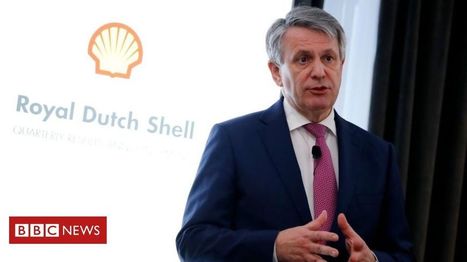
Ben van Beurden's pay packet is now 143 times larger than the average Shell employee's in the UK.
Graham Watson's insight:
Ah! Executive pay - I've not 'scooped' about this in a while but, as Geoff Riley has already tweeted, it's a rich topic for discussion.
Can labour market theory - notably marginal productivity theory - explain the high pay of CEOs like Ben van Beurden? Or are there better explanations, perhaps involving monopsony markets, or aspects of game theory - particularly when remuneration committees, like Shell's are also influencing their own pay, afact acknowledged in the article, with the Shell's own Remuneration Committee noting that "the ration was 'consistent with those in the top 30 companies listed in London.
Scoop.it!

Top executives now earn 133 times more than the average worker, says Guardian columnist Owen Jones
Graham Watson's insight:
Top quality polemic from Owen Jones - and whilst I dislike the hysterical tone - I have to say I don't disagree with the underlying premise.
Executive pay is too high - end of - and I'm probably one of the few people to spot the Clause 4 reference in the article too.
Scoop.it!
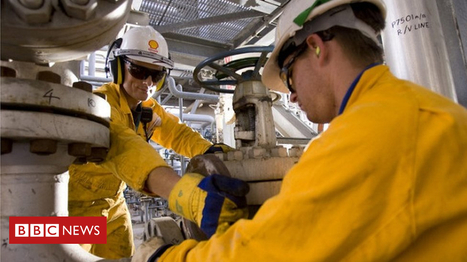
The energy giant makes the move after pressure from investors, including the Church of England.
Graham Watson's insight:
Interesting bit of microeconomics with Shell announcing that they are going to link executive remuneration to carbon reduction. This put a new spin on the theory of the firm and the nature of executive pay, but might also reflect the fact that the head of the Church of England, one of the shareholders named, used to work for Shell.
Scoop.it!

Exclusive: measures could include paying execs only in cash and naming staff paid £150k+
Graham Watson's insight:
The Labour Party is proposing a raft of measures to rein in executive pay - following a report by a leading academic looking into the issue. The article notes that "Labour believes an attempt to curb boardroom pay is justified by the lack of restraint shown by company boards and the failure of voluntary codes to have any impact on executive remuneration."
It's difficult to disagree with much of this - and I don't say this as someone who's keen to bash the rich but the current system of remuneration seems to propagate ever-rising inequality.
Scoop.it!
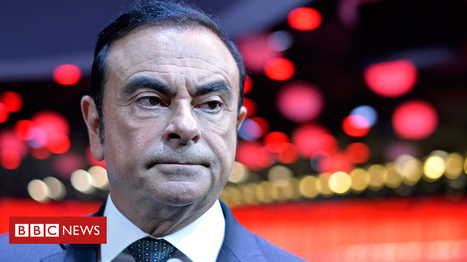
Carlos Ghosn, a towering figure in the car industry, is accused of under-reporting his pay package.
Graham Watson's insight:
A morality tale for the 21st century? It's not been a good year for the titans of industry - Sorrell, Ghosn and so on. Their demise might get you wondering about what it is the provokes them to the behaviours alleged.
Might I refer you to the work of Paul Piff and Dacher Keltner at the University of California, which looks at the behaviour of the rich and suggests that the are more likely to engage in unethical behaviour. And how do these people get so rich? The current acceptance of absurd levels of executive remuneration, perhaps?
That said, psychologists might also have a field day in relation to their family backgrounds - both 'outsiders' - and height...
Scoop.it!

Sacha Romanovitch’s resignation shows ‘responsible capitalism’ still has a long way to go, says author Stefan Stern
Graham Watson's insight:
A depressing insight from Stefan Stern: the departure of Grant Thornton's female Chief Executive Sacha Romanovitch to him represents the triumph of old-school, outdated management by men keen to reduce profit-sharing, and ensure that the distribution of rents is closely focused on a narrow, and largely self-selecting, and probably largely public school, elite.
His view - and mine - is that the world has moved on. And that Romanovitch's demise simply reflected that she was moving more rapidly than many of her less enlightened colleagues.
Scoop.it!

It takes the average CEO less than five days to earn the average full-time annual wage
Graham Watson's insight:
Although Greg Jericho writes for the Australian arm of the Guardian media empire, this article is equally applicable to the UK. I think that all CEOs should be made to account for their earnings in a more transparent way. It would be great to see the CEO of leading companies trying to argue that they work significantly longer hours/harder than all of their staff and I'd like to see them do it.
Scoop.it!

A Sports Direct director later says he did not intend to imply there had been merger discussions.
Graham Watson's insight:
Just a great story: horizontal merger activity - with the suggestion that Debenhams and House of Fraser might be merged, what with Sports Direct having an interest in both.
But it then goes surreal - looking at theory of the firm, in highlighting the shareholder revolt against the Chairman of Sports Direct, Keith Hellawell whose lengthy career in retailing, as Chief-Superintendent of West Yorkshire police - yes, you read that correctly - offers a clear justification of his executive pay...
Scoop.it!

Astronomical gap between the pay of workers and bosses exposed in report on earnings of America’s top 350 CEOs
Graham Watson's insight:
More on executive pay, this time in the US. Evidence of markets working, or evidence of market failure?
It used to, unequivocally be the former. Increasingly, though, I'm not so sure. What is pay a reward for? Risk? Profit? And how much of this can be attributed to the decisions of a relatively small number of individuals.
Scoop.it!

Are executives being rewarded for insecure work and wage theft? Sure looks like it
Graham Watson's insight:
An Australian perspective on executive pay, one of my favourite issues. And how nice to find that New South Wales still has a Fabian Society. Unless Osmond Chiu is its only member.
Scoop.it!

Something is awry when rising executive pay sits alongside flatlining earnings for employees
Graham Watson's insight:
Larry Elliott with an article that I'd like to have written on executive pay, and how the government might have gone further towards curbing executive excesses.
Scoop.it!

Remuneration committees have put too much stock in balance sheets over common sense
Graham Watson's insight:
The first part of Nils Pratley's business briefs and my earlier 'scoop' agree in almost every regard. They've even got the 'acceptable' face of executive pay associated with the article.
|





Sometimes you read a Business Brief that just nails it. And I mean that. Hat-tip of the highest order to Nils Pratley.
This is the sort of bonus-scheme/performance-related pay that makes a nonsense of executive pay, and people like me cross. If true, the notion that the size of Ben van Buerden's pay packet has largely been determined by a rise in the price of oil, then it makes NO economic sense.
Of course, people will say that there's a downside - that oil prices could have fallen. Yes. But by how much? I can't see an oil price of even $25 being sustainable. And the upside - well, oil prices have greater chance of going even higher than $60.
And then what does it say about the people who are prepared to accept such pay packets? I know I'll be accused of the politics of envy but if I was rewarded to such I degree I hope it would be from the lottery rather than from such a rigged game.